
Clinical Psychologist in Delhi
Trust Strip





Quick Facts
| Item | Details |
|---|---|
| Service | Clinical Psychology |
| Professional s | Clinical Psychologists |
| Services | Assessment + Psychotherapy |
| Age Groups | Children, Adolescents & Adults |
| Approach | Evidence-Based & Individualized |
| Follow-Up | Based on Clinical Need |
| Locations | Headspace Mind Clinic Centres |
What Does a Clinical Psychologist Do?
A clinical psychologist is a professional who diagnoses and treats mental health conditions by applying scientifically proven methods of psychological therapy. Based on his/her education, experience, and practice environment, a clinical psychologist can provide a variety of services including but not limited to psychotherapy, psychological evaluation, CBT, behavioral interventions, etc.

- Mood
- Relationships
- Work
- Education
- Sleep
- Behaviour
- Concentration
- Self-esteem
- Daily functioning
What are the services provided by a Clinical Psychologist?
The following services can be provided based on training and need:
- Psychological assessment
- Psychotherapy
- Cognitive Behavioural Therapy
- Behaviour therapy
- Supportive therapy
- Psychoeducation
- Relapse prevention and coping skills
- Family-focused interventions
- Child and adolescent psychological care
- Emotional and behavioural assessment
- Cognitive and neuropsychological assessment where appropriately trained
Clinical Psychology Is Not Just Counselling
The terms counseling, therapy, psychology, and clinical psychology can be often mistaken to be synonymous terms, but this is not always the case.
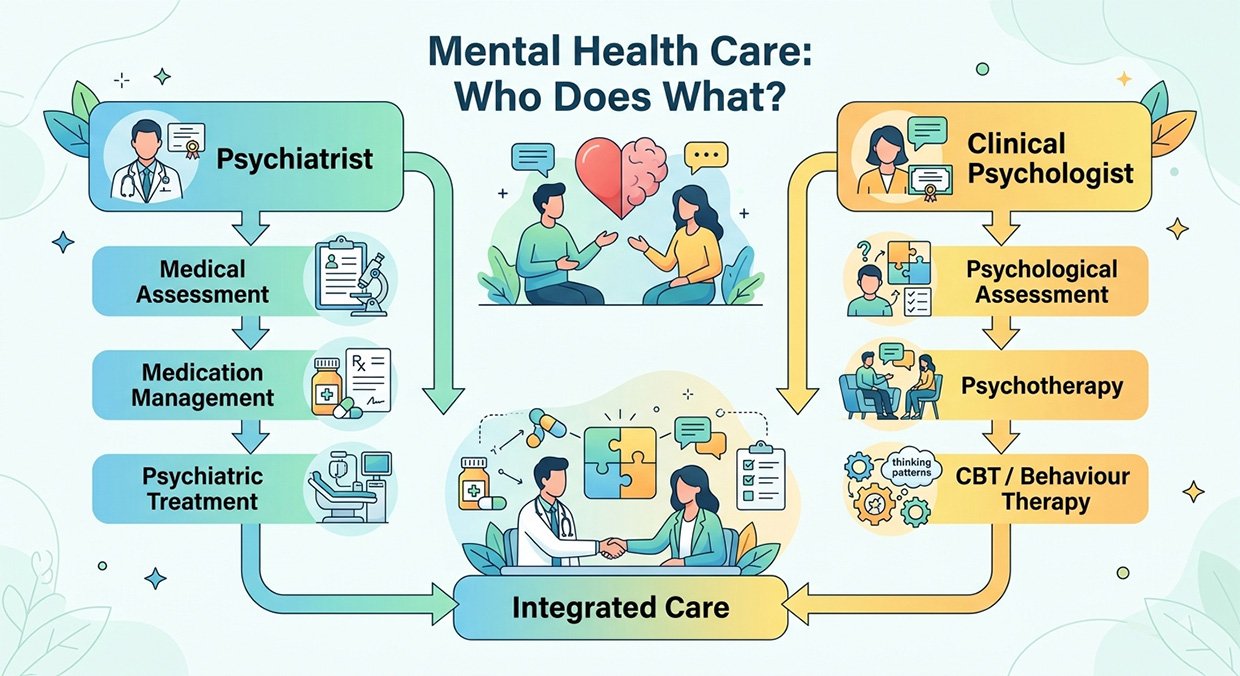
PSYCHOLOGIST VS PSYCHIATRIST
| Clinical Psychologist | Psychiatrist |
|---|---|
| Mental health professional who specializes in clinical psychology | Medical doctor who specializes in psychiatry |
| Psychological assessment | Medical and psychiatric assessment |
| Psychotherapy | Psychiatric treatment |
| Psychological testing | Can prescribe medication |
| CBT, behavioral techniques | Medications along with referral for psychotherapy |
| Concerned about thoughts, emotions, and behaviors | Deals with biological, psychological, and social aspects of mental illness |
Important:
The two specialists are interrelated.
Both a psychiatrist and a clinical psychologist must treat patients.
Clinical Pearl
Clinical psychologist and psychiatrist have different duties within their professions; nevertheless, they can cooperate in some cases. While the first one offers therapy and psychological evaluation, the second one performs medical and psychiatric evaluation and prescribes medications.
“Patient Takeaway
It is unnecessary to understand whether you need a psychologist or a psychiatrist before visiting any of them. A proper assessment will help determine what kind of specialist is needed.”
When should you see a Clinical Psychologist?
If you have any problems related to emotions, behavior, cognition, and interpersonal skills that affect your daily functioning, it will be best to seek consultation from a clinical psychologist. Examples of some common problems include anxiety, depression, stress, low self-esteem, trauma-related problems, behavioral problems, relationship problems, and attention-related problems.
You May Need Clinical Psychology Services If You Are Suffering From
- Persistent sadness
- Excessive worry
- Overthinking
- Panic symptoms
- Stress
- Low self-esteem
- Emotional management problems
- Sleep-related psychological difficulties
- Anger or irritability
- Relationship difficulties
- Trauma-related distress
- Behavioural difficulties
- Poor coping with life changes
- Concentration difficulties
You May Also Benefit From Psychological Assessment If You Need Help Understanding
- Attention difficulties
- Memory concerns
- Learning difficulties
- Cognitive functioning
- Personality characteristics
- Behavioural problems
- Developmental concerns
- ADHD-related symptoms
- Autism-related concerns
Real-life Scenarios
“I understand my problem, but I am just not sure how to resolve it.”
“My anxieties are interfering with my work or private life.”
“I am repeating myself over and over despite being aware that it is unhealthy.”
“I have a child who has behavioural/emotional problems.”
“I need to have a psychological assessment to understand my or my child’s challenges more clearly.”
“I am looking for therapy, but don’t know what kind of therapy I would benefit from.”
Clinical Pearl
However, psychological counseling is not limited to people who have developed severe mental disorders. Psychological interventions may also help people who are going through stress, anxiety, emotional problems, marital issues, behavior problems, or transitions in their lives.
What problems can a clinical psychologist help with?
Clinical psychologists can test for and offer psychological treatment options for various issues that relate to emotions, behaviour, cognition, and other aspects of mental health. Clinical psychologists may be involved in dealing with cases that include depression, anxiety, obsessive-compulsive disorders (OCD), stress, problems associated with trauma, behavior issues, relationship issues, and attention difficulties.
Condition & Concern Grid
Mood Problems
- Depression
- Persistent sadness
- Lack of motivation
- Low self-esteem
Anxiety Problems
- Generalized anxiety
- Excessive worry
- Panic symptoms
- Social anxiety
- Phobias
OCD & Related Difficulties
- Obsessive thoughts
- Compulsive behaviours
- Avoidance
- Seeking Reassurance
Emotional & Stress Issues
- Chronic stress
- Burnout
- Emotional dysregulation
- Irritability
- Anger
Child & Adolescent Concerns
- Behavioural problems
- Emotional difficulties
- School-related concerns
- Attention difficulties
- Developmental concerns
- Parenting difficulties
Cognitive & Attention Concerns
- Poor concentration
- Memory difficulties
- Learning problems
- Attention difficulties
- Cognitive concerns
Relationship & Family Concerns
- Communication difficulties
- Relationship conflict
- Family stress
- Parenting concerns
- Emotional intimacy difficulties
Common Reasons People Seek Clinical Psychology Services
| Concern | Possible Service |
|---|---|
| Anxiety | CBT / Psychotherapy |
| Depression | Psychotherapy ± Psychiatric Care |
| OCD | ERP / CBT |
| Behavioural difficulties | Behaviour Therapy |
| Child emotional problems | Child-focused psychological intervention |
| Attention concerns | Psychological Assessment |
| Learning difficulties | Psychological Assessment |
| Relationship difficulties | Couple / Family Intervention |
| Stress | Psychotherapy / Supportive Psychotherapy |
| Distress due to trauma | Trauma-informed psychological therapy when necessary |
Important Clinical Note
Not all psychological problems are treated the same way.
The correct treatment is dependent upon factors such as:
● Age
● Symptoms
● Severity
● Diagnosis
● Developmental stage
● Personal circumstances
● Treatment goals
● Previous treatment response
If psychiatric evaluation and medication can add value to the process, then the psychiatrist and the clinical psychologist can collaborate in treatment.
Clinical Pearl
The purpose of clinical psychology is not only to remove symptoms. Proper psychological treatment will help patients with coping skills, emotional control, behavior, relationships, function and overall psychological health.
What Types of Psychological Services Are Available?
The treatment approach could be one of the following: psychotherapy, psychological assessment, CBT, behavior therapy, support therapy, family interventions, or even specific forms of psychological therapy. The type of approach used for treatment will depend on the person’s problems and his or her goals.
Psychological Assessment
Systematic assessment of cognitive, emotional, behavioral, developmental or personality problems.
Cognitive Behavioural Therapy
Systematic therapy that helps people identify and change unhealthy ways of thinking and behaving.
Exposure and Response Prevention
A specialized behavioural approach commonly used in the treatment of OCD.
Behaviour Therapy
Focuses on changing behaviours that contribute to distress or functional difficulties.
Supportive Therapy
This includes psychological assistance, coping skills, psychoeducation, and emotional support.
Family-Based Interventions
May help address communication, behavioural, parenting, and family relationship difficulties.
Not Sure Which Psychological Service You Need?
Phone:
What happens during a clinical psychology consultation?
The beginning of clinical psychology involves gaining an understanding of the issues that concern you, the symptoms you suffer from, your history, your current circumstances, and your goals. The psychologist then proceeds to either conduct a clinical interview, psychological tests or evaluations. Finally, he makes recommendations for the right form of therapy or behavioral treatment.
Understanding Your Main Concerns
Your psychologist may ask about:
- What brought you to consultation
- When the difficulties started
- How frequently they occur
- Situations that trigger or worsen them
- How you currently cope
- How the problem affects daily functioning
- Previous attempts to manage the problem
- What you would like to change
Personal and Psychological History
Based on the circumstances, topics of discussion could be:
- Family environment
- Education
- Work
- Relationships
- Significant life events
- Previous psychological difficulties
- Previous therapy
- Medical or psychiatric history
- Sleep
- Substance use where clinically relevant
- Current sources of stress and support
Understanding Your Goals
The effectiveness of psychotherapy depends upon the clarity of treatment goals. You may want help with:
- Managing anxiety
- Improving mood
- Reducing obsessive thoughts
- Changing unhelpful behaviours
- Improving relationships
- Managing anger
- Building confidence
- Improving coping skills
- Understanding yourself better
- Supporting your child's emotional or behavioural development
Clinical Pearl
A clinical psychology consultation is not simply a conversation. It is a structured clinical process used to understand psychological difficulties and determine what type of assessment or intervention is most appropriate.
What happens during a psychological assessment?
The psychological evaluation involves the use of structured interviews, standardized psychological tests, behavior observations, questionnaires, and clinical data if necessary in order to assess any cognitive, affective, behavioral, developmental, or personality related problems. The battery of the tests will depend on the problem under investigation.
What can psychological assessment evaluate?
Depending on the referral question and the psychologist's training, assessment may explore:
- Intellectual functioning
- Attention and concentration
- Memory
- Learning abilities
- Personality characteristics
- Emotional functioning
- Behaviour
- Autism-related characteristics
- ADHD-related difficulties
- Other cognitive or psychological domains
What Does an Assessment Usually Involve?
Psychological testing can involve:
- Clinical Interview
- Selection of Appropriate Tests
- Standardized Testing
- Scoring & Interpretation
- Clinical Integration
- Feedback & Recommendations
Is Psychological Testing Sufficient for Diagnosis?
Generally speaking, no. The results of psychological testing give structured data that require interpretation in the context of the clinical history, behavior, complaints, and additional information. Testing scores should not be interpreted in isolation.
| Assessment Component | Purpose |
|---|---|
| Clinical Interview | Understand history and concerns |
| Questionnaires | Measure specific symptoms or traits |
| Cognitive Tests | Evaluate selected cognitive abilities |
| Behavioural Assessment | Understand patterns of behaviour |
| Standardized Tests | Compare performance using established norms |
| Clinical Interpretation | Place the results in context |
| Feedback | Convey the meaning and implications of the results |
Clinical Pearl
The psychological evaluation is of greatest value when there is a clearly defined clinical question, where testing provides important and relevant information.
How Is the Right Therapy Selected?
The choice of psychological therapy depends on the presenting problem, diagnosis when established, symptom severity, age, developmental needs, treatment goals, available evidence, previous treatment response, and patient preferences. A clinical psychologist may recommend one therapy or combine approaches when clinically appropriate.
Therapy Selection Matrix
| Concern | Possible Psychological Approach |
|---|---|
| Depression | CBT / Behavioural approaches / Supportive Therapy |
| Anxiety | CBT / Exposure-based approaches |
| OCD | CBT with ERP |
| Panic attacks | CBT / Interoceptive and situational exposure where appropriate |
| Behavioural difficulties | Behaviour Therapy |
| Relationship difficulties | Couple / Family-focused interventions |
| Child emotional difficulties | Developmentally appropriate psychological interventions |
| Stress & coping difficulties | CBT / Supportive Therapy |
| Low self-esteem | CBT / Schema-informed approaches where appropriate |
Important:
The final treatment approach should be determined by a qualified clinician after assessment.
What can you expect from Psychotherapy?
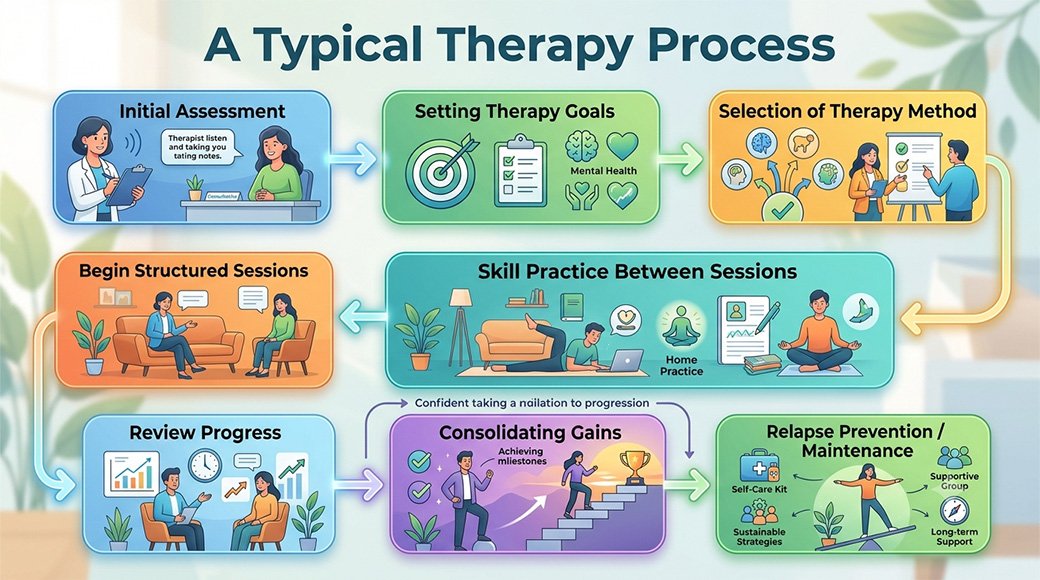
Psychotherapy is a systematic approach in which a mental health practitioner assists you in comprehending and transforming patterns of your thoughts, feelings, behaviors, or relationships that are causing you psychological distress. The sessions can include discussions, skill building, behavior exercises, homework, exposure therapy, problem-solving, or any other technique used in psychotherapy.
What Could Occur in Therapy?
Depending on the therapeutic model, some potential activities could be:
- Identifying patterns of thinking
- Exploring emotional responses
- Behavioural experiments
- Exposure exercises
- Problem-solving
- Communication skills
- Emotional regulation strategies
- Coping skills
- Homework or between-session exercises
- Reviewing progress toward treatment goals
How Long Does Therapy Take?
There is no universal number of sessions. Duration depends on:
- The problem being treated
- Severity
- Treatment approach
- Individual goals
- Response to therapy
- Complexity of the person's circumstances
Clinical Pearl
Good therapy involves cooperation and an aim. Progress is evaluated during the therapy process, not by having each patient attend the same number of therapy sessions.
What Happens After the First Psychology Consultation?
Depending on the results of the consultation, the psychologist will advise psychotherapy, psychological examination, monitoring, or referral to another mental health specialist. In case therapy is recommended, treatment goals, type of therapy, frequency of sessions, and the way of progress monitoring may be discussed prior to the start of regular sessions.
Possible Next Steps
Option 1 — Begin Psychotherapy
When the assessment indicates that structured psychological treatment is appropriate.
Option 2 — Psychological Assessment
When additional information is needed regarding cognition, attention, development, personality, behaviour, or another psychological domain.
Option 3 — Psychiatric Consultation
If there is a suspicion that psychiatric consultation would help.
Option 4 — Integrated Care
Some patients benefit from both psychiatric and psychological treatment.
For example:
Psychiatric Assessment
+
Psychotherapy
+
Psychological Assessment
+
Family Support
Option 5 — Monitoring
When there are mild or ambiguous cases, the psychologist will suggest that there is a need for careful observation and assessment at a future time instead of undergoing intense therapy right away.
How Do Clinical Psychologists Work With Psychiatrists?
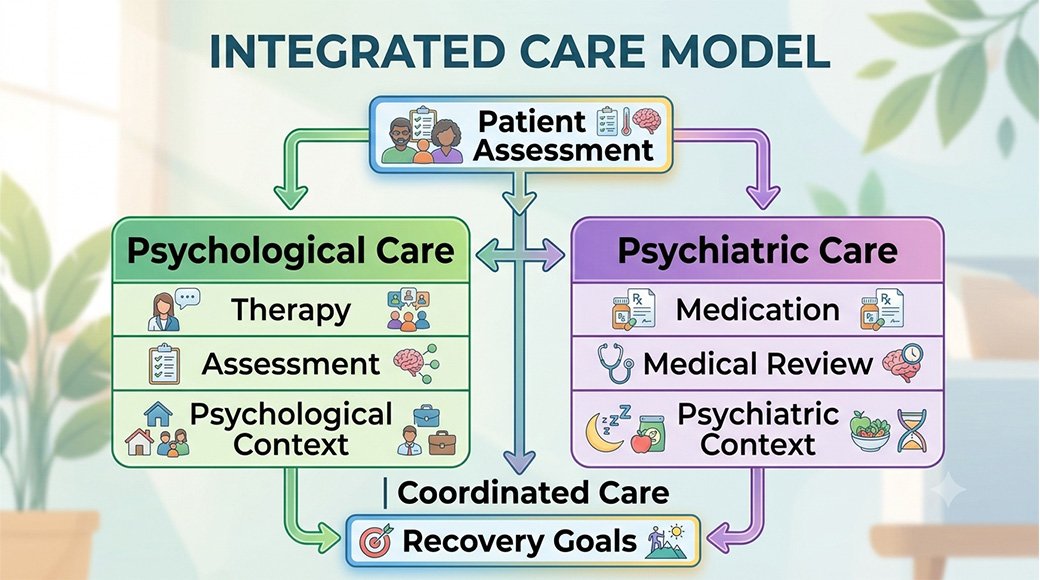
Clinical psychologists and psychiatrists perform separate functions in their professions; however, they may collaborate if the patient’s requirements include both psychological and physiological factors regarding mental disorders. Collaborative practice may be achieved through psychotherapy/psychological assessment combined with psychiatric examination and pharmacotherapy.
Integrated Care Model
| PATIENT |
| ↓ |
| Psychiatric Care Psychological Care |
| Assessment Psychotherapy |
| Diagnosis Assessment |
| Medication Behavioural Intervention |
| ↓ |
| Coordinated Care |
When Collaboration May Help
- Moderate or severe depression
- Significant anxiety
- OCD
- Bipolar disorder
- Psychotic disorders
- ADHD
- Complex child and adolescent presentations
- Treatment-resistant conditions
- Significant safety concerns
- Cases requiring both medication and psychotherapy
Clinical Pearl
Psychiatry and psychology are supplementary to each other. In situations where both are needed clinically, it is possible to provide treatment that addresses all aspects of mental health.
What can you do between Therapy Sessions?
Out-of-session interventions depend upon the form of therapy that is utilized. Patients might be required to carry out various interventions such as practicing coping skills, completing thought records, monitoring symptoms, practicing behavioral techniques, working on exposure tasks, or using communication and emotion regulation skills.
EXAMPLES
CBT
- Thought monitoring
- Cognitive restructuring
- Behavioural activation
- Activity scheduling
ERP
- Planned exposure exercises
- Response prevention
- Monitoring anxiety and compulsions
Behaviour Therapy
- Behaviour tracking
- Reinforcement strategies
- Structured practice
Supportive Therapy
- Coping strategies
- Stress-management techniques
- Problem-solving
Clinical Pearl
Psychotherapy doesn’t confine itself to the time spent in a consultation office; the usage of evidence-based skills outside the office is often an integral part of psychological treatment.
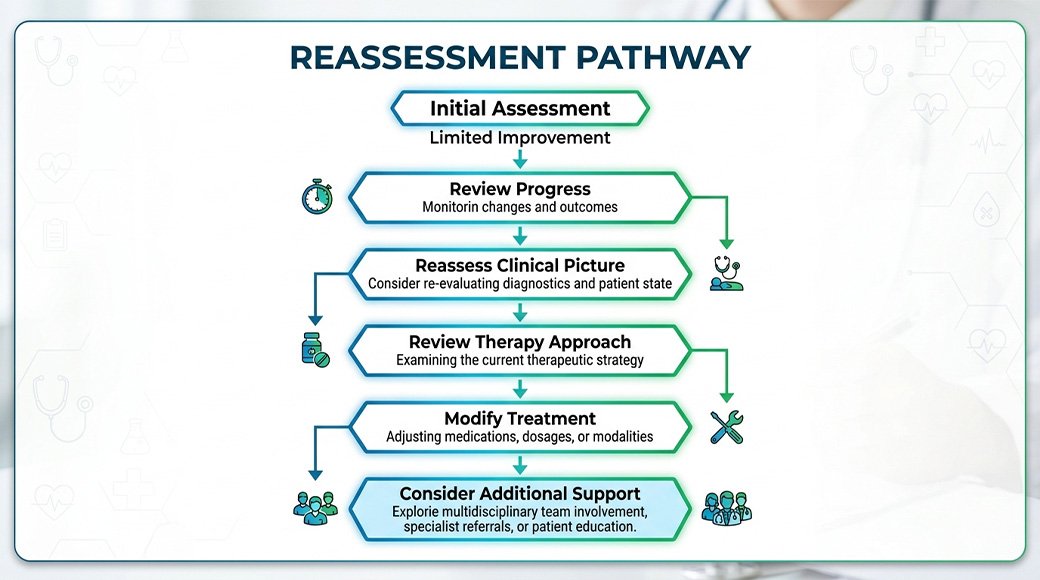
When Should Psychological Treatment Be Reassessed?
Psychological treatment should be reassessed if there is no improvement, there is deterioration, if treatment goals have changed, other issues have appeared, or if the present treatment doesn’t seem to be adequate. Reviewing one’s progress will help define whether psychotherapy should be continued, adjusted, or combined with some other treatment type.
REVIEW MAY BE REQUIRED IN CASES WHEN:
- Symptoms don’t improve despite adequate treatment.
- Symptoms become significantly worse.
- New symptoms develop.
- Therapy goals change.
- The current approach does not feel appropriate.
- Significant life circumstances change.
- A psychiatric evaluation becomes necessary.
- Additional psychological assessment is required.
Not Sure Which Type of Psychological Care You Need?
Phone:
What are the benefits of seeing a clinical Psychologist?
Visiting a clinical psychologist can assist you in comprehending psychological issues, gaining skills in managing these problems, altering detrimental patterns of thinking and behavior, emotional regulation, and working towards improved functioning. This depends on the particular problem one is facing, the type of therapy applied, and the personal goals and situation of the individual.
Better Understanding of Your Thoughts and Emotions
Therapy may assist you in discovering:
- Patterns of thinking
- Emotional triggers
- Behavioural responses
- Avoidance patterns
- Unhelpful coping strategies
- Relationship patterns
Developing Practical Coping Skills
Depending on the therapeutic approach, you may learn skills for:
- Managing anxiety
- Regulating emotions
- Handling stress
- Solving problems
- Communicating more effectively
- Managing difficult thoughts
- Coping with challenging situations
Unhelpful Behaviours Pattern Changes
Certain problems persist due to the reinforcement of problematic behaviour.
Psychological treatment can assist patients in recognizing such patterns and slowly changing to more positive behaviours.
Some examples are:
- Avoidance
- Reassurance seeking
- Compulsive behaviours
- Procrastination
- Social withdrawal
- Anger-driven reactions
Improving Daily Functioning
However, this is not only about feeling good during the sessions. The goal of psychological therapy is to enhance one's functioning in:
- Work
- Education
- Relationships
- Family life
- Social functioning
- Self-care
Benefits
| Potential Benefit | What Therapy May Help With |
|---|---|
| Awareness of emotions | Ability to recognize emotions and triggers |
| Coping skills | Managing stress and difficult situations |
| Behaviour change | Reducing unhelpful behavioural patterns |
| Cognitive skills | Recognizing and overcoming problematic thoughts |
| Communication | Improving interpersonal interactions |
| Emotional management | Managing intense emotions |
| Life functioning | Improving life functioning at home, school, work, and with others |
Clinical Pearl
The goal of psychological intervention is not to rid people of their difficult emotions. The goal is for people to learn better ways to deal with psychological challenges.
What types of Psychological Therapy are available?
Different psychological therapies are designed for different problems and treatment goals. At Headspace, appropriate interventions may include CBT, ERP, behaviour therapy, supportive therapy, family-focused interventions, and other evidence-based approaches depending on the individual's clinical needs and the psychologist's professional training.
Cognitive Behavioural Therapy (CBT)
CBT emphasizes the link between:
Thoughts → Emotions → Behaviours
It can be useful for several conditions, including depression and anxiety disorders.
Exposure and Response Prevention (ERP)
ERP is a specialized behavioural treatment particularly associated with OCD. It involves carefully planned exposure to feared situations or thoughts while reducing compulsive or avoidance responses.
Behaviour Therapy
Behaviour therapy techniques rely on recognizing patterns of behavior and implementing measures to encourage more appropriate functioning.
Supportive Therapy
Supportive therapy is used to aid individuals who suffer from emotional distress, personal issues, difficulties adapting, and coping skills.
It may include:
- Emotional support
- Psychoeducation
- Problem-solving
- Coping strategies
- Strengthening existing resources
Family Therapy
When family relationships or family dynamics contribute to psychological difficulties, involving family members may be clinically useful.
Family-based interventions can address:
- Communication
- Conflict
- Parenting difficulties
- Behavioural concerns
- Support for individuals with mental illness
Other Evidence-Based Approaches
Depending on the clinical presentation and professional expertise, psychological care may also incorporate other structured approaches.
Therapy Selection Matrix
| Therapy | Common Clinical Applications |
|---|---|
| CBT | Depression, anxiety, panic and several other conditions |
| ERP | OCD and related obsessive-compulsive difficulties |
| Behaviour Therapy | Behavioural and developmental concerns |
| Supportive Therapy | Emotional distress and coping difficulties |
| Family Therapy | Family and relationship-related difficulties |
| Other Structured Therapies | Selected conditions based on clinical assessment |
Clinical Pearl
The right therapy is determined by the clinical problem, available evidence, patient characteristics, and treatment goals—not simply by preference for a particular therapy name.
Can Psychological Therapy Work Without Medication?
Yes. Psychotherapy can serve as an independent treatment modality for certain people with certain illnesses. It all depends on diagnosis, symptoms, the specifics of the clinical case, prior treatment experience, and the wishes of the patient. Some patients respond positively to psychotherapy in combination with taking psychiatric medication.
Therapy May Be Considered Alone When:
- Symptoms are suitable for psychological intervention.
- The person prefers psychotherapy
- Medication is not clinically indicated
- The psychological approach has strong evidence for the presenting problem.
- The person can engage meaningfully with therapy
Combined Treatment May Be Useful When:
- Symptoms are moderate to severe.
- Previous treatment has provided incomplete improvement
- Both psychological and biological factors require attention.
- Medication may reduce symptoms enough to facilitate therapy.
- The patient prefers an integrated approach.
Clinical Pearl
The question is not whether medication or therapy is "better" in general. The appropriate treatment depends on the individual and the condition being treated.
How Is Progress Measured During Psychological Treatment?
Improvements made during psychological therapy can be gauged from improvements in symptoms, behavior, functioning, therapy goals, and outcome reported by the patient. For different types of therapies, psychologists make use of certain questionnaires, tracking of symptoms, behavioral observation, and assessment.
What May Be Monitored?
- Symptom severity
- Frequency of distressing thoughts
- Avoidance behaviour
- Compulsions
- Mood
- Anxiety
- Sleep
- Social functioning
- Work or academic functioning
- Relationship difficulties
- The capability of using coping mechanisms
Goal-Based Treatment
Rather than just asking: “Do you feel better?”
therapy may also consider:
“Are you getting done more of what’s important to you?” Such as:
Goal: Re-engage in socialization.
Progress: Slowly joining social events which had been avoided.
Goal: Reduce checking rituals.
Progress: Gradually increasing tolerance for uncertainty without engaging in compulsions.
Goal: Enhance emotional regulation.
Progress: Identifying emotional triggers and employing coping mechanisms.
Clinical Pearl
Often, meaningful advancement is shown not just by the disappearance of distressing symptoms but in the change in functioning and behavior.
What If Therapy Is Not Helping?
If little progress has been made, a re-evaluation of the therapy rather than its continuation is required. This could mean re-diagnosis or reformulation, re-examination of therapy goals, the therapy modality, engagement, practical issues, or the need for psychiatric or psychological evaluation.
Possible Reasons Why There Is No Improvement
- There may be mismatch between the therapy modality and clinical picture.
- The diagnosis may need reassessment.
- Treatment goals may need clarification.
- Additional psychiatric symptoms may be present.
- Therapy may need modification
- Practical barriers may interfere with treatment
- Additional assessment may be required.
- Medication or psychiatric evaluation may need to be considered.
Clinical Pearl
Lack of improvement is a reason to reassess the treatment plan—not a reason to assume that the patient cannot benefit from psychological care.
Children and Adolescents' Psychological Support
The psychological support of children and adolescents is customized based on their age, level of communication, family environment, school performance, and behavior problems. The process of assessment and intervention may include the child, his/her parents, teachers, etc., depending on the situation.
- Irritability
- Behavioural changes
- School difficulties
- Withdrawal
- Sleep problems
- Anger
- Frequent physical complaints
- Attention difficulties
Child Psychology May Involve
- Developmental assessment
- Behavioural assessment
- Emotional assessment
- Learning assessment
- Attention assessment
- Parent guidance
- Behavioural interventions
- Child-focused psychotherapy
- Family interventions
Clinical Pearl
In dealing with children, it is just as important to understand their environment as it is to understand the particular symptoms of that child.
When should a Clinical Psychologist work with a Psychiatrist?
Collaborative care may be appropriate when psychological difficulties coexist with significant psychiatric symptoms, medication may be indicated, symptoms are severe or complex, or both psychological and medical aspects of care need attention. A coordinated approach allows psychotherapy and psychiatric treatment to complement each other.
EXAMPLES
Depression
Psychotherapy + psychiatric evaluation ± medication
OCD
ERP + psychiatric assessment ± medication
ADHD
Psychological assessment + psychiatric evaluation + behavioural strategies
Severe Anxiety
CBT + psychiatric evaluation ± medication
Child Behavioural Concerns
Psychological intervention + developmental/psychiatric assessment where indicated
Looking for a Clinical Psychologist in Delhi?
Phone:
Why choose Headspace Mind Clinic for Clinical Psychology?
Selection of a clinical psychologist is not limited only to the process of seeking help. The success of psychological treatment requires proper evaluation, application of evidence-based treatments, proper treatment targets, monitoring of progress, and establishment of therapeutic relationships. Headspace Mind Clinic offers a combination of clinical psychology and psychiatric consultation, psychological evaluation, therapy, and other mental health treatments when coordination of care is necessary.
Individualized Psychological Care
Therapy is tailored according to:
- Presenting concerns
- Age and developmental stage
- Clinical formulation
- Treatment goals
- Severity and complexity
- Previous treatment
- Personal circumstances
- Patient preferences
Evidence-based Interventions
Depending on the clinical requirement and professional training of the psychologist, treatment may include the following interventions:
- Cognitive Behavioural Therapy
- Exposure and Response Prevention
- Behaviour Therapy
- Supportive Therapy
- Family-focused interventions
- Other structured psychological approaches
Assessment Before Intervention
Where appropriate, psychological assessment can help clarify:
- Cognitive functioning
- Attention
- Memory
- Learning
- Emotional functioning
- Behaviour
- Personality
- Developmental concerns
This allows treatment to be based on a clearer understanding of the individual’s needs.
Integrated Psychiatry & Psychology
Some patients benefit from both psychological and psychiatric care. Headspace can coordinate:
- Clinical Psychology
- Psychiatric Consultation
- Psychological Assessment
- Medication Management where appropriate
- rTMS where clinically indicated
Child, Adolescent & Adult Care
The psychological care is tailored according to the individual’s development level.
The children and teenagers’ treatment can include parents or caregivers, as well as the performance of the patient at school or within their families.
The treatment for the adults can be aimed at such spheres as emotional state, relationships, occupation, adaptation, behavior, or mental health problems.
Confidential & Respectful Care
Why Headspace — Visual Grid
| Headspace Approach | What It Means |
|---|---|
| Individual assessment | Personalized treatment depending on individual’s needs |
| Evidenced-based treatments | Psychological interventions |
| Qualified clinical psychology care | Professional assessment and treatment |
| Multidisciplinary support | Psychology + psychiatry when appropriate |
| Progress monitoring | Treatment adjusted according to response |
| Developmentally appropriate care | Different approaches for children, adolescents and adults |
| Confidential environment | Respectful handling of sensitive information |
Clinical Pearl
The therapeutic relationship is important, but good psychological practice also demands the right kind of assessment, an evidence-based therapy, treatment goals, and follow-up reviews.
Meet Our Clinical Psychology Team
Dr. Tanuja Bhardwaj
Clinical Psychologist
PhD, MPhil Clinical Psychology
Areas of Practice
- CBT
- Psychotherapy
- Behavioural interventions
- Psychological assessment
- Child and adolescent psychological care
- Emotional and behavioural difficulties
Ms. Pooja Sharma
Clinical Psychologist
MPhil Clinical Psychology
Ms. Surmeet Kaur
Clinical Psychologist
PhD, MPhil Clinical Psychology
How should you prepare for your first Psychology appointment?
There is no particular preparation required for the consultation in clinical psychology. You may find it useful to consider your chief concerns, when they begin, how they impact your daily routine, and what you would like to accomplish from therapy. Bring past psychological or psychiatric evaluations if they pertain to your treatment plan.
Before Your Appointment
1. Determine Your Chief Concerns
Consider the following:
- What brings you to therapy?
- How long has the problem been present?
- What situations make it worse?
- How does it affect your daily routine?
- What would you like to change?
2. Think About Your Treatment Goals
Your goal could be:
- Reducing anxiety
- Improving mood
- Managing anger
- Improving relationships
- Reducing compulsive behaviours
- Improving confidence
- Developing coping skills
- Supporting your child
- Understanding cognitive or behavioural difficulties
3. Bring Relevant Records
If available:
- Previous psychological assessments
- Psychiatric prescriptions
- Medical reports
- School reports for children
- Previous therapy records
- Relevant investigation reports
4. Prepare Questions
You may want to ask:
- What type of therapy might help me?
- How often will sessions occur?
- What should I expect from therapy?
- How will progress be measured?
- How long might treatment take?
- Would psychiatric assessment also be useful?
Patient Checklist
- Write down your main concerns
- Note when symptoms started
- Think about your treatment goals
- Bring relevant previous reports
- Prepare your medication list if applicable
- Write down questions
- For children, bring relevant school/developmental information where available
Frequently Asked Questions (FAQ)
The psychiatrist is a doctor with specialization in psychology and can prescribe medications.
The clinical psychologist is a specialist with specialization in psychological evaluation and interventions, for example, therapy.
The two specialists can collaborate if necessary.
No.
You can visit a clinical psychologist regardless of whether you know the possible condition or not.
The first assessment will help to identify what kind of assistance you might need.
Not necessarily.
Evidence-based therapy may include:
- Structured discussions
- Skills training
- Behavioural exercises
- Exposure
- Problem-solving
- Homework
- Monitoring symptoms or behaviours
This varies depending on the type of therapy being used.
There is no fixed number of sessions.
This is dependent on the presenting problem, type of therapy, therapeutic goals, intensity, and response to therapy.
Yes.
Psychological therapies can also be done without using drugs when appropriate.
In some cases, psychological and psychiatric care will both be required by the patient.
Yes.
Clinical psychologists are usually able to treat patients with anxiety disorders using psychological therapies that include CBT and exposure methods, among others.
→ Anxiety Treatment in Delhi
Yes.
Depending on the nature of the case and how severe the depression is, psychological therapies, which may include CBT and behavioural therapies, will be used.
For moderate or severe depression, psychiatric assessment may also be appropriate.
→ Depression Treatment in Delhi
Clinical psychologists with appropriate training may provide ERP and other evidence-based psychological interventions for OCD.
→ OCD Treatment in Delhi
→ ERP Therapy
Yes.
Clinical psychologists are able to evaluate and provide psychological intervention to children and adolescents based on their developmental age and family background.
→ Child & Adolescent Psychiatry
A qualified clinical psychologist can test you with psychological or neuropsychological tests pertinent to attention and executive functions.
An ADHD diagnosis, on the other hand, needs a clinical evaluation rather than a single test.
→ Adult ADHD Treatment in Delhi
Yes.
Psychological testing is a crucial component of clinical psychology, though the specific types of tests vary depending on the clinical question and training of the psychologist.
→ Psychological Assessment
It’s absolutely okay.
The psychologist can determine your problem and suggest an effective treatment modality instead of asking you to decide on it beforehand of your initial visit.
Yes.
Collaborative treatment may be beneficial if both psychological and psychiatric interventions are required based on clinical considerations.
Psychological consultations are held maintaining the privacy standards and relevant legal and ethical norms.
There can be specific exceptions in situations involving serious safety concerns or other circumstances defined by applicable law.
Where Can You See a Clinical Psychologist in Delhi?
Headspace Mind Clinic — Paschim Vihar
Headspace Mind Clinic — Rohini
Headspace Mind Clinic — Narela
Book a Clinical Psychology Consultation
Take the First Step Towards Better Psychological Wellbeing
Phone:
Trust Strip
- Clinical Psychology Services
- Evidence-Based Psychological Interventions
- Psychological Assessment
- Child, Adolescent & Adult Care
- Integrated Psychiatry & Psychology
- Confidential Care
Medically Reviewed By
Dr. Deepak Verma
Consultant Psychiatrist & Neuropsychiatrist, Founder & Medical Director, Headspace Mind Clinic
EDITORIAL POLICY
Clinical psychology content at Headspace Mind Clinic follows the clinic’s medical and mental health editorial process.
EDITORIAL POLICY
- Based on recognized psychological and medical evidence
- Written in accessible patient-focused language.
- Reviewed by appropriately qualified mental health professionals
- Updated periodically as relevant evidence and professional guidance evolve.
- Designed to educate patients and families rather than replace individualized clinical assessment.
“Transparency Statement
Information on this page is educational and should not be interpreted as a diagnosis or individualized medical advice. The appropriate psychological intervention can only be determined after assessment by a qualified professional. “
References & Medical Sources
- American Psychological Association (APA)
- National Institute of Mental Health (NIMH)
- National Institute for Health and Care Excellence (NICE)
- World Health Organisation (WHO)
- PubMed-indexed systematic reviews and clinical guidelines
- Relevant Indian professional and regulatory guidance
References should be checked for currency before publication.
Written By
Headspace Mind Clinic Editorial Team
Medically Reviewed By
Dr. Deepak Verma, Consultant Psychiatrist & Neuropsychiatrist
Psychology Content Review
Qualified Clinical Psychology Professional — Headspace Mind Clinic
Last Updated
August 2026
Medical Review Statement