
Depression Medication Guide
Quick Answer
| Question | Short Answer |
|---|---|
| What are depression medicines? | These drugs are prescribed to treat depression symptoms. |
| Main group | Antidepressants |
| Common classes | SSRIs, SNRIs, and others |
| Do they work immediately? |
No, generally not; the effects build up gradually. |
| Is medication always required? |
No |
| Can medication be combined with therapy? | Yes |
| Who should prescribe it? |
A qualified healthcare professional |
| Should medication be stopped suddenly? |
No; discuss changes with the prescriber. |
It is observed from NIMH that antidepressants normally take four to eight weeks to work, but other symptoms can be relieved earlier.
UNDERSTANDING DEPRESSION MEDICATION
What Is Depression Medication?
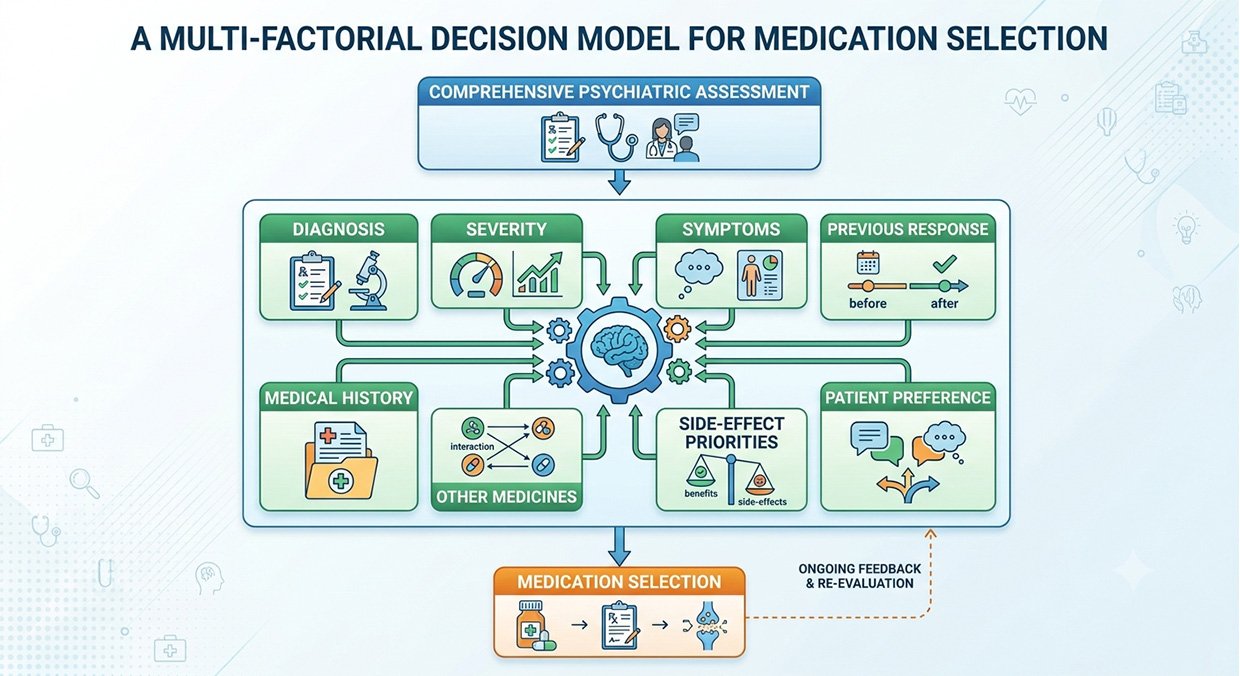
Depression medications include drugs that help in the reduction of symptoms associated with the occurrence of depressive disorders. Antidepressants form the bulk of medications used in depression. The selection of medication depends on the patient’s presentation, severity of the condition, past experiences with medication, other medical and psychological problems, side effects, interactions, and treatment preferences.

- Antidepressant medication
- Combined medication and psychotherapy
- Psychotherapy
- Brain-stimulation treatments in selected circumstances
- CBT
- Lifestyle and behavioural interventions
When is Medication considered for Depression?
The use of medication can be suggested when there is evidence of serious depression, whether persistent or recurrent, or when there are symptoms of impairment, or where the pros of using the medication far exceed the cons. In some instances, therapy may be started first, whereas in other cases, the use of medication may be included in the initial treatment approach.
This would depend on various factors.
Severity
The likelihood of medication being used increases if there is moderate or severe depression where symptoms cause substantial impairment.
Functional Impairment
Examples include difficulty:
- Working
- Studying
- Maintaining relationships
- Sleeping normally
- Caring for oneself
- Completing daily responsibilities
Patient Preference
The patient’s choice and health situation should be taken into account.
Previous Episodes
A history of recurrent depressive episodes may influence the treatment decision.
Previous Treatment
The psychiatrist could take into account:
- What medicines were previously used
- Whether they caused adverse effects
- Whether they helped
- Whether an adequate treatment trial was completed
Important Distinction
Mild Depression Does Not Automatically Mean "No Medication"
Likewise:
Severe Depression Does Not Necessarily Mean "Medication Alone"
An Individual Approach to Treatment is Important.
Psychotherapy can be used for patients with milder forms of depression. Medication, together with therapy in some cases, can be included in the treatment plan of patients with moderate or severe depression.
What types of medicines are used for Depression?
Antidepressants have been described as the most commonly used medication in the treatment of depressive disorder. Types of antidepressants include the SSRIs, SNRI, and other types of antidepressants having different pharmacological effects; at times, tricyclic antidepressants or MAOI have been found useful.
Major Antidepressant Groups
| Medication Class |
General Description | Clinical Consideration |
|---|---|---|
| SSRIs | Work on increasing serotonin signalling via serotonin reuptake inhibition |
Frequently considered initial therapy in many cases of depression |
| SNRIs | Work on both serotonin and norepinephrine signalling | May be helpful depending on specific symptomology or conditions |
| NDRIs | Primarily affect norepinephrine and dopamine pathways | May be appropriate for selected patients |
| TCAs | Older antidepressants with broad range of pharmacological actions | Effective but mostly linked with greater incidence of side effects |
| MAOIs | Older antidepressants with impact on monoamine metabolism | Applicable selectively due to interactions and dietary/medication considerations |
| Other antidepressants | Mechanisms vary widely | Based on the specific clinical circumstances |
Important
It would be unwise to make this a listing of all the antidepressants available in India. The detailed drug-specific information should eventually sit under:
Antidepressants Explained
That page can cover medication classes and individual medicines in greater depth.
How are Depression medicines different from each other?
Various types of antidepressants affect similar yet different neurotransmitter systems and may have varying impacts on the person. The choice of the optimal antidepressant cannot be determined solely by depression.
Symptom Profile
For example:
- Sleep disturbance
- Anxiety
- Fatigue
- Appetite changes
- Poor concentration
- Agitation
Side-Effect Profile
Different medicines may have different effects on:
- Sleep
- Appetite
- Gastrointestinal symptoms
- Sexual functioning
- Energy
- Weight
Previous Response
If a specific drug proved effective in treating a prior episode of depression, that fact may shape future treatment choices.
Medical Conditions
The psychiatrist needs to consider relevant physical health conditions.
Other Medicines
Drug interactions can influence medication selection.
Other Psychiatric Conditions
Depression can occur alongside:
- Anxiety disorders
- OCD
- ADHD
- Substance-use disorders
- Bipolar disorder
How is Depression medication different from Psychotherapy?
There is medication, and there is psychotherapy; these are two treatment methods that can be considered in the management of depression. The first one uses pharmacological effects, while the second one deals with the patterns of thoughts, behavior, emotions, interpersonal relationships, and coping of a patient.
| Depression Medication |
Psychotherapy |
|---|---|
| Pharmacological treatment | Psychological treatment |
| Prescribed by an appropriate medical professional | Delivered by a trained mental health professional |
| Targets symptoms through medication effects |
Works through psychological and behavioural mechanisms |
| Requires medication monitoring | Requires therapy sessions and active participation |
| Can be used alone in some situations |
Can be used alone in some situations |
| May be combined with therapy | May be combined with medication |
Can Depression Medication and Therapy be used together?
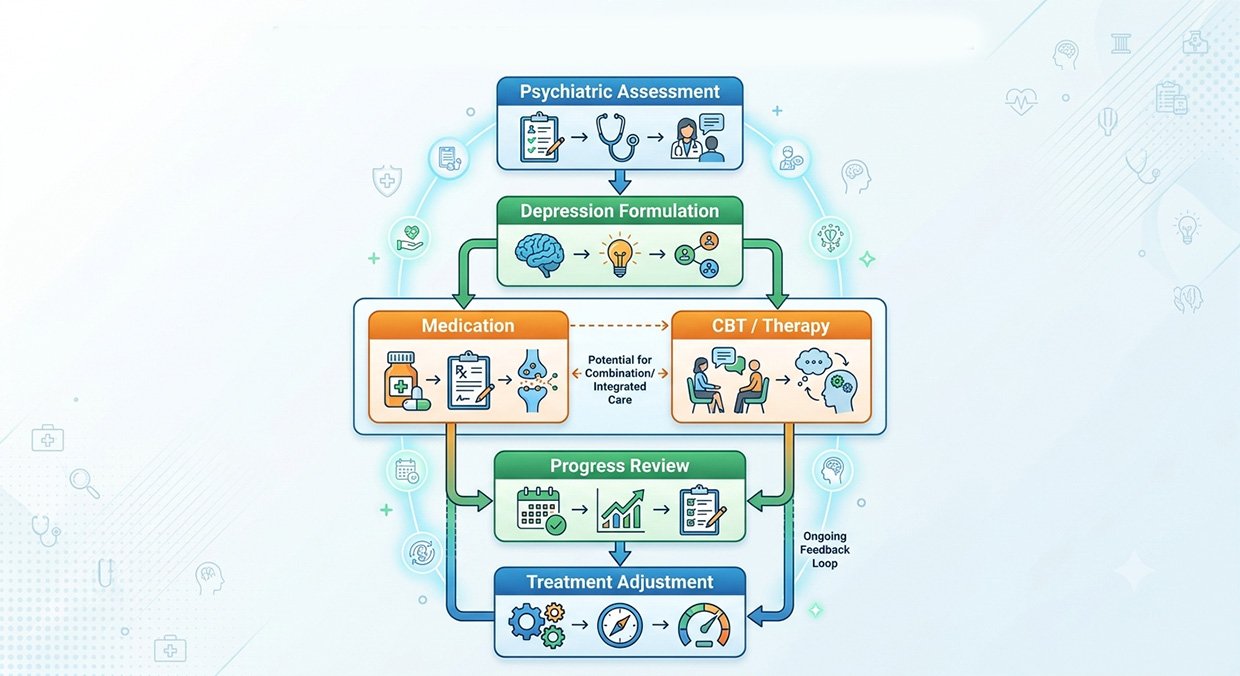
Yes. Medicine and therapy can be used together if medically necessary. Combining both approaches is especially important in cases where the depressive symptoms are severe, recurring, functional impairment is present, and/or where there is a need to address psychological and behavioral issues along with the symptoms.
- Negative thinking patterns
- Behavioural withdrawal
- Avoidance
- Relapse prevention
- Coping
- Relationships
- Stress
How long do Antidepressants take to work?
Antidepressants normally take some time before they reach their full effect. According to the information provided by the National Institute of Mental Health, it usually takes 4 to 8 weeks for them to start working, although the process may be individual and the time required can vary for different symptoms.
Early changes may involve
- Sleep
- Appetite
- Energy
- Concentration
- Mood
- Interest
- Motivation
Clinical Pearl
Feeling no better or feeling only slightly improved after a few days is not necessarily a sign that an antidepressant medication is ineffective.
However, experiencing worsening symptoms needs to be communicated to the prescribing physician and not just ignored.
Is there one best Depression medication?
No. It is important to point out that there is not any particular antidepressant that would be considered the most effective in the treatment of depression for all patients. The selection of an appropriate drug is different for each particular patient depending on several factors.
What This Means For Patients
Can Depression Medication Be Used Without Therapy?
Yes, medication may be used without psychotherapy in some clinical circumstances. However, whether medication alone is appropriate depends on the severity and characteristics of depression, patient preferences, previous treatment, availability of therapy, and other clinical factors.
For some patients:
Medication → appropriate initial treatment
For others:
Psychotherapy → appropriate initial treatment
This should be personalized.
And for some:
Medication + psychotherapy → preferred approach
Can Depression be treated without medication?
Yes. Medications do not form the only evidence-based treatment approach for dealing with depression. Psychotherapy may work in some cases, and there are other alternatives that can be considered based on the seriousness of the situation. Some patients may prefer psychological treatment or may have reasons why medication is not suitable.
Treatment Decision Table
| Clinical Situation | Possible Approach |
|---|---|
| Mild depression | Psychological treatment may be considered. |
| Moderate depression | Therapy via medication or psychotherapy |
| Severe depression | Medication is one of the methods used in treating the condition; therapy may also be included. |
| Recurrent depression | Possible long-term treatment planning. |
| Inadequate response | Reassessment and treatment adjustment |
| Treatment-resistant depression | Other special approaches may be explored. |
| Significant suicide risk | Clinical evaluation is urgently needed. |
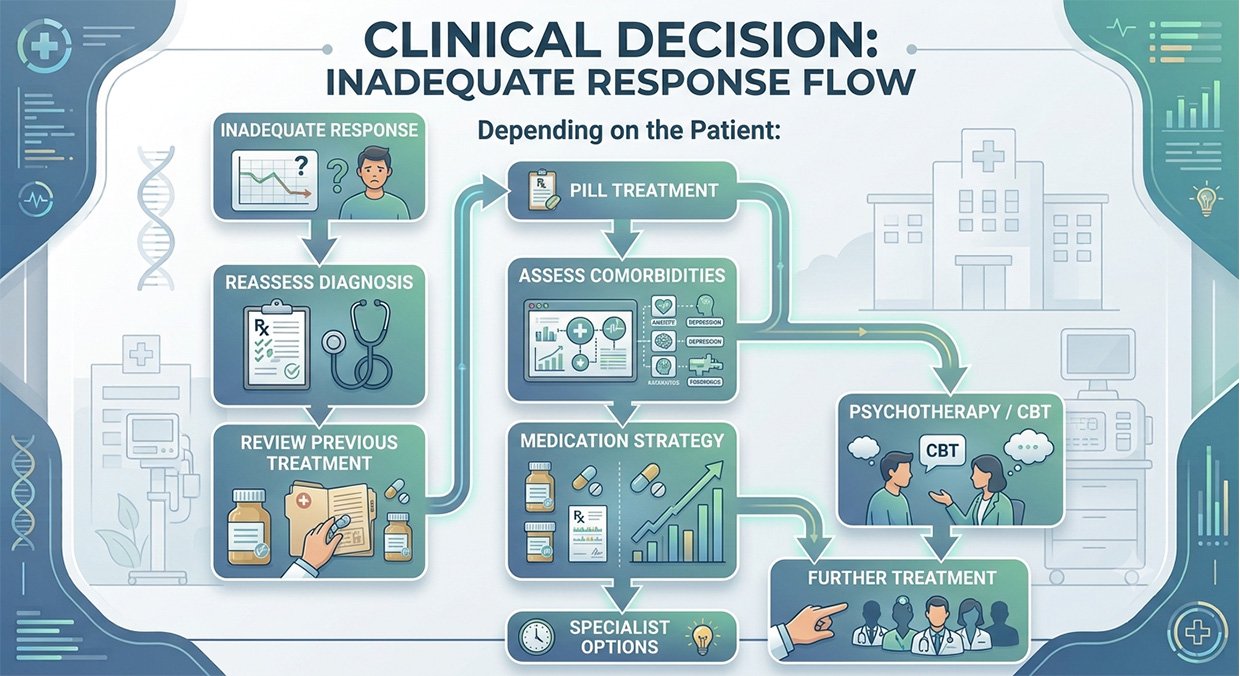
What if the first Antidepressant does not work?
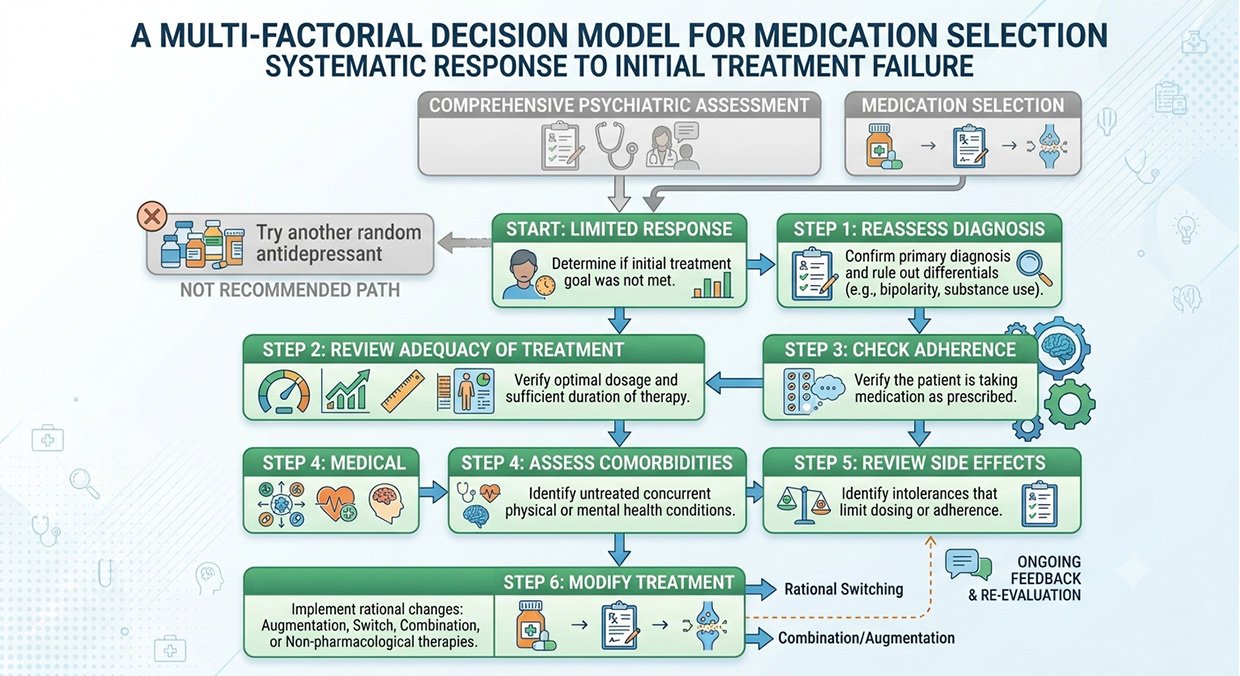
Inadequate response to antidepressants is not a reflection of the inability to treat the problem. There are various other measures such as reconsideration of the diagnosis, duration or adherence to medication, presence of other mental or medical illness, dose or medication change, introduction of psychotherapy and other forms of treatment.
Does Depression medication mean you will need it forever?
No. Depression management with the use of medication is done for different periods of time depending on the diagnosis, the number of previous episodes, recurrence risks, medication response, side effects, among other factors. Medication should be continued, reduced, changed, or stopped after discussion with the psychiatrist and not just spontaneously by the patient.
Important Safety Principle
Never stop the prescribed antidepressants suddenly without discussing with the prescribing doctor.
According to NIMH, sudden discontinuation of a psychiatric drug is a risky matter and requires careful consideration with the help of a healthcare practitioner.
What are the main types of Antidepressants?
These are various types of drugs that are collectively known as antidepressants. The common types of antidepressants include the following; SSRIs which are selective serotonin reuptake inhibitors, SNRIs which are serotonin-norepinephrine reuptake inhibitors and finally NDRIs which are norepinephrine-dopamine reuptake inhibitors. There may be other types of drugs under certain conditions.
Major Classes
| Class | Examples* | General Pharmacological Action |
Common Clinical Considerations |
|---|---|---|---|
| SSRIs | Sertraline, Escitalopram, Fluoxetine, Paroxetine, Fluvoxamine |
Main mechanism on serotonergic system | They are typically prescribed; they are well tolerated |
| SNRIs | Venlafaxine, Duloxetine, Desvenlafaxine |
Action through serotonin and norepinephrine systems | Would be helpful if some specific symptoms are there |
| NDRI | Bupropion | Mechanism of action on norepinephrine and dopamine | Unique set of side-effects compared to SSRIs and SNR |
| TCAs | Amitriptyline, nortriptyline, clomipramine |
Target multiple neurotransmitter systems | Effectively treat depression |
| MAOIs | Phenelzine, tranylcypromine and others | Monoamine oxidase inhibitors | Interactions and food/drug precautions |
| Other antidepressants | Mirtazapine and others |
Varies according to medication | Selection depends on clinical circumstances |
What are SSRIs and why are they commonly used?
SSRIs are antidepression medicines whose effectiveness has been tested to increase the serotonin signal transmission among neurons. The SSRIs are widely used in the treatment of depressions and anxiety disorders. The rationale behind the selection of the SSRIs is their efficiency and relatively mild side effects in comparison with older anti-depressants.
Examples include
- Sertraline
- Escitalopram
- Fluoxetine
- Paroxetine
- Fluvoxamine
- Previous response
- Anxiety symptoms
- Sleep pattern
- Gastrointestinal sensitivity
- Sexual adverse effects
- Other medications
- Medical conditions
- Previous adverse effects
What are SNRIs and How are they different from SSRIs?
SNRIs are the abbreviation of serotonin-norepinephrine reuptake inhibitors, which influence serotonin and norepinephrine activities. Examples of these drugs include venlafaxine and duloxetine. They are used to treat depression; however, some patients may use them for anxiety disorders and other medical conditions as well.
SSRI vs SNRI
| Feature | SSRI | SNRI |
|---|---|---|
| Neurotransmitter Systems | Serotonin | Combination of serotonin and norepinephrine |
| Depression | Common indication | Common indication |
| Anxiety disorders | Frequently used | Frequently used |
| Choice depends on | Clinical profile | Clinical profile |
| Monitoring | Response and adverse effects | Response, adverse effects, and special medication aspects |
What are other Antidepressants used for Depression?
Different types of antidepressants have other pharmacological actions and can be used if an SSRI or an SNRI is inappropriate or ineffective, or has adverse effects. The drugs include bupropion and mirtazapine, and other options could be TCAs and MAOIs.
NDRIs
The bupropion is another antidepressant drug with pharmacological action different from that of the SSRIs and SNRIs drugs.
This may become clinically important when a psychiatrist thinks about:
- Previous medication response
- Adverse effects
- Particular symptom patterns
- Drug interactions
- Patient preference
Mirtazapine
Mirtazapine has another pharmacological action altogether and can be used in certain cases.
Considerations for prescribing could include:
- Sleep
- Appetite
- Weight
- Other medications
- Previous treatment
Tricyclic Antidepressants
TCAs are older but effective antidepressants.
MAOIs
MAOIs are another older antidepressant group.
They can be effective but require careful attention to:
- Drug interactions
- Food interactions
- Switching protocols
- Clinical monitoring
NICE guidelines have put particular emphasis on the need for specialized management of some MAOI medications and the need to take into consideration the risk of drug overdose toxicity.
How does a Psychiatrist choose an Antidepressant?
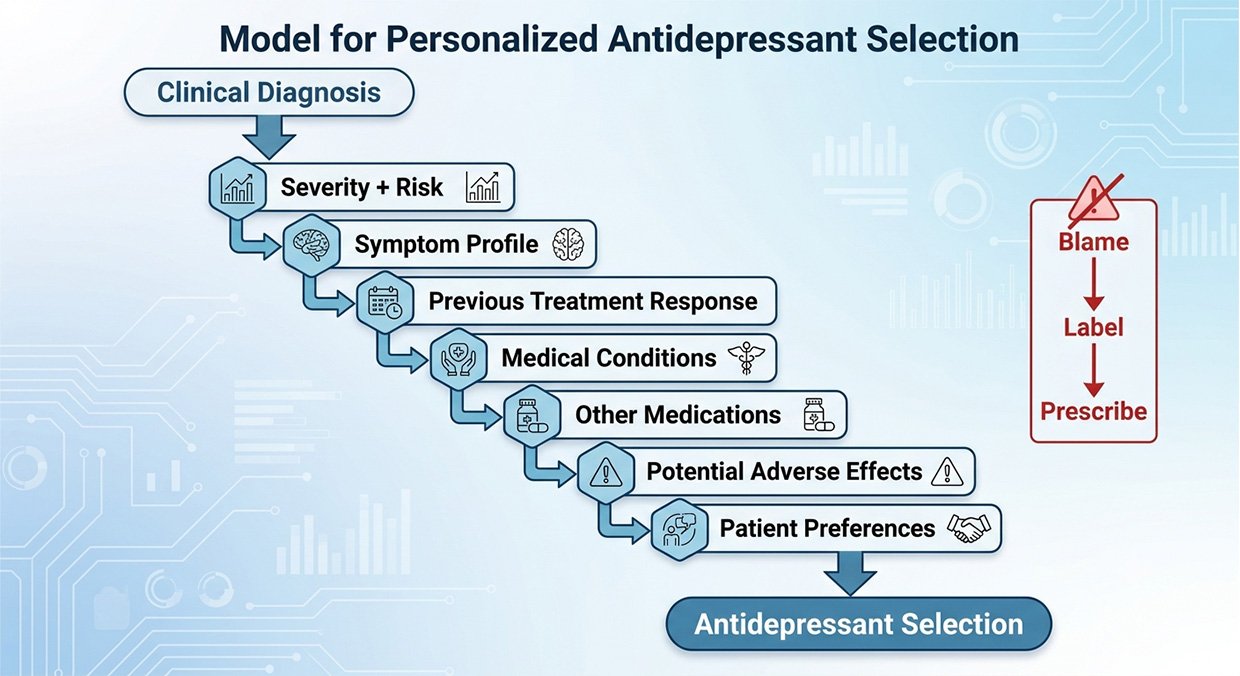
There is no ideal antidepressant for all individuals. This is because medication choice is a process of weighing the pros and cons associated with it by considering individual’s symptoms, past experience, medical background, concurrent medication, psychiatric disorder, suicidal risk, logistics, and personal considerations.
Factors That Can Change The Choice
1. Previous Response
If the medicine was beneficial in previous episodes and also well-tolerated, this data might prove useful for clinical purposes.
3. Sleep
Insomnia or excessive sleep can influence the treatment discussion.
5. Anxiety
When depression occurs alongside significant anxiety, medication selection may take both symptom clusters into account.
7. Medical Conditions
Relevant physical health conditions can affect medication selection and monitoring.
2. Previous Side Effects
A patient who experienced troublesome adverse effects with one medication may prefer an alternative with a different profile.
4. Appetite and Weight
Changes in appetite and weight can be clinically relevant when choosing among medications.
6. Other Psychiatric Conditions
The presence of:
- OCD
- Panic disorder
- ADHD
- Substance-use disorder
- Bipolar disorder
Why is it important to rule out Bipolar Disorder before starting an Antidepressant?
Depression may be associated with bipolar disorder; hence, it is necessary to determine whether there has been mania or hypomania at any point in time prior to the selection of treatment. Treatment of depression in patients with bipolar disorder may vary widely and therefore requires proper assessment.
Questions That May Be Important
- Unusually elevated or irritable mood
- Reduced need for sleep
- Increased energy
- Increased activity
- Rapid speech
- Racing thoughts
- Impulsive behaviour
- Unusual confidence
- Significant changes from usual functioning
How is an Antidepressant started?
Starting antidepressant treatment includes choosing the medicine, explaining possible benefits and adverse effects, determining the dosing schedule and subsequent follow-up. In some situations, the use of a reduced initial dose can be recommended, and further medication will depend on the reaction, tolerance, age, coexisting disorders, and the selected medicine.
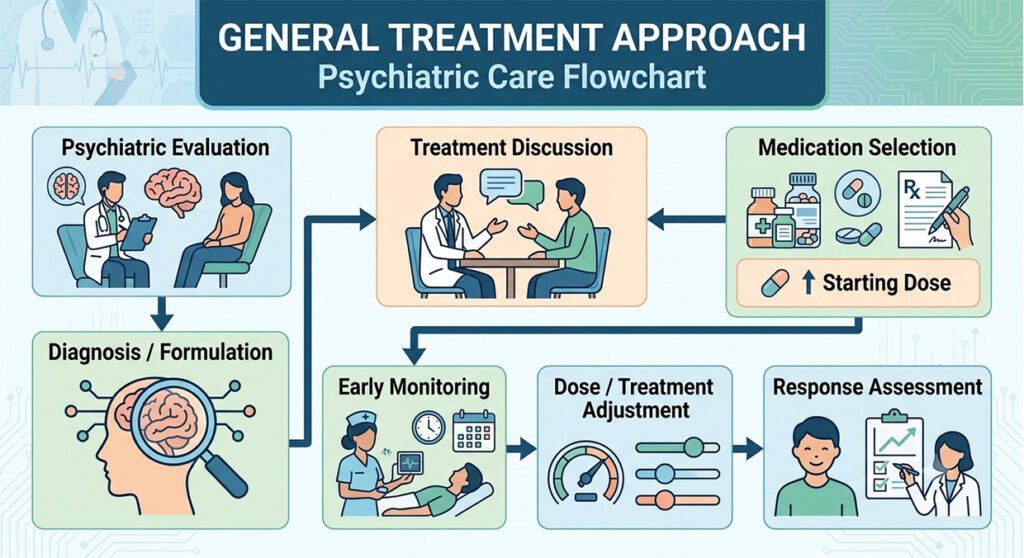
What Should Be Discussed Before Starting?
Expected Benefits
What symptoms is the medication intended to improve?
Side Effects
Which effects are common and which require medical attention?
Follow-Up
How often should the therapy be reviewed?
Time Course
When should improvement begin?
Interactions
What other drugs, herbs, or chemicals should be reported?
Does the Dose of an Antidepressant Stay the Same?
Certainly not. However, the initial dose can be varied depending on how the patient responds to the drug. In certain situations, patients may react favorably to low doses, while in other situations, it may require variation of the dose or even a change of medication.
Why Doses May Change
If Symptoms Are Improving
The clinician may continue the current treatment.
If Response Is Incomplete
The clinician may consider whether:
- More time is needed
- Dose adjustment is appropriate
- Another intervention should be added
- The diagnosis needs reassessment
If Side Effects Are Troublesome
Options may include:
- Dose adjustment
- Change in timing
- Slower titration
- Switching medication
How long should an Antidepressant trial continue before it is judged ineffective?
An antidepressant drug must be allowed enough time to prove its ineffectiveness in the treatment unless the patient experiences side effects or the patient's condition makes discontinuation mandatory at an early stage. "Antidepressants generally take about 4 to 8 weeks to act," states NIMH. There are numerous elements that determine the effectiveness of the treatment process, and dosage is one of them.
Why Patience Matters
Week 1
→ Side effects may appear before meaningful improvement.
Later
→ Mood and broader depressive symptoms may improve.
Early weeks
→ Sleep, appetite, or energy may begin changing.
Important
If symptoms become worse, there is suicidal ideation, or if side effects happen, the patient should contact the physician who will be treating them immediately.
What happens if an Antidepressant helps only partially?
In a partial response, the treatment has made some progress, and it does not necessarily imply that it has failed in achieving success. The psychiatrist might evaluate the need for more time, an adequate dosage, whether there is a need to introduce psychotherapy, the use of another medication strategy, or whether there is a problem with the diagnosis.
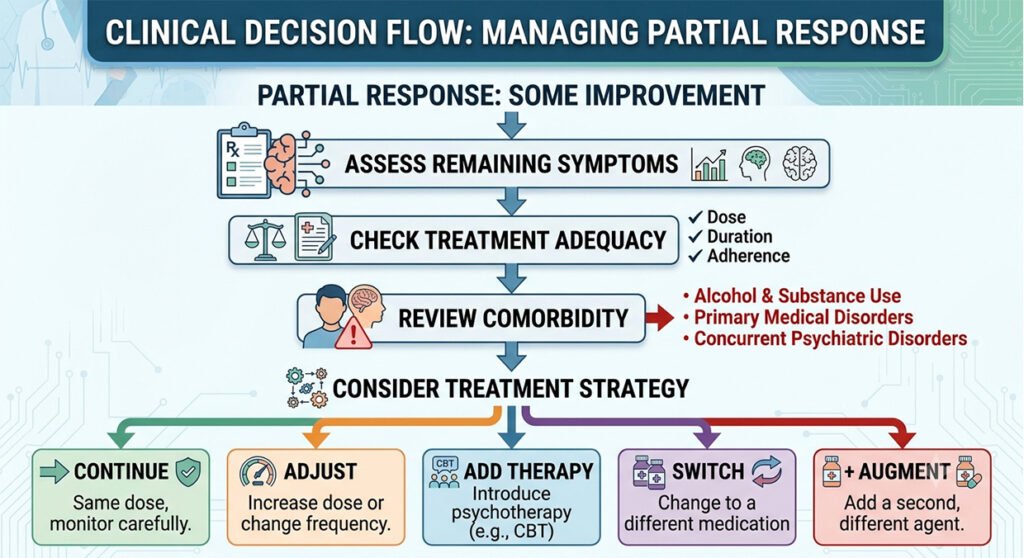
Important Distinction
Response
Symptoms have improved.
Remission
Symptoms have reduced substantially to a level consistent with remission criteria.
Recovery
Improvement is sustained over time with restoration of functioning.
These are not interchangeable terms.
What Is Antidepressant Augmentation?
Augmentation means adding another treatment to an existing antidepressant strategy when the initial treatment has produced insufficient improvement, but there is a reason to continue it. The other therapy might be a medicine or psychotherapy based on the clinical scenario. The concept of augmentation needs to be personalized and should be assessed for its pros and cons.
Possible Strategies
Continue + Psychotherapy
Medication + CBT
Medication Augmentation
Adding another medication with a specific clinical rationale.
Switching
Switching one antidepressant for another.
Reassessment
Questioning. whether the diagnosis or therapy is right.
When is Depression considered Treatment-Resistant?
Treatment-resistant depression is normally characterized by the persistence of depressive symptoms even after proper attempts to treat with the correct drugs. It does not occur when a particular drug fails. A practitioner might initially check the diagnosis, adherence, treatment length and dosage, comorbidity, substances, medical considerations, and adequacy of prior treatment.
What Happens Next?
- Switching antidepressants
- Combining treatments
- Adding psychotherapy
- Medication augmentation
- Specialist psychiatric review
- Certain brain stimulation therapies like rTMS or ECT under specific conditions
Can Antidepressants be used with other Medicines?
Certainly, antidepressants can be taken together with other medications; however, such a combination requires an assessment by a medical professional since medications might interact or have synergistic side effects. Patients are advised to disclose their full list of prescribed medications, non-prescribed medications, herbal medications and other substances to the prescriber before starting antidepressant therapy.
TELL YOUR DOCTOR ABOUT
- Prescription medicines
- OTC medicines
- Herbal supplements
- St John's wort
- Migraine medicines
- Pain medicines
- Sleep medicines
- Other psychiatric medicines
- Alcohol or recreational substances
Can Depression Medication Be Combined With rTMS?
In some people, rTMS can be used with medications as part of a wider treatment program, especially when depression has been resistant to treatment. The use of medication, changes to medication, or using rTMS with medication is decided according to a patient’s psychiatric history.
Depression Medication Guide
→ explains medication
while:
rTMS for Depression
→ explains the neuromodulation treatment itself.
What happens if Depression Medication stops working?
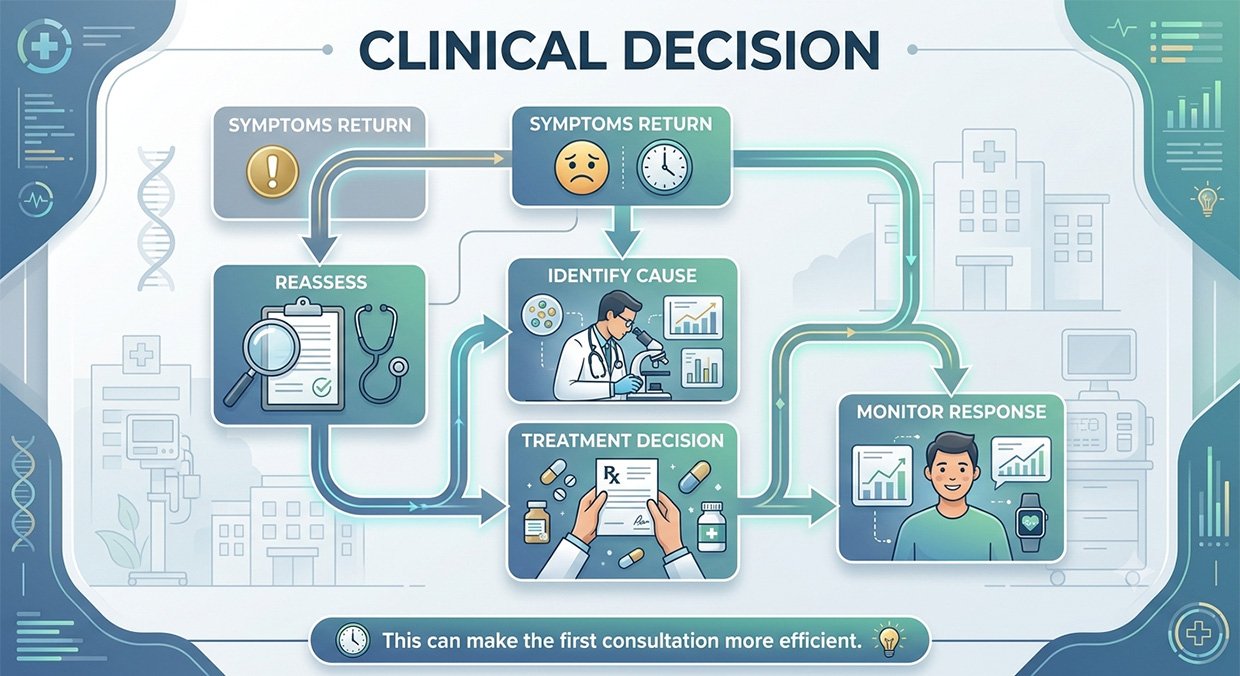
In situations where there was once effectiveness of the treatment, but effectiveness fades, the first thing that will likely occur is reassessment before taking any other steps. These may include factors like compliance of the patient, new stresses, or even the reappearance of depression.
Possible Explanations
Recurrence
The depressive disorder may have returned.
New Stressors
Major changes in:
- Work
- Relationships
- Health
- Sleep
- Substance use
- may contribute.
New Comorbidity
For example:
- Anxiety
- Bipolar disorder
- Substance use
- ADHD
Medication Issues
Including:
- Missed doses
- Drug interactions
- Changes in other medications
- Treatment intolerance
What side effects can Antidepressants cause?
The side effects associated with the use of antidepressants vary depending on the medication used, dosage, the individual’s tolerance to the medication, and the other medications used by the individual. The side effects include nausea, stomach disorders, headache, insomnia, dizziness, agitation, or sexual issues. Most side effects tend to diminish with time; however, persistent and problematic side effects must be reported to the prescribing healthcare professional.
Possible side effects may be
- Nausea or gastrointestinal discomfort
- Headache
- Dizziness
- Sleepiness
- Insomnia
- Restlessness or agitation
- Changes in appetite
- Sexual difficulties
- Changes in weight, depending on the medication
- Other medication-specific effects
Do Antidepressants cause sexual side effects?
Yes. Side effects relating to sex are possible in some antidepressants, and these may manifest as loss of libido, problems achieving orgasms, and other issues related to sex. These side effects affect different people in different ways. It is important that the patient discuss any such issues with their psychiatrist, as these side effects may be curable.
- Depression itself
- Other medical conditions
- Anxiety
- Other medications
- Relationship difficulties
- Antidepressant treatment
If sexual side effects occur
- Monitoring over time
- Treating other contributing factors
- Dose-related factors
- Adjusting the treatment strategy
- Switching medication
Can Antidepressants Affect Sleep?
Yes. Various types of antidepressants have different impacts on sleep. They may either cause drowsiness or lead to insomnia and restlessness. Sleep disturbances may also be associated with the disease itself, and that’s why the psychiatrist takes into consideration not only the medication but the disease as well.
- Has sleep improved?
- Are you sleeping more?
- Are you having difficulty falling asleep?
- Are you waking frequently?
- Do you feel drowsy during the daytime?
Can Antidepressants affect appetite or weight?
Some antidepressants could affect one’s appetite or body weight; however, the differences can vary among drugs and patients. Depression could affect a person’s body weight or appetite as well. If body weight or appetite changes are clinically significant, these aspects could be taken into account by the psychiatrist while choosing medication.
- Obesity
- Diabetes
- Metabolic conditions
- Significant appetite changes
- Eating-related concerns
Can Antidepressants initially make you feel more restless or anxious?
Patients can experience some signs of restlessness, irritability, agitation, and insomnia when taking their first dose of antidepressants, typically in the early stages of treatment. These should be immediately reported to the attending physician, particularly if they are very persistent, and if they come with issues of mood disturbance or suicidal ideation.
Expected early discomfort
Some side effects may be temporary.
Clinically important deterioration
Agitation, deteriorating depression, abnormal behaviour, or suicidality necessitates urgent clinical attention.
Can Antidepressants increase suicidal thoughts?
The management of depression through the use of antidepressants should be done through proper monitoring for any worsening cases of depression or suicidal tendencies especially at the onset of treatment. The connection between antidepressants and suicide is not straightforward as it depends on age and circumstances.
- Adolescents and young adults
- People with significant suicidal ideation
- Early treatment
In cases where suicidal thoughts escalate to a point of risk
This is no longer a routine medication question.
- Medication changes
- Severe or rapidly changing depression
Immediate assessment by a psychiatrist or doctor is needed.
What is Serotonin syndrome?
Serotonin syndrome is not a common disorder but poses a risk to patients, as it develops due to the overactivity of the serotonergic system. It may be caused by serotonergic drugs. Symptoms include agitation, disorientation, sweating, shaking, muscle changes, fever, and changes in heart rate. Serotonin syndrome should always be investigated medically.
- Some antidepressants
- Certain migraine medicines
- Some pain medicines
- Certain other psychiatric medicines
- Some supplements, including St John's wort
Can Antidepressants interact with other medicines?
Serotonin syndrome is not a common disorder but poses a risk to patients, as it develops due to the overactivity of the serotonergic system. It may be caused by serotonergic drugs. Symptoms include agitation, disorientation, sweating, shaking, muscle changes, fever, and changes in heart rate. Serotonin syndrome should always be investigated medically.
Tell Your Psychiatrist About
| Category | Examples |
|---|---|
| Prescription medicines | All regular medications |
| OTC medicines |
Painkillers, cold medicines, etc. |
| Supplements | Herbal or nutritional products |
| Psychiatric medicines | Antidepressants, mood stabilizers, etc. |
| Migraine medicines | Certain triptan medicines |
| Substance use | Alcohol and recreational substances |
Particularly important
Tell your psychiatrist if you take:
St John's wort
because it can interact with several medicines.
Should Antidepressants be taken at the same time every day?
The regular use of the medication according to the prescription is important for many antidepressants as a way of maintaining a stable schedule of therapy. The proper schedule depends on the particular drug and the reaction to it. For instance, some drugs are more suitable for morning consumption, whereas others are better consumed in the evening.
- Whether the medication is working
- Whether side effects are medication-related
- Whether symptoms are returning
- Whether treatment has been adequate
What Should I do if I miss an Antidepressant dose?
However, the right thing to do in the event of a missed dose is to determine the type of medication and the time elapsed since the supposed administration of the medication. In addition, the directions that came with the medication have to be followed, or one should consult a pharmacist or a prescribing practitioner.
On the live page
We should direct patients to: Check the prescription information of the drug or talk to the prescriber/ pharmacist.Can Antidepressants cause dependence?
It should be noted that antidepressants cannot be called addictive drugs since there is no addiction to this type of medication like for other types of drugs that lead to compulsion or intoxication. Nevertheless, some antidepressants can cause withdrawal symptoms. This is one reason medication reduction should generally be planned with the prescriber.
Addiction
Usually involves patterns such as:
- Craving
- Loss of control
- Compulsive use
- Continued use despite harm
Discontinuation
This may happen due to abrupt reduction or discontinuation of certain antidepressant drugs. However, both are different from each other.
What Happens When You Stop an Antidepressant?
Sometimes, discontinuation effects can occur if one stops taking antidepressants, especially if he/she does so suddenly or quickly. These effects range from dizziness, nausea, insomnia, agitation, sensory problems, or flu-like effects. A slow taper should be considered in place of abrupt cessation.
Tell Your Psychiatrist About
- Dizziness
- Anxiety
- Flu-like feelings
- Nausea
- Sleep disturbance
- Sensory disturbances
- Headache
- Irritability
- Mood changes
Important
Do not stop taking an antidepressant if you feel better suddenly. Discuss the matter with the prescribing doctor.
How are Antidepressants safely discontinued?
However, the medications to treat depression are usually gradually decreased in cases of withdrawal symptoms; nonetheless, this tapering process is determined by such factors as the type of medication, dosage, length of the treatment, withdrawal experience before, and so forth. Different individuals may have different rates of tapering required.
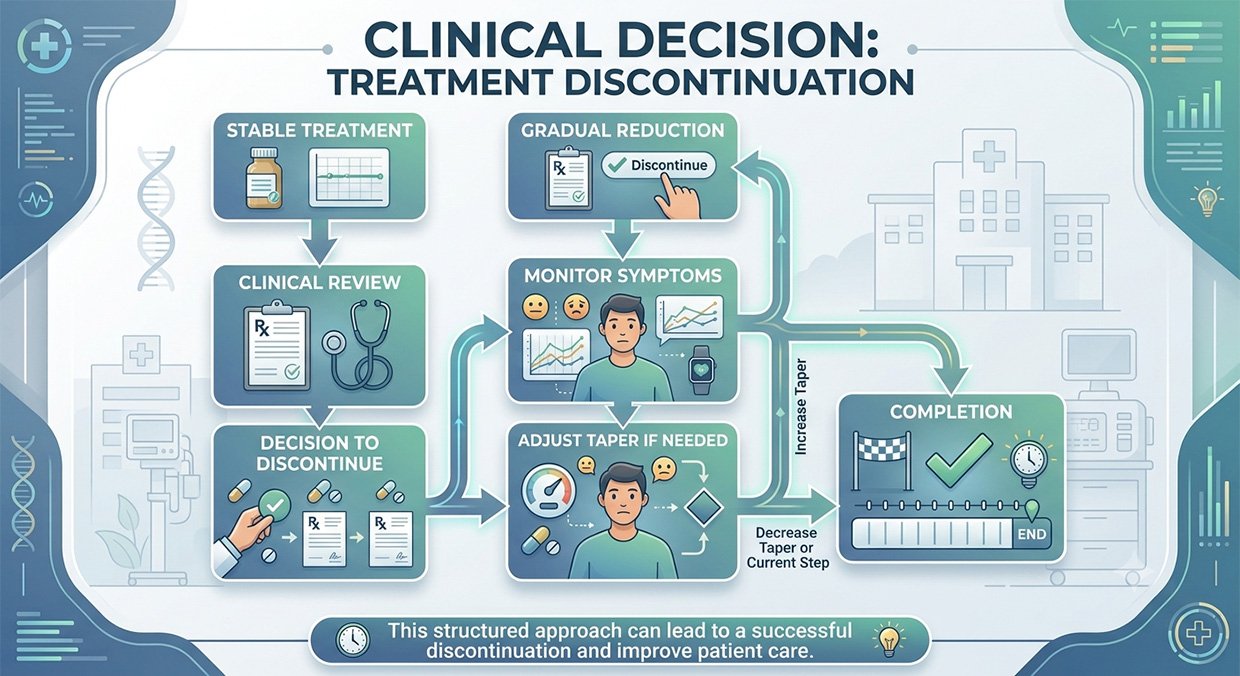
discontinuation symptoms
from:
return of depression.
These can sometimes feel similar, which is another reason clinical supervision is useful.
How long do people usually stay on Antidepressants?
Duration of antidepressant treatment depends on the individual’s diagnosis, severity of symptoms, recurrence pattern, response, likelihood of relapse, side effects, and individual preference. Individuals who have recovered may only require a limited duration of treatment, while other individuals suffering from recurrent or ongoing depression can benefit from prolonged treatment and reassessment.
Number of Previous Episodes
Previous episodes can justify the need for prolonged treatment.
Recurrence
Frequent recurrence may influence maintenance decisions.
Patient Preference
Treatment decisions should involve informed discussion rather than an automatic duration for everyone.
Severity
Severity of previous episodes can justify the duration of the treatment.
Previous Discontinuation
Should symptoms continually recur following cessation of medication, then long-term therapy may be considered.
What is maintenance treatment for Depression?
Maintenance therapy is intended to lower the chances of any further episodes of depression following remission. This therapy may be through ongoing use of antidepressants, psychotherapy, relapse prevention techniques, or any combination of these, depending on the individual's predisposition for recurrence.
Maintenance Treatment May Include
- Medication review
- Psychotherapy where appropriate
- Follow-up appointments
- Monitoring early warning signs
- Managing stressors
- Relapse-prevention planning
- Sleep and routine management
- Substance-use review
Do older adults need different Depression Medication Considerations?
Yes. There is a need to have extra care for the health of the elderly concerning the health condition, interactions with other drugs, renal or hepatic function, falls, cognition, and adverse drug reaction sensitivity. The elderly can be using several medications at once, making it essential to check for interactions.
- Polypharmacy
- Cognitive symptoms
- Other medical conditions
- Cardiovascular health
- Kidney function
- Falls
- Liver function
Can Depression Medication be used during pregnancy or breastfeeding?
Depression in pregnancy and/or postpartum necessitates an individual approach since both the lack of depression treatment and drug use can be crucial factors. The decision to use antidepressants during pregnancy or while breastfeeding must take into account the particular type of the drug, dose, pregnancy stage, patient's reaction to prior treatment, degree of severity, and plans for breastfeeding.
What about Depression Medication in Adolescents and Young Adults?
Medications for young individuals need to consider factors such as age, diagnosis, development, suicidal ideation, family involvement if needed, and post-treatment monitoring. When prescribing antidepressants to children or adolescents, guidelines based on age and expert evaluation must be considered.
What If Depression medication makes me feel better but I still have symptoms?
Partial improvement can be considered as an essential sign of treatment response, yet the presence of some persistent signs suggests that further assessment of the treatment process should be conducted. Thus, the psychiatrist could evaluate whether the extra time should be considered, or whether any changes concerning the dose or medication or even psychotherapy should be made.
Think Beyond "Better Or Not Better"
No response
Little or no meaningful improvement.
Response
Meaningful improvement.
Recovery
Improvement is sustained and functioning has been restored over time.
Partial response
Some symptoms improve, but clinically significant symptoms remain.
Remission
Depressive symptoms have reduced to a minimal or absent level according to clinical assessment.
When should I contact my Psychiatrist about an Antidepressant?
Contact your healthcare provider if you are experiencing side effects that are bothersome, if you have worsening symptoms, new psychiatric symptoms emerge, difficulty taking the medication, or concerns regarding interactions, dose adjustments, pregnancy, drug use, and withdrawal. It is imperative to get assessed immediately if there is any risk of harm or significant deterioration.
Contact Your Clinician About
- Significant side effects
- Worsening depression
- New suicidal thoughts
- New medicines
- Severe agitation
- Major sleep changes
- New unusual behaviour
- Alcohol or substance use
- Difficulty taking medication
- Missed doses
- Pregnancy
- Desire to stop medication
When is Emergency Psychiatric help needed?
Emergency evaluation is indicated where there is an immediate risk of suicide or self-harm, an immediate risk of hurting someone else, confusion, extreme behaviour, psychosis, or other cases where it would not be possible to keep the patient safe. These instances call for urgent treatment rather than waiting for the routine review of the medications.
Seek urgent help for
- Immediate suicidal intent
- Imminent risk to another person
- Severe confusion
- Severe intoxication or withdrawal
- Serious suicide attempt
- Severe psychosis affecting safety
- Serious medication reaction
- Severe self-harm
- Extreme agitation
- Suspected serotonin syndrome
Patient Safety Checklist
Before Starting Medication
- Tell the psychiatrist about previous medication
- Provide current medication list
- Mention allergies or previous adverse reactions
- Tell the clinician about medical conditions
- Mention supplements and herbal products
- Discuss alcohol/substance use where relevant
- Discuss pregnancy/breastfeeding where relevant
- Ask when follow-up should occur
During Treatment
- Take medication as prescribed
- Monitor response
- Report troublesome side effects
- Attend scheduled reviews
- Tell the clinician about new medicines
- Discuss worsening symptoms promptly
Before Stopping
- Discuss the reason for stopping
- Review relapse risk
- Plan a taper if appropriate
- Understand possible discontinuation symptoms
- Know when follow-up is needed
What if Antidepressants do not work?
If the patient responds inadequately to the use of an antidepressant drug, the course of action is typically that of reassessment, as opposed to trying out any medication randomly. In the case of such failure, the psychiatrist will evaluate all aspects relating to the nature of the diagnosis, the length of treatment, dosage, adherence, concomitant conditions, etc.
The diagnosis may need review.
- Bipolar disorder
- Anxiety disorders
- ADHD
- Substance-use disorders
- Sleep disorders
- Medical conditions
The treatment may not have been adequate
The clinician may review:
- Duration
- Dose
- Adherence
- Tolerability
- Drug interactions
Other factors may be maintaining symptoms.
These can include:
- Chronic stress
- Sleep disturbance
- Substance use
- Relationship difficulties
- Physical illness
What is Treatment-Resistant Depression?
Treatment-resistant depression is usually considered to be depression which has failed to respond sufficiently despite an appropriate course of treatment. One commonly accepted definition of treatment-resistant depression is a lack of sufficient response to at least two trials of antidepressant treatment; however, there are many definitions. Prior to labeling someone with treatment-resistant depression, it is important to consider various issues.
Possible Next Steps
What treatments can be considered when Depression does not respond to medication?
When the response to antidepressant therapy is inadequate, possible approaches may include medication switch, psychotherapy, combination therapy, medication augmentation, or even specialist approaches like rTMS or ECT depending on certain situations. The best follow-up approach would depend on the level of depression, past treatment, risk, comorbid conditions, and patient's preference.
1. Optimize the Existing Treatment
Clinically feasible, the psychiatrist may evaluate if there was enough trial for the present therapy.
3. Add Psychotherapy
CBT or another evidence-based psychological treatment may address residual symptoms or maintaining factors.
5. Consider Brain-Stimulation Treatment
However, for some chosen patients, options like rTMS or ECT might be viable.
2. Switch Antidepressants
A different antidepressant may be considered.
4. Augment Treatment
A second treatment may be added when there is a clinical rationale.
When is rTMS considered for Depression?
Repeated Transcranial Magnetic Stimulation (rTMS) is a non-invasive form of brain stimulation therapy and can be used in some patients with depression, especially when conventional therapy has not led to any improvements or has been ineffective. Suitability for rTMS requires evaluation by a psychiatrist and is determined by the individual patient’s clinical picture and treatment experience.
- It does not require general anaesthesia.
- It uses magnetic rather than direct electrical stimulation.
- It is provided in outpatient treatments within proper clinical environments.
rTMS Should Not Be Described As:
❌ A replacement for every antidepressant
❌ A guaranteed treatment
❌ Appropriate for every patient
❌ A treatment that works immediately for everyone Instead:
rTMS is one evidence-based option that may be considered after appropriate clinical assessment.
Can Antidepressants Be Continued During rTMS?
In some patients, antidepressant medication and rTMS are used together. Whether medication is continued, modified or stopped during rTMS depends on the individual's treatment history, clinical response, tolerability and psychiatric assessment. Medication decisions should be coordinated with the treating psychiatrist rather than changed independently.
How does Headspace Mind Clinic approach Depression Medication Treatment?
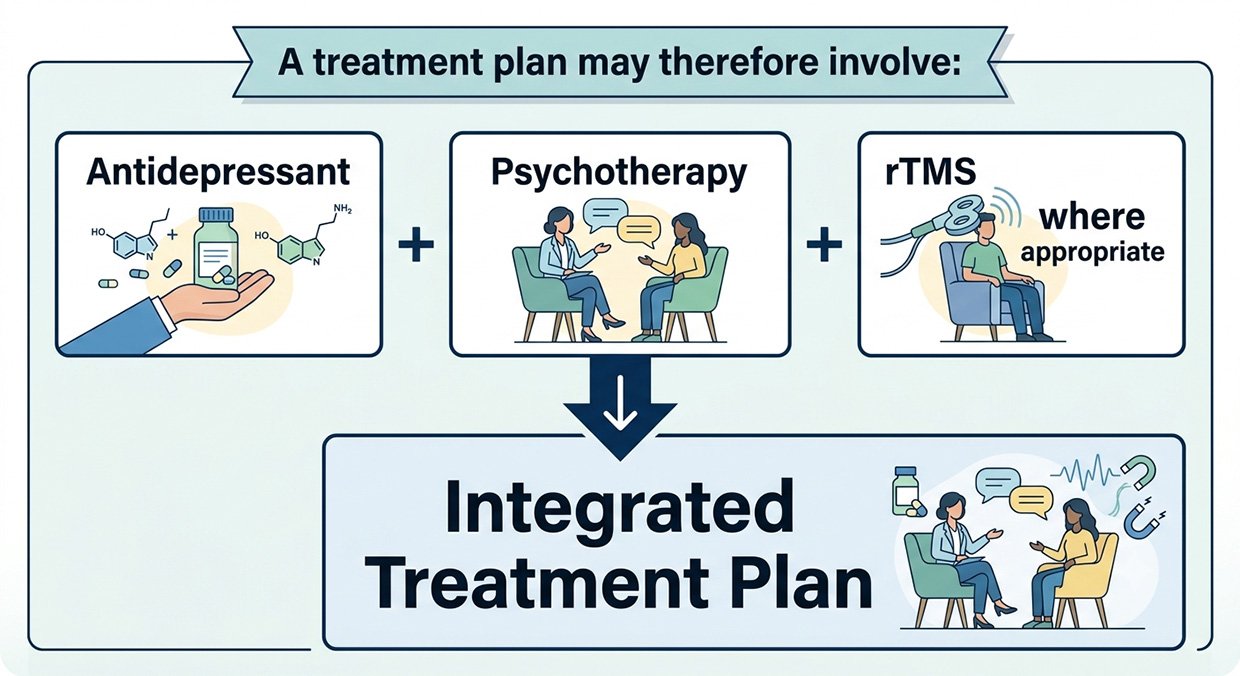
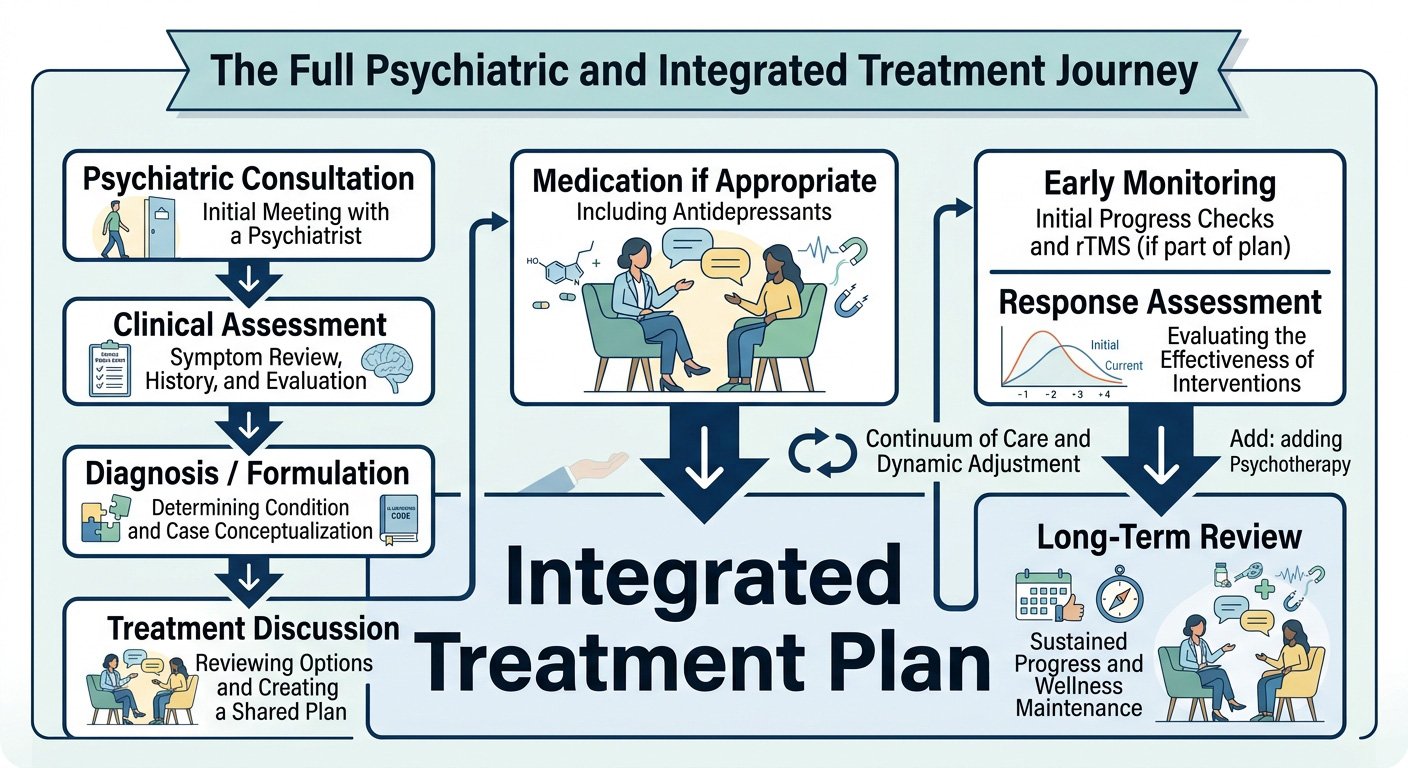
Medication management is achieved through psychiatric evaluation, individualized choice of medication, assessment of its effects and any side effects, and evaluation of the management process after an extended period. Psychiatric treatment can also work in conjunction with therapy or other evidence-based treatment options like rTMS where applicable.
Headspace Care Pathway
The Principle
The goal is not simply: "Prescribe an antidepressant." The goal is: "Determine what treatment strategy is most appropriate for this person and review whether it is actually helping."
Who provides Depression Medication Treatment at Headspace?
Medication management for depression is offered via psychiatric assessment, during which the doctor will assess symptoms, diagnosis, medical history, past treatment and personal situations before recommending medication therapy. Psychotherapy and psychological assessment may also be coordinated if necessary.
Psychiatric care may include:
- Diagnostic assessment
- Medication selection
- Medication monitoring
- Side-effect review
- Treatment adjustment
- Relapse prevention
- Assessment of treatment resistance
Psychological care may include:
- CBT
- Psychotherapy
- Psychological assessment
- Relapse-prevention work
How often should Depression Medication be reviewed?
The follow-up will be determined based on the drug prescribed, the severity of depression, risk of suicide, phase of treatment, side-effects, and clinical response. According to NICE guidelines, it is advised that a review is made within 2 weeks of taking antidepressants, and within 1 week in individuals aged 18-25 years or with specific suicide risk.
Follow-up Changes Over Time
Early Treatment
Focus on:
- Side effects
- Emerging response
- Adherence
- Suicidal thoughts
- Worsening symptoms
Stabilization
Focus on:
- Degree of improvement
- Residual symptoms
- Functioning
- Medication tolerability
Maintenance
Focus on:
- Relapse prevention
- Continued need for treatment
- Long-term benefit
- Side effects
How Long Should Depression Medication Continue After Recovery?
Antidepressant duration after improvement depends on the person's risk of relapse and clinical circumstances. NICE advises that antidepressant treatment is typically continued for at least 6 months after remission, with regular review, while longer treatment may be considered when relapse risk is higher. The appropriate duration should be decided collaboratively with the prescribing clinician.
- Recurrent depression
- Persistent residual symptoms
- Previous treatment history
- Previous relapse after stopping medication
- Significant functional impairment
- Severe previous episodes
- Patient preference
What happens during a Depression Medication Consultation?
The initial stage of psychiatric drug evaluation entails identifying the symptoms of depression, the persistence, and effects of such symptoms on the individual’s functioning. The physician can consider previous medications taken, the physical health, the ongoing medications, sleep, substance abuse, suicidal tendencies, and the likelihood of bipolar disorder.
Consultation Flow
01 — Current Symptoms
What has changed?
03 — Prior Treatment
Which medications or treatments have been used previously?
05 — Diagnostic Assessment
Is this unipolar depression, bipolar depression, a different psychological disorder, or something else?
07 — Follow-Up
Review response, adverse effects and functioning.
02 — Clinical History
When did symptoms begin?
04 — Medical Review
Are there physical health factors or medication interactions to consider?
06 — Treatment Discussion
Medication, psychotherapy, combined treatment or other options.
What should I bring to a Depression Medication Appointment?
Take along a list of all your current and past medications, previous psychological reports or evaluations, your past medical history, and your reactions to any previous treatments. It may be useful to mention the onset date of your symptoms, their impact on your life, and any medication-related questions you have.
Useful information includes
- Current medications
- Previous psychiatric prescriptions
- Other medicines or supplements
- Appetite or weight changes
- Previous antidepressants
- Psychological reports
- Substance use where relevant
- Previous episodes of depression
- Previous side effects
- Relevant medical conditions
- Sleep changes
What questions should i ask before starting an Antidepressant?
The patient should not feel shy about inquiring about the condition that the medicine is meant to address, when results can be expected, the possible side effects, how long the treatment will last, the earliest time for a follow-up, and what action should be taken if the condition worsens.
Questions about the medication
- What symptom is this targeting?
- Why have you recommended this medication?
- What alternatives are available?
- When might I notice improvement?
- What side effects should I expect?
Questions about follow-up
- When should I return?
- How will I know whether it’s effective?
- What steps do I take when my condition worsens?
- What if it doesn’t help?
Questions about stopping
- How long might I need it?
- How would we eventually stop it?
- Could withdrawal symptoms occur?
Frequently Asked Questions About Depression Medication
Antidepressants often require many weeks before achieving their optimum effectiveness. NIMH states that they usually take around 4–8 weeks, although individual responses vary.
Yes, medication can be combined with CBT.
→ CBT
When Should You Consider Seeing a Psychiatrist for Depression?
You should consider seeking a psychiatric consultation for depression when you experience any depressive symptoms like sadness, lack of interest, lack of motivation, disturbance in sleeping or eating habits, inability to concentrate, hopelessness, and so on.
You should consider seeing a psychiatrist when
- Symptoms persist for weeks
- Sleep is significantly disrupted
- Symptoms repeatedly return
- You are unsure whether symptoms could represent another condition
- Depression affects work or studies
- Motivation has markedly reduced
- You are considering antidepressant medication
- Relationships are being affected
- Previous treatment has not worked
- Medication side effects are troublesome
Why choose Headspace Mind Clinic for Depression Medication Management?
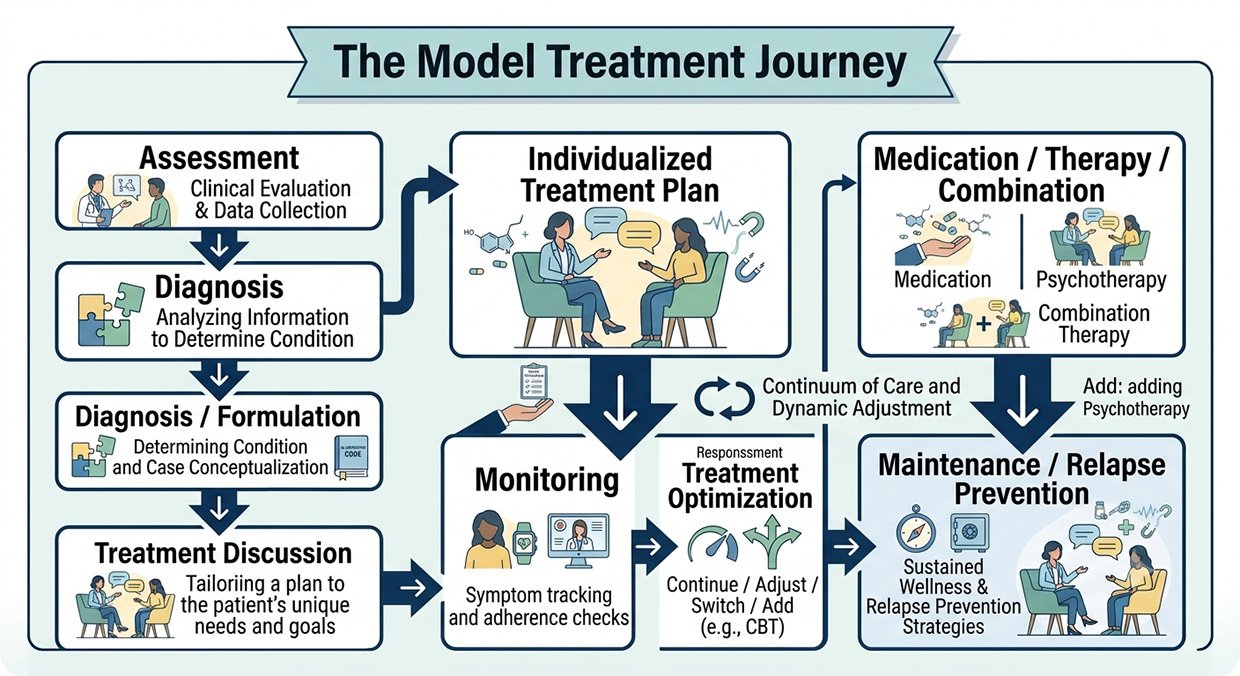
Unlike other clinics, at Headspace Mind Clinic, patients will not get depression medication treatment without a comprehensive psychiatric assessment and treatment plan. This treatment is done considering the patient’s diagnosis, symptoms, past treatment, medical issues, response, side effects, and alternative psychotherapy treatments, among others.
Headspace Treatment Model
What Makes This Approach Important?
Medication Is Not the Whole Treatment
Depression can require psychological, behavioural and social interventions alongside medication.
Limited Response Is Investigated
Treatment resistance should trigger reassessment rather than random medication changes.
Treatment Is Reviewed
Medication should not simply continue indefinitely without considering benefit, adverse effects and ongoing need.
Other Treatments Are Considered
Psychotherapy, CBT and rTMS may have roles in selected patients.
Book a Depression Medication Consultation in Delhi
Thinking About Medication for Depression?
It is not necessary for you to choose an antidepressant beforehand prior to consulting the psychiatrist. A clinical evaluation can help establish whether:
- Whether your symptoms meet criteria for depression
- Whether psychotherapy should be included
- Whether medication is appropriate
- Whether another condition could be contributing
- Which treatment options may be reasonable
- How treatment should be monitored
Phone:
Related Depression Treatment Services
Depression Treatment in Delhi
Comprehensive assessment and treatment options for depressive disorders.
Cognitive Behavioural Therapy
A structured psychological treatment for depression and several other mental health conditions.
Psychiatric Consultation
Assessment and individualized psychiatric treatment planning.
Psychotherapy
Psychological treatment that can be used alone or alongside medication.
rTMS for Depression
A non-invasive brain-stimulation treatment that may be considered for selected patients with depression.
E-e-a-t / Medical Review
Written by: Headspace Mind Clinic Editorial Team
Medically reviewed by: Headspace Mind Clinic Advisory Board
Last Updated: August 2026
Medical disclaimer: This page provides general educational information and does not replace an individualized psychiatric or medical assessment. Antidepressants should be prescribed, monitored, changed, or discontinued under appropriate clinical supervision.
Authoritative Sources
- NIMH — Depression — treatment approaches, antidepressant response, treatment-resistant depression and brain stimulation.
- NIMH — Mental Health Medications — antidepressant classes, expected onset and medication considerations.
- NICE — Depression in Adults: Treatment and Management — antidepressant monitoring, treatment duration, relapse prevention and safe discontinuation.
- NIMH — Brain Stimulation Therapies — rTMS and other brain-stimulation