
Adult Psychiatry in Delhi
Comprehensive Psychiatric Assessment and Individualized Mental Health Care for Adults
Trust Strip





Quick Facts
| Question | Answer |
|---|---|
| Service | Adult Psychiatry |
| Patient Group | Adults |
| Assessment | Psychiatric + Medical |
| Treatment | Individualized |
| Medication | When clinically indicated |
| Psychological Therapy | Where appropriate |
| Follow-Up | Based on clinical needs |
| Location | Delhi |
What Is Adult Psychiatry?
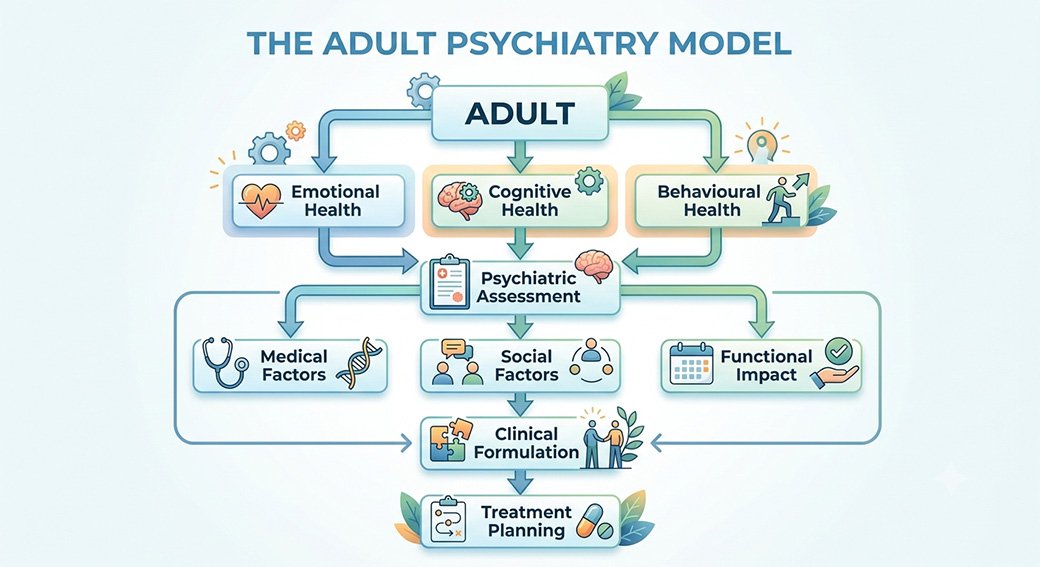
The field of adult psychiatry involves the evaluation, diagnosis, treatment and prevention of mental disorders in adults. The adult psychiatrist takes into account several factors, including mental problems as well as others like physical health, medication, chemicals, relationship, work, and sleeping problems.

What Does Adult Psychiatry Cover?
- Mood
- Anxiety
- Thinking
- Behaviour
- Sleep
- Concentration
- Perception
- Emotional regulation
- Substance use
- Relationships
- Daily functioning
Why This Matters
Poor concentration
could occur with:
- ADHD
- Depression
- Anxiety
- Sleep deprivation
- Substance use
- Medication effects
- Medical conditions
Clinical Pearl
The process of psychiatric diagnosis is not about just pinpointing a symptom that fits the diagnosis. What the doctor looks at is the combination of symptoms, the time period, intensity, and other issues before deciding on a particular mode of treatment.
What does an Adult Psychiatrist do?
An adult psychiatrist is a doctor who will determine the condition of a person from the point of view of the state of their psychological well-being, give a diagnosis, consider the treatment methods available, prescribe drugs, and monitor the person's development. In some cases, a psychiatrist can use the services of other specialists such as clinical psychologists and therapists.
Core Responsibilities
1. Psychiatric Assessment
The psychiatrist evaluates:
- Presenting symptoms
- Duration
- Severity
- Functional impact
- Previous episodes
- Previous treatment
2. Medical Assessment
Relevant factors may include:
- Physical health
- Current medications
- Medical history
- Sleep
- Substance use
- Family history
3. Diagnostic Formulation
The psychiatrist looks at the whole clinical picture and not just one symptom.
4. Treatment Planning
Depending on the presentation, treatment may include:
- Medication
- Psychotherapy
- CBT
- Behavioural interventions
- Lifestyle strategies
- Family involvement
- Coordinated care
5. Monitoring
Follow-up can assess:
- Symptom improvement
- Functioning
- Treatment response
- Medication adverse effects
- New symptoms
- Changing treatment needs
When should an adult see a Psychiatrist?
An individual should be referred for a psychiatric evaluation in cases where he/she exhibits symptoms that are chronic, recurrent, progressive, severe, or are leading to impairment in his/her occupational, social, or personal well-being. The inability to understand the symptoms exhibited or when a medication is required will also call for such an evaluation.
Common Reasons To Seek Assessment
Persistent Emotional Symptoms
- Persistent sadness
- Loss of interest
- Excessive worry
- Irritability
- Emotional instability
Cognitive Changes
- Poor concentration
- Memory difficulties
- Indecisiveness
- Racing thoughts
- Mental slowing
Behavioural Changes
- Anger
- Impulsivity
- Withdrawal
- Loss of motivation
- Changes in routine
Sleep Problems
- Persistent insomnia
- Excessive sleep
- Major changes in sleep pattern
- Daytime fatigue
Social or Occupational Difficulties
- Reduced work performance
- Difficulty maintaining relationships
- Social withdrawal
- Loss of functioning
Severe Psychiatric Symptoms
- Hallucinations
- Hearing voices
- Delusional beliefs
- Severe mood changes
- Significant behavioural disturbance
Risk Concerns
- Suicidal thoughts
- Self-harm
- Severe substance use
- Risk of harming others
The Four-factor Rule
- Persistence
- Severity
- Functional Impact
- Change From Usual Functioning
Clinical Pearl
One does not have to wait for symptoms to become intense to go for psychiatric treatment. It can help determine if the symptoms are related to a psychiatric condition, a psychological problem, a physical one, a side effect of medication, or any other combination of reasons.
What Conditions Does an Adult Psychiatrist Treat?
The adult psychiatrist treats different kinds of psychological disorders like depression, anxiety, OCD, bipolar, psychosis, schizophrenia, panic attacks, insomnia, substance abuse, personality disorders, and ADD. The process of treatment will depend upon the diagnosis, severity of the illness, functioning of the individual, and history of the patient.
Common Conditions
Depression
Possible symptoms include:
- Persistent low mood
- Loss of interest
- Fatigue
- Sleep changes
- Appetite changes
- Poor concentration
- Feelings of worthlessness
Anxiety Disorders
Including:
- Generalized anxiety
- Social anxiety
- Specific fears
- Excessive worry
- Physical anxiety symptoms
OCD
Characterized by:
- Intrusive thoughts
- Repetitive behaviours
- Mental rituals
- Checking
- Washing
- Reassurance seeking
Bipolar Disorder
May involve episodes of:
- Depression
- Mania
- Hypomania
- Significant mood changes
Schizophrenia & Psychotic Disorders
Possible symptoms include:
- Hallucinations
- Delusions
- Disorganized thinking
- Significant changes in behaviour
- Social or occupational deterioration
Adult ADHD
May involve:
- Poor concentration
- Disorganization
- Impulsivity
- Difficulty completing tasks
- Time-management problems
Panic Disorder
May involve:
- Recurrent panic attacks
- Fear of future attacks
- Avoidance
- Physical anxiety symptoms
Sleep Disorders
Including persistent insomnia and other sleep-related difficulties.
Addiction and Substance-Use Disorders
Assessment may involve:
- Alcohol
- Tobacco/nicotine
- Cannabis
- Other substances
- Behavioural consequences
Personality Disorders
Longstanding patterns affecting:
- Relationships
- Emotional regulation
- Self-image
- Behaviour
- Impulse control
Important Architecture Rule
The individual condition pages remain the deep-dive treatment destinations.
This Adult Psychiatry page should provide an overview and link to them rather than reproducing their full content.
What Symptoms Can an Adult Psychiatrist Assess?
Psychiatric evaluations have the ability to deal with problems caused by emotional, cognitive, behavioral, perceptual, and somatic problems resulting from mental health issues. Problems encountered include persistent depression, anxiety, panic attacks, lack of concentration, insomnia, irritability, anger, mood swings, lack of motivation, memory loss, hallucinations, and suicide ideation.
Symptom → Possible Areas To Explore
| Symptom | Possible Areas of Assessment |
|---|---|
| Persistent sadness | Depression, adjustment difficulties, other mood conditions |
| Excessive worry | Anxiety disorders |
| Panic attacks | Panic disorder, other anxiety conditions |
| Poor concentration | ADHD, anxiety, depression, sleep, medical factors |
| Sleep disturbances | Insomnia, anxiety, mood disorders, sleep disorders |
| Irritability | Mood disorders, anxiety, stress, drug use |
| Mood swings | Mood disorders, personality, other possible explanations |
| Lack of motivation | Depression, burnout, sleep, other conditions |
| Memory problems | Mood, sleep, medications, neurological/medical causes |
| Hallucinations | Psychotic disorders, mood disorders, substances, medical causes |
| Hearing voices | Psychosis and other possible causes |
| Anger issues | Mood, impulse control, stress, personality-related factors |
| Suicidal thoughts | Depression, other mental disorders, crisis situation |
Important
Symptoms do not make a diagnosis.
For instance:
Poor concentration ≠ automatically ADHD
Mood swings ≠ automatically bipolar disorder
Hearing voices ≠ automatically schizophrenia
A proper assessment will have to be done in order to arrive at the proper diagnosis.
What happens during an Adult Psychiatric Assessment?
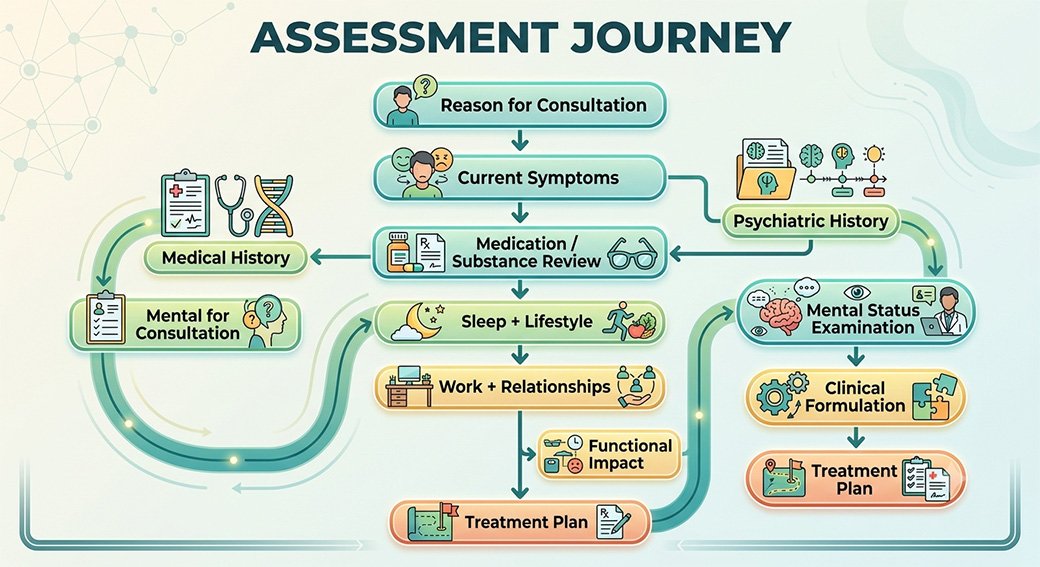
The adult psychiatric evaluation generally starts with learning about their chief complaint and symptom presentation. After that, there will be an evaluation of the individual’s psychiatric and medical history, medicines, sleep patterns, substance use, relationships, employment, and functionality. Then the psychiatrist forms a clinical formulation and considers if further evaluation or other treatment methods are required.
What May Be Discussed?
Current Symptoms
- What are you experiencing?
- When did it begin?
- How often does it occur?
- How severe is it?
- Is it changing?
Previous Episodes
- Have you experienced something similar before?
- Was treatment received?
- What helped?
- What did not help?
Functioning
- Work
- Relationships
- Sleep
- Self-care
- Social life
- Daily responsibilities
Does a Psychiatric Assessment include a mental status examination?
Yes. A mental status examination is a crucial component of a psychiatric evaluation. The physician examines various factors including the patient’s appearance and behavior, speech, mood and affect, thinking process, thinking content, perceptions, cognition, insight, and judgment in relevance to the clinical picture.
Areas That May Be Observed
| Domain | Examples |
|---|---|
| Appearance & Behaviour | General presentation, activity, cooperation |
| Speech | Rate, volume, fluency |
| Mood | Subjective emotional state |
| Affect | Observable emotional expression |
| Thought Process | Organization and flow of thoughts |
| Thought Content | Preoccupations, beliefs, suicidal ideas |
| Perception | Experiences like hallucinations |
| Cognition | Attentiveness, Orientation, Memory |
| Insight | Understanding of difficulties |
| Judgement | Judgment and behavior control |
Why It Matters
What Medical factors can affect mental health symptoms?
Psychiatric symptoms may sometimes result from, or be simulated by, medical illness, medication use, drug abuse, sleep disorders, hormones, and other physical causes. During an adult psychiatric evaluation, the patient's past medical history of the patient and medications that the patient is on are considered, and medical testing may be recommended.
Examples Of Factors That May Need Consideration
- Thyroid-related problems
- Neurological conditions
- Hormonal changes
- Sleep disorders
- Medication effects
- Substance use
- Alcohol use
- Caffeine or stimulant use
- Other medical illnesses
Important
This does not mean every psychiatric consultation requires extensive laboratory testing. Investigations should be guided by the clinical question.
Does a Psychiatrist only treat mental illness with medication?
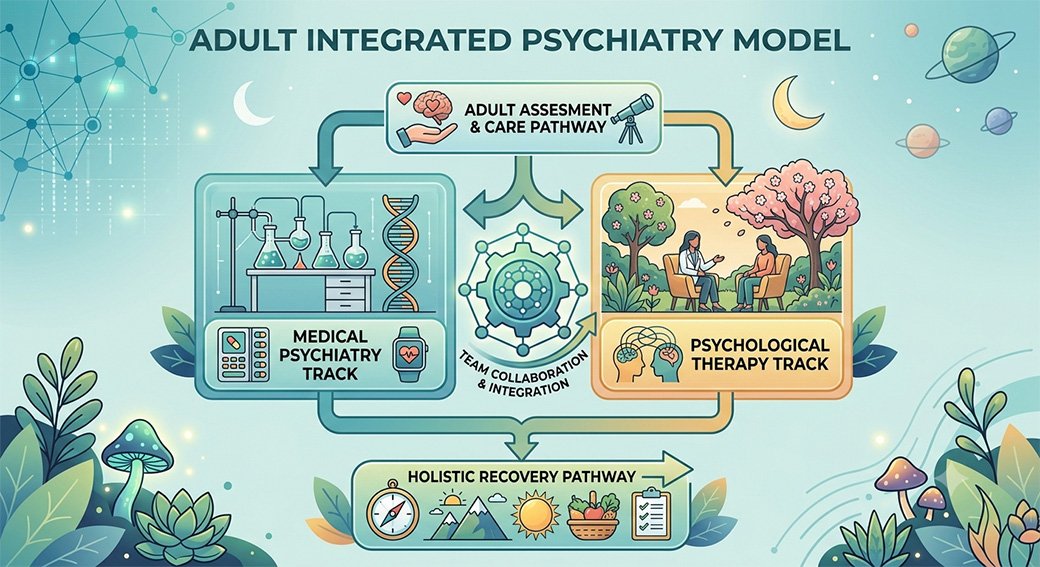
No. Medication is not the only part of treatment in psychiatry. In accordance with the clinical situation, a psychiatrist can suggest using psychotherapy, CBT, behavior therapy, lifestyle modifications, family therapy, sleep management, psychological assessment, or combined care with a clinical psychologist. Medication can be prescribed when clinically appropriate.
Possible Components Of Care
Medication
When indicated.
Psychological Therapy
Such as:
- CBT
- Psychotherapy
- Supportive therapy
- Behaviour therapy
Family / Relationship Support
When relevant.
Lifestyle & Behavioural Strategies
Depending on the condition:
- Sleep routine
- Physical activity
- Substance-use reduction
- Stress management
- Daily structure
Coordinated Care
Psychiatry + clinical psychology + other healthcare professionals.
What is the difference between an Adult Psychiatrist and a Clinical Psychologist?
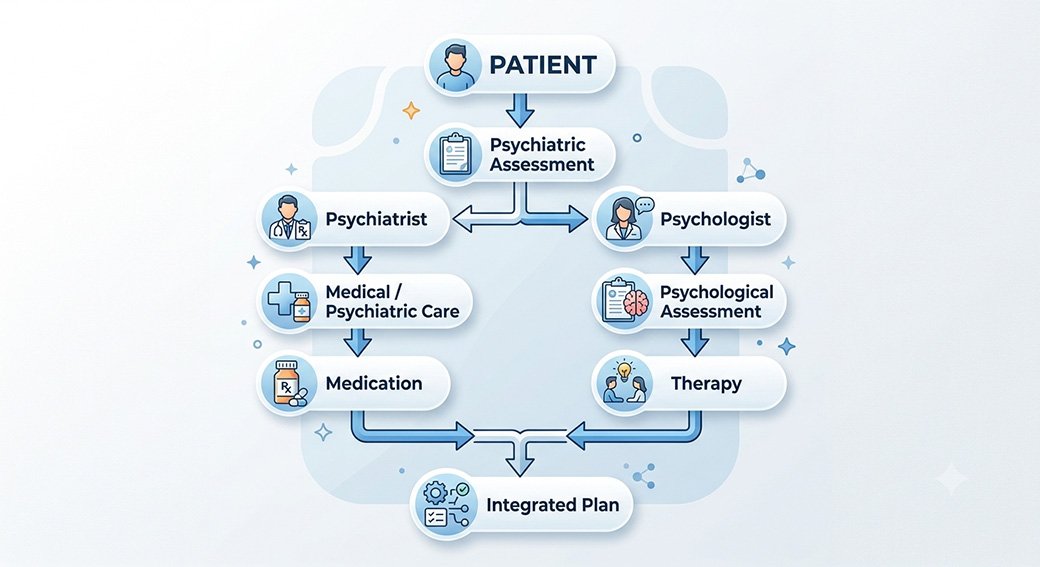
A psychiatrist is a medical doctor who specializes in the mental aspect of human life and has the ability to prescribe medication for a patient, while a psychologist is an expert in psychological interventions. The combination of the two can be applied depending on a patient’s condition.
Comparison
| Adult Psychiatrist | Clinical Psychologist |
|---|---|
| Medical doctor | Psychology professional |
| Psychiatric assessment | Psychological assessment |
| Medical factors considered | Psychological and behavioural factors assessed |
| Can prescribe medication | Provides psychological therapy |
| Monitors medication | Delivers structured psychological interventions |
| Psychiatric diagnosis/formulation | Psychological formulation |
| Coordinates medical/psychiatric care | Coordinates psychological care |
When Both May Be Useful
Depression
Psychiatrist:
→ Diagnostic assessment + medication if indicated; Psychologist:
→ CBT / psychotherapy
ADHD
Psychiatrist:
→ Psychiatric assessment + treatment planning Psychologist:
→ Psychological/cognitive assessment and behavioural interventions where appropriate
OCD
Psychiatrist:
→ Psychiatric assessment + medication where appropriate; Psychologist:
→ CBT / ERP
Do I need a diagnosis before seeing an Adult Psychiatrist?
No. It does not matter that you do not have a diagnosis before arranging a consultation with a psychiatrist. The point of the consultation is to figure out what you are suffering from, whether it is a psychiatric problem or something else, and give advice on how to proceed.
You Can Come With
“I have been feeling low for several weeks.” “I cannot stop worrying.”
“I am unable to sleep.”
“My concentration has become very poor.” “My family says my behaviour has changed.”
“I am hearing things that others don’t seem to hear.”
“I don’t know what is happening, but I don’t feel like myself.”
Why This Matters
“My issue is not important enough.”
or:“I do not know what my diagnosis is.”
Neither is a requirement for seeking professional assessment.Can an Adult Psychiatrist help with Work-Related Stress and Burnout?
The psychiatrist can examine any signs of major emotional or psychological problems emerging due to work stress or burnout and evaluate whether the issue is a mental health problem or some other sort of problem for the individual. Other issues that can be considered in the evaluation include sleep, anxiety, depression, drug use, functioning, etc.
Important Distinction
- Anxiety
- Depression
- Sleep problems
- Substance use
- Reduced functioning
Can Adults seek psychiatric help for sleep problems?
Yes. Sleep problems that persist can be evaluated in the practice of adult psychiatry, especially if they are associated with anxiety, depression, mood problems, drug use, or any other mental illness. This evaluation must take into account the patient’s sleep practices, medications, and potential primary sleep disorder.
Sleep Concerns May Include
- Difficulty falling asleep
- Repeated night waking
- Early morning awakening
- Non-restorative sleep
- Excessive daytime sleepiness
- Reversed sleep schedule
What happens after an Adult Psychiatric Assessment?
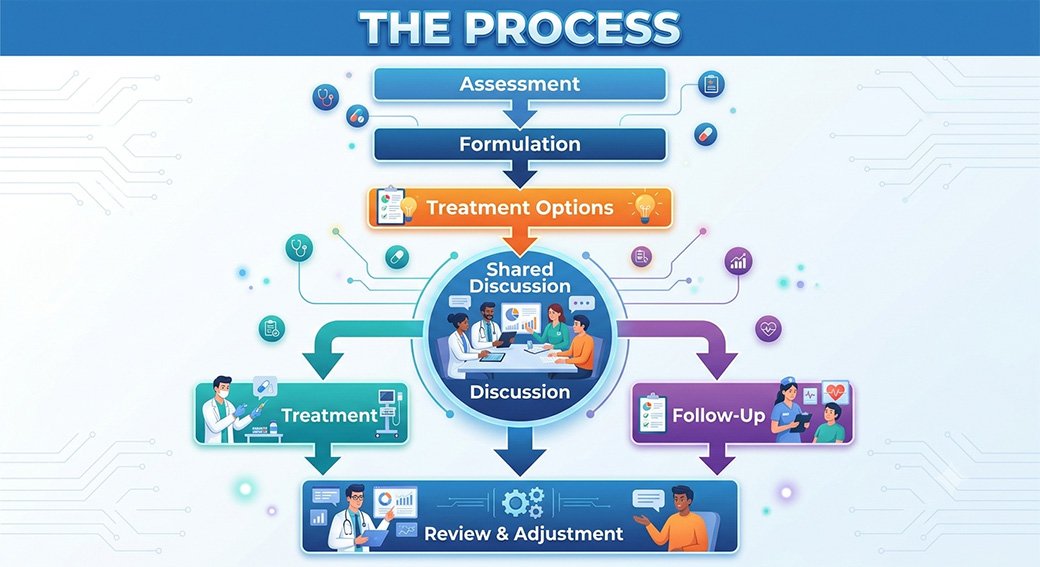
Following the evaluation, the psychiatrist explains the clinical perspective of the condition and offers suitable action steps. These can range from reassurance and monitoring to psychological counseling or medication, depending on the results of the evaluation.
Possible Outcomes
1. Diagnosis Established
A treatment plan can be developed.
2. Working Diagnosis
Further observation or assessment may be needed.
3. Psychological Treatment Recommended
Referral or coordination with a clinical psychologist may be appropriate.
4. Further Medical Evaluation
If symptoms could have a medical contribution.
5. Monitoring
When symptoms are mild or the diagnosis remains uncertain.
Looking for an Adult Psychiatrist in Delhi?
Phone:
What treatments are available in Adult Psychiatry?
Adult psychiatric management can consist of medication, psychological therapy, behavior modification, lifestyle and sleep modification, family interventions, rTMS when applicable, and/or any combination of these strategies. Treatment choice is determined by several factors, including the specific clinical problem, the extent of illness, disability, prior treatment history, medical issues, and personal preference.
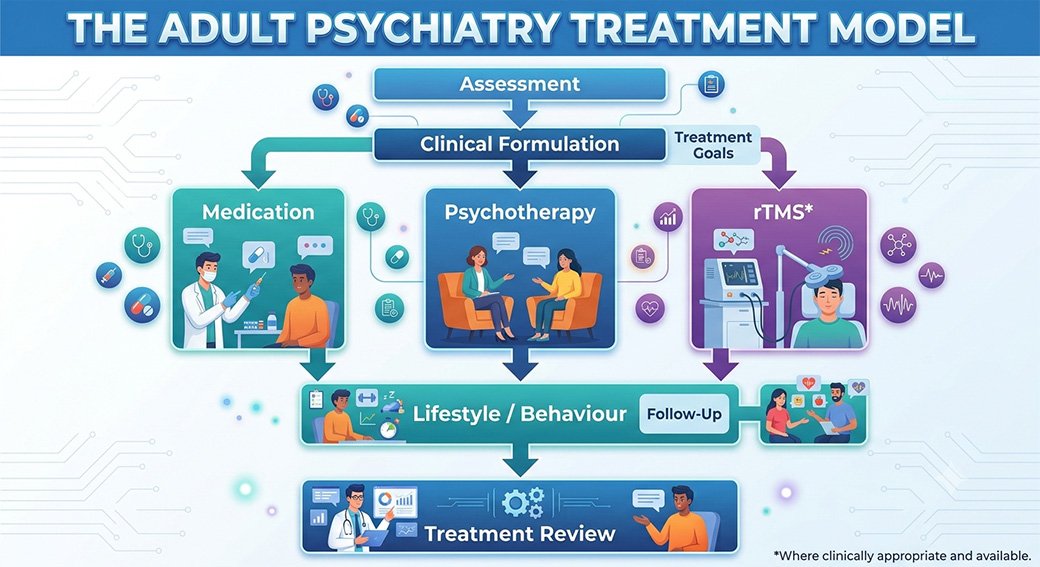
Possible Components Of Care
Psychiatric Medication
Used when clinically indicated.
Psychological Therapy
Including:
- CBT
- Psychotherapy
- Supportive therapy
- Behavioural interventions
Neuromodulation
Such as:
- rTMS in selected conditions
Functional Interventions
Depending on the problem:
- Sleep interventions
- Behavioural strategies
- Stress management
- Substance-use interventions
- Activity and routine planning
Coordinated Care
Psychiatry can be coordinated with:
- Clinical psychology
- Psychological assessment
- Other medical specialists
Is medication always necessary in Adult Psychiatry?
No. Mental health consultations do not always necessarily lead to medication. Based on the diagnosis and clinical indications, the course of therapy can include counseling, behavioral therapy, observations, change in lifestyle, among other modalities. If it is indicated by the potential gains, need, and evidence, then medication can be prescribed.
When Medication May Be Considered
Medication might be needed if:
- Symptoms are moderate to severe.
- A condition has a strong evidence base for pharmacological treatment.
- Symptoms are substantially impairing functioning.
- Psychological treatment alone has not been sufficient.
- Psychological treatment is not currently feasible or appropriate.
- There is a significant risk associated with untreated illness.
- Previous medication has been beneficial.
- Combined treatment is clinically appropriate.
When Other Approaches May Be Appropriate
Depending on the presentation:
- CBT
- ERP
- Psychotherapy
- Behavioural interventions
- Sleep interventions
- Family interventions
- Monitoring
- Lifestyle changes
Clinical Pearl
The purpose of psychiatric treatment is not to prescribe medication whenever a diagnosis is made. The treatment plan should address the person's actual clinical needs and use the least burdensome effective approach that is appropriate for the condition.
How does Psychiatric Medication work as part of Treatment?
Psychiatric drugs are prescribed for the alleviation of certain symptoms or mechanisms underlying certain psychiatric disorders. The use of a drug in this regard may aim to relieve symptoms of depression, anxiety, psychosis, unstable mood, obsessive-compulsive behaviors, problems sleeping, attention problems, or other clinically important symptoms.
Medication Is Condition-specific
Depression
Medication may act upon:
- Depressive mood
- Loss of interest
- Anxiety associated with depression
- Sleep or appetite changes
Anxiety
Medication may be used to reduce:
- Excessive worry
- Panic symptoms
- Physical anxiety
- Persistent anxiety
Bipolar Disorder
Treatment may focus on:
- Mania
- Hypomania
- Depression
- Prevention of recurrence
Psychotic Disorders
Medication may target:
- Hallucinations
- Delusions
- Disorganized thinking
- Behavioural disturbance
ADHD
Medication may address:
- Inattention
- Hyperactivity
- Impulsivity
OCD
Medication can form part of treatment alongside psychological interventions such as ERP.
Important
The page should not become a medication encyclopedia.
Individual medication classes and detailed pharmacology belong on the dedicated treatment/knowledge pages.
What should you know before starting Psychiatric Medication?
Before taking psychiatric medication, patients must first know about what the medication is meant to treat, when the effects might become evident, how the medication will be monitored, any potential side effects, important cautions, and alternatives to the medication. The patient must take the prescribed medication following the directions of the prescribing practitioner.
Questions To Ask Your Psychiatrist
What does this medicine treat?
Knowing what the medicine is supposed to do will help you know the target of the medication.
When should I expect results?
Medication will show different responses within a certain time frame depending on the particular symptom that it is supposed to treat.
What side effects can I expect?
Ask which effects are:
- Common
- Temporary
- Clinically important
- A reason to contact the doctor
How long will I need it?
Duration depends on:
- Diagnosis
- Recurrence risk
- Treatment response
- Previous history
- Individual circumstances
What happens if it doesn't work?
The clinician may:
- Adjust the dose
- Change medication
- Add another treatment
- Reassess the diagnosis
- Add psychotherapy
- Consider another intervention
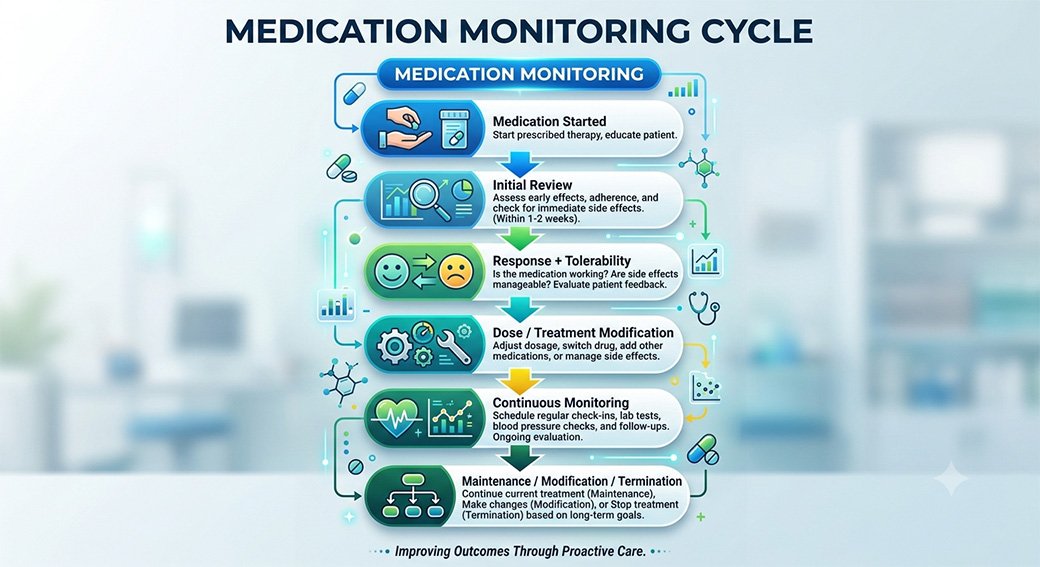
Important
It is critical that patients do not discontinue or modify their prescribed psychiatric drugs without prior consultation with the treating health-care provider, except where medical advice requires otherwise.
What is Psychotherapy in Adult Psychiatry?
Psychotherapy is a methodical process in which psychological therapy is carried out, and it can assist individuals in comprehending and altering patterns related to thoughts, feelings, behaviors, relationships, and coping mechanisms. Based on the illness, the use of psychotherapy can either be combined with psychiatric drugs or not.
Common Psychological Approaches
Cognitive Behavioural Therapy — CBT
Focuses on relationships between:
Thoughts → Emotions → Behaviours
Useful across several conditions.
Exposure and Response Prevention — ERP
A specialized behavioural approach commonly used for OCD.
Supportive Therapy
May help with:
- Coping
- Emotional support
- Adjustment
- Stress
- Functioning
Family Therapy
Can be relevant when relationship or family factors are clinically important.
Behavioural Interventions
May address:
- Avoidance
- Daily routines
- Reinforcement patterns
- Activity levels
Can Medication and Psychotherapy be used together?
Yes. It might also be possible to combine medication with psychological therapy for some adults. While the drug might treat biological or psychiatric symptoms, the psychological therapy can focus on cognitive-behavioral and emotional issues, as well as others. The appropriateness of combined therapy will depend on various factors.
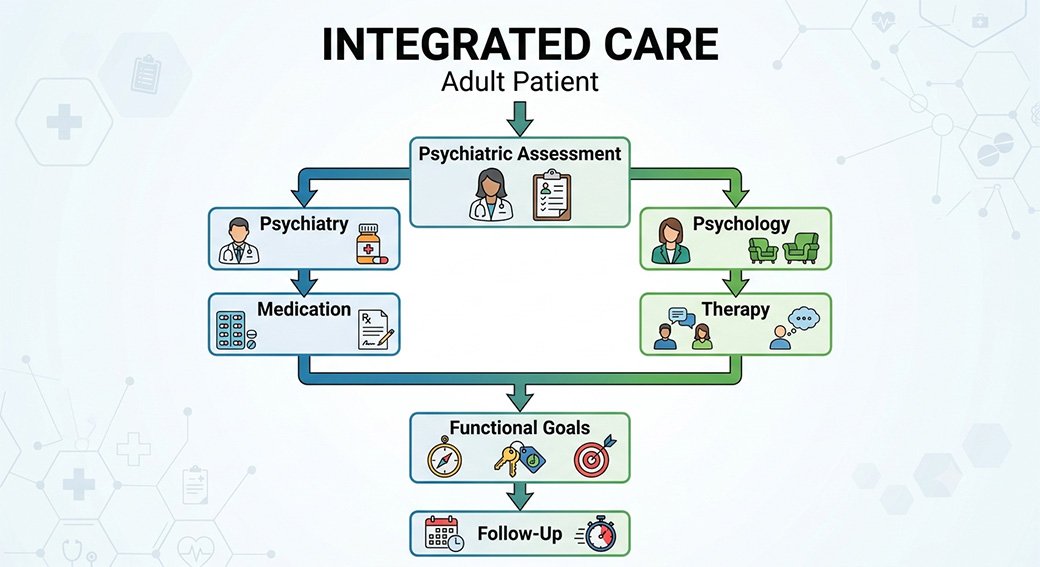
Examples
Depression
Psychiatric care:
→ Assessment
→ Medication when indicated Psychological care:
→ CBT / psychotherapy
Anxiety
Psychiatric care:
→ Assessment
→ Medication when indicated Psychological care:
→ CBT / exposure-based interventions where appropriate
OCD
Psychiatric care:
→ Assessment
→ Medication where appropriate Psychological care:
→ ERP
Why Coordination Matters
Some patients need:
one clinician
while others may benefit from:
psychiatrist + clinical psychologist
The appropriate arrangement should follow the clinical needs rather than a predetermined model.
How is Depression treated in Adult Psychiatry?
Treatment of depression in adults is dependent on the severity of the condition, the symptoms, duration, degree of functional impairment, past history, risk factors, and the preference of the individual being treated. The mode of treatment can involve psychological treatment, antidepressants, lifestyle changes, combination treatments, or special treatments like rTMS.
Possible Treatment Pathway
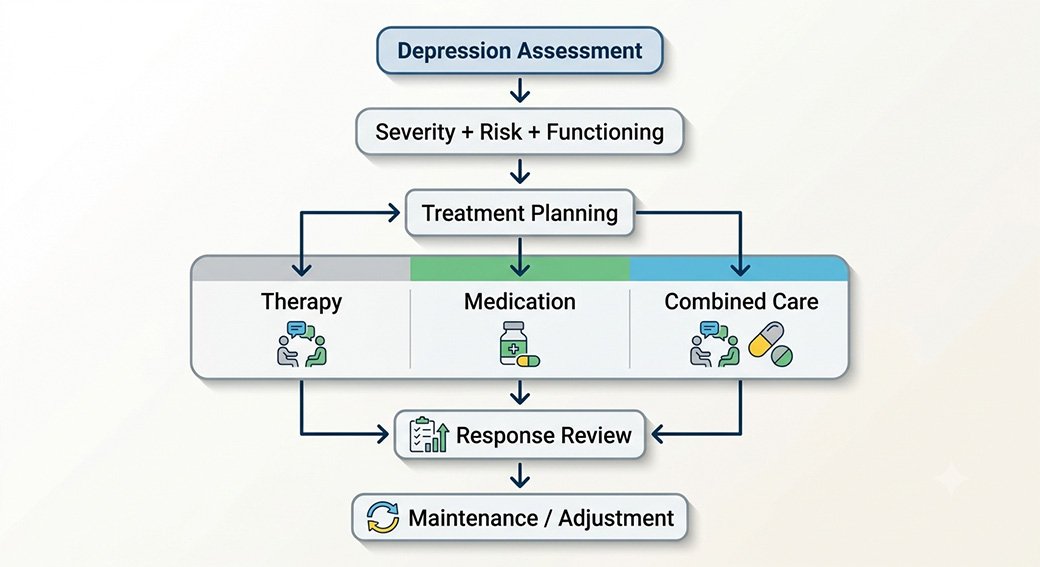
Potential Interventions
- CBT
- Psychotherapy
- Antidepressant medication
- Combined treatment
- Lifestyle interventions
- Sleep management
- rTMS in selected patients
How is Anxiety treated in Adult Psychiatry?
The treatment of anxiety is influenced by various factors such as the kind of anxiety disorder, intensity, chronicity, avoidance, functionality, and associated symptoms. Treatment options range from CBT and other psychological therapies to the use of medication and behavioral approaches depending on the form of presentation.
Common Treatment Components
Psychological
- CBT
- Exposure-based interventions
- Psychotherapy
Behavioural
Medication where clinically appropriate
- Activity planning
- Sleep improvement
- Reduction of avoidance
- Stress-management strategies
Psychiatric
Medication where clinically appropriate
- Avoidance
- Daily routines
- Reinforcement patterns
- Activity levels
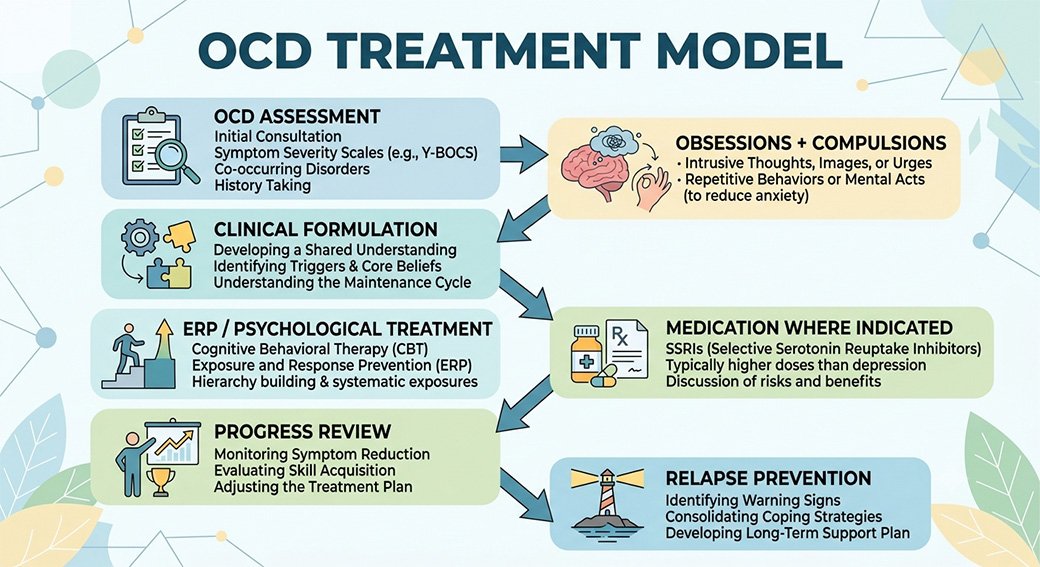
How is OCD treated in Adult Psychiatry?
OCD treatment usually entails evidence-based psychological treatment, including ERP, and may also entail psychiatric medication, based on the severity of symptoms and previous treatment experience. Psychiatric and psychological treatment can be coordinated in case the treatment of both types is required.
How is Bipolar Disorder treated?
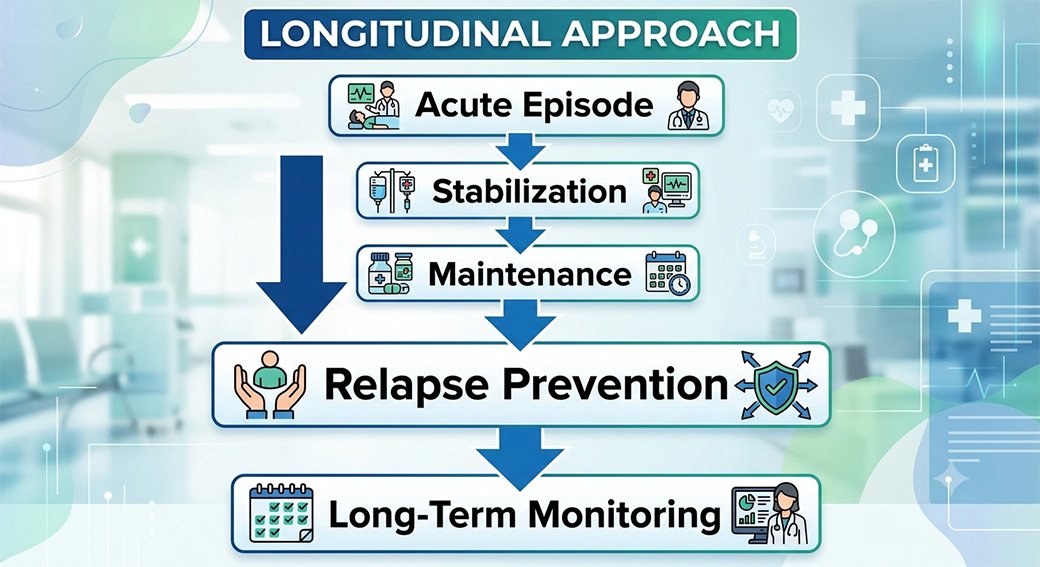
Management of bipolar disorder is supposed to be carried out in such a manner as to take into consideration not only the current symptoms but also the possibility of preventing future mood swings. The treatment can be conducted using either mood stabilizers or other psychiatric drugs, along with psychological approaches.
Treatment Needs To Consider
- Current episode
- Mania or hypomania
- Depression
- Previous episodes
- Recurrence risk
- Sleep
- Substance use
- Medication adherence
- Functional impact
→ Bipolar Disorder Treatment in Delhi
How is Psychosis treated in Adult Psychiatry?
A mental state characterized by psychosis should be evaluated by a psychiatrist, and the reasons for the symptoms of the condition should be explored. There may be different reasons for psychosis – from psychiatric to substance-induced conditions. It may be treated with the help of medication or therapy.
Assessment Should Consider
- First episode vs previous episodes
- Substance use
- Medical causes
- Mood symptoms
- Medication history
- Risk
- Functional deterioration
Treatment May Involve
- Psychiatric medication
- Psychoeducation
- Family interventions
- Psychological support
- Functional rehabilitation
- Substance-use treatment where relevant
How is Adult ADHD treated?
ADHD treatment in adults may include drugs, psychotherapy, behavioral methods, organization, and all these combined. It is essential to conduct assessment since attention deficit and executive function deficits can be found in such conditions as anxiety, depression, insomnia, substance abuse, and more.
Treatment Targets
- Attention
- Organization
- Planning
- Time management
- Impulsivity
- Task completion
- Emotional regulation
Support May Include
Medication
When clinically indicated.
Psychological Intervention
Such as CBT adapted for ADHD.
Behavioural Strategies
- Structured routines
- Task breakdown
- External reminders
- Time-management systems
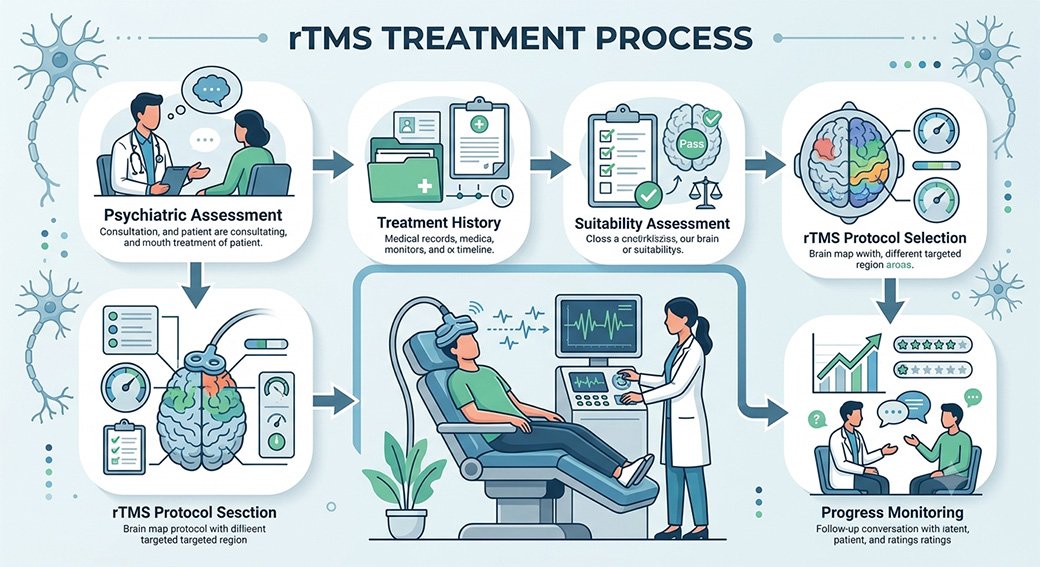
Can rTMS Be Used in Adult Psychiatry?
rTMS is a form of noninvasive brain stimulation treatment that can be used to treat specific cases of mental disorders, especially some forms of depression. The suitability of rTMS is dependent on the condition, its severity, prior treatment, and the medical background.
rTMS At Headspace
- Depression
- Selected treatment-resistant presentations
- OCD in appropriate clinical circumstances
- Other indications depending on current evidence and clinical assessment
How are Sleep problems addressed in Adult Psychiatry?
Sleep disorders are evaluated in light of the individual’s overall psychological and physical well-being. Possible management strategies include sleep-related behavior modification, anxiety or depression treatment, evaluation of any medication or substance use, management of sleep habits, and possible treatment for a co-morbid psychiatric or sleep disorder.
The Clinician May Assess
- Sleep timing
- Sleep duration
- Night waking
- Daytime sleepiness
- Caffeine
- Alcohol
- Medication
- Anxiety
- Depression
- Work schedule
How is Addiction treated in Adult Psychiatry?
The process of addiction treatment starts with an assessment of the specific drug or behavior to be treated, the degree of the problem, usage pattern, effects on physical and mental well-being, motivation for change and co-existing psychological disorders. Addiction treatment involves psychiatry, psychology, relapse prevention, family counseling, medication and referrals if needed.
Assessment
The psychiatrist may explore:
- Frequency
- Quantity
- Loss of control
- Craving
- Withdrawal
- Consequences
- Previous attempts to stop
- Coexisting psychiatric symptoms
Treatment May Include
- Motivational interventions
- Psychotherapy
- Relapse prevention
- Medication where indicated
- Family support
- Structured addiction treatment
- Referral to specialized services when required
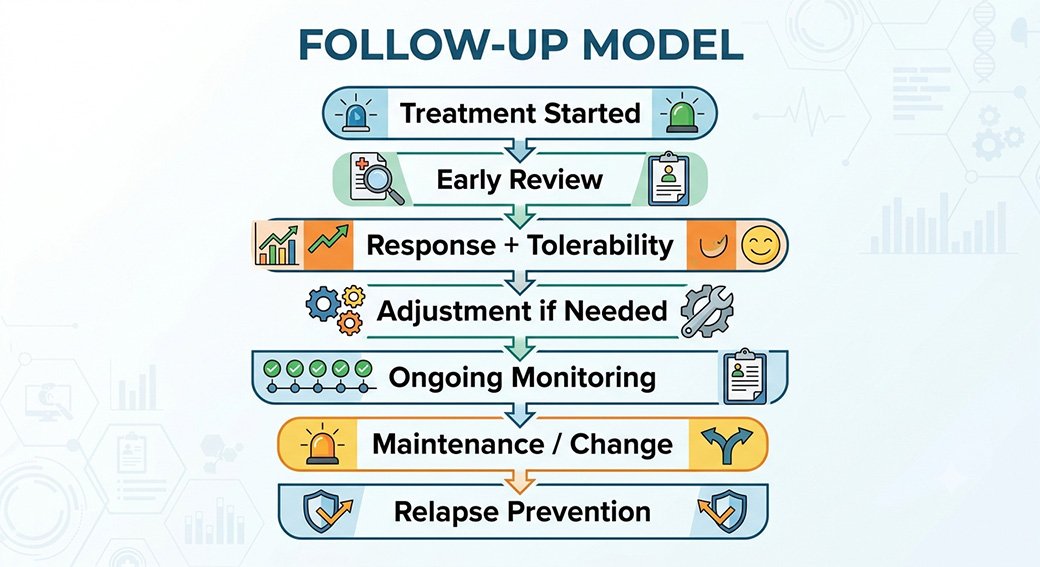
How is treatment monitored in Adult Psychiatry?
There should be ongoing assessment of the psychiatric intervention since it is not a once-off prescription or consultation. The follow-up assessment includes the evaluation of how well the symptoms have responded to the medication, how well the individual is coping, compliance, side effects, new symptoms, and goal modification.
What Should Improve?
Treatment response is not only:
“Do you feel less anxious?”
It may also involve:
- Returning to work
- Better sleep
- Improved relationships
- Reduced avoidance
- Better concentration
- Improved self-care
- Reduced compulsive behaviour
- Improved social functioning
What if the first treatment does not work?
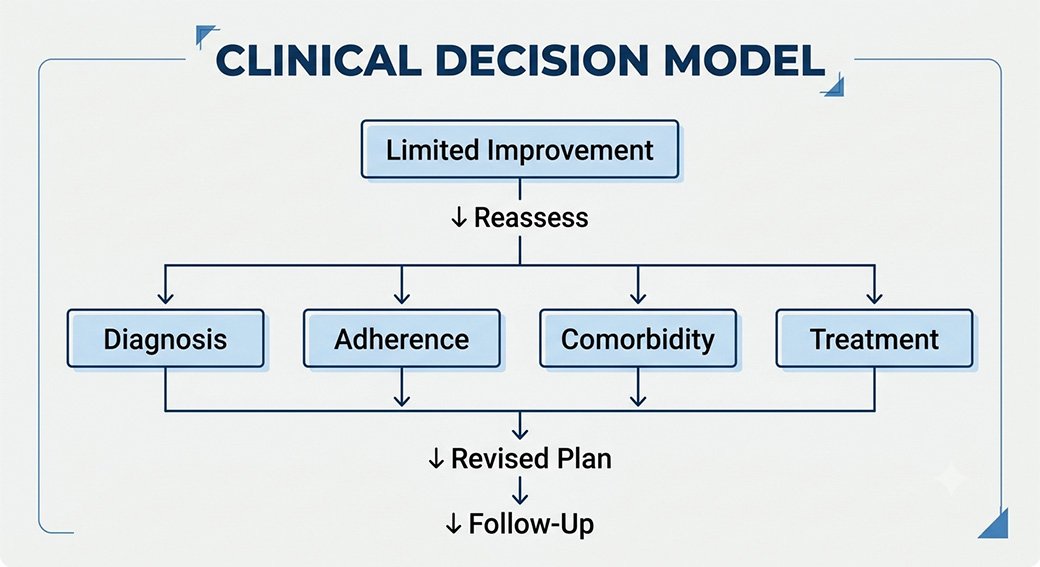
Even limited progress necessitates further evaluation at the clinical level and not an immediate upgrade. The psychiatrist can reconsider the diagnosis, compliance with the prescribed medication, the dose and time of administration, comorbidity, psychological factors, use of drugs, sleep habits, environmental factors, or whether an alternative treatment strategy needs to be adopted.
Possible Reasons For Limited Response
Need to Reconsider the Diagnosis
The original formulation may not fully explain the symptoms.
Another Condition May Be Present
For example:
- Anxiety
- ADHD
- Bipolar disorder
- Substance use
- Sleep disorder
Treatment May Need Modification
This could involve:
- Medication adjustment
- Different medication
- Psychological therapy
- Combined treatment
- rTMS in selected cases
- Additional assessment
What Is Long-Term Psychiatric Care?
Long-term psychiatric care is all about sustaining recovery, preventing any relapses, treating, and adapting to any changes that may arise in the patient’s condition or situation. Some conditions require longer-term follow-up, while others may need only a limited period of treatment and monitoring. The duration and frequency of care depend on the individual clinical course.
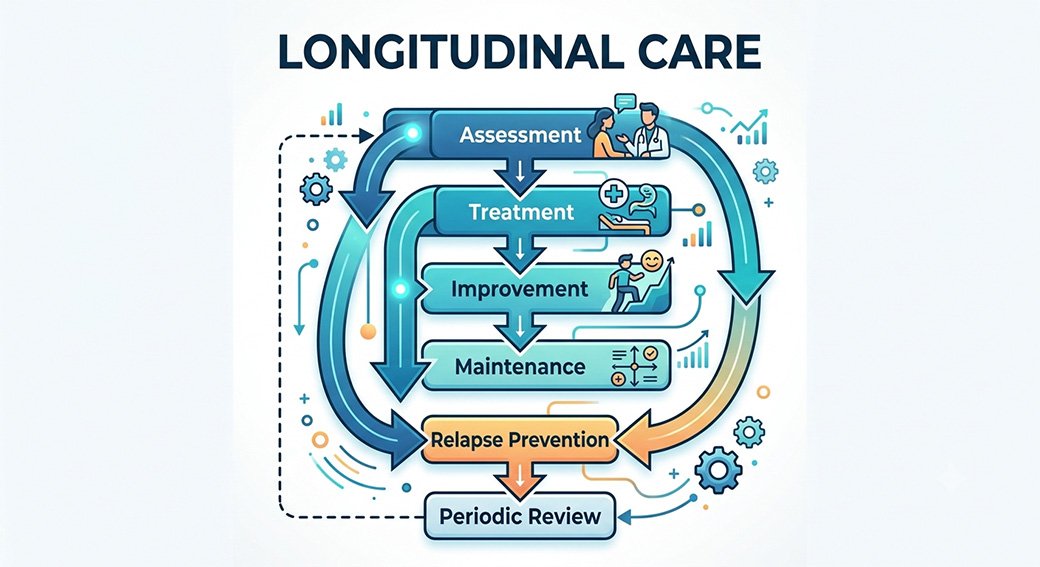
Long-term Goals
- Maintain symptom control
- Prevent recurrence
- Minimize treatment burden
- Improve functioning
- Support relationships
- Improve quality of life
- Maintain work/education
- Recognize early warning signs
What Happens When Treatment Is Working?
If the intervention proves to be helpful, then the aim is not to keep all the interventions ongoing without reassessment. The therapist thinks about whether the symptoms or functioning of the individual have improved, whether the intervention needs to go on for the prevention of relapse, whether there is an opportunity to reduce any burden of treatment, and what can the individual do to maintain recovery.
Recovery Can Include
Symptom Improvement
Reduced:
- Anxiety
- Depression
- Intrusive thoughts
- Mood instability
- Psychotic symptoms
Functional Improvement
Better:
- Work
- Relationships
- Sleep
- Self-care
- Social functioning
Self-Management
Improved ability to:
- Recognize warning signs
- Use coping strategies
- Maintain routines
- Seek help early
Looking for Adult Psychiatry in Delhi?
Phone:
What happens during the First Adult Psychiatry Appointment?
The first session in psychiatry typically begins by exploring the problems that the individual currently faces, his/her symptoms, past history, medical history, drug usage, sleep patterns, substance abuse, relationship issues, work status, and functioning. Further, the psychiatrist talks about the formulation of the case and the options for further action.
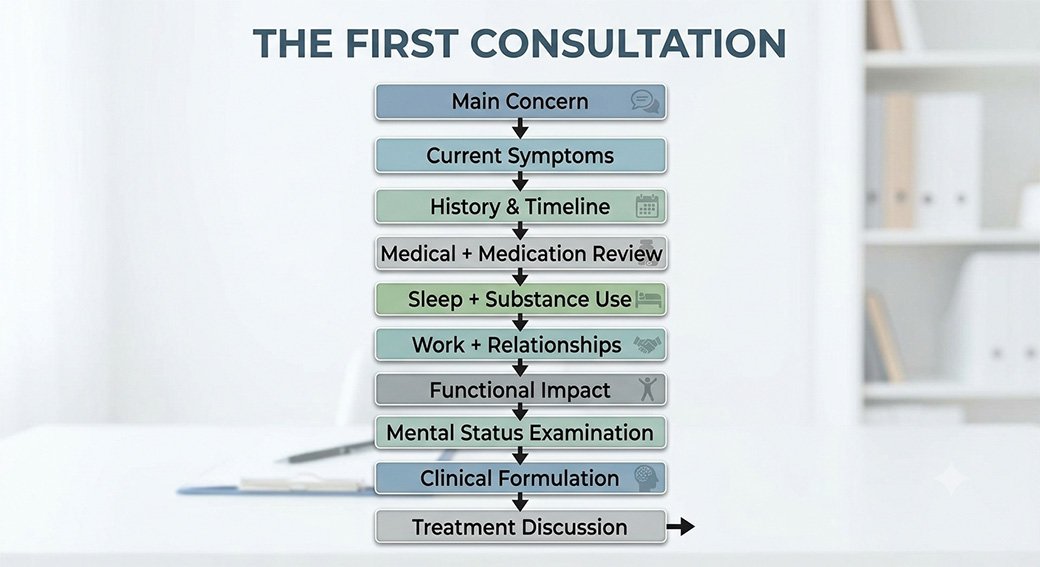
Patients May Be Asked
About the Current Problem
- What brought you in?
- When did it begin?
- How has it changed?
- What makes it better or worse?
About Daily Life
- How is work going?
- How are relationships?
- How are you sleeping?
- Has your routine changed?
About Previous Episodes
- Have you experienced this before?
- Have you received psychiatric treatment?
- What worked?
- What did not work?
About Physical Health
- What medical conditions do you have?
- What medicines are you taking?
- Have there been recent medical changes?
Important
You do not need to prepare a perfect medical history. A simple timeline and examples of what has changed can be extremely useful.
How should you prepare for an Adult Psychiatry Consultation?
Prior to an evaluation by the psychiatrist, one may consider writing down the areas of concern, onset of symptoms, past experiences, medications being taken, any treatment that was done in the past, any medical illnesses or issues, and any changes in sleep or functioning. It is also helpful to bring any past psychiatric, psychological or medical records.
Consultation Checklist
- Current symptoms
- Approximate date symptoms began
- Previous psychiatric treatment
- Current medications
- Previous medications
- Relevant medical conditions
- Previous psychological reports
- Previous investigations if relevant
- Substance or alcohol use where relevant
- Sleep pattern
- Major recent life changes
- Questions you want answered
Simple Pre-consultation Note
1. My main concern:
2. When it started:
3. How it affects my life:
4. What I have done so far:
5. What I want help with:
How is Psychiatric Medication monitored?
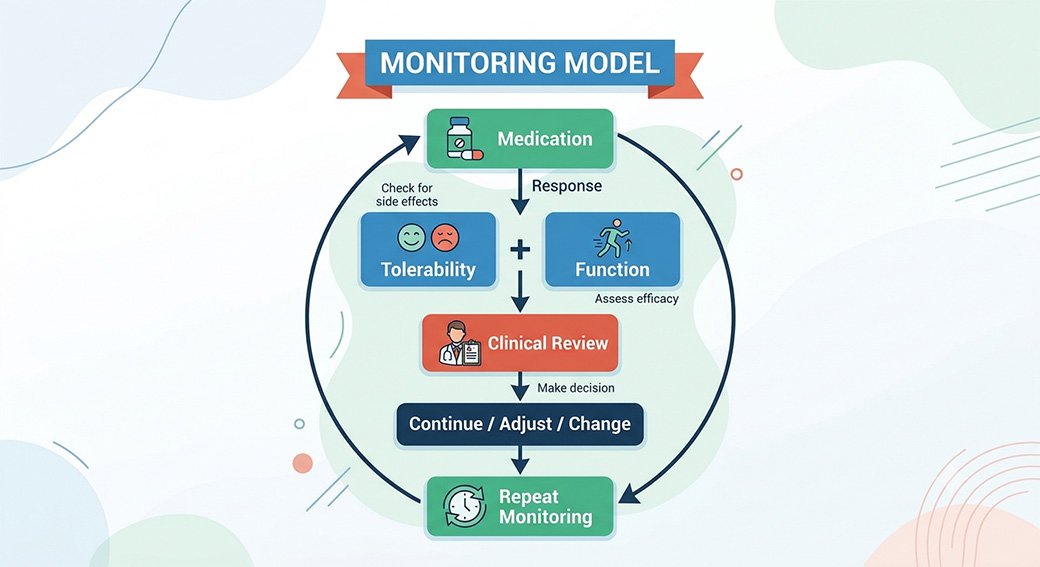
Medication review entails an assessment to check whether the medication is working, whether adverse effects are being experienced, whether the dose is still appropriate, and whether the treatment regimen is still suitable for the patient's needs. In certain medications, review will also include physical aspects related to the body.
What Is Reviewed?
Symptom Response
- Is the original problem improving?
- How much improvement has occurred?
- Which symptoms remain?
Functioning
- Work
- Relationships
- Sleep
- Daily activities
- Social functioning
Tolerability
- Side effects
- Daytime sedation
- Gastrointestinal symptoms
- Sexual adverse effects
- Weight or metabolic effects where relevant
- Other medication-specific concerns
Adherence
The clinician may ask:
- Are doses being missed?
- Is the medication difficult to take?
- Are there practical barriers?
How often will Psychiatric Follow-Up be needed?
There are no universal guidelines for how often follow-ups should take place for adults receiving psychiatric care. The frequency depends upon the illness, its severity, stage of treatment, medications, risks, treatment response, and stability of the situation. Follow-ups tend to happen more frequently if the patient is undergoing treatment and changes to their treatment regimen.
Follow-up Frequency May Change
During Initial Treatment
More frequent review may be appropriate to assess:
- Early response
- Adverse effects
- Safety
- Treatment adherence
During Maintenance
Reviews may focus on:
- Relapse prevention
- Ongoing functioning
- Medication monitoring
- Early warning signs
During Stabilization
The focus shifts toward:
- Treatment effectiveness
- Functional recovery
- Fine-tuning the plan
The Goal
Not simply:
“Keep coming every month.”
But:
“Review care often enough to provide safe and effective treatment.”
What is Treatment-Resistant Mental Illness?
Resistance to treatment is usually defined as the presence of clinical symptoms even after appropriate attempts at treatment have been made. One should not conclude that a particular disease is resistant to treatment simply because an attempt to treat has failed. In order to conclude that a disease is resistant to treatment, one must first consider various factors..
When Response Is Limited
Diagnosis
Is the original diagnosis the right one?
Treatment Adequacy
Was the treatment:
- Appropriate?
- Taken consistently?
- Used for an adequate duration?
- Delivered at an appropriate intensity?
Other Conditions
Could there be:
- Anxiety
- ADHD
- Substance use
- Bipolar disorder
- Sleep disorder
- Medical illness
Psychological Factors
Could ongoing:
- Avoidance
- Trauma-related symptoms
- Relationship difficulties
- Stress
- Behavioural patterns
- be affecting recovery?
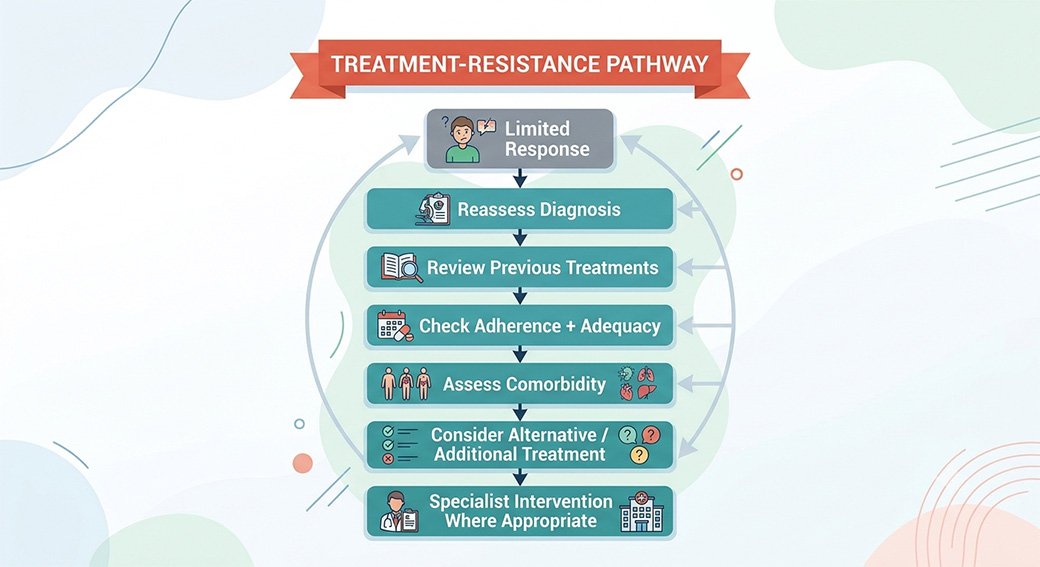
Important
"The first treatment did not work" is not the same as "nothing will work."
A systematic reassessment can identify why improvement has been limited.
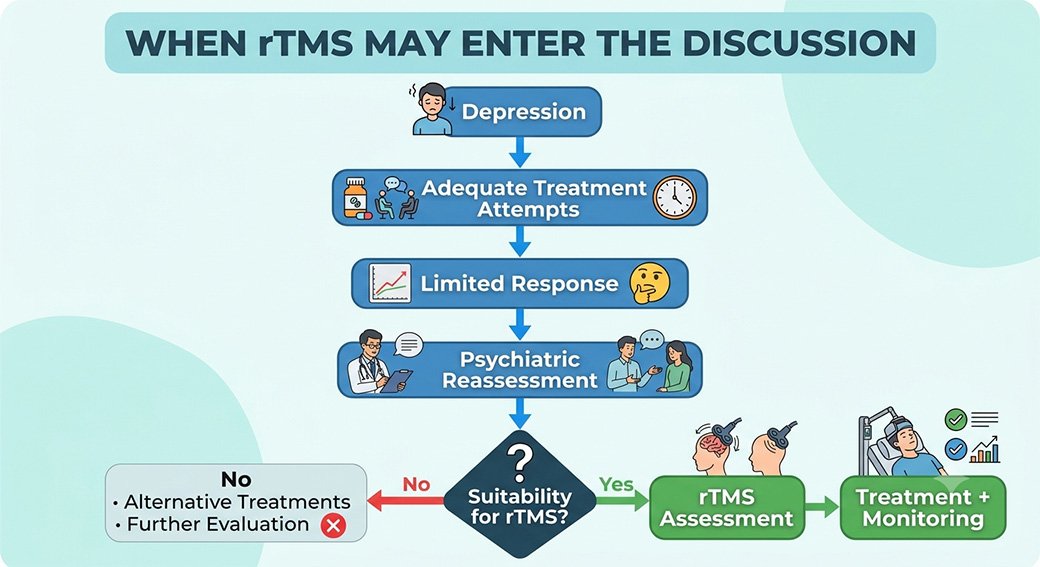
What Is the Role of rTMS When Depression Does Not Respond Adequately?
rTMS might be an alternative treatment modality in select patients diagnosed with depression who have failed to respond to standard treatment or where a clinical evaluation recommends that it is an appropriate mode of treatment. This is dependent on the patient’s diagnosis, treatment history, and medical issues involved. rTMS must be offered as one of the possible treatment modalities.
Related Services
What if Someone has more than one Mental Health Condition?
Many adults suffer from more than one mental health problem at once. For instance, depression can be accompanied by anxiety, anxiety by ADHD, substance abuse by mood disorders, or insomnia with other mental health problems. Hence, the treatment of such cases requires taking into account the entire clinical picture, not just separate symptoms.
Examples Of Comorbidity
Depression + Anxiety
Both mood and anxiety symptoms may require attention.
ADHD + Anxiety
Concentration problems should be interpreted alongside anxiety symptoms.
OCD + Depression
Compulsions and mood symptoms may reinforce each other.
Bipolar Disorder + Anxiety
Treatment planning must account for the underlying mood disorder.
Substance Use + Depression
Both the substance-use pattern and psychiatric symptoms may need assessment.
Insomnia + Anxiety
Sleep disturbance may both result from and worsen anxiety.
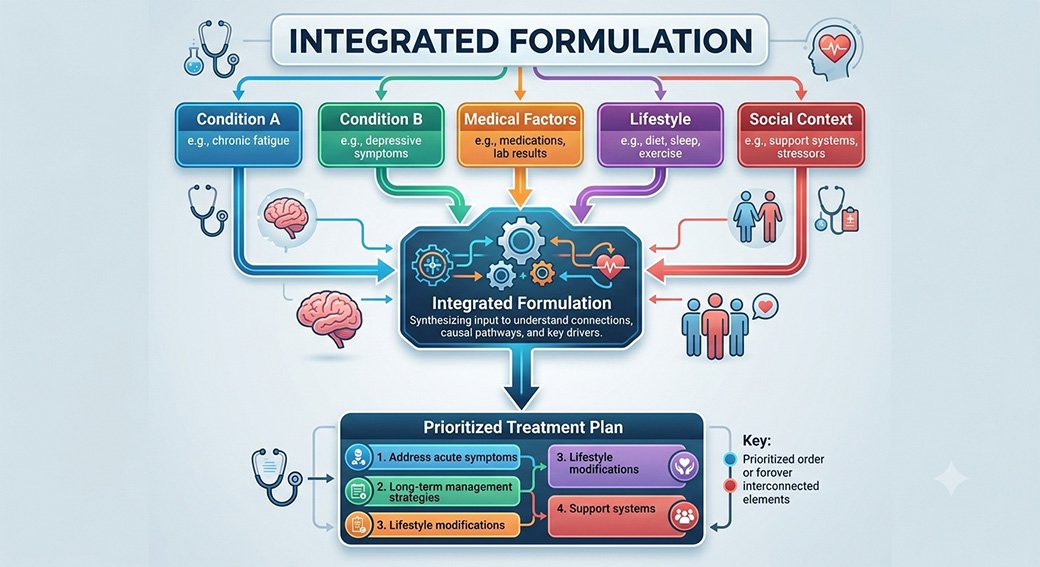
Clinical Pearl
It does not mean that there should be a different plan to address each symptom. The clinician determines what conditions or factors contribute to most of the functional impairment and addresses them first.
How does Family Involvement work in Adult Psychiatry?
Adults are expected to make all the decisions regarding their healthcare independently. However, it is sometimes helpful to involve the family if it is desired by the client and when it helps with assessment, intervention, or recovery.
Family May Help With
- Providing collateral history
- Recognizing changes in behaviour
- Supporting treatment adherence
- Encouraging follow-up
- Supporting daily routines
- Recognizing early warning signs
- Participating in family therapy when appropriate
Patient Autonomy Remains Central
Family participation should not necessarily supersede that of the adult patient.
The patient's:
- Preferences
- Consent
- Privacy
- Treatment goals
Can Psychiatric Problems affect Work and Relationships?
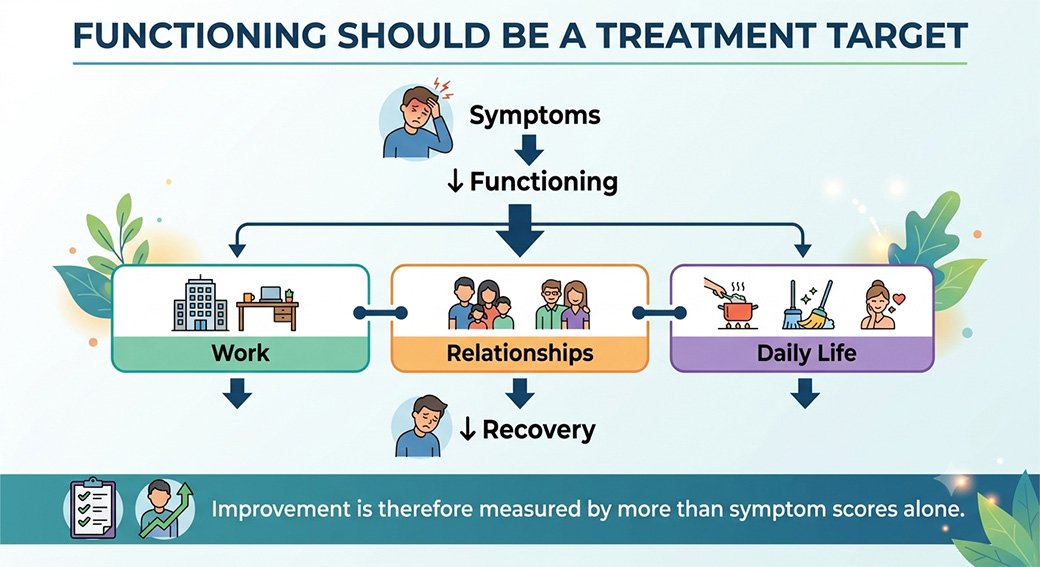
Yes. A mental disorder can impair an individual’s ability to concentrate, motivate, communicate, regulate emotions, make decisions, sleep, work efficiently, relate to others, and function socially. Thus, the psychiatric evaluation not only focuses on the symptoms exhibited by the patient, but also their impact on significant aspects of his/her adult life.
Work
Mental health difficulties may contribute to:
- Reduced concentration
- Absenteeism
- Procrastination
- Low motivation
- Reduced productivity
- Conflict
- Difficulty making decisions
Relationships
Possible effects include:
- Irritability
- Withdrawal
- Reduced communication
- Emotional instability
- Loss of interest
- Reassurance seeking
- Conflict
Can Lifestyle Changes be part of Psychiatric Treatment?
Yes. Interventions relating to lifestyle and behaviors may be helpful in addition to psychiatric care especially in relation to sleep, physical exercise, substance abuse, routines, stress management, and social connection. Such interventions should usually supplement and not necessarily substitute psychiatric therapy for patients with substantial mental illness.
Areas That May Be Discussed
Sleep
- Consistent sleep schedule
- Sleep environment
- Addressing excessive daytime sleep
Physical Activity
Regular activity may support overall mental and physical health.
Substance Use
Reducing or stopping alcohol, nicotine, cannabis, or other substances may be clinically important depending on the presentation.
Daily Structure
Helpful for:
- Depression
- ADHD
- Sleep problems
- Recovery from severe mental illness
Social Connection
Maintaining appropriate social and meaningful activities can support recovery.
Important
Individualized lifestyle tips must be offered. Such tips must not be recommended as an alternative to psychiatric intervention, where drugs, psychological treatment, or specialist assistance is clinically required.
What Is Recovery in Adult Psychiatry?
Recovery does not just mean alleviating psychological problems; it might mean returning to work or school, rebuilding relationships, having better sleep patterns and daily habits, learning coping skills, becoming independent, and decreasing the risk of relapse. The recovery process needs to be customized for each person’s needs.
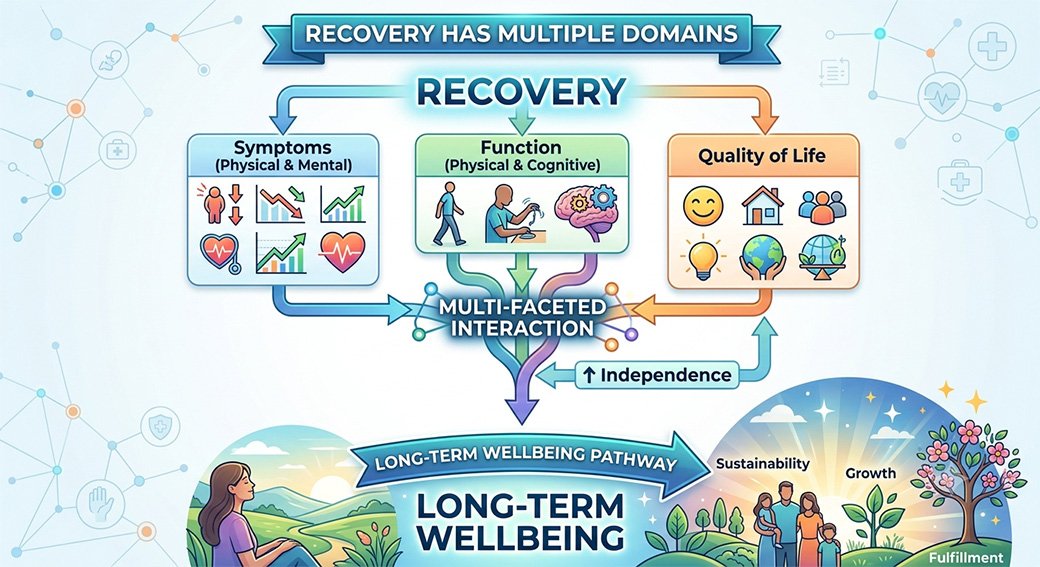
Possible Recovery Goals
Mental Health
- Fewer symptoms
- Greater emotional stability
- Better coping
Work
- Returning to work
- Improved concentration
- Better productivity
Relationships
- Better communication
- Greater emotional availability
- Reduced conflict
Daily Life
- Better sleep
- Regular routine
- Self-care
- Social engagement
What is Relapse Prevention in Psychiatric Care?
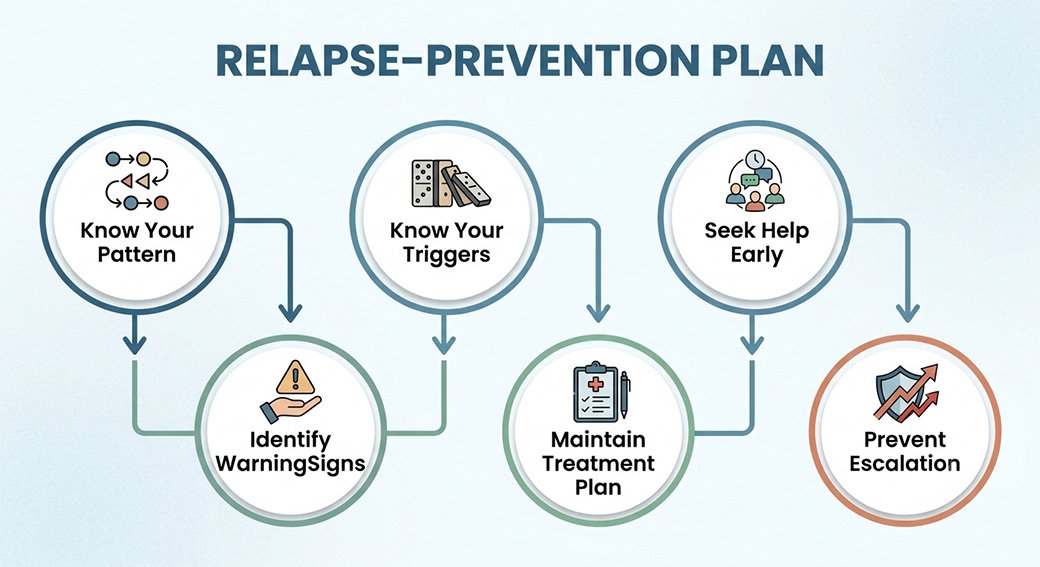
A relapse prevention technique is based on understanding what leads to a high probability of developing symptoms and planning how to address those early warning signs. This can be based on whether you continue taking your medication if you need to, keeping regular routines, tracking sleep and drug use, recognizing early signs of symptoms, and contacting your doctor.
Early Warning Signs May Include
Depending on the condition:
- Reduced sleep
- Increasing anxiety
- Social withdrawal
- Loss of interest
- Reduced self-care
- Increasing irritability
- Return of compulsive behaviours
- Increasing suspiciousness
- Changes in speech or behaviour
- Increased substance use
When Does an Adult Psychiatrist Refer to Another Specialist?
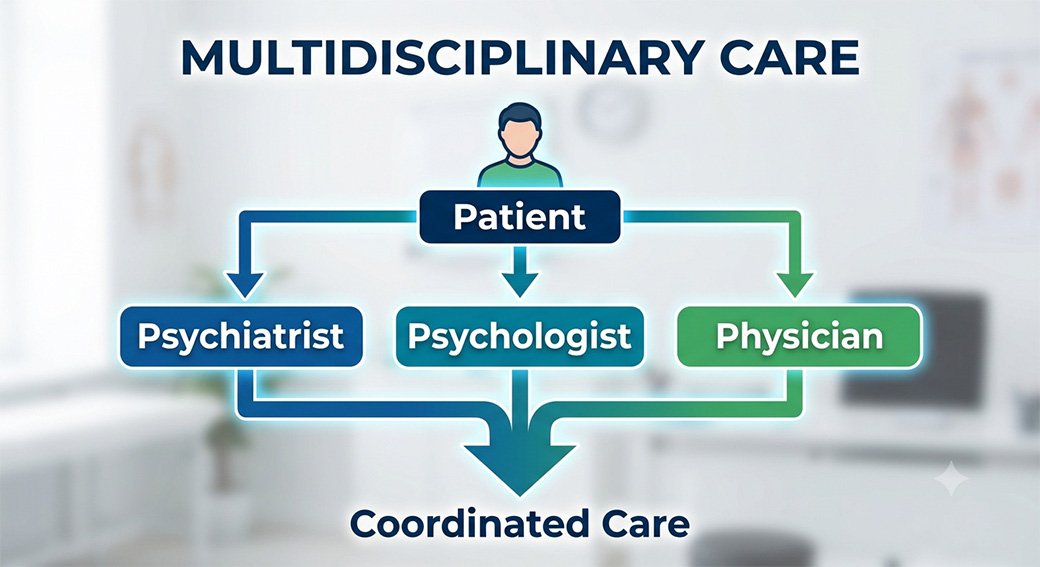
Referral/collaborative care may be indicated if the client’s symptoms indicate a possible medical/neurological condition, if a special psychological evaluation is required, if addiction treatment necessitates a higher level of care, or if another type of professional can provide expertise that is applicable to the client’s situation. Psychiatric services frequently go hand-in-hand with other medical/mental health services.
Possible Collaboration
Clinical Psychologist
For:
- Psychological assessment
- CBT
- ERP
- Psychotherapy
Physician / Specialist
When medical factors require further evaluation.
Neurologist
When neurological symptoms or diagnostic questions are relevant.
Addiction Specialist / Structured Program
When substance use requires a higher level of specialized treatment.
Other Specialists
Depending on:
- Sleep disorders
- Medical conditions
- Women's mental health
- Older-adult psychiatric presentations
- Complex neurological or cognitive symptoms
When Is Urgent Psychiatric Help Needed?
Psychiatric/emergency evaluation might become urgently required in case of an immediate threat to the patient’s life through suicidal tendencies or any other self-inflicted injury, an immediate threat to somebody else’s life, psychosis, behavioral problems, delirium, or any other circumstance in which the safety of the person cannot be ensured. Outpatient consultations must not be made an alternative to emergencies.
Seek Urgent Help When There Is:
- An immediate suicide risk
- A serious suicide attempt
- Severe self-harm
- Imminent risk of serious harm to another person
- Severe psychotic symptoms with impaired safety
- Extreme agitation or behavioural disturbance
- Severe confusion or altered mental state
- Serious intoxication or withdrawal
- Inability to maintain basic safety
Important
In case of any imminent threat, it is better to go for urgent medical help than wait for the regular psychiatry clinic visit.
What if i have been taking Psychiatric Medication for a Long Time?
Psychiatric medication may be indicated for long-term use in certain cases and does not need to be taken for the rest of one’s life in other instances. Whether medication should be continued, tapered off, replaced, discontinued, and so forth hinges on the diagnosis, risk of recurrence, response to treatment, stability, side effects, and individual patient preference.
Long-term Medication Review
The psychiatrist will sometimes question:
- Is the original diagnosis still appropriate?
- Is the medication still helping?
- Has the patient remained stable?
- What is the risk of relapse?
- Are there alternative treatments?
- Is continued treatment recommended?
The Goal
Not simply:
“Continue medication forever.”
And not:
“Discontinue the medicine as soon as you start feeling well.”
Instead:
Periodically review the benefits, risks and necessity thereof.
What happens When Psychiatric Treatment needs to change?
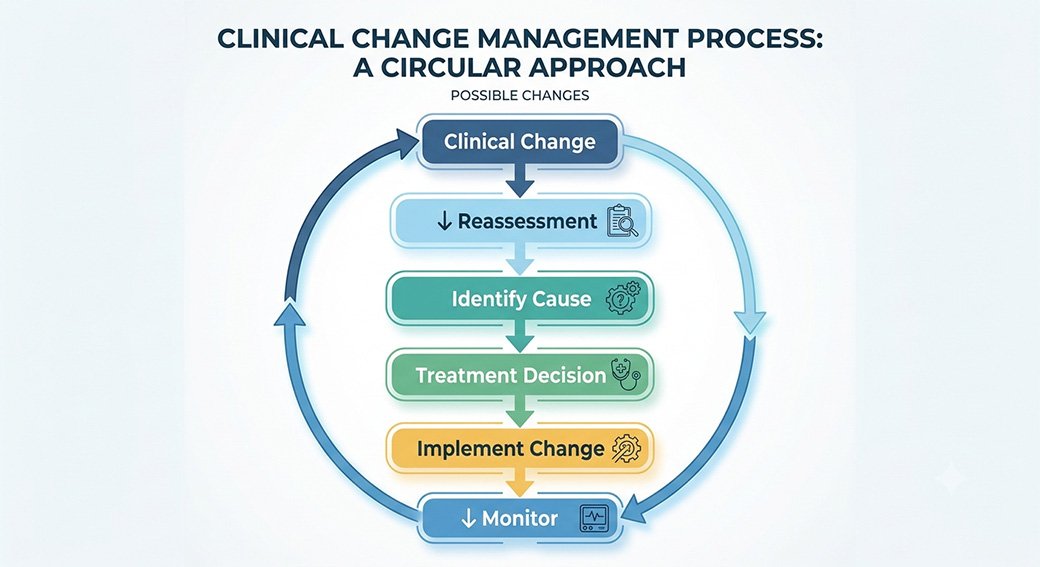
Your psychiatric care may require changes due to changes in symptoms, development of side effects, changes in your life situation, your new diagnosis, or insufficient effectiveness of the existing care. Changes must come after a reassessment, not due to a single hard day.
Examples
Symptoms Return
→ Assess relapse or new stressors.
Side Effects Develop
→ Review medication and alternatives.
New Diagnosis Emerges
→ Reconsider formulation and treatment.
Life Circumstances Change
→ Adjust treatment goals.
Patient Preferences Change
→ Discuss alternatives and shared decision-making.
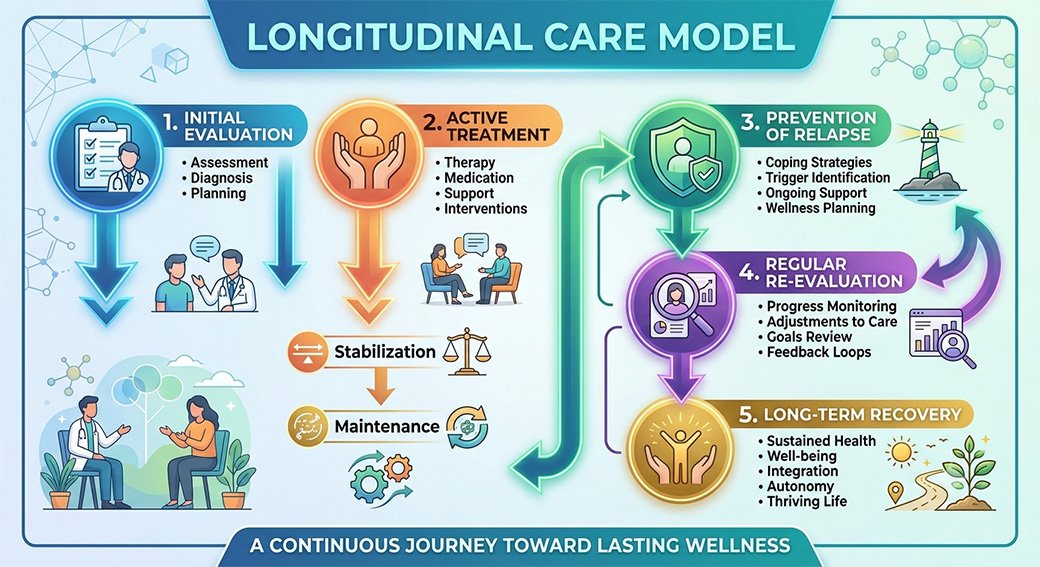
How does Adult Psychiatry support Long-Term Mental Health?
Long-term mental health treatment tries to sustain gains made, recognize early warning signs, decrease chances of recurrence, provide safe management, and promote functioning. The frequency of follow-up may vary throughout the course of long-term treatment, with increased involvement when ill and reduced involvement when stable and functioning.
The Ultimate Goal
- Better symptoms
- Better functioning
- Greater independence
- Sustainable recovery
Need Ongoing Psychiatric Care?
Phone:
Why Choose Headspace Mind Clinic for Adult Psychiatry?
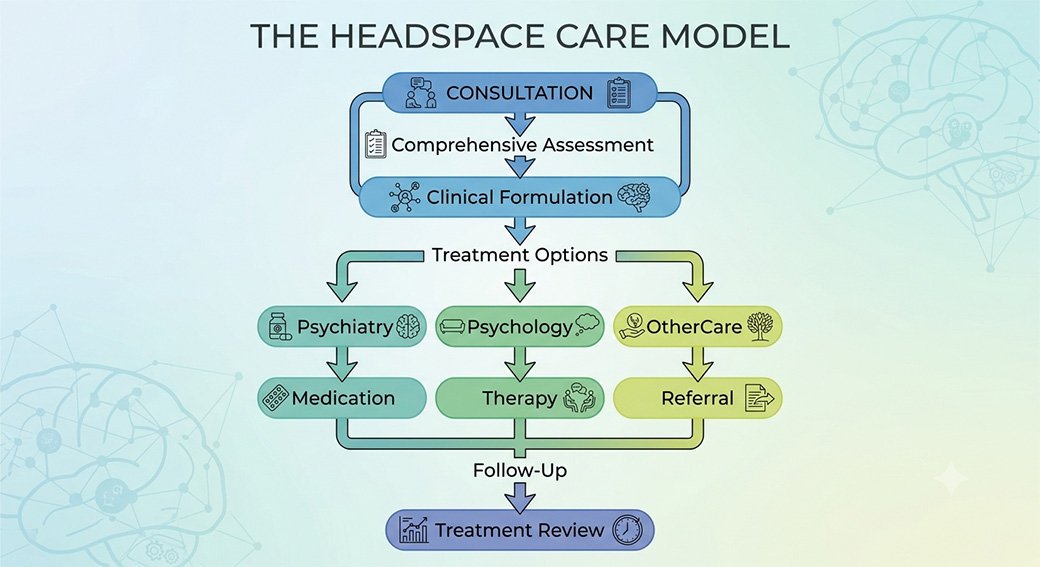
Headspace Mind Clinic provides psychiatric care for adults via assessment, treatment planning, and review. The treatment plan can be incorporated with clinical psychology, psychological assessment, psychotherapy, among others, where the plan takes into consideration the symptoms and their effects on work, personal relationships, sleep, and daily activities.
What This Means For Patients
Evaluation Before Treatment
The treatment plan begins with understanding the clinical problem rather than assuming a diagnosis.
Integrated Services
Psychiatric care can be coordinated with clinical psychology and psychological assessment when appropriate.
Individualized Care
The treatment is decided based on the patient’s symptoms, diagnosis, severity, history, personal choices, and circumstances.
Ongoing Review
It is evaluated continuously depending on changing symptoms and circumstances.
Function-Focused Care
The goal is not only symptom reduction but improvement in areas such as:
- Work
- Relationships
- Sleep
- Daily functioning
- Independence
- Quality of life
Who Provides Adult Psychiatric Care at Headspace?
Adult psychiatric consultations at Headspace are led by qualified psychiatric professionals, with psychological and other services coordinated when clinically appropriate. The psychiatrist is responsible for psychiatric assessment, diagnosis and treatment planning, including medication when indicated, while clinical psychologists provide psychological assessment and evidence-based psychological interventions within their professional scope.
Dr. Deepak Verma
Founder & Medical Director — Headspace Mind Clinic
Areas of Adult Psychiatric Care
- Depression
- Anxiety disorders
- OCD
- Bipolar disorder
- Psychotic disorders
- Adult ADHD
- Panic disorder
- Sleep-related psychiatric concerns
- Addiction and substance-use concerns
- Personality-related difficulties
- Other psychiatric presentations
Psychiatric Care May Include
Assessment
Understanding symptoms, history, medical factors and functioning.
Medication Management
Prescribing and monitoring psychiatric medication when clinically indicated.
Follow-Up
Progress check and modification of treatment plan.
Treatment Planning
Discussing appropriate treatment options.
Psychological Coordination
Using clinical psychology services where psychological assessment or psychotherapy would be indicated.
Important Internal Content Rule
The profile section should be based on the current verified professional credentials and actual services being provided.
Avoid unsupported claims such as:
● "best psychiatrist"
● "leading psychiatrist"
● "No. 1 psychiatrist"
● "guaranteed recovery"
● "specialist in every psychiatric condition"
The page should demonstrate expertise rather than make unverifiable superlative claims.
How Does Adult Psychiatry Work With Clinical Psychology?
Psychiatric services and psychological services differ in their scope of mental health services; however, both services are interrelated and interdependent. A psychiatrist conducts medical psychiatry assessment, whereas a clinical psychologist is responsible for psychological assessments and therapy. When required, it is possible to integrate all these services into one treatment program.
When Psychological Services Can Be Included
Psychological Evaluation
In the case of a definite question about:
- Cognition
- Attention
- Personality
- Emotional functioning
- Other psychological domains
CBT
When cognitive and behavioural intervention is appropriate.
ERP
Particularly relevant for OCD.
Psychotherapy
When emotional, interpersonal or behavioural difficulties warrant structured psychological treatment.
What can you expect from an Adult Psychiatry Consultation at Headspace?
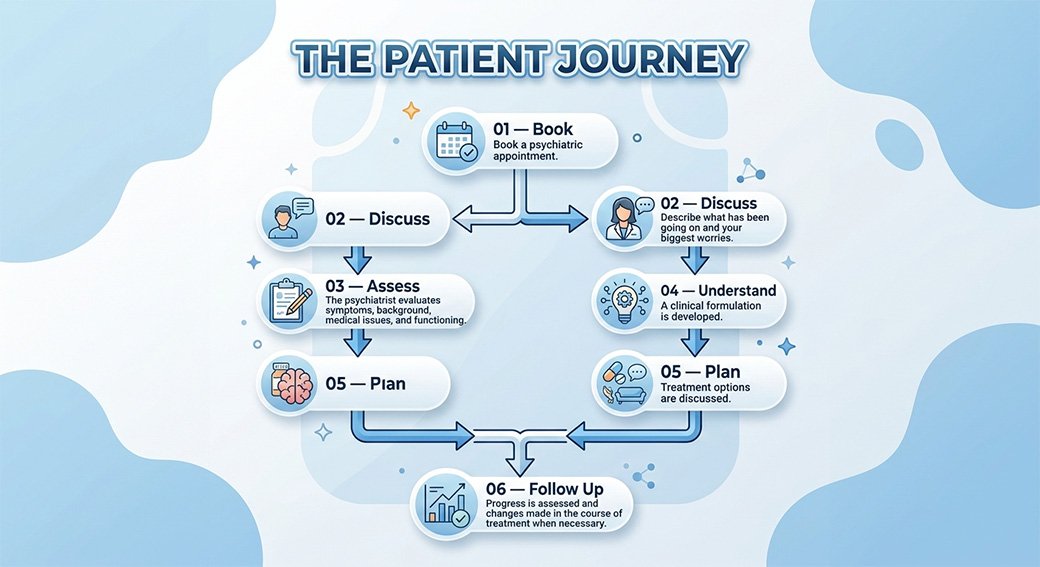
A consultation starts with the identification of reasons for which help is being sought and changes that have occurred. The psychiatrist assesses relevant symptoms, history, medical issues, and functioning, provides the clinical perspective on the issue, and explains the available treatments. Depending upon the clinical context, the initial consultation can result in treatment, testing, or referral.
The Key Principle
You don’t need to come knowing your diagnosis
The consultation is where that clinical question is explored.
What should I bring to my First Psychiatric Appointment?
Bring any history of psychiatric, psychological, or other relevant medical assessments, your current and past medication list, and any significant medical problems. It will be useful for you to create a brief chronology of symptoms and identify the important questions that you would like to ask during the appointment.
Quick Checklist
- Previous psychiatric prescriptions
- Current medication list
- Previous psychological reports
- Relevant medical records
- Important medical conditions
- Previous investigations where relevant
- Brief symptom timeline
- Questions for the psychiatrist
Optional
If someone close to you has observed important changes in your behaviour, sleep, mood, or functioning, their observations may sometimes be useful as collateral information, subject to appropriate consent and clinical circumstances.
Can a Family Member Accompany an Adult Patient?
Yes, an adult patient is free to have his family member along during the visit where this may be relevant. Family members may be able to contribute valuable information regarding the patient’s medical history or even assist in other ways. Adult patients still have some level of independence in health care decisions.
Family Involvement May Help With
- Treatment history
- Changes in behaviour
- Medication history
- Practical support
- Follow-up
- Recognizing early warning signs
Patient Autonomy
- Consent
- Preferences
- Privacy
- Treatment goals
Is an Adult Psychiatric Consultation Confidential?
Psychiatric consultations are performed under the provisions of the professional and legal obligations related to confidentiality and privacy. Information is usually treated confidentially unless there is an exceptional case that involves the need for disclosure legally or ethically.
Why Confidentiality Matters
- Substance use
- Relationship difficulties
- Sexual concerns
- Work stress
- Suicidal thoughts
- Self-harm
- Family conflict
- Psychotic symptoms
Important
The page should not promise absolute confidentiality. The exact boundaries depend on:
● Applicable Indian law
● Professional obligations
● Consent
● Clinical circumstances
● Safety considerations