
Exposure and Response Prevention (ERP) Therapy in Delhi
A Specific Psychological Therapy for OCD and Obsessive-Compulsive Problems
Trust Strip




Quick Facts
| Item | Details |
|---|---|
| Therapy | Exposure and Response Prevention |
| Common Application | OCD |
| Treatment Type | Behavioural / CBT-based |
| Core Principle | Exposure + Response Prevention |
| Approach | Gradual & Structured |
| Format | Individualized |
| Provider | Qualified Clinical Psychology Professional |
| Medication | May be combined with psychiatric treatment when appropriate |
What is Exposure and Response Prevention (ERP)?
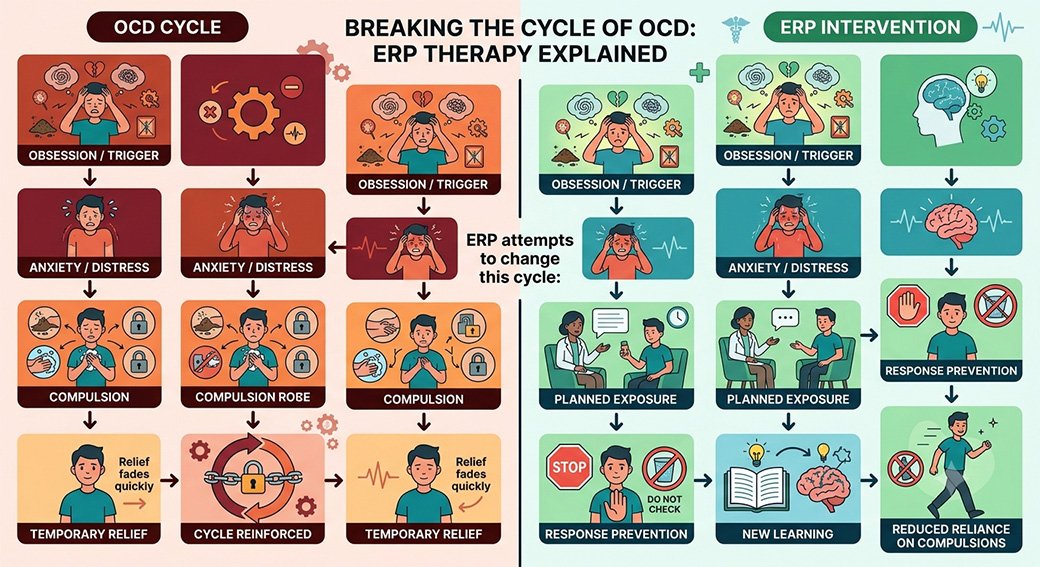
Exposure and Response Prevention (ERP) is a form of therapy in which the patient gets exposed to situations, ideas, sensations or anything that causes anxiety and obsessive thoughts while lowering any compulsions that are employed to ease the mind. Exposure and response prevention is especially effective as a psychological treatment for obsessive-compulsive disorder (OCD).

ERP is commonly considered a specialized form of cognitive behavioural therapy (CBT). The treatment focuses on two connected components:
Exposure
Approaching or deliberately encountering a feared trigger.
Response Prevention
Reducing or resisting the compulsive behaviour, ritual, reassurance seeking, or avoidance that would normally follow.
THE ERP MODEL
EXAMPLE
Clinical Pearl
ERP therapy isn’t just about exposure to something fear-provoking. The response-prevention component is important because through this type of therapy, the patient can decrease their dependence on compulsions, rituals, and other activities related to OCD.
How Does ERP Work?
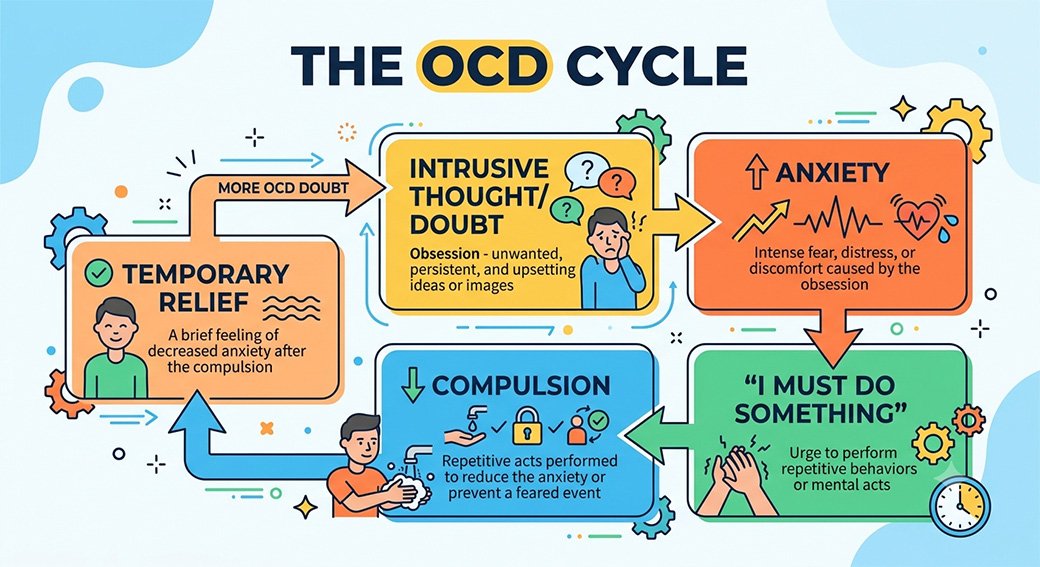
ERP works by helping people approach feared triggers without automatically performing the compulsive or avoidance response that normally follows. Repeated, appropriately planned practice can provide opportunities for new learning, greater tolerance of distress and uncertainty, and reduced dependence on compulsions. ERP is individualized rather than based on forcing a person into feared situations.
THE OCD CYCLE
ERP Interrupts The Cycle
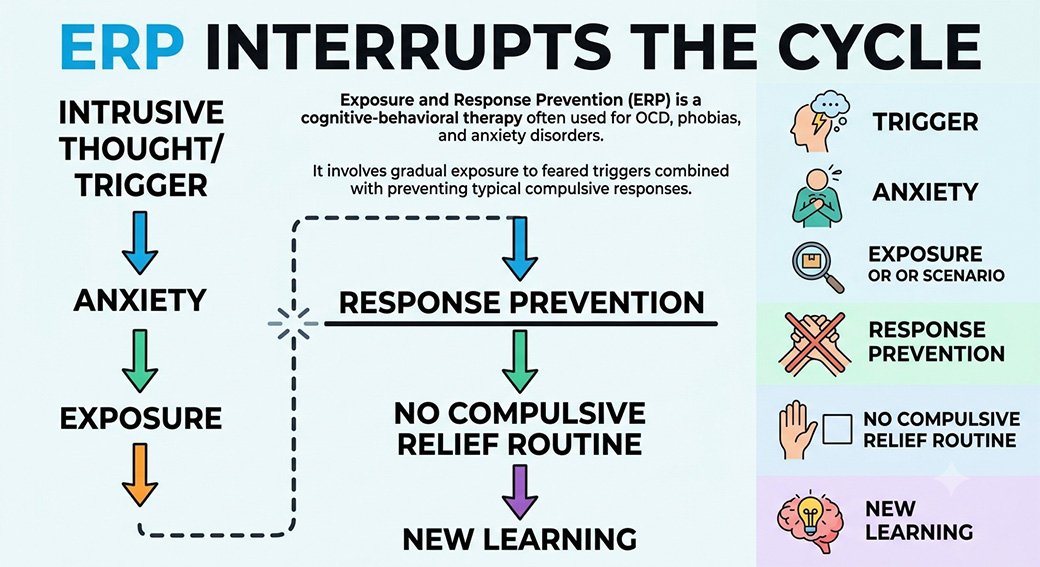
- Anxiety can be tolerated
- Uncertainty can be tolerated
- Thoughts do not necessarily require action.
- Compulsions are not the only way to respond.
- Feared outcomes may not occur as predicted.
- Discomfort notwithstanding, the individual can still function without carrying out the ritual.
Important:
ERP does not consist of proof that all feared events cannot happen. For many OCD fears, complete certainty is impossible. The treatment may instead focus on developing the ability to tolerate uncertainty without performing compulsions.
Clinical Pearl
ERP does not aim to ensure that something that the sufferer dreads never occurs. It aims to teach an individual how to alter their connection to fear, uncertainty, obsessions, and compulsions so that OCD is not such a powerful influence on everyday activities.
Is ERP a Type of CBT?
Yes. ERP is generally considered a specialized behavioural treatment approach within the broader CBT framework and is particularly important in psychological treatment for OCD. While CBT encompasses several techniques, ERP specifically focuses on systematic exposure to feared triggers combined with reducing compulsive or avoidance responses.
CBT → ERP ARCHITECTURE
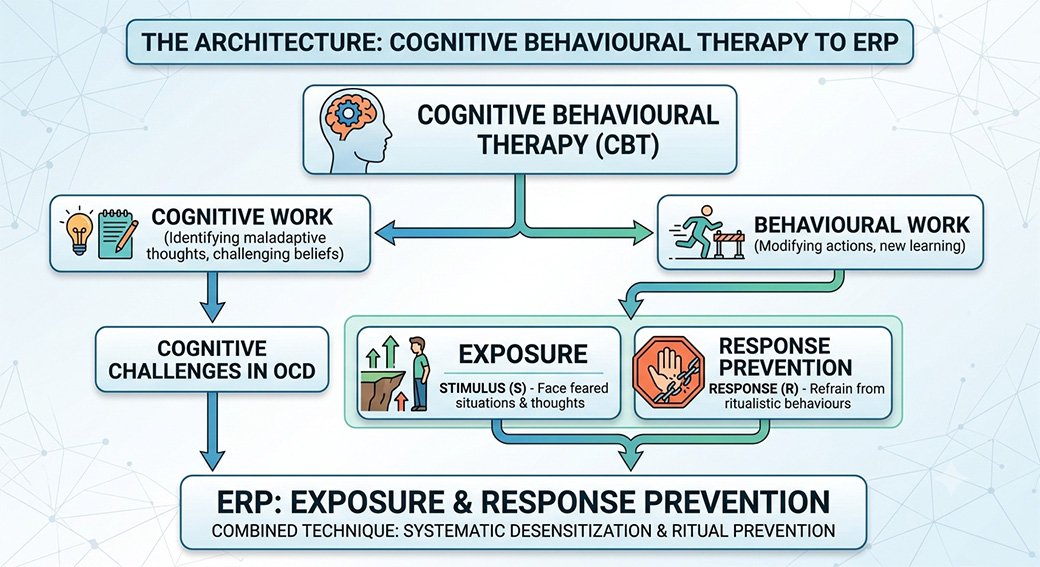
CBT AND ERP
| CBT | ERP |
|---|---|
| Broad treatment framework | Specialized treatment approach |
| Cognitive + behavioural techniques | Exposure + response prevention |
| Used across many conditions | Particularly associated with OCD |
| May involve cognitive restructuring | Focuses strongly on behavioural learning |
| Multiple techniques | Highly structured exposure-based approach |
Important:
ERP should not be presented as completely separate from CBT.
It is better understood as a specialized behavioural intervention that sits within the broader CBT treatment family.
Who Can Benefit From ERP?
ERP is especially useful for those individuals diagnosed with OCD who show symptoms including compulsions, avoidance, reassurance-seeking, or any other repetitive behavior in an effort to lower their anxiety or prevent certain consequences. ERP can be applied even to other forms of OCD, but in order to use it, first, there must be an assessment.
Common OCD Presentations
Contamination OCD
Fears may involve:
- Germs
- Dirt
- Illness
- Contaminated objects
- Excessive washing
- Cleaning
- Avoiding surfaces
- Repeated checking for contamination
Checking OCD
Examples include fears about:
- Doors
- Appliances
- Mistakes
- Safety
- Harm
Harm-Related OCD
A person may experience intrusive fears about:
- Accidentally harming someone
- Losing control
- Causing an accident
- Avoidance
- Reassurance seeking
- Mental checking
- Repeated review of events
Relationship OCD
Obsessive doubt may involve:
- "Do I really love my partner?"
- "Is this definitely the right relationship?"
- "What if I am making a mistake?"
- Repeated comparison
- Reassurance seeking
- Checking feelings
- Mental analysis
Religious / Moral OCD
This may involve intrusive fears concerning:
- Sin
- Morality
- Religious wrongdoing
- Responsibility
Possible compulsions:
- Repeated prayer
- Mental rituals
- Confession
- Reassurance seeking
Sexual- or Identity-Related OCD
Intrusive thoughts may involve unwanted doubts or fears concerning sexuality or identity. Compulsions may include:
- Mental checking
- Reassurance seeking
- Testing
- Avoidance
Symmetry / Ordering OCD
The person may feel compelled to:
- Arrange objects
- Repeat actions
- Achieve a particular sense of "rightness"
Purely Mental Compulsions
Not every compulsion is visible. Some people engage in:
- Mental reviewing
- Repeating phrases
- Mental checking
- Analyzing memories
- Seeking internal certainty
Clinical Pearl
OCD is not defined by one particular theme. ERP can be adapted to different obsessive and compulsive patterns, including contamination, checking, harm, relationship, religious, symmetry, and predominantly mental compulsions.
Difference between Exposure and Response Prevention
Exposure entails approaching an appropriate stimulus that elicits fear, whereas response prevention entails reducing or resisting the behavior that follows. The two techniques are complementary, with one providing a learning opportunity, while the other reduces reinforcement.
Exposure
Exposure might involve approaching:
- A feared object
- A feared situation
- An uncomfortable sensation
- An intrusive thought
- Uncertainty
- A situation previously avoided
Response Prevention
Response prevention may involve reducing:
- Washing
- Checking
- Reassurance seeking
- Avoidance
- Mental reviewing
- Repeating rituals
- Other compulsive responses
Why Both Matter
Think about a person who often checks if a door is locked.
If they approach the door but immediately check it ten times, the compulsive cycle may remain intact.
ERP may instead involve planned exposure to the uncertainty associated with the door while reducing repeated checking, under appropriate therapeutic guidance.
Clinical Pearl
Exposure without response prevention may not adequately target the compulsive cycle. ERP combines both elements so that the person can learn to tolerate uncertainty or distress without relying on the ritual that previously provided temporary relief.
Is ERP Only Used for OCD?
ERP is most strongly associated with OCD treatment, where it is a central evidence-based psychological approach. Exposure-based interventions are also used in other anxiety-related conditions, although the treatment may be structured differently. The term ERP should therefore be used carefully rather than treating every form of exposure therapy as identical to OCD-focused ERP.
OCD
ERP is a major psychological treatment approach for OCD.
Other Anxiety Conditions
Exposure-based CBT approaches can also be used for:
Important Architectural Distinction
ERP Page
Owns:
"What is ERP and how does it function?"
OCD Condition Page
Owns:
"How is OCD treated, including ERP, medication, and other treatments?"
CBT Page
Owns:
"What is CBT and what is the overall concept behind CBT?"
This avoids making the three pages compete against each other.
Is ERP Suitable for Everyone With OCD?
ERP is an essential form of treatment for people with OCD, but it needs to be personalized based on the patient's circumstances. This involves considering the severity of symptoms, the types of compulsions and avoidance involved, comorbidities, developmental issues, goals of treatment, and the ability of the person to engage with treatment effectively.
Factors To Consider
- Type of OCD symptoms
- Severity
- Functional impairment
- Comorbid anxiety or depression
- Other psychiatric conditions
- Developmental stage
- Previous treatment
- Treatment preferences
- Motivation and readiness
- Cognitive functioning
Children & Adolescents
ERP can be adapted for younger patients. Treatment may involve:
- Developmentally appropriate explanations
- Parent/caregiver involvement
- Family-based strategies
- Age-appropriate exposure exercises
ADULTS
Treatment can focus on:
- OCD triggers
- Compulsions
- Avoidance
- Reassurance seeking
- Mental rituals
- Functional impairment
Clinical Pearl
ERP should be individualized rather than delivered as a standard list of feared situations. A qualified clinician determines how exposure and response prevention should be structured according to the person's symptoms, circumstances, and treatment goals.
Does ERP Mean I Will Be Forced to Face My Worst Fear?
No. Proper ERP therapy is collaborative and planned, not coercive. Together, the therapist and the client determine appropriate targets for therapy and create a step-by-step plan taking into consideration the individual’s clinical profile and readiness. The exposure exercises aim at facilitating learning, not at overloading or punishing the client.
- Planned
- Collaborative
- Structured
- Gradual where appropriate
- Linked to treatment goals
- Repeated when useful
Example
Exposure Hierarchy
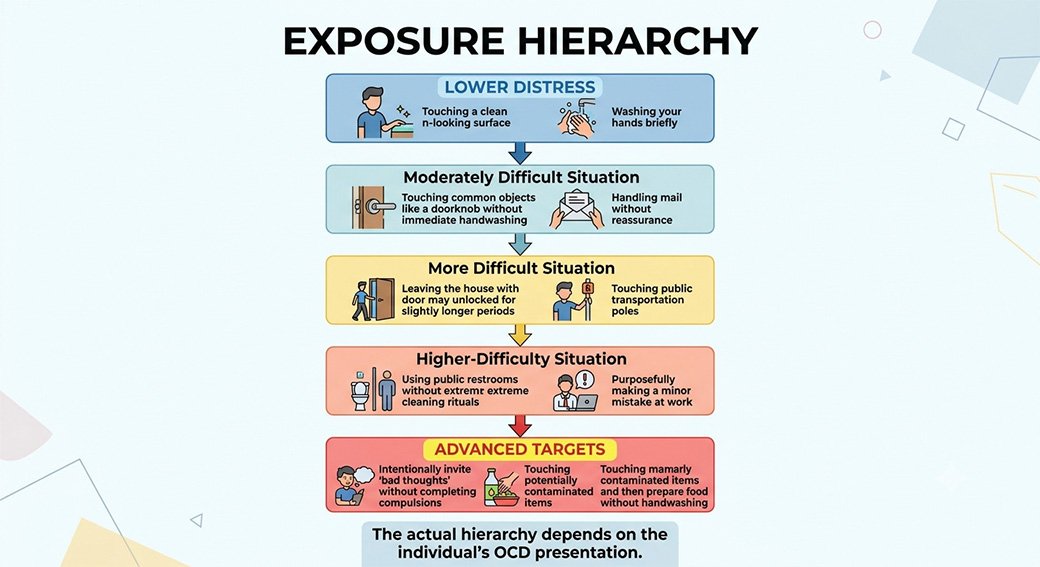
Important:
Exposure is not about deliberately causing unnecessary distress. The purpose is therapeutic learning.
Clinical Pearl
Good ERP is not "flooding" someone with fear. It is a collaborative treatment process designed around meaningful targets, appropriate exposure exercises, and reduction of compulsive responses.
Looking for ERP Therapy in Delhi?
Phone:
What Happens During ERP Therapy?
ERP typically starts off with a process to assess the patient’s obsessive thinking, compulsions, avoidance, seeking reassurance and functionality. Once a formulation is made, the exposure targets will be identified and gradual exposure techniques practiced together with minimizing the compulsions. Progress is reviewed throughout treatment and the approach is adjusted when necessary.
ERP Treatment Journey
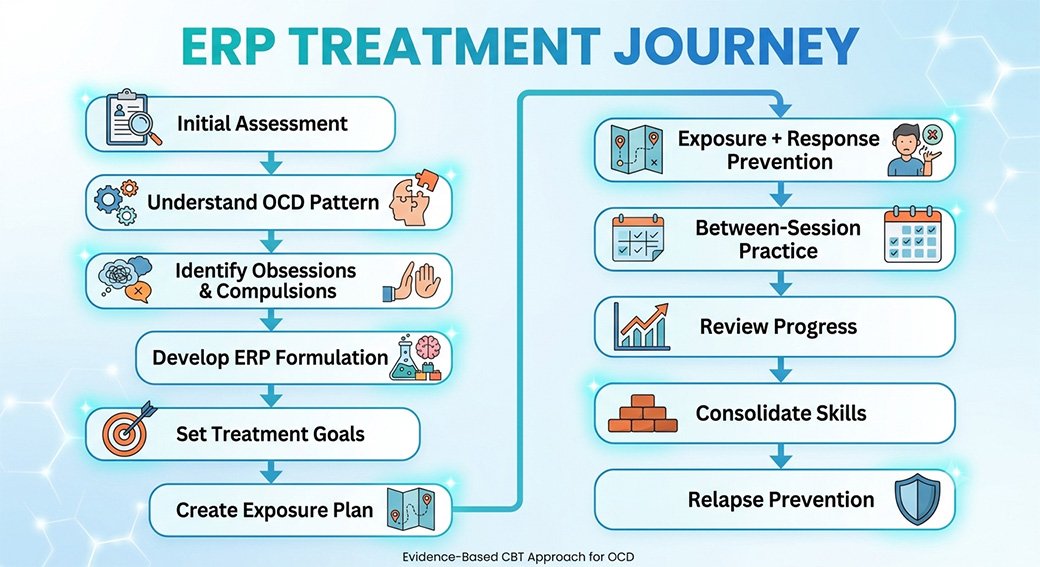
Step 1 — Assessment
The therapist explores:
- Obsessions
- Compulsions
- Avoidance
- Reassurance seeking
- Mental rituals
- Triggers
- Time spent on rituals
- Functional impairment
- Previous treatment
- Other psychological symptoms
Step 2 — Understanding the OCD Cycle
The therapist and patient identify how the symptoms interact. For example:
- Trigger
- intrusive thought
- anxiety
- compulsion
- temporary relief
- stronger OCD cycle
Step 3 — Developing an ERP Plan
The therapist and patient identify situations that could be approached through exposure and determine which compulsive responses need to be reduced.
Step 4 — Exposure and Response Prevention
The person approaches an agreed trigger and works on resisting the compulsive response.
Step 5 — Between-Session Practice
ERP skills are practised outside therapy so that learning can transfer into everyday life.
Step 6 — Progress Review
The therapist reviews:
- Symptom changes
- Compulsions
- Avoidance
- Functional improvement
- Difficulties with exposure
- New OCD patterns
Clinical Pearl
ERP is a process rather than a single exercise. Assessment, formulation, exposure planning, response prevention, practice, and progress review all contribute to effective treatment.
How Is OCD Assessed Before Starting ERP?
Prior to initiating ERP, the clinician must first determine the individual's OCD symptoms, which may include intrusive thoughts, compulsions, avoidance, need for reassurance, mental rituals, trigger factors, and functional impairment. The assessment would also look into other co-occurring psychological problems and if ERP would be the right intervention for the individual.
What The Therapist May Explore
Obsessions
- What thoughts or images occur?
- How often do they occur?
- What do they mean to you?
- What makes them particularly distressing?
Compulsions
- What do you do to reduce anxiety?
- How often do you perform the behaviour?
- How long does it take?
- What happens if you try not to do it?
Avoidance
The person may avoid:
- Places
- Objects
- People
- Activities
- Situations
- Thoughts or conversations
Reassurance Seeking
This may involve repeatedly asking:
- "Are you sure?"
- "Did I do something wrong?"
- "Do you think this is safe?"
- "Do you think I caused harm?"
Mental Rituals
The person may perform repetitive mental activities such as:
- Reviewing
- Checking memories
- Repeating phrases mentally
- Analyzing
- Trying to achieve certainty
Functional Impact
- Work
- Education
- Relationships
- Family life
- Sleep
- Daily routines
- Social activities
- Time available for normal activities
Clinical Pearl
The ERP treatment plan must consider the OCD cycle itself and not just its diagnosis. Even two individuals suffering from OCD could have vastly differing exposure targets due to differences in their obsessions, compulsions, avoidance behaviors, and maintaining factors.
What Is an ERP Formulation?
The ERP formulation involves the processes through which the individual's trigger, intrusive thought, interpretation, anxiety, compulsion, avoidance, and reassurance seeking work together to maintain the problem of OCD. Through the ERP formulation, the specific behaviors that provide temporary relief and reinforce the OCD cycle can be identified.
Example
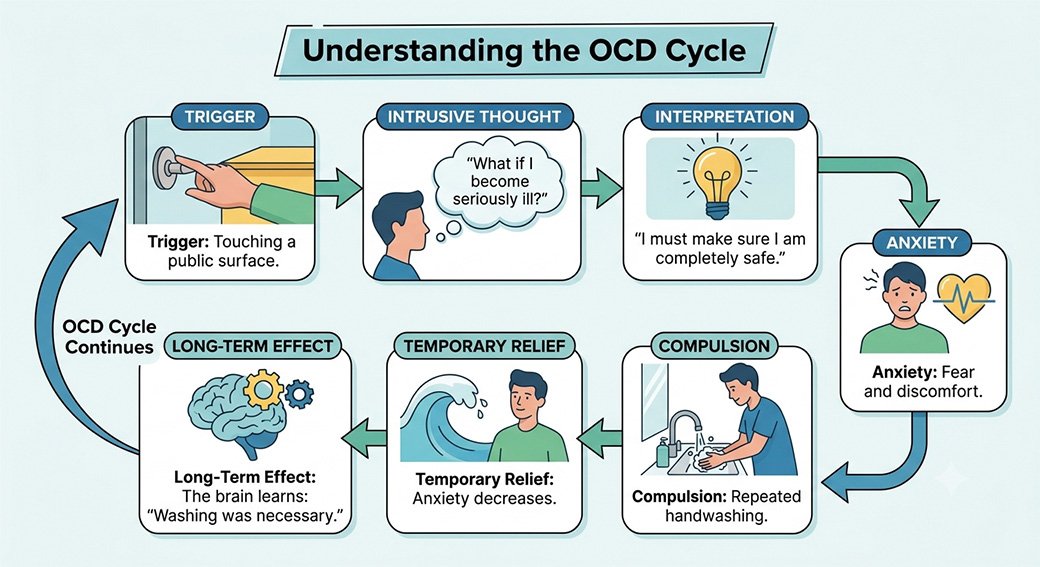
ERP Target
| ERP may therefore focus on: |
| ● Touching an appropriate trigger |
| ● Reducing or delaying washing |
| ● Allowing uncertainty and discomfort |
Clinical Pearl
The target of ERP is often not the intrusive thought itself. Treatment focuses on changing the behavioural response to the thought—particularly compulsions, avoidance, reassurance seeking, and other strategies used to obtain certainty or relief.
How Is an ERP Exposure Hierarchy Created?
ERP exposure hierarchy involves a unique set of stimuli or circumstances that are associated with OCD and that may be worked on in therapy. When choosing what exposures to do and the order of their implementation, the psychologist takes into consideration various aspects, including distress, compulsions, avoidance, and therapy goals.
Example Hierarchy
| Exposure Target | Relative Difficulty |
|---|---|
| Touching a relatively low-concern object | Lower |
| Touching a shared household object | Moderate |
| Using a public object | Higher |
| Delaying washing after exposure | Higher |
| More challenging contamination-related situation | Advanced |
Important:
An ERP hierarchy is not simply:
"Easy fear → difficult fear."
The therapist also considers:
● What compulsions occur?
● What avoidance is maintaining the problem?
● What is clinically important?
● What does the patient want to regain?
● What exposures provide useful therapeutic learning?
Flexible ERP
- Current symptoms
- Life circumstances
- Treatment progress
- New OCD patterns
- Practical opportunities for exposure
Clinical Pearl
A good ERP hierarchy is individualized and clinically meaningful. It does not aim to make the most terrifying hierarchy possible. The purpose is to determine the exposures that interrupt the OCD process.
What Types of Exposure Are Used in ERP?
ERP exposure can involve real-life situations, objects, sensations, thoughts, images, or uncertainty associated with OCD. Depending on the symptoms of the person and treatment formulation, the type of exposure is determined. The exposure could be with the therapist, independently between the sessions, and also through exercises in real-life situations.
1. In-Vivo Exposure
In-vivo exposure involves approaching an actual feared situation or trigger.
Example
A person with contamination fears may intentionally touch an agreed object.
2. Imaginal Exposure
Sometimes the feared situation cannot easily be recreated in real life. The therapist may therefore use:
- Written descriptions
- Imagery
- Narratives
- Other structured methods
- Harm
- Responsibility
- Uncertainty
- Catastrophic outcomes
3. Interoceptive Exposure
Some people become frightened by physical sensations.
4. Uncertainty-Based Exposure
Important:
The appropriate exposure method depends on the clinical problem. ERP should not be reduced to one specific technique.
What Is Response Prevention in ERP?
Response prevention refers to the diminishing or preventing the compulsive reaction to the stimulus. For instance, the individual may choose not to wash hands, check repeatedly, seek reassurance, do a mental review of an incident or any other action that is meant to relieve anxiety or uncertainty. The specific response targeted depends on the individual's OCD cycle.
Visible Compulsions
Examples include:
- Washing
- Cleaning
- Checking
- Repeating
- Ordering
- Counting
Less Visible Compulsions
Response prevention can also target:
- Mental checking
- Mental reviewing
- Repeating words internally
- Repeating words internally
- Rumination used to achieve certainty
- Reassurance seeking
- Testing
- Comparing
Response Prevention Never Necessarily Means:
"Never perform the compulsion again from the first day."
Treatment is tailored to the individual.
The therapist works in collaboration with the patient on how to most effectively decrease the compulsive responses.
Clinical Pearl
Compulsions are not limited to visible rituals. Mental reviewing, reassurance seeking, checking feelings, repeated analysis, and other internal strategies can also function as compulsions and may need to be addressed during ERP.
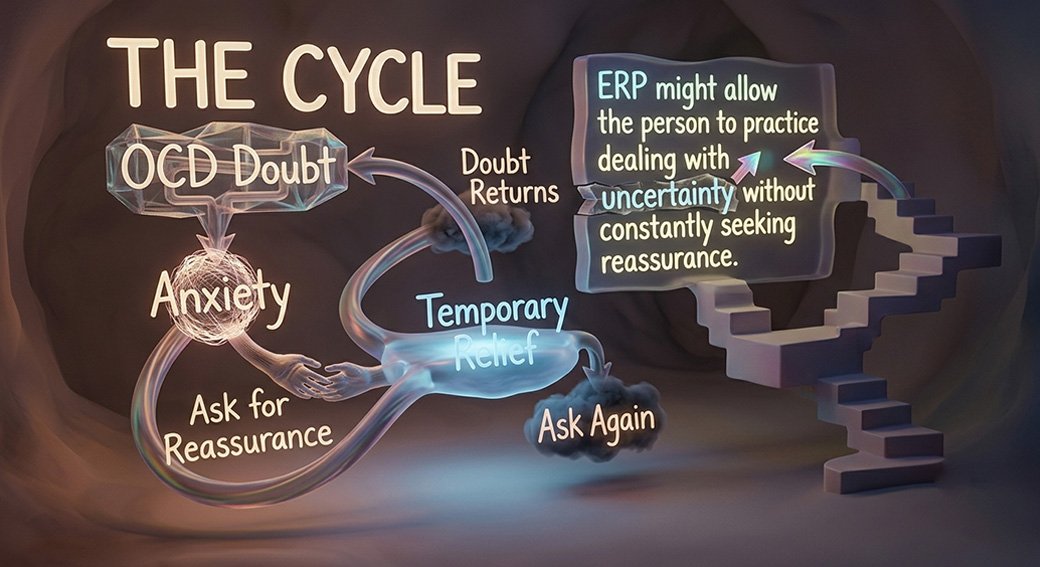
How Does ERP Address Reassurance Seeking?
The act of repeatedly looking for reassurance can become an obsession when it is employed to attain certainty or relieve OCD-induced anxiety. Consequently, ERP might entail recognizing such compulsive reassurance-seeking behavior and decreasing dependence on it. This may include reassurance from family members, spouses, friends, psychologists, or even constant searching online.
Example
The Cycle
Family Involvement
- Answer repeated questions
- Participate in checking
- Help with rituals
- Avoid situations for the patient
- Provide repeated reassurance
Clinical Pearl
Reassurance might be seen as supportive in an indirect manner when it is continually used as a means of seeking certainty; therefore, ERP might include changing reassurance.
How Does ERP Address Mental Compulsions?
Compulsive thoughts are repetitive inner behaviors that are engaged in to relieve anxiety or gain certainty and include activities like recalling memories, examining options, checking one's emotions, repeating words, or attempting to negate negative thoughts. ERP can address these patterns by helping the person notice the urge to perform the mental ritual and practise responding differently.
Examples
A person may:
- Replay a conversation repeatedly
- Check whether they "felt the right emotion
- Analyze whether they are a good person
- Mentally repeat a phrase.
- Review memories for evidence
- Test whether an intrusive thought feels meaningful.
ERP Target
Instead of:
Intrusive thought → mental analysis → temporary certainty
Treatment may involve:
Intrusive thought → notice urge → allow uncertainty → refrain from mental ritual
Important:
This does not mean that all actions of thought or reflection are compulsions. The clinical context matters.
Can ERP Be Done at Home?
Yes. ERP often involves practice outside therapy because OCD behaviors take place in the real world. It is important that any home practice be based on a treatment plan created specifically for the individual with their therapist. The individual will carry out agreed exercises and record difficulties, progress, and learnings to be discussed later in therapy.
Why Home Practice Is Important
OCD rarely occurs only inside the therapy room. A person can be triggered by:
- Home
- Work
- College
- School
- Public places
- Social situations
Example
In Session
The therapist and patient practise an agreed exposure.Between Sessions
The patient repeats an appropriate exercise independently.Next Session
They review:- What happened?
- What was difficult?
- What compulsions occurred?
- What was learned?
- Does the exposure need modification?
Clinical Pearl
ERP is geared toward generalizing the learning from therapy into real life. Homework assignments can be significant, but they need to be scheduled properly rather than being uncontrolled and overexposure.
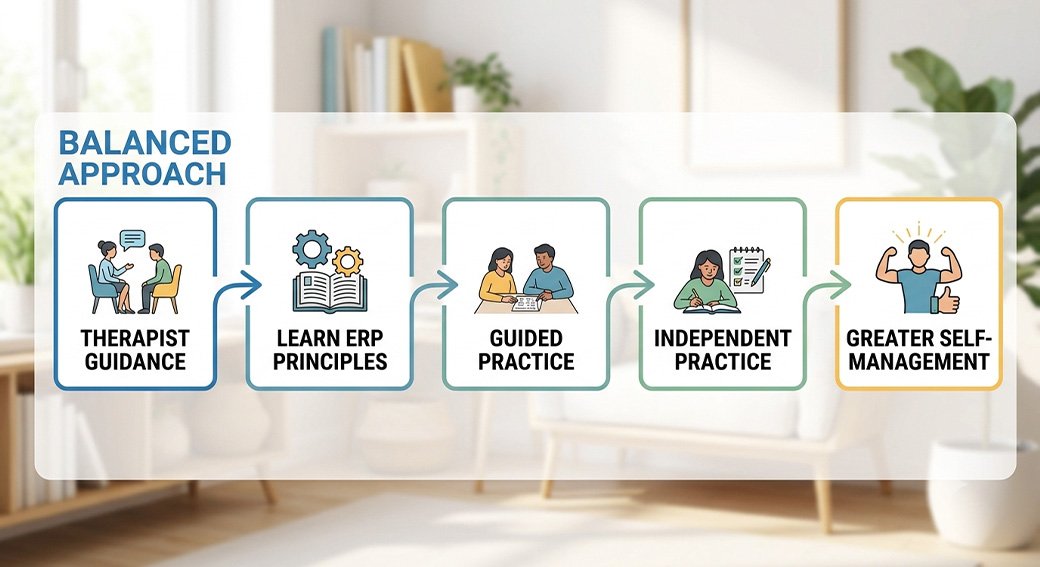
Is ERP Done With a Therapist or Alone?
Exposure and Response Prevention therapy can include therapist-led practice, patient-led practice, or a mixture of both. The early stages of treatment usually require assistance of the professional for proper understanding of the exposure and response prevention techniques. As skills develop, patients may increasingly practise appropriate exercises independently.
Therapist-guided ERP
Useful when:
- Beginning treatment
- Exposure is particularly challenging
- The patient is uncertain about response prevention
- Compulsions are complex
- Family accommodation is significant
Independent Practice
May become increasingly useful as the patient develops confidence with:
- Exposure planning
- Recognizing compulsive urges
- Response prevention
- Tolerating uncertainty
- Reviewing progress
Balanced Approach
How Is Progress Monitored During ERP?
ERP can be measured by the modification of compulsions, avoidance, reassurance-seeking, duration of OCD-related behaviors, anxiety, and normal functioning. Clinical evaluations and symptom scales could also be used by therapists to assess improvement. Improvement is not only characterized by reduction of intrusive thoughts; rather, less compulsive behavior and more normal activity are other signs of successful treatment.
What May Be Tracked?
OCD Symptoms
- Frequency of intrusive thoughts
- Intensity of distress
- Compulsions
- Avoidance
- Mental rituals
- Reassurance seeking
Time
How much time is spent:
- Checking
- Washing
- Reviewing
- Seeking reassurance
- Performing rituals
Functioning
Can the person:
- Work more effectively?
- Study?
- Leave home?
- Socialize?
- Sleep better?
- Participate in family activities?
- Make decisions without prolonged checking?
Important:
A person may continue to experience intrusive thoughts while still making substantial progress. The goal is not necessarily:
"Never have an intrusive thought again."
The goal may be:
"I can have the thought without allowing OCD to control what I do."
Clinical Pearl
ERP success is not measured only by whether intrusive thoughts disappear. A meaningful outcome can be reduced compulsions, less avoidance, greater tolerance of uncertainty, and increased ability to live according to personal goals despite intrusive thoughts.
Ready to Explore ERP Therapy in Delhi?
Phone:
How Effective Is ERP for OCD?
ERP (Exposure and Response Prevention) therapy is a very well-established form of psychological therapy in treating OCD. Its efficacy differs among patients depending on several variables, including severity of the symptoms, type of OCD manifestation, quality of the therapy itself, patient’s cooperation and presence of any comorbid disorders.
- Compulsions
- Avoidance
- Reassurance seeking
- Mental rituals
- Time consumed by OCD
- Functional impairment
- Ability to tolerate uncertainty
- Quality of life
What Can Influence ERP Outcomes?
1. Accurate Clinical Assessment
Treatment needs to target the actual OCD cycle.
3. Consistent Practice
ERP skills need to be transferred into everyday situations.
5. Therapeutic Relationship
Collaboration and trust between therapist and patient are essential in ERP therapy.
6. Appropriate Treatment Intensity
Some patients may require a more intensive or extended treatment approach.
2. Appropriate ERP Formulation
Exposure targets should be linked to the individual's maintaining behaviours.
4. Symptom Complexity
Some presentations involve:
- Multiple obsessional themes
- Extensive rituals
- Mental compulsions
- Significant avoidance
- Family accommodation
- Coexisting psychiatric difficulties
Clinical Pearl
ERP has strong evidence for OCD, but treatment response is individual. Meaningful improvement is better assessed through changes in compulsions, avoidance, functioning, and the person's ability to respond differently to intrusive thoughts than through a promise of complete symptom elimination.
How Long Does ERP Therapy Take?
There is no universal number of ERP sessions that would apply to everybody. Duration of the treatment depends on the severity of OCD and the number and types of compulsions, functional impairment, goals of treatment, response to treatment, as well as the necessity of other psychotherapy or psychiatric treatments.
Factors That Affect Duration
| Factor | Why It Matters |
|---|---|
| OCD severity | More severe symptoms may require greater treatment intensity |
| Number of rituals | Multiple compulsions may require several treatment targets |
| Avoidance | Extensive avoidance may require additional exposure work |
| Mental compulsions | These can be more difficult to identify and address |
| Family accommodation | Family patterns may need to be addressed |
| Comorbid conditions | Other disorders may affect treatment planning |
| Treatment response | Progress determines whether the plan needs modification |
| Functional goals | Returning to work, study, relationships, etc. may require additional work |
Possible Treatment Phases
Early Phase
- Assessment
- Psychoeducation
- OCD formulation
- Treatment goals
- Initial exposure planning
Active Treatment
- Exposure
- Response prevention
- Behavioural experiments where appropriate
- Reduction of avoidance
- Reduction of reassurance seeking
- Between-session practice
Consolidation
- Generalizing gains
- Managing difficult triggers
- Relapse prevention
- Increasing independent use of skills
Clinical Pearl
ERP should not be treated as a fixed package of sessions. The appropriate duration depends on the person's OCD presentation and response to treatment, with regular review helping determine whether treatment should continue, change, or move toward consolidation.
Can ERP Be Done Without Medication?
Yes. ERP can be used as a psychological treatment for OCD without medication when clinically appropriate. However, there are certain individuals who find it advantageous to be on a mix of ERP and pharmacotherapy. This is determined by a number of factors.
ERP Alone May Be Considered When
- OCD is suitable for psychological treatment
- The person prefers psychotherapy
- Symptoms can reasonably be addressed through ERP.
- There is no immediate indication requiring another intervention.
- The person can participate in treatment.
Combined Treatment May Be Considered When
- OCD symptoms are severe.
- Functional impairment is substantial
- Previous treatment has produced incomplete improvement.
- There are significant coexisting psychiatric symptoms.
- Medication has previously been helpful
- The attending psychiatrist finds the use of medicine justified.
Important:
Beginning, stopping, or modifying psychiatric medicine must always be discussed with the prescriber of such medication.
ERP should not be presented as a reason to discontinue prescribed medication.
Clinical Pearl
ERP does not have to compete with psychiatric treatment. For some patients, psychological treatment and medication can form complementary parts of an individualized OCD treatment plan.
Can ERP Be Combined With OCD Medication?
Yes. ERP may be combined with psychiatric medication when clinically indicated. Some people receive ERP alongside pharmacological treatment, particularly when OCD symptoms are significant or when previous treatment has been incomplete. Decisions about medication should be made by a qualified prescribing clinician and reviewed separately from the psychological treatment plan.
Integrated OCD Care
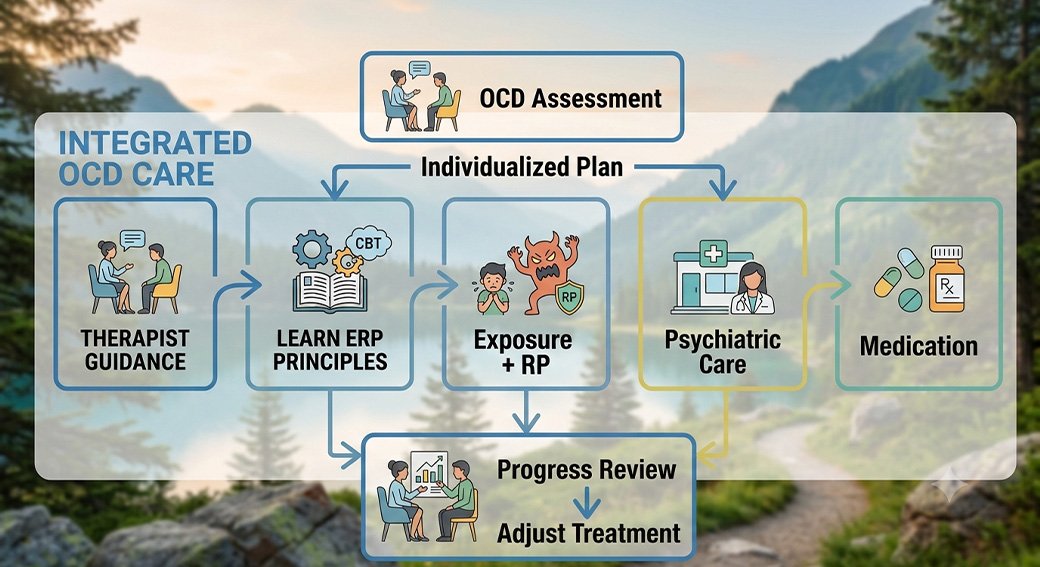
Why Combine Treatments?
- Symptoms are significant
- OCD substantially interferes with functioning
- There are coexisting conditions
- Response to one treatment alone is incomplete
- Clinical circumstances support combined treatment
Can ERP Help With Severe OCD?
The use of ERP can play a vital role in the treatment of patients who have serious problems with OCD, although more intense cases might warrant a well thought out treatment program. The pace and severity of the exposure should be customized, and the treatment process might have to include extensive avoidance, mental rituals, accommodation of the family, depression, etc.
Severe OCD May Involve
- Several hours of compulsions each day
- Extensive avoidance
- Severe distress
- Significant interference with work or education
- Relationship difficulties
- Family accommodation
- Multiple obsessional themes
- Mental compulsions
- Significant depressive symptoms
Treatment May Need To Address Multiple Levels
OCD Symptoms
- Obsessions
- Compulsions
- Avoidance
Maintaining Behaviours
- Reassurance
- Checking
- Mental rituals
Functional Impact
- Work
- Education
- Family
- Social functioning
Coexisting Problems
- Depression
- Anxiety
- Sleep difficulties
- Other psychiatric conditions
Clinical Pearl
Having a severe case of OCD does not necessarily exclude the possibility of using ERP. What it really means is that a thorough evaluation, treatment planning, and coordination with psychiatry become critical issues.
What If ERP Feels Too Difficult?
ERP is expected to involve some discomfort because it asks people to approach situations they have learned to avoid and reduce compulsive responses. Nonetheless, therapy must still be collaborative and clinically indicated. Should an exercise prove too difficult, the therapist may examine the objective, pace, formulation, or response prevention rather than interpreting distress as an excuse for terminating treatment.
Important Distinction
Therapeutic Discomfort
Some anxiety or uncertainty may be expected during exposure.
Unnecessary Overwhelm
Exposure should not be designed simply to produce maximum distress
If An Exposure Session Is Too Challenging
- Segmenting the task
- Reviewing the rationale
- Clarifying the compulsive response
- Changing the exposure target
- Practising a different exposure first
- Addressing avoidance
- Reviewing the underlying formulation
Clinical Pearl
ERP aims at learning and not maximization of discomfort. When an exposure becomes consistently unmanageable, then it is time to re-evaluate the therapy program, and not just assume that more discomfort means better therapy.
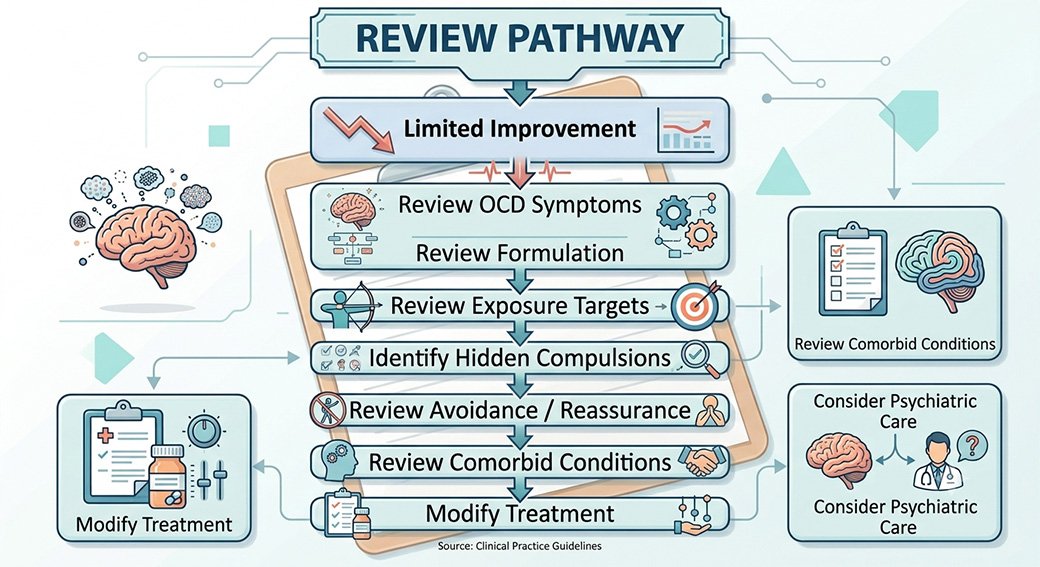
What If ERP Is Not Working?
If improvement is not satisfactory, this is an indicator for clinical review and not necessarily a repetition of ERP without any adjustments. Possible issues can include reassessment of the OCD formulation, exposure hierarchy, response prevention, treatment adherence, family accommodation, comorbidity or psychopharmacological treatment, among others.
Possible Reasons For Limited Response
The Exposure May Not Target the Main Compulsion
The visible behaviour may not be the primary maintaining factor.
Mental Compulsions May Be Missed
A patient may stop one visible ritual while continuing:
- Mental reviewing
- Analysis
- Internal checking
- Reassurance in the mind
Further Reassurance-Seeking May Persist
The family/clinicians may inadvertently be involved in the compulsions loop.
Avoidance May Remain
The person may technically perform exposures while continuing to avoid important situations.
The Formulation May Need Revision
The therapist may need to reconsider what maintains the OCD symptoms.
Another Condition May Be Contributing
For example:
- Depression
- Severe anxiety
- Trauma-related symptoms
- Other psychiatric difficulties
Review Pathway
Clinical Pearl
However, if the ERP treatment is not working well enough, one should not immediately jump to the conclusion that more exposure is the key to success.
What Happens When OCD Symptoms Occur Again after ERP?
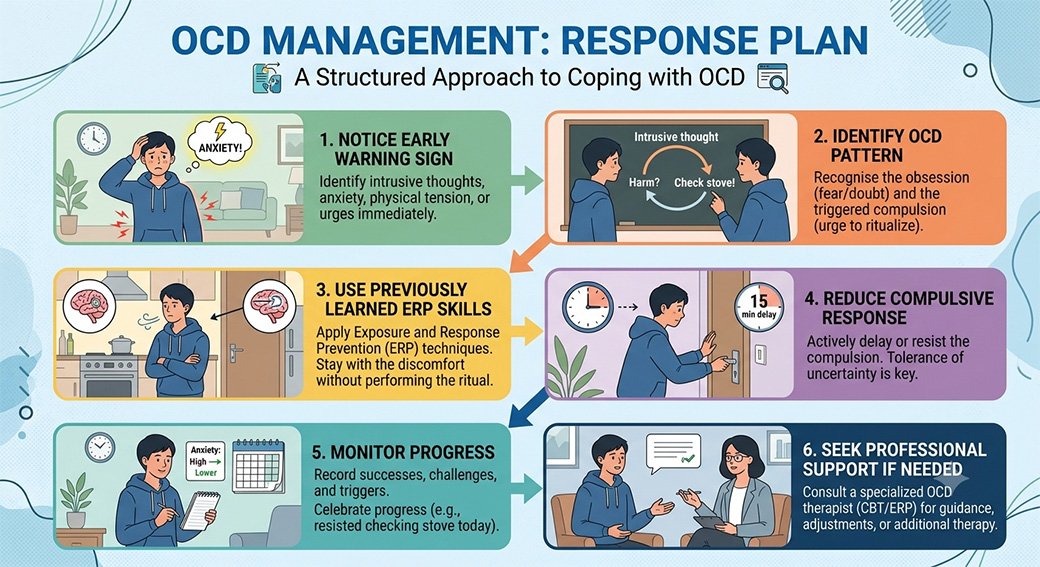
There is a possibility that your OCD symptoms may vary from time to time, but it does not indicate that ERP has been unsuccessful in dealing with it. Relapse prevention will assist you in understanding the early warning signs of a relapse, recognizing circumstances which can lead to your obsessions, and using the skills learned during ERP therapy.
Early Warning Signs
Possible changes include:
- Increased checking
- More reassurance seeking
- Returning to avoidance
- Increased mental reviewing
- More time spent on rituals
- Increased need for certainty
- Reduced participation in normal activities
Response Plan
Clinical Pearl
The purpose of relapse prevention is not to prevent the symptoms of OCD from recurring indefinitely. The goal is to enable the individual to identify the cycle early and intervene before compulsions and avoidance are deeply entrenched.
What is Relapse Prevention in ERP?
A relapse prevention is about getting ready for an eventual increase in OCD symptoms. This includes recognizing one’s own warning signs, reviewing successful ERP techniques, and developing a plan of action for such instances. Here, the patient recognizes their own recurrence of the same pattern of behavior and uses previous learned techniques.
Relapse-Prevention Plan
Step 1 — Identify Your Early Signs
For example:
"I have started checking the door repeatedly again."
Step 3 — Apply ERP Skills
"I can leave after one normal check."
Step 5 — Escalate Support if Needed
If symptoms do not improve, consultation may be required.
Step 2 — Identify the OCD Response
"I am seeking certainty through checking."
Step 4 — Monitor
"Is the checking decreasing?"
Can Family Members Assist with ERP?
Family members can be extremely helpful in the treatment of OCD, especially if there has been involvement by family members with the individual's compulsions, reassurance-seeking, avoidance, or rituals. With proper guidance, the family can assist with ERP without encouraging more compulsions.
Family Accommodation
The family members may unintentionally:
- Answer repeated reassurance questions
- Check things for the patient
- Participate in rituals
- Avoid feared situations
- Change routines to accommodate OCD
- Provide repeated certainty
Family Support Can Instead Involve
- Understanding OCD
- Supporting treatment attendance
- Encouraging use of ERP skills
- Reducing participation in rituals
- Responding consistently to reassurance seeking
- Maintaining appropriate family routines
Important:
Family involvement should be individualized.
The role of the therapist in determining the level of involvement is:
● Age
● Family dynamics
● Severity
● Dependence
● Treatment goals
Clinical Pearl
Helping someone with OCD doesn't necessarily mean taking away their anxiety right away. Sometimes, what they need the most is help in tolerating uncertainty rather than repeated reassurance or ritualizing behavior.
What Will Occur at the End of ERP?
At the end of ERP, therapy usually transitions from being more intensive and therapist-led into maintenance of acquired skills. The therapist and patient can take stock of what has been accomplished, pinpoint any areas that are still vulnerable, devise a plan for prevention of relapse, and determine if the regular therapy sessions should be continued or terminated.
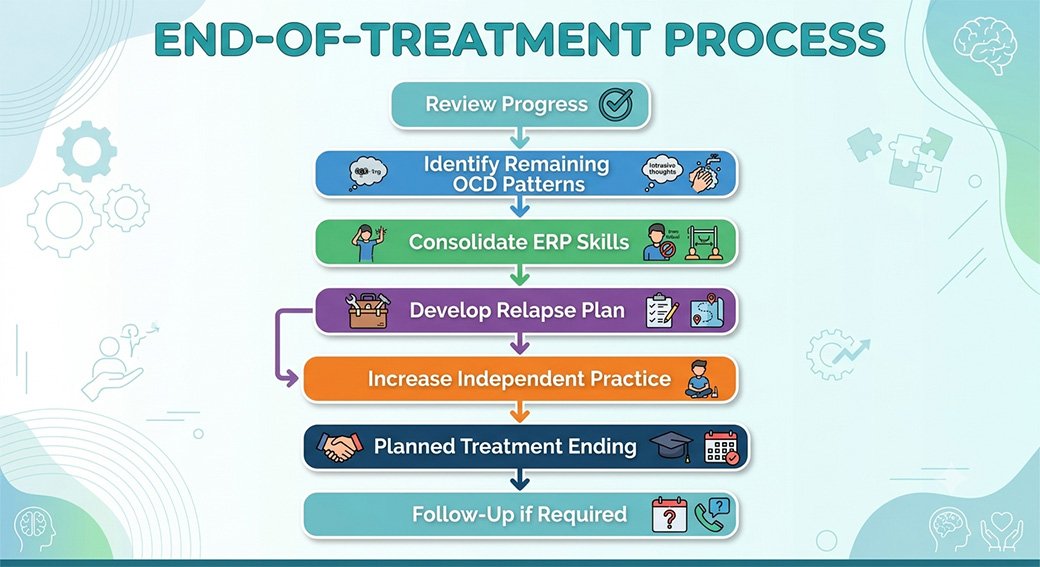
Things The Patient Need To Know
- What OCD looks like for them
- What their compulsions are
- How avoidance maintains the problem
- When reassurance becomes a compulsion
- How to approach triggers
- How to prevent compulsive responses
- How to respond when symptoms increase
Clinical Pearl
A successful ERP ending is not simply the last therapy appointment. This is a move toward more self-reliance, where the patient is able to recognize OCD behaviors and principles of ERP without depending fully on the therapist.
Can ERP Skills Be Used After Therapy?
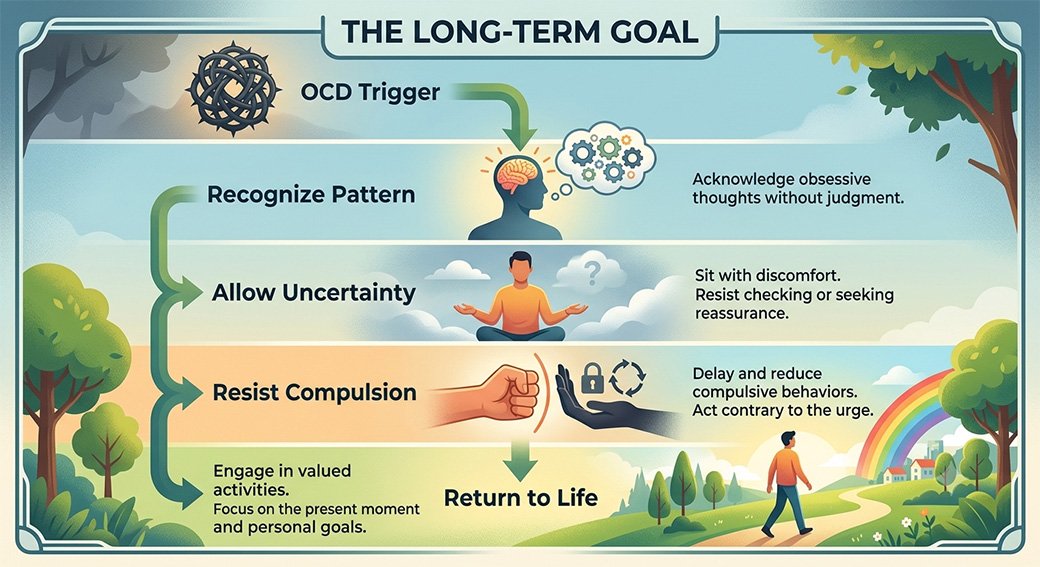
Yes. ERP is intended to teach skills that can continue to be used after regular therapy ends. Patients can apply these principles when new triggers appear, when avoidance begins to increase, or when compulsive urges return. The aim is to recognize the OCD cycle early and respond without automatically returning to old rituals.
Long-term ERP Skills
Notice
Recognize an intrusive thought or trigger.
Allow
Permit uncertainty or discomfort without trying to eliminate it immediately.
Continue
Return attention to meaningful activities.
Label
Identify the OCD pattern.
Prevent
Reduce the compulsive response.
Looking for ERP Therapy in Delhi?
Phone:
Why Choose Headspace Mind Clinic for ERP Therapy?
ERP requires more than simply exposing someone to situations they fear. Appropriate treatment involves clinical assessment, an individualized OCD formulation, carefully selected exposure targets, response prevention, progress monitoring, and adaptation when difficulties arise. At Headspace Mind Clinic, ERP can be provided within a broader clinical psychology and psychiatric care framework when additional assessment or treatment is clinically appropriate.
| Clinical Assessment |
| ↓ |
| Understand OCD Pattern |
| ↓ |
| Individualized Formulation |
| ↓ |
| Treatment Goals |
| ↓ ERP Plan |
| ↓ |
| Exposure + Response Prevention |
| ↓ |
| Progress Review |
| ↓ |
| Relapse Prevention |
Individualized OCD Assessment
The clinician first understands:
- Obsessions
- Compulsions
- Avoidance
- Reassurance seeking
- Mental rituals
- Functional impairment
- Treatment history
- Coexisting symptoms
Formulation-Based ERP
ERP targets are selected according to the individual's OCD cycle. Treatment is therefore not based on a generic exposure checklist.
Structured Treatment
ERP provides a clear framework for:
- Exposure
- Response prevention
- Between-session practice
- Progress review
- Relapse prevention
Clinical Psychology + Psychiatry
Some patients may benefit from psychological treatment alongside psychiatric assessment or medication. Where clinically appropriate, care can be coordinated across services.
Child, Adolescent & Adult Adaptation
ERP can be adapted according to:
- Age
- Developmental level
- Family environment
- Cognitive abilities
- Presenting symptoms
Focus on Functional Recovery
The goal is not simply to reduce an OCD score. Treatment should also consider whether the person can increasingly:
- Work
- Study
- Socialize
- Participate in family life
- Make decisions
- Leave home
- Perform everyday activities without extensive rituals
Why Headspace — Visual Grid
| Headspace Approach | What It Means |
|---|---|
| Clinical assessment | Understand the OCD pattern before treatment |
| Individualized formulation | Identify maintaining factors |
| Structured ERP | Exposure + response prevention |
| Progress monitoring | Review response during treatment |
| Integrated care | Psychology + psychiatry when appropriate |
| Developmental adaptation | Appropriate approach for age and circumstances |
| Functional focus | Recovery extends beyond symptom scores |
Clinical Pearl
Good ERP is not simply about increasing exposure. ERP is about identifying the OCD cycle correctly, choosing targets for treatment, decreasing the compulsive reactions, and regaining control of daily living.
Who Provides ERP at Headspace?
ERP should be provided by a suitably qualified mental health professional with appropriate training and competence in OCD-focused psychological treatment.
Dr. Tanuja Bhardwaj
Clinical Psychologist
PhD, MPhil Clinical Psychology
Relevant Areas
- OCD-focused psychological treatment
- CBT
- ERP
- Psychological assessment
- Child and adolescent psychological care
- Psychotherapy
Ms. Pooja Sharma
Clinical Psychologist
MPhil Clinical Psychology
Ms. Surmeet Kaur
Clinical Psychologist
PhD, MPhil Clinical Psychology
Important Publishing Check
Before this page goes live, verify:
- Which clinician currently provides ERP
- Specific ERP training
- Current professional designation
- Current registration details where applicable
- Age groups treated
- OCD presentations treated
- Current clinic availability
How should you prepare for your first ERP Appointment?
You don't have to create a hierarchy or abstain from your compulsions prior to attending the first ERP session. It could be useful for you to consider the symptoms that are bothering you, the behaviors you perform or avoid, the amount of time spent on OCD, and its impact on your life. Having previous treatment information is useful too.
Before Your Appointment
1. Identify Your Main Concerns
Think about:
- What thoughts or fears trouble you?
- What do you do in response?
- How often does it happen?
- How much time does it take?
- What situations do you avoid?
2. Notice Your Compulsions
Compulsions may be:
Visible
- Washing
- Checking
- Cleaning
- Repeating
- Ordering
Less Visible
- Mental reviewing
- Reassurance seeking
- Analysing
- Checking feelings
- Repeating thoughts
- Trying to achieve certainty
3. Think About Functional Impact
Consider whether OCD affects:
- Work
- College
- School
- Relationships
- Sleep
- Travel
- Family activities
- Social life
4. Bring Relevant Treatment Information
If available:
- Previous psychiatric prescriptions
- Psychological assessment reports
- Previous therapy records
- Relevant medical information
5. Don't Try to "Perform Well"
There is no test to pass. The therapist needs an honest understanding of the OCD pattern.
Patient Checklist
- Main concerns
- Obsessions / intrusive thoughts
- Compulsions
- Avoidance
- Reassurance seeking
- Mental rituals
- Impact on daily functioning
- Time spent on OCD
- Previous treatment
- Current medication, if applicable
What Happens During the First ERP Appointment?
During the first ERP session, a number of factors will be addressed by the psychologist including the person's symptoms, their OCD patterns, treatment background, functional impairment, and goals. It is important for you to know how OCD persists and how ERP is beneficial. Intensive exposure does not necessarily begin during the first appointment.
First Appointment Flow
| Initial Conversation |
| ↓ |
| Understand OCD Symptoms |
| ↓ |
| Identify Compulsions & Avoidance |
| ↓ |
| Assess Functional Impact |
| ↓ |
| Relevant Treatment History |
| ↓ Explain ERP |
| ↓ |
| Initial Formulation |
| ↓ |
| Treatment Planning |
What Might Be Talked About?
Obsessions
Which thoughts, images, worries or fears happen?
Compulsions
What behaviours or mental rituals follow?
Goals
What would you like to be able to do that OCD currently interferes with?
Avoidance
What situations are avoided because of OCD?
Reassurance
Who or what do you repeatedly ask for certainty?
Important:
The first appointment is not necessarily about immediately confronting your most difficult fear. The clinician may need to understand the OCD cycle before selecting exposure targets.
What Questions Should You Ask an ERP Therapist?
Patients may inquire about the therapist’s credentials, experience treating OCD with ERP, the method of treatment to be employed, selection criteria for the exposure target, how improvement will be assessed, and the process in case the therapy doesn’t achieve the desired results. This information can help in making a well-informed choice of a specialized psychological treatment program.
Questions About The Therapist
- What is your professional qualification?
- What training have you received in ERP?
- How frequently do you work with OCD?
- Do you treat mental compulsions and reassurance seeking?
Questions About ERP
- How will my exposure hierarchy be developed?
- How is response prevention handled?
- Will I practise between sessions?
- How will we measure progress?
- What would happen if an exposure becomes too much for you?
Questions About Treatment
- How often are sessions usually scheduled?
- How long might treatment take?
- Can ERP be combined with medication?
- What happens when therapy ends?
- What happens if ERP is not helping enough?
Clinical Pearl
It is important that patients feel free to ask about the therapist's training of the therapist in ERP, the reasoning behind the therapy, the procedure to be used, and how progress will be assessed. Knowing about the therapy process will enhance the therapeutic process because it will become more interactive.
Frequently Asked Questions (FAQ)
ERP is short for Exposure and Response Prevention.
It is a psychological intervention where the individual is exposed to appropriate triggers of OCD with decreased responses or compulsions.
ERP is typically viewed as a behavioral therapy modality that is part of the larger CBT modality.
CBT involves a larger spectrum of cognitive and behavioral therapies.
ERP is most strongly associated with OCD treatment.
There are also exposure-based CBT therapies used for other anxiety disorders, albeit with a different format and nomenclature.
There is no definitive method for curing OCD.
ERP may be helpful in reducing compulsions, avoidance, reassurance-seeking, and impairment and help people manage their future symptoms.
No.
Appropriate ERP is collaborative and planned.
The choice of exposure targets is based on the individual’s presentation and treatment aims.
Yes.
ERP may be combined with psychiatric medication where clinically indicated. The decision regarding medications needs to be made by a trained prescriber.
ERP can address mental compulsions. These may include:
- Reviewing
- Analysing
- Mental checking
- Repeating phrases
- Checking feelings
- Seeking certainty internally
It can be.
Repeated reassurance seeking may function as a compulsion when it is primarily used to reduce OCD-related uncertainty or distress.
Yes, when clinically appropriate.
Family members may need guidance on reducing participation in rituals or repeated reassurance while continuing to provide appropriate emotional support.
Even the therapy for children and teenagers is possible to conduct.
The involvement of a parent or a caregiver can also come in handy depending on various factors including age, symptomatology and family dynamics in particular.
Yes.
Practice between sessions may be an essential part of ERP therapy, but one must take care to plan exercises correctly.
The treatment should be reviewed. The clinician may reassess:
- OCD formulation
- Exposure targets
- Mental compulsions
- Avoidance
- Reassurance
- Family accommodation
- Comorbid conditions
- Need for psychiatric treatment
ERP Therapy Locations in Delhi
ERP availability should be displayed only at locations where the service is actually being provided.
Headspace Mind Clinic — Paschim Vihar
Headspace Mind Clinic — Rohini
Headspace Mind Clinic — Narela
Mental health services including psychological and psychiatric care.
Book ERP Therapy in Delhi
Take the First Step Toward Breaking the OCD Cycle
Book an ERP Consultation
Phone:
Trust Strip
- Evidence-Based Psychological Treatment
- Specialized ERP Approach
- Individualized Treatment Planning
- Qualified Clinical Psychology Professionals
- Psychology + Psychiatry Coordination
- Confidential Care
Medically Reviewed By
Dr. Deepak Verma
Consultant Psychiatrist & Neuropsychiatrist, Founder & Medical Director, Headspace Mind Clinic
ERP content should additionally undergo review by the clinical psychologist responsible for providing ERP, particularly sections describing exposure procedures, response prevention, OCD-specific techniques, and treatment expectations.
Publishing Verification Checklist
- Current ERP provider
- ERP-specific training
- Professional registration where applicable
- Current clinic locations
- Whether ERP is available in-person, online, or both
- Age groups treated
- Current appointment availability
- Exact wording of service claims
Editorial & Medical Disclaimer
Authoritative Sources
- NICE clinical guidance on OCD and related disorders
- American Psychological Association
- National Institute of Mental Health
- PubMed-indexed systematic reviews and clinical trials
- Relevant professional guidance on psychological treatment of OCD
Condition-specific claims should be supported by the appropriate clinical guideline or systematic review rather than generic mental-health websites.
Written By
Headspace Mind Clinic Editorial Team
Medically Reviewed By
Dr. Deepak Verma, Consultant Psychiatrist & Neuropsychiatrist
Psychology Content Review
Qualified Clinical Psychology Professional — Headspace Mind Clinic
Last Updated
August 2026
Medical Review Statement
Medically reviewed for clinical accuracy and updated periodically in accordance with relevant evidence and professional guidance.