
Psychiatric Consultation in Delhi
Trust Strip




Quick Facts
| Item | Details |
|---|---|
| Service | Psychiatric Consultation |
| Consultation Type | In-person & Online (where available) |
| Suitable For | Adults, Adolescents & Older Adults |
| Duration | Individualized based on assessment needs |
| Performed By | Consultant Psychiatrist |
| Follow-up | As clinically recommended |
What Is a Psychiatric Consultation?
A psychiatric consultation is an in-depth medical examination conducted by a skilled psychiatrist to analyze various emotional, behavioral, cognitive, and psychological issues of concern. It includes discussion of symptoms, personal history, personal circumstances, and overall functioning to provide an accurate diagnosis and an appropriate treatment program.

- Psychoeducation
- Lifestyle recommendations
- Psychological therapy
- Medication management
- Psychological assessment
- rTMS therapy (where appropriate)
- Family involvement (when beneficial)
- Follow-up consultations
What does a Psychiatrist do?
A psychiatrist is a medical specialist whose work is to deal with mental disorders through treatment, diagnosis, and even prevention.
The different duties that a psychiatrist can perform include:
- Diagnose psychiatric conditions
- Differentiate between mental and physical causes of symptoms
- Prescribe medication where necessary
- Conduct psychotherapy
- Coordinate care involving various disciplines
- Provide treatment of complicated mental disorders
Is a Psychiatric Consultation the same as Counselling?
| Psychiatric Consultation | Counselling/Psychotherapy |
|---|---|
| Conducted by a Psychiatrist | Conducted by a Psychologist or Psychotherapist |
| Medical assessment | Psychological treatment |
| Can diagnose mental illness | Does not make medical diagnoses in the same way |
| Can prescribe medication when appropriate | Does not prescribe medication |
| Creates overall treatment plan | Delivers structured therapy |
Clinical Pearl
A psychiatric consultation is more than just getting prescribed some drugs; it is all about knowing why you have those symptoms and choosing the best way to treat them, which might or might not involve taking any drugs.
“Patient Takeaway
Your first consultation will be when you get to talk about your problems and collaborate with your psychiatrist on a care plan for yourself.”
When should you consider a Psychiatric Consultation?
It might be wise for one to seek a psychiatric evaluation when there is a recurrence of emotional, psychological, and behavioral issues, when these issues become more severe, causing problems in life, and when they affect one's job, social relationships, academic performance, and even sleeping habits.
Consider Scheduling a Consultation if You Are Experiencing
- Feelings of depression or loss of interest
- Ongoing worry or anxiety
- Panic attacks
- Difficulty sleeping
- Mood swings
- Obsessions or compulsions
- Lack of concentration or memory problems
- Hallucinations or hearing voices
- Threats to harm yourself
- Attention difficulties suggestive of ADHD
- Behavioral or emotional issues in children
- Emerging emotional problems affecting your relationships and work
Real-Life Scenarios
Consultation may prove useful if you feel:
- "I do not seem like my usual self."
- "My anxiety is impacting my daily activities."
- "Nothing I have tried is working for me."
- "My child is having emotional difficulties."
- "I am unsure about whether I require therapy, medication, or both."
Clinical Pearl
Psychiatric assessment from the outset leads to early detection and effective treatment.
What Mental Health conditions can be evaluated?
There are extensive studies on various kinds of psychiatric illnesses that affect the above areas. The purpose of the consultation is to get to the cause of the illness and recommend a solution.
Condition Grid
Mood Disorders
- Depression
- Bipolar Disorder
Anxiety Disorders
- Generalized Anxiety Disorder
- Panic Disorder
- Social Anxiety
- Phobias
Obsessive-Compulsive & Related Disorders
- OCD
- Body-Focused Repetitive Behaviors
Neurodevelopmental Disorders
- Adult ADHD
- Autism Spectrum Disorder
Psychotic Disorders
- Schizophrenia
- Related Psychotic Disorders
Sleep & Stress-Related Problems
- Insomnia
- Stress-related disorders
- Mental checking
- Repeated review of events
Substance Use Disorders
- Alcohol dependence
- Tobacco dependence
- Behavioural addictions
Cognitive Disorders
- Dementia
- Memory concerns
Internal Linking Hub
Not Sure Whether You Need a Psychiatric Consultation?
Your Psychiatric Consultation Journey
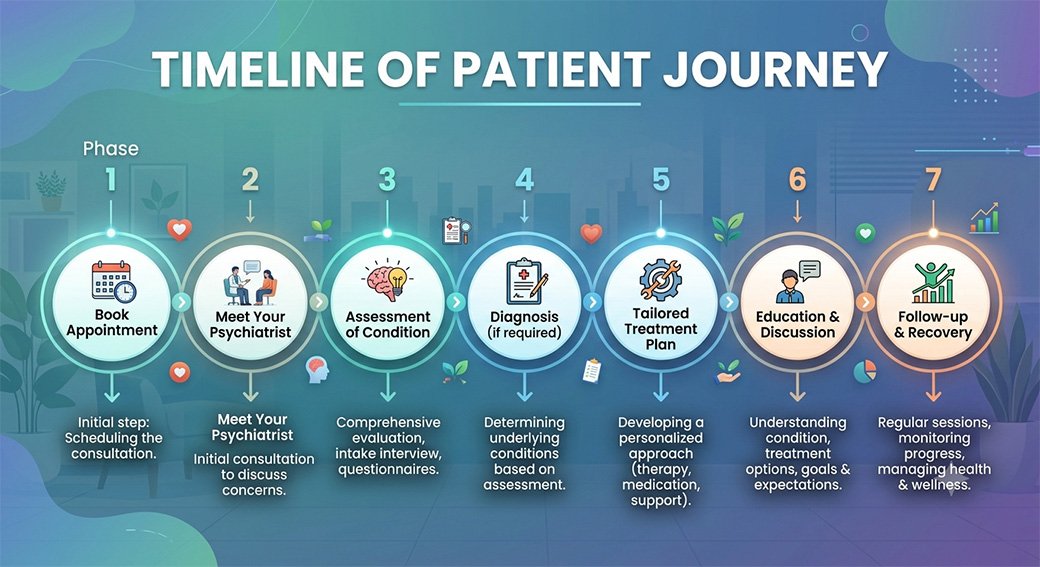
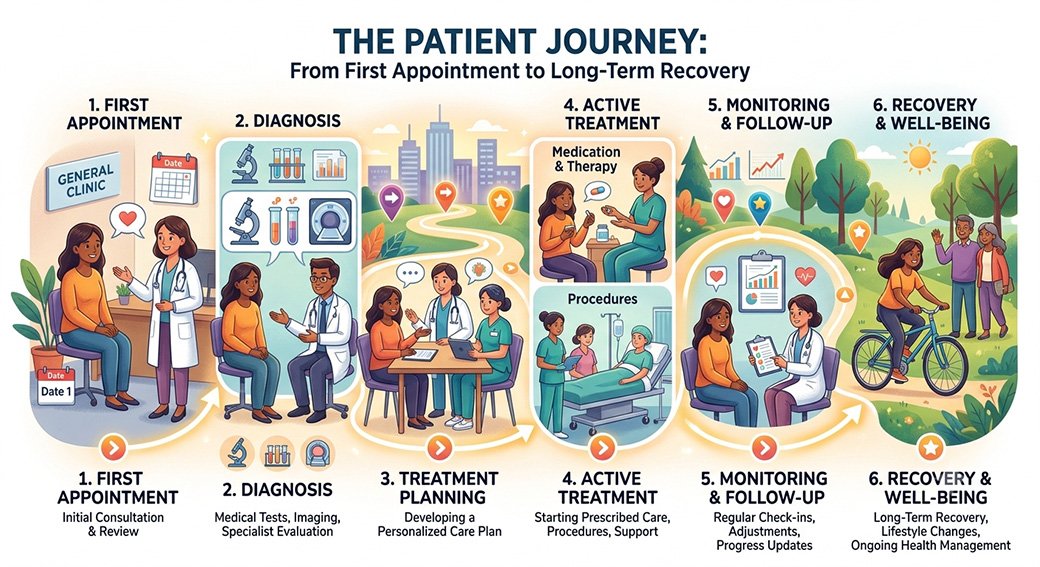
The psychiatric consultation is a comprehensive medical assessment that starts with finding out about your concerns and then proceeds through clinical assessment, diagnosis (where applicable), individualized treatment planning, and follow-ups. This procedure is a cooperative, confidential, and individualized medical encounter.
Clinical Pearl
A thorough consultation should never be hurried. Spending time gathering information about the overall situation will result in improved accuracy of the diagnosis and treatment decisions.
What happens during your first Psychiatric Consultation?
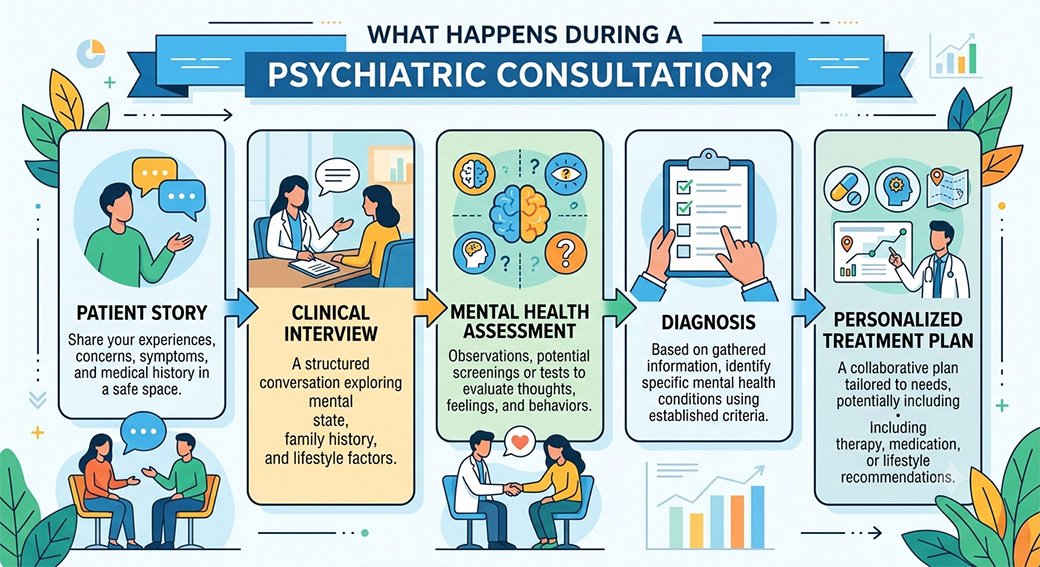
In your first psychiatric consultation, your psychiatrist will go over the issues that you are having, your emotions, past illnesses, family background, lifestyle, and functionality. Based on the symptoms that you have, the discussion may also include the mental status examination and risk assessment.
Understanding Your Current Concerns
Your psychiatrist will begin by asking about:
- The main reason for seeking help
- How symptoms have changed over time
- Factors that make them better or worse
- When the symptoms started
- How they affect work, studies, relationships, or daily life
Medical and Psychiatric History
A comprehensive understanding of your background helps identify possible
contributing factors. Topics may include:
- Previous mental health concerns
- Earlier psychiatric consultations
- Hospital admissions (if any)
- Current and past medications
- Previous psychotherapy
- Medical illnesses
- Sleep patterns
- Substance use
- Family history of mental illness
Personal and Social History
Mental health is influenced by many aspects of life.
Your psychiatrist may discuss:
- Education
- Occupation
- Relationships
- Family environment
- Recent life events
- Stressors
- Hobbies and interests
- Social support
Mental Status Examination (MSE)
The Mental Status Examination is a procedure commonly performed during a psychiatric examination. It consists of observation and discussion, not an actual written test.
The psychiatrist evaluates areas such as:- Appearance and behaviour
- Speech
- Mood and emotional expression
- Thought content
- Thought process
- Perception
- Attention and concentration
- Memory
- Insight
- Judgement
Components of the First Consultation
| Assessment Area | Purpose |
|---|---|
| Presenting Concerns | Understand current symptoms |
| Medical History | Identify physical health factors |
| Psychiatric History | Review previous treatments |
| Family History | Identify inherited risk factors |
| Lifestyle Assessment | Understand contributing factors |
| Mental Status Examination | Evaluate psychological function |
Clinical Pearl
The initial interview should involve listening more than doing. A thorough examination can reveal some truths that would be missed by symptomatology alone.
How is a Mental Health Diagnosis made?
Mental health diagnosis is done using an overall clinical evaluation rather than through a single test or imaging study. Psychiatrists use information from your symptoms, history, mental status exam, and other tests to arrive at a diagnosis.
- Current symptoms
- Duration of symptoms
- Severity
- Daily functioning
- Medical history
- Psychological factors
- Social circumstances
- Clinical observation
The Importance of an Accurate Diagnosis
A correct diagnosis helps:
- Identify the underlying condition
- Avoid unnecessary treatments
- Select the most appropriate therapy
- Improve long-term outcomes
- Reduce the risk of relapse
Sometimes the Diagnosis Evolves
Mental disorders can progress through time. Symptoms might be made more apparent on follow-up visits. Continuing assessment is an important aspect of psychiatry.
Clinical Pearl
A correct diagnosis is the starting point for effective therapy. Understanding the whole picture takes precedence over fast diagnosis.
Do I Need Any Medical Tests?
Most psychiatric disorders are based on a clinical diagnosis. In some cases, your psychiatrist might feel the need for certain laboratory investigations to rule out any medical problems, establish possible causes, and make sure that treatment is right for you.
- Complete Blood Count (CBC)
- Thyroid Function Tests
- Vitamin B12 levels
- Vitamin D levels
- Blood glucose testing
- Liver and kidney function tests
- Electrolytes
- Other investigations based on your symptoms or medical history
| Investigation | Possible Purpose |
|---|---|
| CBC | General health assessment |
| Thyroid Profile | To identify signs of thyroid problems |
| Vitamin B12 | For vitamin B12 deficiency |
| Blood Sugar | To test metabolic problems |
| Liver & Kidney Function | Medication safety when relevant |
Clinical Pearl
Medical investigations support—but do not replace—a comprehensive psychiatric assessment.
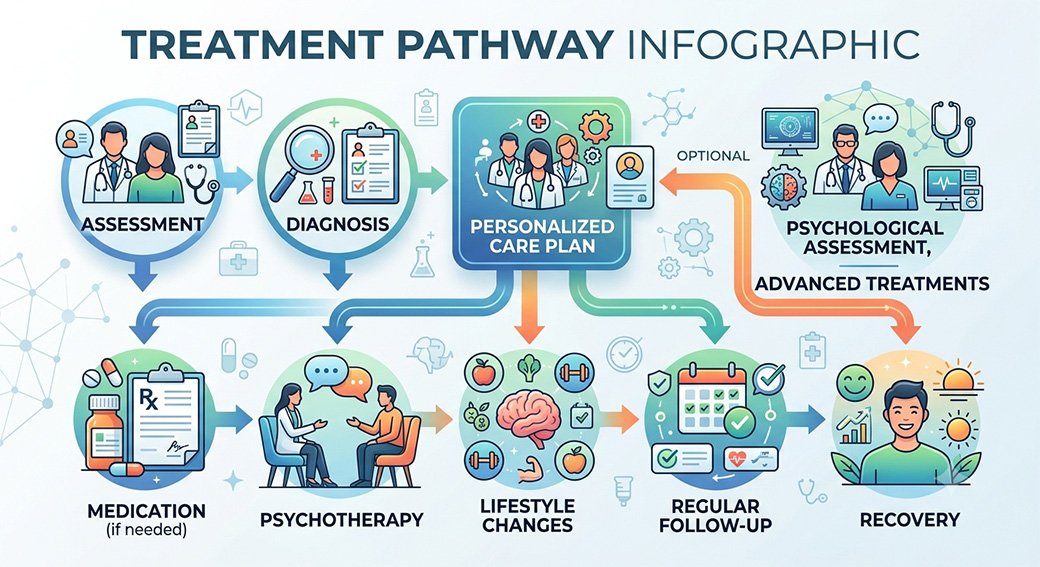
Your Personalized Treatment Plan
After evaluation, the psychiatrist provides a personalized plan of treatment based on your diagnosis, symptoms, goals for treatment, preferences, and overall well-being. The treatment may consist of education, changes to your lifestyle, therapy, medication, and other innovative treatments.
- The working diagnosis (if appropriate)
- Possible causes of your symptoms
- Available treatment options
- Expected benefits and limitations
- Potential side effects (where relevant)
- Follow-up recommendations
PossIble Components of a Treatment Plan
Psychoeducation
Understanding your condition and treatment.
Lifestyle Changes
Sleep, diet, exercise, stress management, and good practices.
Psychological Assessment
If there is need for further assessment of cognition, personality, attention, or learning.
rTMS Therapy
May be discussed for selected patients when clinically appropriate.
Medication
If necessary, medications may be used after weighing their benefits and drawbacks.
Psychotherapy
Refer to therapy based on evidence including:
- Cognitive Behavioural Therapy
- Exposure and Response Prevention
- Behaviour Therapy
- Family Therapy
- Supportive Therapy
Clinical Pearl
Therefore, the best treatment plan should include scientific evidence as well as your personal objectives, preferences, and circumstances.
Your First Consultation Can Be the Beginning of Recovery
Whether it’s been weeks, months or years since your struggle started, the first step is figuring out what’s going on and investigating treatment methods that are best suited for you.
Here at Headspace Mind Clinic, we offer a consultation by our experienced psychiatrists who will take the time to understand your case, diagnose and suggest a personalized treatment regimen for you.
What are the benefits of a Psychiatric Consultation?
A psychiatric consultation may allow you to find out what has caused your problems in terms of emotions, behavior, thoughts, and mind and which treatment methods will suit you best. As a consequence, you will be able to get an early diagnosis, treatment planning, proper optimization of any medication you may require, and coordination of psychological and medical treatment depending on your specific needs.
1. Better Understanding of Your Symptoms
A psychiatrist can help you understand:
- What may be contributing to your symptoms
- Whether symptoms fit a recognizable clinical pattern
- Whether physical health factors could be involved
- Whether medication or substance use may be contributing
- Whether psychological therapy may be beneficial
2. Accurate Diagnosis
A structured assessment can differentiate between disorders that at first might look similar.
For example, difficulties with concentration can occur with:
- ADHD
- Depression
- Anxiety
- Sleep disorders
- Substance use
- Certain medical conditions
3. Personalized Treatment Planning
A customized treatment plan can be created based on:
- Diagnosis
- Symptom severity
- Previous treatment response
- Patient preferences
- Medical history
- Current medications
- Lifestyle
- Treatment goals
4. Medication Optimization
When medication is appropriate, psychiatric consultation allows the doctor to:
- Select an appropriate medication
- Determine an appropriate starting dose
- Monitor response
- Monitor adverse effects
- Adjust treatment when required
- Review whether medication remains necessary
5. Coordinated Mental Healthcare
A psychiatrist can determine whether you may benefit from:
- Psychotherapy
- Psychological assessment
- Family intervention
- rTMS
- Lifestyle intervention
- Specialist medical evaluation
Benefits
| Benefit | What It Provides |
|---|---|
| Clinical Assessment | Understanding of symptoms and functioning |
| Diagnosis | Identification of possible mental health conditions |
| Treatment Planning | Personalized care strategy |
| Medication Management | Safe and appropriate pharmacological care |
| Therapy Referral | Access to suitable psychological treatment |
| Follow-up | Monitoring and treatment modification |
Clinical Pearl
Psychiatric consult is beneficial not only for the purpose of making a diagnosis, but also to determine the type of treatment that is truly needed. The correct answer may turn out to be psychotherapy, psychosocial intervention, psychological assessment or even medical examination instead of medication.
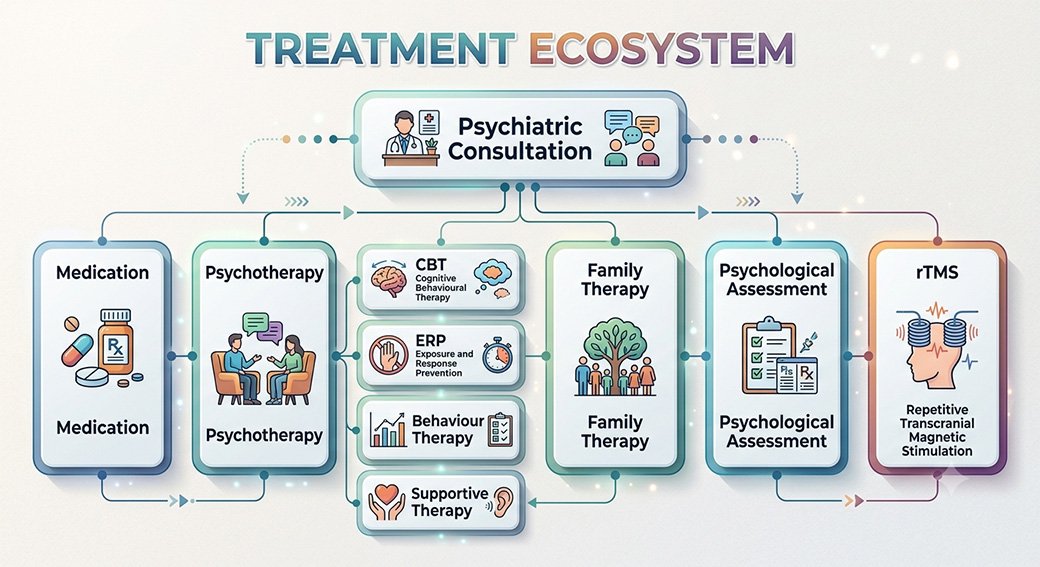
What treatment options can be discussed during Psychiatric care?
The treatment process following consultation with a psychiatrist may include psychotherapy, drugs, lifestyle modifications, psychological testing, family therapy, and even new treatment methods like rTMS. The treatment modality depends on the actual diagnosis, severity of symptoms, previous treatments, health status, and patient preference.
Medication Management
Medication may be considered for conditions such as:
- Depression
- Anxiety disorders
- Bipolar disorder
- Schizophrenia
- ADHD
- Certain sleep disorders
- Substance use disorders
Psychotherapy
This form of therapy may be employed independently or alongside medications.
These include:
- Cognitive Behavioural Therapy
- Exposure and Response Prevention
- Behaviour Therapy
- Supportive Therapy
- Family Therapy
rTMS Therapy
In some cases, especially for individuals with hard to treat conditions, the use of rTMS may be considered along with the entire treatment regimen.
Psychological Assessment
A psychological assessment may be recommended when further evaluation of:
- Attention
- Memory
- Intelligence
- Personality
- Learning
- Autism-related characteristics
- ADHD-related difficulties
Clinical Pearl
Psychiatric care does not involve recommending a specific type of treatment; rather, it involves recognizing which form of treatment will provide the most benefits and advantages.
Can a Psychiatrist help if i do not want Medication?
Yes. Seeking psychiatric advice does not always mean being prescribed medication. According to the results of your evaluation, the psychiatrist could recommend that you undertake psychotherapy, change your behavior, undergo psychoeducation, psychological tests, family therapy, or no treatment whatsoever, but only consultations. These decisions have to be made jointly.
Possible Non-pharmacological Interventions
Psychotherapy
Psychological treatments could be effective for many disorders.
Lifestyle Intervention
Sleep, exercise, nutrition, medication, and stress might affect the psychological state.
Watchful Monitoring
For some mild or uncertain presentations, regular monitoring may be more appropriate than immediately starting medication.
Psychoeducation
It is also essential to learn about and control your symptoms.
Family Intervention
Involvement of families might be especially useful in children, adolescents, and serious mental disorders.
Clinical Pearl
A psychiatrist's role is to recommend appropriate care—not automatically medication. Decision-making together is an integral component of modern psychiatry.
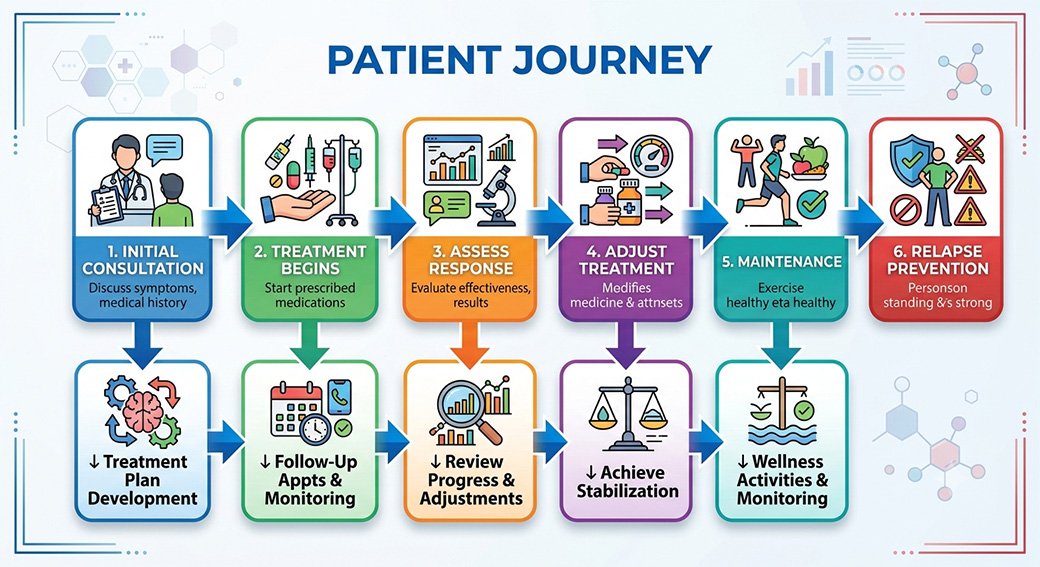
What happens during follow-up Psychiatric Consultations?
Additional consultations determine changes in the symptom, function, therapy result, side effect, and the whole process. The treatment plan can be prolonged, altered, or changed depending on the outcome of your therapy by your psychiatrist.
What May Be Reviewed?
- Changes in symptoms
- Mood and anxiety
- Sleep
- Appetite
- Energy
- Concentration
- Daily functioning
- Medication adherence
- Side effects
- Substance use
- Relationship or occupational functioning
- Safety concerns
Treatment Could Be Modified
Based on the rate of improvement, the psychiatrist may:
- Continue the current plan
- Adjust medication dosage
- Change medication
- Add psychotherapy
- Recommend psychological assessment
- Consider advanced treatment
- Reduce treatment intensity when appropriate
Clinical Pearl
Psychiatric care is an ongoing clinical activity. Follow-up enables the care to be adapted to changes in symptoms and circumstances.
Privacy, Confidentiality and Safety in Psychiatric Care
Confidentiality forms an integral part of any psychiatric treatment. Information exchanged in the process of the consultation must be dealt with in a professional manner. There are limited circumstances—such as serious and immediate safety risks—where confidentiality may have specific legal or clinical exceptions.
- Thoughts and emotions
- Relationships
- Substance use
- Trauma
- Sexual concerns
- Family difficulties
- Self-harm or suicidal thoughts
What can you discuss with your Psychiatrist?
It is not necessary to be embarrassed when talking about:
- Anxiety
- Depression
- Sexual health
- Addiction
- Anger
- Relationship difficulties
- Suicidal thoughts
- Self-harm
- Unusual thoughts or perceptions
Family Involvement
Family members can sometimes provide useful information, particularly when:
- The patient is a child or adolescent
- There are memory difficulties
- Symptoms affect insight
- Severe mental illness is present
- The patient wants family support
Safety Assessment
If required clinically, psychiatrists screen for safety factors such as:
- Suicidal thoughts
- Self-harm
- Harm to others
- Severe self-neglect
- Substance-related risks
- Vulnerability or exploitation
Clinical Pearl
If you have any suicidal ideation, tendencies toward hurting yourself, confusion, or are at risk of being hurt or hurting someone else, then you need immediate help, not just waiting to be seen by your psychiatrist.
When should Psychiatric treatment be reassessed?
It is necessary to reevaluate the treatment plan when there are no signs of improvement in symptoms, worsening of symptoms, the onset of new symptoms, occurrence of side effects due to medication, decreased functioning, or important changes in the patient's physical and personal situations.
Treatment Review Required When
- Symptoms continue despite treatment.
- Symptoms become significantly worse.
- New symptoms develop.
- Medication causes troublesome side effects.
- You are struggling to take medication regularly.
- Sleep changes substantially
- Substance use increases.
- Difficulty with work, school, and interpersonal relationships arises.
- Suicidal thoughts and urges appear
- Your family notices significant behavioural changes.
Take the First Step Toward Better Mental Health
Why choose Headspace Mind Clinic for Psychiatric Consultation?
Choosing a psychiatrist is an important decision, particularly if the symptoms have started affecting you at work and socially, or during sleep and overall activities. At Headspace Mind Clinic, patients can consult a psychiatrist who is also a consultant. They can also benefit from psychological therapy, psychometric testing, neuromodulation, and follow-up.
Comprehensive Psychiatric Assessment
The consultation considers:
- Presenting symptoms
- Medical history
- Psychiatric history
- Medication history
- Family history
- Safety and risk factors
- Personal and social circumstances
- Sleep and lifestyle
- Substance use where relevant
- Current functioning
Integrated Mental Healthcare
Psychiatric care does not operate in isolation.
When clinically appropriate, patients can be connected with other services within the Headspace ecosystem, including:- Clinical psychology
- Psychological assessment
- CBT
- ERP
- Behaviour therapy
- Behaviour therapy
- Supportive therapy
- rTMS
Personalized Treatment Planning
Treatment recommendations are based on the individual's:
- Diagnosis
- Symptom severity
- Previous treatment response
- Medical history
- Preferences
- Treatment goals
- Practical circumstances
Continuity of Care
Confidential and Respectful Environment
Mental problems may include very private issues.
Why Headspace — Visual Grid
| Headspace Approach | What It Means for Patients |
|---|---|
| Comprehensive Assessment | Know everything about the clinical case. |
| Consultant-led Care | Specialist psychiatric evaluation |
| Integrated Services | Psychiatry + psychology + therapy + rTMS |
| Personalized Treatment | Care based on individual needs |
| Structured Follow-up | Treatment monitored over time |
| Confidential Environment | Sensitive concerns handled professionally |
Clinical Pearl
Factors that can be seen to influence the provision of psychiatric care include the right diagnosis and medication as well as proper evaluation, therapy, continuity, and availability of psychological/medical treatment.
Meet Your Psychiatrist
Dr. Deepak Verma
Founder & Medical Director — Headspace Mind Clinic
- Comprehensive assessment
- Evidence-based treatment
- Individualized care
- Patient education
- Long-term recovery
- Integration of psychiatric and psychological interventions
Areas of Clinical Practice
- Depression
- Anxiety disorders
- OCD
- Schizophrenia and psychotic disorders
- Adult ADHD
- Autism-related psychiatric concerns
- Sleep disorders
- Addiction
- Dementia and cognitive concerns
- Sexual health-related psychiatric concerns
- rTMS and other treatment approaches where clinically appropriate
“Clinical Philosophy
Understanding the individual, identifying the root cause of the problem, and selecting the most appropriate form of treatment for the person.”
How should you prepare for your Psychiatric Consultation?
There is no need for you to prepare yourself specially for the psychiatric examination. Nevertheless, taking along your old medical history, the list of your medications, the results of your investigations and the description of your complaints may make the examination much easier for you.
Before Your Appointment
1. List Your Main Issues to Think About
Consider noting:
- What symptoms are troubling you most?
- When did they begin?
- How frequently do they occur?
- Are they getting better or worse?
- How are they affecting your life?
2. Bring Previous Medical Records
If available, bring:
- Previous psychiatric prescriptions
- Consultation notes
- Hospital discharge summaries
- Relevant blood tests
- Imaging reports
- Supportive therapy
- Psychological assessment reports
3. Prepare a Medication List
It should include:
- Medication name
- Dose
- How often you take it
- Duration
4. Consider bringing a Family Member
A trusted family member may be helpful when:
- Symptoms affect memory
- The patient is a child or adolescent
- There are significant behavioural changes
- The patient wants additional support
5. Be Open About Important Information
Your psychiatrist might have to discuss issues that you may find difficult, such as:
- Alcohol or substance use
- Sexual health
- Relationship difficulties
- Trauma
- Self-harm
- Suicidal thoughts
- Medications
Patient Checklist
Before Your Appointment
- Identify your primary issues
- Note when symptoms started
- Bring previous prescriptions
- Bring relevant reports
- Prepare your medication list
- Note important medical conditions
- Write down questions you want to ask
Frequently Asked Questions About Psychiatric Consultation
The former is a medical professional, a specialist in mental health care, who is able to diagnose psychiatric conditions and prescribe medicines.
In contrast to that, psychologists practice psychological assessment and therapy. Both types of specialists are often needed in combination.
No, you do not need a referral to meet a psychiatrist in most cases.
There may be exceptions based on the circumstances of healthcare provision.
Not necessarily.
Medication will be suggested only if the need arises. The therapy can also include counseling, lifestyle changes, psychoeducation, psychological assessment, monitoring, and so on.
This depends on how complex your issues are and whether it is the first or the following visit.
If it is your first visit, the consultation will take more time since the psychiatrist needs to get to know your medical background and present symptoms in detail.
Your previous prescriptions, any medical and psychological assessment reports, and a list of drugs that you take can be useful.
It is even acceptable for you to include a member of your family or anyone whom you believe could be of help during your visit.
Yes.
It is not essential to have a diagnosis prior to visiting a psychiatrist.
In fact, the main reason why people consult a psychiatrist is to obtain an assessment of their symptoms and determine whether further evaluations and treatments are needed.
Yes.
Psychotherapy can be prescribed independently or in conjunction with drugs.
Yes.
There can be many reasons for sleeping disorders like insomnia, and a psychiatrist may help to find out their cause and whether it’s necessary to visit sleep clinics.
Yes.
The treatment of anxiety disorders and panic disorders is among the duties of psychiatrists, and they may suggest the treatment, which includes psychotherapy, medications, changes in the lifestyle and more.
Meetings with a psychiatrist shall be held while observing the rules of medical confidentiality and other related regulations.
There may be situations where the meeting is not confidential due to the safety of the patient.
Yes, provided it is deemed necessary and taking into account the age of the patient, consent, confidentiality, and other clinical aspects.
Family information can sometimes be very valuable where there are symptoms that influence the perception of reality, memory, behavior or performance.
This aspect may be discussed by your psychiatrist to find out if there is a need for psychotherapy or psychological tests.
If it is appropriate for you, you may be referred to a clinical psychologist from the Headspace team.
There is no common follow-up regimen that applies to everyone.
Follow-up frequency depends on the diagnosis, treatment, severity of the symptoms, medication changes, and effectiveness of the treatment.
Where can I have a Psychiatric Consultation in Delhi?
Headspace Mind Clinic — Rohini
Mental Health & Psychiatric Care
- Psychiatric consultations
- Psychological services
- rTMS
- Assessments
Headspace Mind Clinic — Paschim Vihar
- Psychiatric consultation
- Psychological services
- Therapy
- Follow-up care
Headspace Mind Clinic — Narela
- Psychiatric consultation
- Psychological services
- Therapy
- Follow-up care
Book a Psychiatric Consultation
You Don't Have to Figure It Out Alone
Phone:
Trust Strip
- Consultant Psychiatric Care
- Confidential Consultation
- Personalized Treatment Planning
- Integrated Psychiatry & Psychology
- Multiple Delhi Locations
Medical Reviewer
Dr. Deepak Verma
Consultant Psychiatrist & Neuropsychiatrist, Founder & Medical Director, Headspace Mind Clinic
Editorial Policy
Our medical content is:
- Based on recognized psychiatric and medical
- Written for patients and families rather than medical
- Reviewed by a qualified mental health
- Updated periodically when significant clinical guidance or evidence
- Designed to educate rather than replace an individual clinical
Transparency Statement
Information on this website should not be interpreted as a diagnosis or personalized medical advice. Treatment decisions should be made after an appropriate clinical assessment.
References & Medical Sources
- American Psychiatric Association (APA)
- National Institute of Mental Health (NIMH)
- World Health Organization (WHO)
- National Institute for Health and Care Excellence (NICE)
- Indian Psychiatric Society (IPS)
- Relevant PubMed-indexed systematic reviews and clinical guidelines
References should be reviewed before publication and updated when clinically important recommendations change.
Written By
Headspace Mind Clinic Editorial Team
Medically Reviewed By
Dr. Deepak Verma, Consultant Psychiatrist & Neuropsychiatrist
Last Updated
August 2026
Medical Review