

Psychotherapy in Delhi: A Supportive Space to Understand and Improve Mental Health
Psychotherapy is a structured form of psychological treatment that helps people understand emotions, thoughts, behaviours and relationship patterns. It can support people experiencing anxiety, depression, stress, trauma-related difficulties and other mental health concerns. At Headspace Mind Clinic, psychological treatment should be selected according to the person’s needs, presenting concerns and assessment findings. Depending on the situation, psychotherapy may be used independently or alongside psychiatric treatment.
- Individualized care
- Therapy matched to your concerns and goals.
- Collaborative sessions Work with a qualified mental health professional.
- Goal-oriented support
- Build understanding, coping skills and practical strategies.
Looking for psychological support?
Discuss your concerns with the Headspace Mind Clinic team to understand which type of assessment
or treatment may be appropriate.
Prepare appointment enquiry section
Confirm the clinic’s current contact details, therapist availability, fees and appointment process before
publishing.
Quick Answer: What Is Psychotherapy?
Psychotherapy is a professional treatment that uses psychological methods to help people
understand and manage emotional difficulties, unhelpful thinking patterns, behaviours and
relationship problems. Depending on the approach, it may focus on present-day coping skills,
behavioural change, emotional processing or longer-standing patterns. The type and duration of
therapy depend on the individual’s needs.
What Is Psychotherapy ?
Psychotherapy is a collaborative treatment process in which a trained mental health professional uses evidence-informed psychological methods to help a person address emotional, behavioural, cognitive or interpersonal difficulties.
It is sometimes called talk therapy, although not all psychotherapy consists only of talking. Some approaches use structured exercises, behavioural experiments, exposure-based methods, mindfulness skills, problem-solving or between-session activities.
The purpose is not to tell people how they should live. Rather, therapy helps them understand their difficulties, develop useful skills, consider alternative perspectives and work toward agreed treatment goals.
Psychotherapy can be relevant to people experiencing a diagnosed mental health condition as well as those struggling with stress, adjustment, grief, relationships or difficult life circumstances. Whether a particular concern is best addressed through psychotherapy, psychiatric care or a combination should be decided after appropriate assessment.
Key features of psychotherapy
- A professional therapeutic relationship.
- Agreed goals and a treatment approach.
- Psychological techniques suited to the person’s needs.
- Opportunities to understand emotions, thoughts and behaviours.
- Review of progress and adjustment of treatment where needed.
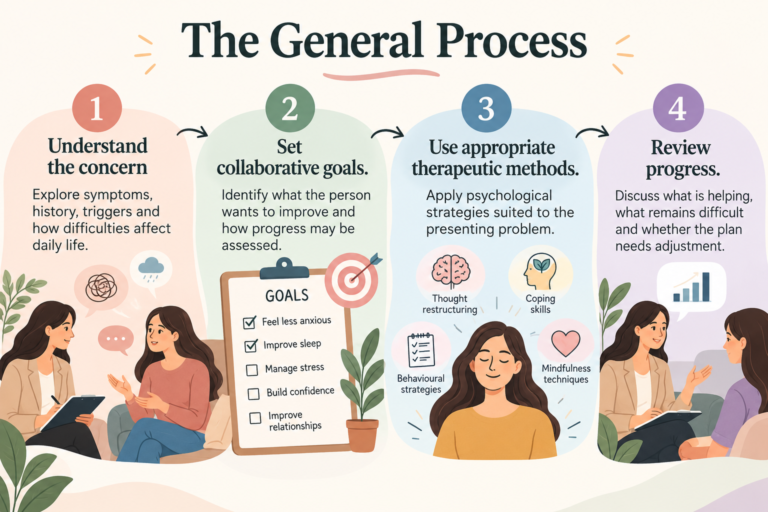
How Does Psychotherapy Work?
Psychotherapy works through different mechanisms depending on the therapeutic approach. Some
approaches help people identify and change unhelpful thought patterns; others focus on behaviour,
emotional regulation, interpersonal relationships, trauma-related responses or recurring psychological
patterns.
For example, someone who avoids social situations because they fear embarrassment may learn to
identify their predictions, test those predictions safely and gradually reduce avoidance. A person
experiencing persistent sadness may explore patterns of withdrawal and develop strategies to restore
meaningful activity.
Psychotherapy is not a guaranteed quick fix. Progress varies according to the presenting concern,
treatment approach, therapeutic relationship, consistency and other life circumstances.
What Can Psychotherapy Help With?
Psychotherapy may be useful for a range of psychological and emotional concerns, depending on the
type of therapy and the person’s circumstances.
Areas We Can Help With
| Concern | Potential Therapeutic Focus |
|---|---|
| Anxiety and excessive worry | Understanding worry, reducing avoidance and building coping skills. |
| Depression | Behavioural activation, coping strategies and patterns of thinking. |
| Panic symptoms | Understanding bodily sensations and addressing fear-related cycles. |
| OCD | Specialized approaches, including exposure and response prevention where indicated. |
| Stress and burnout | Coping strategies, problem-solving and boundaries. |
| Trauma-related difficulties | Appropriate trauma-informed treatment following assessment. |
| Relationship difficulties | Communication, interaction patterns and emotional understanding. |
| Grief and adjustment | Emotional processing and adaptation to change. |
| Anger and emotional regulation | Recognizing triggers and developing regulation skills. |
| Low self-esteem | Exploring beliefs, self-criticism and behavioural patterns. |
Clinical note: The presence of a symptom does not automatically establish a diagnosis or determine
which therapy is appropriate. Assessment helps clarify the problem and guide treatment selection.
What Are the Different Types of Psychotherapy?
An Overview of Major Approaches
Psychotherapy is not a single technique. It includes multiple approaches with different theories,
methods and evidence bases. The most appropriate approach depends on the presenting concern,
treatment goals, available expertise and the person’s preferences
Codgnitive Behavioural Therapy (CBT)
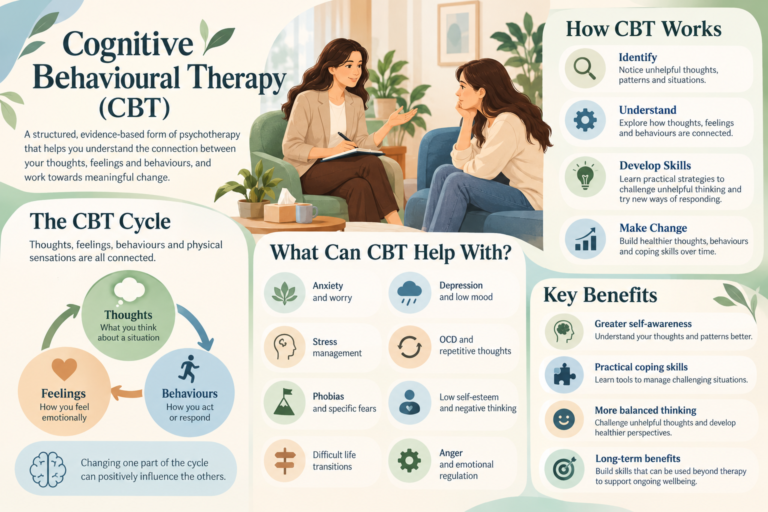
CBT — Cognitive Behavioural Therapy
CBT explores the relationships between thoughts, feelings and behaviours. Depending on the
problem, it may involve identifying unhelpful thinking patterns, behavioural experiments,
problem-solving, exposure or structured practice between sessions.
Often considered for: Anxiety disorders, depression, panic disorder and several other conditions.
Exposure and Response Prevention (ERP)
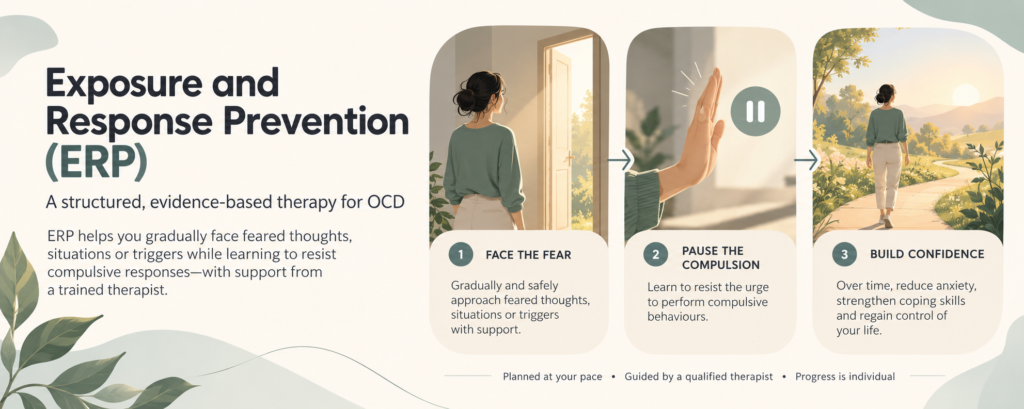
ERP — Exposure and Response Prevention
ERP is a specialized behavioural treatment particularly associated with OCD. It involves carefully
planned exposure to distressing triggers while learning to refrain from compulsive responses, with the
process adapted to the person’s needs.
Often considered for: Obsessive-compulsive disorder.
Dialectical Behaviour Therapy (DBT)
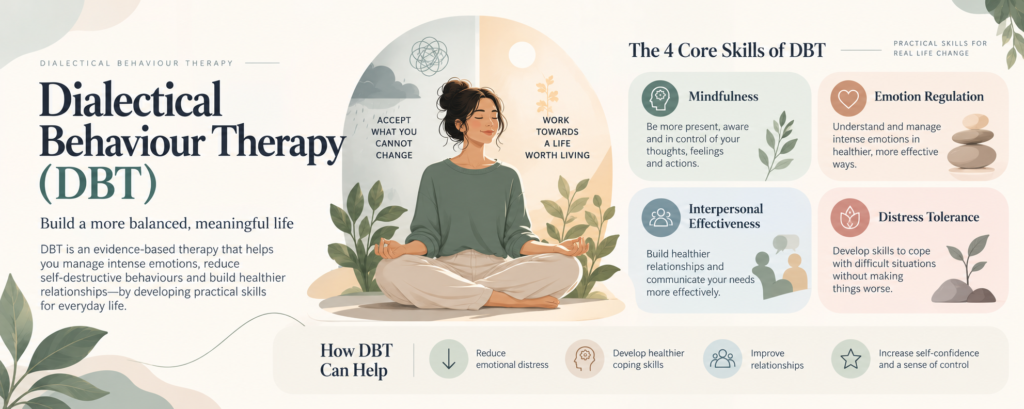
DBT — Dialectical Behaviour Therapy
DBT combines acceptance-oriented strategies with skills for change. It commonly teaches
mindfulness, emotional regulation, distress tolerance and interpersonal effectiveness.
Often considered for: Specific difficulties involving intense emotions, self-harm risk and certain
complex clinical presentations, when clinically indicated.
Psychodynamic Psychotherapy

Psychodynamic Psychotherapy
Psychodynamic approaches explore recurring emotional patterns, relationship experiences and
processes that may occur outside a person’s immediate awareness. The format, duration and goals
vary by treatment model.
May be considered for: Recurring interpersonal difficulties, emotional conflicts and longstanding
psychological patterns.
Supportive Psychotherapy
Supportive psychotherapy emphasizes emotional support, coping, strengthening existing abilities and
helping a person manage current challenges. It may be used as part of a broader treatment plan.
May be considered for: Adjustment difficulties, distress associated with illness and other situations
where supportive intervention is appropriate.
Family Therapy
Family therapy works with family relationships, communication patterns and shared difficulties.
Depending on the situation, sessions may involve several family members rather than only one
individual.
May be considered for: Family conflict, caregiving challenges and selected child or adolescent mental health concerns.
Couple Therapy
Couple therapy focuses on communication, recurring conflict, relationship distress and shared goals.
It is distinct from individual psychotherapy and requires consideration of safety and suitability for joint
sessions.
Mindfulness-Based Approaches
Mindfulness-based interventions help people practise present-moment awareness and respond
differently to thoughts, feelings and bodily sensations. Their use depends on the intervention, clinical
need and person’s circumstances.
Comparison of Psychotherapy Approaches
Comparison of Psychotherapy Approaches
| Approach | Main Focus | Examples of Potential Use |
|---|---|---|
| CBT | Thoughts, behaviours and coping skills | Anxiety, depression and panic |
| ERP | Exposure and reducing compulsive responses | OCD |
| DBT | Emotional regulation and coping skills | Selected complex emotional difficulties |
| Psychodynamic therapy | Emotional and relationship patterns | Selected longstanding difficulties |
| Supportive therapy | Coping and emotional support | Adjustment and distress |
| Family therapy | Family interactions and communication | Family-related concerns |
| Couple therapy | Relationship dynamics | Relationship distress |
| Mindfulness-based approaches | Awareness and responding to experiences | Selected emotional and stress-related concerns |
Important: This table is an overview, not a ranking. Some approaches have stronger evidence for
particular conditions than others. The therapy selected should match the presenting problem and
current clinical guidance.
Psychotherapy vs Counselling: What Is the Difference?
Psychotherapy and counselling overlap, and the terms are not used consistently across every setting.
Counselling often refers to support with specific life difficulties, adjustment or decision-making, while
psychotherapy may involve a more structured treatment of persistent psychological symptoms or
patterns. In practice, the distinction depends on the professional, training, setting and intervention
rather than the label alone.
| Feature | Counselling | Psychotherapy |
|---|---|---|
| Common focus | Specific concerns, adjustment and support | Psychological symptoms, patterns and emotional difficulties |
| Structure | Varies | Varies by therapeutic approach |
| Duration | May be brief or extended | May be brief or extended |
| Techniques | Support, reflection and problem-solving | May include structured evidence-based psychological methods |
| Professional suitability | Depends on training and scope | Depends on training and scope |
Neither label automatically tells you the quality or suitability of a service. Ask about the professional’s
qualifications, experience with your concern, treatment approach and how progress will be reviewed.
Clinical pearl
The right question is not simply “Is this counselling or psychotherapy?” but “Does this professional
have the appropriate qualifications and experience to provide the treatment I need?”
Who Can Benefit From Psychotherapy?
Psychotherapy may be suitable for people who are experiencing persistent emotional distress,
behavioural difficulties, relationship challenges or symptoms of a mental health condition. It may also
support people who want to understand themselves better or develop healthier coping strategies.
Suitability depends on the person’s needs, risk level, treatment goals and whether the chosen therapy
is appropriate for the presenting concern.
Adults
Adults may seek psychotherapy for anxiety, depression, stress, grief, relationship difficulties,
emotional regulation or other concerns affecting daily life.
Adolescents
Adolescents may benefit from age-appropriate psychological treatment for emotional difficulties,
anxiety, low mood, behavioural concerns or adjustment problems. Assessment should consider
developmental stage, family context, safeguarding and the young person’s needs.
Children
Children may need developmentally adapted psychological interventions, play-based approaches or
family involvement, depending on the concern and the clinician’s training.
Couples and families
Couples and families may seek help with communication, conflict, caregiving challenges or
relationship patterns. Joint therapy is not appropriate for every situation; safety and individual needs
must be considered.
People already receiving psychiatric treatment
Psychotherapy may complement psychiatric assessment or medication when the combination fits the
person’s needs. The treating professionals may coordinate care when appropriate and with suitable
consent.
People without a formal diagnosis
A formal diagnosis is not required for every form of psychological support. However, symptoms that
are persistent, severe or impairing may warrant a clinical assessment to clarify whether a diagnosable
condition or another type of care is involved.
Not Sure Which Type of Therapy You Need?
Different concerns may benefit from different psychological approaches. An initial assessment can
help clarify your goals and whether psychotherapy, CBT, psychiatric consultation or another service is
suitable.
Prepare the appointment CTA
Before publishing, replace this placeholder action with the clinic’s verified booking link or telephone
contact.
What Are the Benefits of Psychotherapy?
Psychotherapy can help people develop a clearer understanding of their difficulties, build coping
strategies and make changes aligned with their treatment goals. The benefits vary depending on the
concern, therapeutic approach, quality of the treatment relationship and individual circumstances.
Potential benefits
Potential Benefits of Psychotherapy
Better Understanding of Emotions
Therapy can help people identify emotional triggers, recurring reactions and the contexts in which distress becomes more intense.
Improved Coping Skills
Some approaches teach practical strategies for responding to stress, managing worry and navigating difficult situations.
Changes in Unhelpful Patterns
Depending on the treatment, people may learn to recognize patterns of avoidance, self-criticism, reassurance-seeking or other behaviours that maintain distress.
Support with Relationships
Psychotherapy may help people communicate more effectively, understand interpersonal patterns and establish healthier boundaries.
Improved Daily Functioning
Treatment goals may include improved participation in work, study, relationships, sleep routines or meaningful activities.
Relapse Prevention and Maintenance
Some therapies help people recognize early warning signs and continue using skills after the formal treatment period ends.
What psychotherapy cannot promise
Psychotherapy does not guarantee a cure, immediate relief or the same outcome for everyone. Some
people improve gradually, some need a different approach, and some require combined care or
reassessment.
The goal is to provide appropriate treatment and review progress transparently.
Is Psychotherapy Evidence-Based?
Psychotherapy includes multiple approaches, and the strength of evidence varies by condition and
treatment model. CBT, for example, has an established evidence base for several anxiety and
depressive disorders, while ERP is an important psychological treatment for OCD. Other approaches
may be appropriate for different clinical presentations.
Evidence-based care involves more than selecting a popular therapy name. It requires matching the
intervention to the clinical concern, delivering it competently, monitoring progress and adapting the
plan when necessary.
What to look for in evidence-informed therapy
- A clear explanation of the proposed treatment.
- A reasonable link between the intervention and the presenting problem.
- A qualified professional with relevant training.
- Collaborative and realistic treatment goals.
- Review of progress and adverse experiences.
- Appropriate referral or escalation when needed.
Patient takeaway
There is no single psychotherapy approach that is best for every condition or every person. The most
suitable option depends on the clinical concern, the available evidence, the professional’s
competence and the person’s preferences.
Does Psychotherapy Work Without Medication?
Psychotherapy can be used without medication when it is clinically appropriate. For some concerns,
psychological treatment may be a primary intervention; for others, medication, psychotherapy or a
combination may be considered after assessment.
The decision depends on symptom severity, diagnosis, previous treatment response, safety concerns,
preferences and the evidence for the particular condition.
For example, CBT may be used as a psychological treatment for certain anxiety disorders, while a
person with more severe or complex symptoms may benefit from a broader treatment plan involving
psychiatric evaluation.
Do not interpret this as a recommendation to stop prescribed medication. Anyone considering
changing medication should discuss the decision with their prescriber.
Can Psychotherapy and Medication Be Used Together?
Yes. Psychotherapy and medication may be combined when clinically appropriate. The treatments
can serve complementary roles: medication may help reduce symptoms, while psychotherapy may
address thought patterns, behaviours, emotional responses and coping strategies.
However, combined treatment is not necessary for everyone. Some people may benefit from
psychotherapy alone, while others need medication, psychiatric monitoring or additional services.
A collaborative treatment pathway
- Assessment and shared decision-making
- Psychotherapy
- Psychological methods, coping skills and behavioural change.
- Psychiatric care
- Assessment and medication where clinically indicated.
- Review progress and adapt the plan
Important consideration
Where several professionals are involved, clear communication and appropriate consent can help
coordinate treatment and reduce conflicting advice.
How Long Does Psychotherapy Take?
There is no fixed duration for psychotherapy. Some structured interventions are designed to be
relatively brief, while other concerns may require a longer course of treatment. Duration depends on
the presenting problem, treatment approach, goals, complexity, progress and practical circumstances.
Factors that influence duration
| Factor | How it may affect treatment |
|---|---|
| Presenting concern | Some concerns have more established brief treatment protocols. |
| Severity | More significant difficulties may require more support. |
| Complexity | Multiple conditions or longstanding problems may require a broader plan. |
| Treatment goals | Specific goals may be addressed differently from broader goals. |
| Progress | The plan may change according to response. |
| Attendance and practice | Consistency may affect opportunities to apply therapy skills. |
| Safety and stability | Risk and clinical complexity may change treatment needs. |
Avoid publishing a universal session count
Do not claim that psychotherapy always takes a set number of sessions. Where a service has a
defined treatment protocol, explain the typical format only if it is accurate for the actual clinic service
and appropriate to the condition.
What Should You Expect From Your First Psychotherapy Session?
The first session commonly involves understanding the person’s concerns, relevant history, current
functioning and goals. The exact format depends on the clinician, therapeutic approach, age of the
patient and reason for seeking help.
A typical first-session framework
- Have we agreed on clear, realistic goals?
- Do I understand the therapeutic approach?
- Have we reviewed what has improved and what remains difficult?
- Are there practical barriers, such as time, cost, travel, or privacy?
- Are the exercises and strategies suitable for my circumstances?
- Would a different approach or additional clinical assessment be appropriate?
Not every detail needs to be discussed immediately. The clinician should explain the process and create an appropriate setting for the patient to raise concerns.
Patient takeaway
The first session is not an examination that a patient has to pass. It is an opportunity to understand the concern, discuss goals and determine whether the professional and proposed treatment are a suitable fit.
Is Psychotherapy Confidential?
Psychotherapy generally involves confidentiality, but confidentiality has legal, ethical and clinical limits. These may include situations involving serious safety risks, safeguarding duties or disclosures required by applicable law. The precise requirements depend on the circumstances and relevant professional obligations.
Before beginning treatment, patients should be able to ask:
● How will session notes and personal information be handled?
● Who can access the records?
● Are there circumstances in which information must be shared?
● How does confidentiality work for children and adolescents?
● What happens if another professional is involved in care?
● What are the clinic’s privacy and communication policies?
For minors, the balance between confidentiality, parental involvement, consent and safeguarding needs particular care and should be explained in an age-appropriate manner.
Publication requirement: The final page must align its confidentiality explanation with the clinic’s actual policies and applicable Indian law. Do not promise absolute confidentiality.
How Is the Right Type of Psychotherapy Selected?
The most appropriate type of psychotherapy depends on the person’s presenting concerns, clinical assessment, treatment goals, preferences, previous treatment experiences and the evidence supporting the proposed approach. There is no single therapy that works best for every condition or individual.
A qualified mental health professional may consider the following factors before recommending a treatment approach.
Presenting concern
The first step is understanding what the person is experiencing and how it affects daily life.
For example:
- Persistent worry may require assessment for an anxiety disorder.
- Recurrent intrusive thoughts and compulsive behaviours may warrant evaluation for OCD.
- Persistent low mood and loss of interest may indicate a need for depression assessment.
- Relationship difficulties may call for individual, couple or family-based work, depending on the circumstances.
The same symptom can occur in different conditions, so treatment should not be selected from a symptom alone.
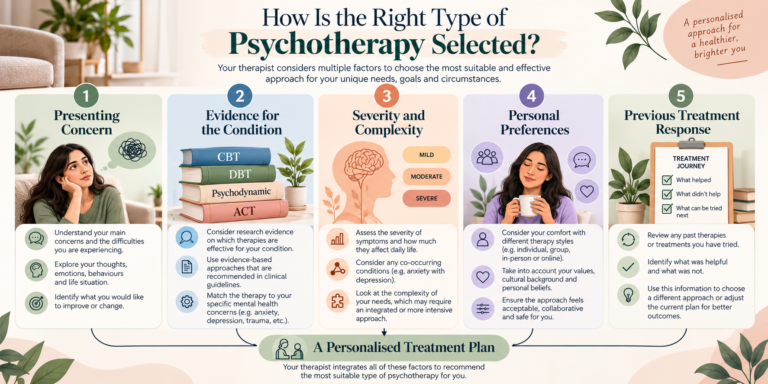
Evidence for the condition
Different psychological treatments have different levels of evidence for specific conditions.
CBT is an established treatment for several anxiety and depressive disorders. Exposure and response prevention (ERP) has an important role in OCD treatment. Other approaches may be more appropriate for particular emotional, interpersonal or adjustment-related difficulties.
The treatment plan should reflect current clinical guidance rather than popularity or marketing claims.
Severity and complexity
Mild, situational difficulties may be approached differently from severe, persistent or complex symptoms.
✦ Assessment may identify a need for:
- 01 Individual psychotherapy.
- 02 A structured psychological intervention.
- 03 Psychiatric assessment.
- 04 Combined psychological and medication treatment.
- 05 Further assessment or specialist referral.
- 06 Additional support where safety concerns are present.
Personal preferences
Therapy is collaborative. Relevant preferences may include the treatment format, goals, cultural considerations, communication style and willingness to complete structured activities between sessions.
A patient’s preference matters, although the clinician should also explain when a preferred approach may not be the most suitable option.
Previous treatment response
If a person has previously received therapy, the clinician may explore what helped, what did not help, whether the treatment was appropriate for the presenting problem and whether any barriers affected participation.
Previous treatment failure does not automatically mean that psychotherapy cannot help. It may indicate a need to reconsider the formulation, approach, goals or level of care.
Clinical takeaway
Selecting psychotherapy is a clinical decision, not simply a choice between therapy names. The best starting point is to understand the problem, agree on goals and select an appropriate evidence-informed approach.
What Happens During a Psychotherapy Session?
A psychotherapy session provides a structured opportunity to discuss concerns, explore experiences and work toward agreed goals. The exact format depends on the therapeutic approach, the patient’s needs and the stage of treatment.
Not every session follows the same pattern. Some focus on learning skills, some on understanding emotional experiences, and others on reviewing progress or working through a specific difficulty.
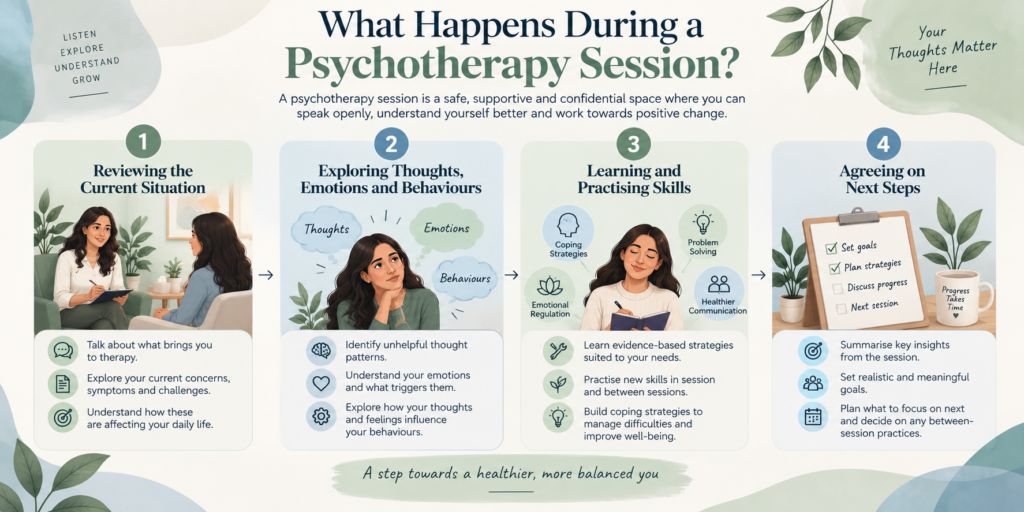
Reviewing the Current Situation
A session may begin with a discussion of the person’s mood, symptoms, recent experiences and any important developments since the previous meeting.
The therapist may ask:
- What has been difficult since the last session?
- Were there any situations that triggered distress?
- Did you try any strategies discussed previously?
- Has anything improved or worsened?
- Is there an issue you would like to prioritize today?
This review helps the therapist understand how the person is doing and what needs attention.
Exploring Thoughts, Emotions and Behaviours
Depending on the treatment approach, the therapist may help the person identify patterns connecting situations, thoughts, feelings, physical sensations and behaviours.
For example, a person who fears being judged may avoid meetings, experience short-term relief and then become increasingly anxious about future meetings.
Recognizing this pattern can help identify treatment targets.
Learning and Practising Skills
Some therapies involve learning specific skills during sessions.
These may include:
- Recognizing and evaluating unhelpful thoughts.
- Problem-solving.
- Emotional regulation.
- Managing distress.
- Improving communication.
- Reducing avoidance through appropriately planned exposure.
- Developing practical coping strategies.
The therapist should explain the purpose of exercises and adapt them to the individual’s treatment plan.
Agreeing on Next Steps
Toward the end of a session, the therapist may summarize the main themes, identify what the person has learned and discuss the next step.
In structured therapies, the person may be invited to practise a skill or complete an activity between sessions. This should be appropriate to the treatment and agreed upon collaboratively.
✦ Example of a structured session
Check-in
Review current symptoms, progress and important events.
Session focus
Identify the issue or treatment goal to work on.
Therapeutic work
Explore experiences, practise skills or use the planned intervention.
Review
Discuss progress and agree on next steps, if needed.
Reflect on what was learned and discuss the next step.
This is an illustrative structure, not a mandatory format for every therapy session.
What Is the Therapeutic Relationship?
The therapeutic relationship is the professional working relationship between the therapist and the person receiving treatment. It involves collaboration, communication, trust, shared goals and agreement about the work being undertaken.
A supportive relationship can make it easier to discuss difficult experiences and engage with treatment. However, psychotherapy is not simply a conversation with a sympathetic listener: it should have a purpose and be appropriate to the person’s needs.

Trust and Psychological Safety
People may initially feel uncomfortable discussing personal experiences, trauma, relationships or distressing thoughts. A therapist should explain the process, respect appropriate boundaries and help the person understand how confidentiality works.
Trust usually develops over time. Patients do not need to disclose every detail immediately.
Shared Goals
The therapist and patient should work toward goals that are meaningful and realistic.
Examples include :
- Reducing avoidance of feared situations.
- Managing excessive worry.
- Returning to meaningful activities.
- Improving communication.
- Developing emotional regulation skills.
- Understanding recurring interpersonal difficulties.
Goals may be refined as treatment progresses.
Collaboration and Feedback
Patients should be able to ask questions and discuss whether the treatment feels useful. A therapist may invite feedback about the pace, methods and challenges of therapy.
If the approach is not helping, the appropriate response is to discuss the difficulty and consider adjustments rather than assuming that the patient has failed.
Professional Boundaries
Psychotherapy requires clear professional boundaries. The therapist should explain the nature of the service, relevant confidentiality limits, fees, session arrangements and procedures for concerns or complaints.
Patient takeaway
A suitable therapeutic relationship should allow the patient to participate actively, raise concerns and understand the purpose of treatment.
Is Psychotherapy Only About Talking?
No. Although conversation is central to many forms of psychotherapy, treatment may also include structured exercises, behavioural practice, worksheets, exposure tasks, skills training, mindfulness exercises or activities between sessions.
The methods depend on the therapy being provided.
| Therapeutic activity | Purpose |
|---|---|
| Guided discussion | Explore experiences and identify patterns |
| Thought records | Examine connections between thoughts, emotions and behaviours |
| Behavioural experiments | Test predictions in a planned and safe way |
| Exposure exercises | Address avoidance and fear responses when clinically appropriate |
| Skills practice | Develop emotional regulation, coping or communication skills |
| Between-session activities | Apply learning in everyday situations |
| Progress monitoring | Review symptoms and whether treatment goals are being met |
Not every approach uses every method. The therapist should explain the relevance of any exercise and how it supports the agreed treatment plan.
What Are Between-Session Activities in Psychotherapy?
Some forms of psychotherapy involve practising skills or completing activities outside the session. These activities help people apply what they learn in everyday life. They may include monitoring patterns, trying a coping strategy, practising communication or carrying out a planned behavioural exercise.
Examples




Are these activities compulsory?
Expectations vary by approach. In structured therapies, practice between sessions may be an important part of treatment. The therapist should take account of the person’s circumstances and discuss barriers to participation.
Missing an activity should be treated as information that can help improve the treatment plan, not as a reason for blame.
How Is Progress in Psychotherapy Measured?
Psychotherapy progress can be assessed through changes in symptoms, daily functioning, coping, behaviour and progress toward agreed goals. The method used depends on the condition and treatment approach. Progress is not always linear. Some people notice early improvements, while others improve gradually or experience periods of increased difficulty.
Symptom Changes
A therapist may review whether symptoms have become less frequent, less intense or easier to manage.
For example:
- Fewer episodes of overwhelming worry.
- Reduced avoidance.
- Improved mood.
- Less interference from intrusive thoughts
- Better ability to manage distress.
Daily Functioning
Symptom scores alone may not fully capture improvement. Functioning may also be important.
Examples include:
- Returning to work or study tasks.
- Participating in social activities.
- Managing everyday responsibilities.
- Improving communication.
- Re-establishing meaningful routines.
Treatment Goals
The therapist and patient can revisit their original goals and determine which have been achieved, which need further work and whether new goals have emerged.
Standardized Measures
Where appropriate, validated questionnaires or symptom scales may help track change. They should support—not replace—clinical judgement and discussion with the patient.
Important principle
Progress should be reviewed collaboratively. If improvement is limited, the clinician may reconsider the treatment formulation, goals, intervention or need for additional assessmen
What If Psychotherapy Is Not Helping?
If psychotherapy does not appear to be helping, it is important to discuss the problem with the treating professional. Limited progress does not automatically mean that psychotherapy is unsuitable; it may indicate that the approach, goals or broader treatment plan need review.
Possible factors include:
✦ Possible factors include:
- The presenting concern has not been fully assessed.
- The therapy may not match the condition.
- Treatment goals may need clarification.
- The approach may need more time or a different structure.
- Practical barriers may be affecting attendance.
- The person may find the methods difficult or unsuitable.
- Another mental health or medical condition may be contributing.
- Additional psychiatric assessment or a different level of care may be needed.
What can happen next?
A clinician may review the diagnosis, treatment approach, therapeutic relationship, progress measures and practical barriers. Depending on the findings, they may modify the plan, discuss another psychological approach, recommend psychiatric evaluation or arrange a referral.
Patients should not feel obliged to continue a treatment indefinitely without discussing concerns or understanding the rationale.
Not Seeing the Progress You Expected?
Treatment can require reassessment when goals are not being met. A professional review can help clarify whether the approach, treatment plan or level of support needs to change.
Explore the appropriate next step at Headspace Mind Clinic.
What Factors Can Influence Psychotherapy Outcomes?
Outcomes depend on several interacting factors. No single factor guarantees success, and patients should not be blamed when progress is slower than expected.
Factors That Support Effective Treatment
Appropriate Treatment Selection
The intervention should be suitable for the presenting concern and delivered by someone with relevant training.
Therapeutic Collaboration
Clear communication, agreed goals and opportunities to provide feedback may support engagement.
Consistency and Accessibility
Attending sessions and having opportunities to apply skills may support progress. However, transport, cost, work schedules, caregiving responsibilities and other practical barriers can affect participation.
Complexity of the Clinical Picture
Coexisting conditions, ongoing stressors, medical concerns and safety issues may influence treatment planning.
Patient Preferences and Readiness
Treatment is generally more collaborative when the patient understands the proposed approach and has a chance to discuss concerns.
Review and Adaptation
Regularly reviewing progress allows the clinician to recognize when an approach is useful and when changes may be needed.
Clinical pearl: Psychotherapy is an active treatment process, but the responsibility for good care includes appropriate assessment, competent delivery, review and adaptation—not merely the patient’s effort.
Is Psychotherapy Different for Every Person?
Yes. Even when two people have the same diagnosis, their treatment plans may differ. Symptoms, life circumstances, previous experiences, preferences, support systems and treatment goals are not identical.
For example, two people with anxiety may require different emphases:
● One may need help reducing avoidance and testing catastrophic predictions.
● Another may need support managing worry alongside depression or sleep difficulties.
● Another may require additional assessment because physical symptoms could have a medical explanation.
Personalization should not mean abandoning evidence-based care. Rather, it means applying suitable treatment principles to the individual.
Can Psychotherapy Be Used for Children and Adolescents?
Psychological treatment can be appropriate for children and adolescents, but it should be adapted to their developmental stage, communication needs and circumstances. The approach may involve individual work with the young person, caregiver guidance, family sessions, behavioural interventions or coordination with school and other professionals when appropriate and with suitable consent.
The approach may involve individual work with the young person, caregiver guidance, family sessions, behavioural interventions or coordination with school and other professionals when appropriate and with suitable consent.
Factors to Consider
Age and Development
Age and developmental stage.
Nature and Severity
Nature and severity of the concern.
Family and Caregivers
Family context and caregiver involvement.
School and Relationships
School functioning and social relationships.
Safeguarding and Safety
Safeguarding and safety needs.
Professional Expertise
The professional's training in child and adolescent care.
A child’s symptoms should not automatically be interpreted using adult assumptions. Persistent emotional or behavioural difficulties may warrant an age-appropriate assessment.
Can Psychotherapy Help Older Adults?
Psychotherapy may be useful for older adults experiencing depression, anxiety, grief, adjustment difficulties, relationship concerns or distress related to medical illness.
Treatment should consider the person’s physical health, sensory needs, cognitive functioning, medication history, support system and preferences.
Where memory changes, confusion or substantial cognitive difficulties are present, further medical or cognitive assessment may be needed before deciding on the appropriate psychological approach.
Is Online Psychotherapy as Suitable as In-Person Therapy?
Online psychotherapy may be suitable for some people, depending on the presenting concern, clinician, privacy arrangements, technology access and safety needs. In-person care may be preferable in other circumstances.
Neither format is automatically appropriate for everyone.
Consider Before Choosing Online Therapy
Can you speak privately?
Is the internet connection reliable?
Does the clinician offer the treatment you need online?
Is the format suitable for your symptoms and circumstances?
What arrangements exist if your symptoms worsen?
Are the service's privacy and communication policies clear?
The clinic should advertise online psychotherapy only if it actually provides the service and has appropriate clinical and operational arrangements.
Publishing note: Confirm Headspace Mind Clinic’s current availability of online sessions before including an online-booking CTA.
What Should You Look for When Choosing a Psychotherapist in Delhi?
Choosing a psychotherapist involves more than searching for the nearest service. Patients should consider professional qualifications, relevant experience, the proposed treatment approach, communication, practical accessibility and the ability to review progress.
Checklist for choosing a therapist
- Verify qualifications, registration where applicable and scope of practice.
- Ask about experience with your particular concern.
- Understand the proposed therapy and its rationale.
- Discuss treatment goals and how progress will be reviewed.
- Clarify fees, session arrangements and cancellation policies.
- Ask how confidentiality and records are handled.
- Ensure there is a process for reassessment or referral when needed.
Why qualifications matter
Titles such as therapist, counsellor, psychologist and clinical psychologist do not necessarily indicate identical training or scope of practice. Patients should verify the professional’s actual qualifications and suitability for the treatment they are seeking.
For readers looking for a qualified professional. Link to Clinical Psychologist in Delhi and Fees & Appointments.
When Is Psychotherapy Not Enough on Its Own?
Psychotherapy is an important part of mental health care, but it is not always the only treatment required.
A broader assessment may be necessary when a person has severe or rapidly worsening symptoms, significant functional impairment, suspected medical causes, complex coexisting conditions or substantial safety concerns.
Depending on the circumstances, the care plan may involve psychiatric assessment, medical evaluation, medication, specialist referral or a higher level of care.
Seek urgent help when necessary
If someone is at immediate risk of harming themselves or another person, cannot remain safe, or is experiencing a psychiatric or medical emergency, urgent professional assessment is necessary. In India, call 112 for emergency assistance or attend the nearest emergency department when immediate danger exists.
Psychotherapy appointments should not be used as a substitute for emergency care.
Is Psychotherapy Safe? Understanding Its Limitations
Psychotherapy is generally considered a safe and useful treatment option when delivered by an appropriately qualified professional using a suitable therapeutic approach. However, like other forms of healthcare, it has limitations, and the experience may differ from one person to another.
Psychotherapy may involve discussing difficult experiences, painful memories, relationship conflicts, fears, grief, or patterns of behaviour that a person has avoided thinking about. These discussions can sometimes bring temporary emotional discomfort.
The aim is not to make a person feel distressed unnecessarily. Rather, therapy should help the person explore difficult material at an appropriate pace, develop coping strategies, and work towards agreed treatment goals.
Possible challenges during psychotherapy
Possible Challenges During Psychotherapy
| Challenge | What It May Feel Like | How It Can Be Addressed |
|---|---|---|
| Temporary emotional discomfort | Feeling upset after discussing a painful experience | Discuss the reaction with the therapist and adjust the pace |
| Difficulty discussing personal matters | Embarrassment, hesitation, or fear of being judged | Begin with less difficult topics and build trust gradually |
| Practising unfamiliar skills | Feeling awkward while changing habits or communication patterns | Start with manageable exercises and review what works |
| Slow or uneven progress | Some weeks feel better than others | Track progress over time instead of judging treatment by one session |
| Lack of fit with the therapist | Feeling misunderstood or uncomfortable | Raise concerns openly or consider another qualified professional |
| Limited improvement | Symptoms or difficulties remain despite attending sessions | Reassess goals, treatment approach, diagnosis, barriers, and need for additional care |
Does psychotherapy always work?
No single treatment works equally well for everyone. Outcomes depend on factors such as the problem being treated, the suitability of the therapeutic approach, the person’s circumstances, the quality of the therapeutic relationship, and access to consistent care.
A lack of improvement does not automatically mean that a person has failed at therapy. It may indicate that the treatment plan needs to be reviewed.
Possible next steps include:
- Clarifying the goals of treatment.
- Reviewing attendance, practical barriers, and between-session exercises.
- Considering whether the selected therapy matches the presenting concern.
- Reassessing symptoms or other factors that may need clinical attention.
- Discussing whether psychiatric consultation, medication, or another intervention could be helpful.
Patient takeaway: Psychotherapy is a collaborative process, not a test of willpower. Patients should be able to raise concerns and ask for their treatment plan to be reviewed.
Emotional Discomfort During Therapy: What Should Patients Expect?
Some people expect psychotherapy to provide immediate relief from the first session. Others worry that discussing difficult experiences will make them feel worse. In reality, responses vary.
A person may feel relieved after speaking openly, uncertain about what they discussed, emotionally tired, or temporarily unsettled. Some sessions may feel productive, while others may involve frustration or difficult questions.
The important distinction is between manageable discomfort that can be discussed and distress that feels overwhelming, persistent, or unsafe.
What can help when a session feels difficult?
Ways to Navigate Difficult Moments in Therapy
Tell the Therapist What You Are Experiencing
You do not need to hide discomfort or pretend that a session was helpful.
Ask to Slow Down
Difficult subjects can often be approached gradually.
Discuss Grounding and Coping Strategies
These may help you manage emotional reactions during and after sessions.
Review the Purpose of an Exercise
Understanding why a therapeutic activity is being used can make it easier to participate.
Agree on a Plan for Difficult Moments
This may include identifying warning signs, coping steps, and when to seek additional support.
When should a patient seek additional help?
Contact the treating professional if emotional distress becomes significantly worse, remains difficult to manage, or interferes substantially with daily functioning. Urgent assessment is necessary if a person develops an immediate risk of harming themselves or someone else, cannot maintain their safety, or experiences another psychiatric emergency.
In India, call 112 for an immediate emergency or go to the nearest emergency department when urgent safety concerns arise. Do not wait for the next routine psychotherapy appointment.
Informed Consent: What Should Be Explained Before Therapy Begins?
Informed consent means that a patient receives understandable information about the proposed treatment and has a meaningful opportunity to ask questions and make an informed decision.
Before beginning psychotherapy, patients should be able to understand the general purpose of treatment, the approach being considered, its potential benefits and limitations, and the practical arrangements for sessions.
The exact consent process may vary according to the person’s age, clinical circumstances, professional role, and applicable law.
Topics to discuss before starting psychotherapy
Topics to Discuss Before Starting Psychotherapy
Treatment Goals
What concerns will therapy focus on?
Therapeutic Approach
What type of psychotherapy is proposed, and why?
Expected Process
How are sessions usually structured?
Benefits and Limitations
What might improve, and what remains uncertain?
Fees and Cancellation
What are the charges and cancellation policies?
Confidentiality
What information is private, and what are the exceptions?
Records and Communication
How are clinical notes and relevant communications handled?
Online-Session Arrangements
If therapy is remote, what platform and privacy precautions are used?
Questions and Concerns
How can the patient raise disagreement or request a review?
Alternatives
Are there other reasonable treatment options to consider?
Can a patient change their mind?
Patients should be able to discuss concerns about treatment and ask about alternatives. They may decline a proposed exercise, request clarification, or discuss whether to continue, pause, or change the treatment plan.
Consent is not simply a signature on a form. It is an ongoing process of communication, subject to applicable legal and clinical requirements.
For children and adolescents, consent, assent, parental or guardian involvement, and confidentiality need particular care. The appropriate arrangements depend on the young person’s age, capacity, circumstances, and applicable law.
Clinical note for publication: Avoid promising that every patient can independently consent to every type of treatment in all circumstances. Consent requirements must be reviewed against applicable Indian law and professional standards.
Confidentiality in Psychotherapy: What Remains Private?
Privacy is a central part of the therapeutic relationship. People may be more willing to discuss sensitive experiences when they understand how their information will be handled.
However, confidentiality should not be described as absolute. The applicable professional duties, legal requirements, consent arrangements, and circumstances of the case determine what information may need to be shared.
When might confidentiality have limits?
Depending on the circumstances and applicable law, exceptions may arise when:
- There is a serious and immediate concern about safety.
- Disclosure is required by law or a valid legal process.
- Safeguarding obligations apply, particularly in cases involving children or vulnerable people.
- Information must be shared with relevant professionals for care, where permitted and appropriate.
- The patient has provided valid consent for a particular disclosure.
These examples are not an exhaustive list. The therapist should explain relevant limits before treatment begins and discuss them again when a specific situation arises, where it is appropriate and safe to do so.

What about family members?
A family member does not automatically have unrestricted access to an adult patient’s therapy discussions simply because they arranged or paid for the appointment.
Information sharing should follow the applicable consent, confidentiality, professional, and legal requirements. Where family involvement is clinically appropriate, the therapist can discuss what information may be shared and why.
For children and adolescents, balancing privacy, parental involvement, safeguarding, and the young person’s welfare requires an age-appropriate and legally informed approach.
Digital privacy and online psychotherapy
Patients attending online sessions can take practical steps to protect their privacy:
- Choose a private room where conversations cannot easily be overheard.
- Use a secure device and a trusted internet connection.
- Avoid public spaces when discussing sensitive information.
- Ask how records, session notes, and communications are stored and accessed.
- Clarify whether sessions are recorded; recording should not be assumed to be routine or automatically appropriate.
- Ask how appointment reminders and messages will be sent, especially if other people can access the phone.
Clinics should maintain appropriate safeguards for personal and health information and follow applicable privacy and data-protection requirements.
Suggested internal link: Privacy Policy Suggested supporting link: Fees & Appointments
Psychotherapy Boundaries: What a Healthy Therapeutic Relationship Looks Like
Psychotherapy involves a professional relationship with clear goals, responsibilities, and boundaries. It is different from a friendship, informal advice from an acquaintance, or a conversation in which the therapist simply agrees with everything the patient says.
A healthy therapeutic relationship should support respect, appropriate communication, collaboration, and professional accountability.
Signs of a constructive therapeutic relationship
Signs of a Constructive Therapeutic Relationship
-
01
✓
The therapist explains the treatment approach in understandable language.
-
02
✓
You can ask questions without being shamed or belittled.
-
03
✓
Your goals and preferences are considered.
-
04
✓
Disagreements can be discussed respectfully.
-
05
✓
The therapist maintains appropriate professional boundaries.
-
06
✓
You understand the arrangements for sessions, fees, cancellations, and contact outside appointments.
-
07
✓
Progress and difficulties are reviewed rather than ignored.
-
08
✓
The therapist recognises the limits of their expertise and considers referral when needed.
Does a therapist always agree with the patient?
No. A therapist may gently challenge an assumption, ask the patient to consider another perspective, or help identify a pattern that may be contributing to distress. Such work should be conducted respectfully and with a clear therapeutic purpose.
The patient should not feel pressured to accept every interpretation without discussion. It is reasonable to ask, “Could you explain why you see it that way?” or “How does this relate to the goal we agreed on?”
What if the patient feels uncomfortable with the therapist?
Some discomfort can occur when discussing difficult issues, but persistent fear, disrespect, unexplained boundary violations, or an inability to raise concerns should not be dismissed as a necessary part of therapy.
Where appropriate, patients can discuss the problem directly, request a change in approach, seek a second opinion, or consider another qualified professional.
Barriers to Psychotherapy: Why People Delay Seeking Help
People may recognise that they are struggling but still hesitate to seek psychotherapy. These barriers can be emotional, cultural, practical, financial, or related to uncertainty about treatment.
Understanding these concerns can make it easier to take a first step without creating unrealistic expectations.
| Common barrier | Why it can be difficult | A practical step |
|---|---|---|
| Fear of being judged | Worry that personal experiences will be criticised | Ask about the therapist's approach and confidentiality |
| Mental health stigma | Concern about what family, colleagues, or others may think | Begin with a confidential professional consultation |
| Uncertainty about therapy | Not knowing what happens in sessions | Request an explanation of the proposed process |
| Financial constraints | Concern about ongoing costs | Discuss fees, frequency, and realistic treatment planning |
| Time and travel | Difficulty attending regularly | Ask whether online sessions are suitable and available |
| Difficulty expressing emotions | Finding it hard to describe experiences verbally | Write down concerns or examples before the appointment |
| Family disagreement | Relatives may misunderstand or oppose therapy | Discuss how to explain treatment and whether appropriate family involvement could help |
| Previous disappointing experience | A prior treatment may not have felt useful | Review what did not work and what should be different this time |
| Fear of medication | Confusing psychotherapy with medication treatment | Clarify that psychotherapy and medication are distinct options, although they may be combined when appropriate |
Do you need to wait until a problem becomes severe?
No. People may seek psychotherapy for persistent stress, relationship difficulties, emotional regulation, adjustment to life changes, or other concerns even when they do not have a diagnosed mental health condition.
Seeking help earlier may allow a person to explore difficulties before they become more disruptive. However, the appropriate treatment and likely benefits depend on the individual’s needs and circumstances.
What if you do not know what to say in the first session?
You do not need to prepare a perfect explanation. It may be enough to describe what has been difficult recently, when you first noticed it, how it affects daily life, and what you would like to change.
You can also say that you are unsure where to begin. Helping patients organise their concerns is part of the initial therapeutic process.
Psychotherapy in a Culturally Sensitive Setting
A person’s family environment, language, social expectations, financial circumstances, relationships, and cultural background can influence how they understand emotional distress and seek help.
Psychotherapy should consider these factors without making assumptions about a person based on their community, gender, age, occupation, or family structure.
In a diverse city such as Delhi, patients may prefer to discuss personal concerns in Hindi, English, or another language they are comfortable using. Language availability should be confirmed with the clinic rather than assumed.
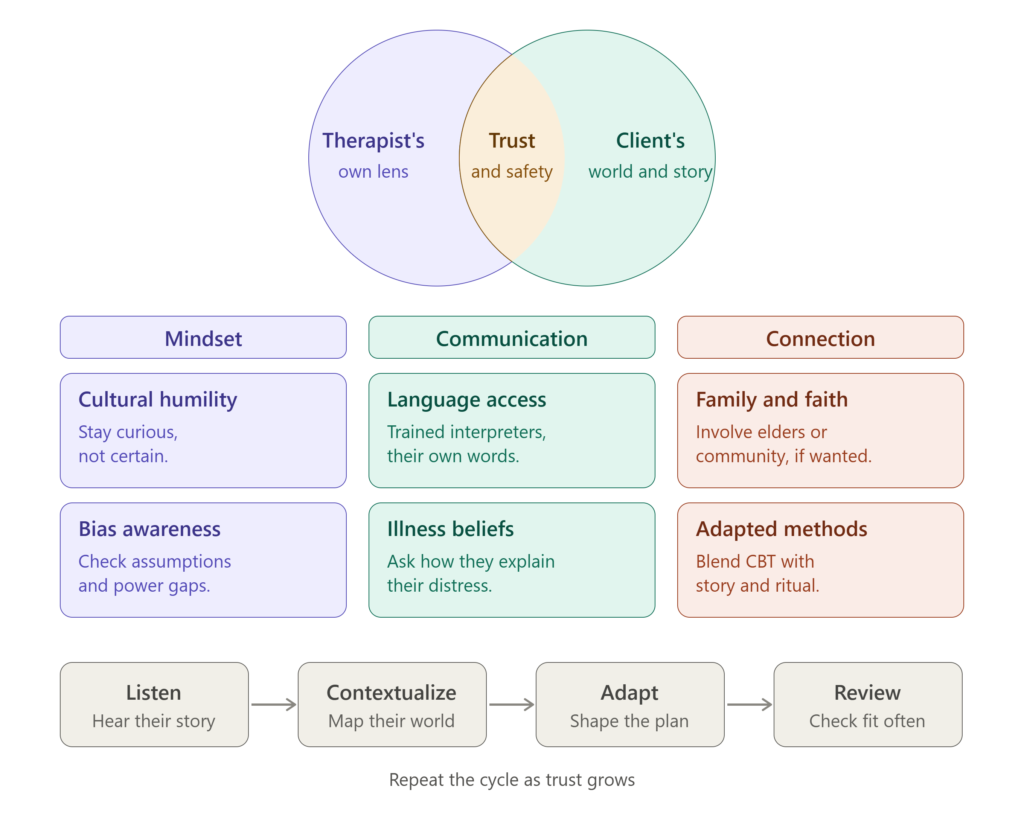
What culturally sensitive psychotherapy may involve
-
01
✓
Asking how the patient understands the problem.
-
02
✓
Respecting the patient’s language and communication preferences where possible.
-
03
✓
Considering family expectations and responsibilities without automatically treating them as either helpful or harmful.
-
04
✓
Recognising the effect of stigma, discrimination, social pressure, or financial stress when relevant.
-
05
✓
Avoiding stereotypes about gender, marriage, parenting, religion, or community.
-
06
✓
Agreeing on goals that are meaningful to the patient and clinically appropriate.
Can family be involved in psychotherapy?
Family involvement may be helpful in some circumstances, particularly when communication patterns, caregiving, parenting, or shared responsibilities are part of the concern. It is not necessary or appropriate in every case.
The therapist should consider the patient’s wishes, confidentiality, safety, clinical needs, and the purpose of involving others. Family participation should not be presented as a universal requirement.
Patient takeaway: Good psychotherapy should be respectful of your circumstances while still helping you examine patterns, develop skills, and work towards realistic goals.
Psychotherapy Alongside Psychiatric Consultation and Other Treatments
Psychotherapy is one component of mental healthcare. Depending on the patient’s symptoms and needs, care may involve a clinical psychologist, psychiatrist, another appropriately qualified mental health professional, or a coordinated team.
Psychotherapy and psychiatric consultation have different but sometimes complementary roles.
Psychotherapy and psychiatric consultation: how they differ
Psychotherapy and psychiatric consultation, side by side
Two different kinds of mental health care. They often work together, and each answers a different question.
| Aspect | Psychotherapy | Psychiatric consultation |
|---|---|---|
| Main focus | Psychological processes, coping, emotions, behaviour, relationships, and agreed treatment goals | Clinical assessment, diagnosis where appropriate, medical and psychiatric factors, and treatment planning |
| Common activities | Structured therapeutic conversations, skills practice, behavioural exercises, and review of progress | History-taking, mental status assessment, medical considerations, diagnosis where indicated, and discussion of treatment options |
| Medication | A psychotherapist’s prescribing authority depends on their professional qualifications and applicable law; psychotherapy itself does not necessarily involve medication | A psychiatrist may prescribe medication when clinically indicated and legally authorised |
| Role in care | Can be a primary intervention or part of a broader treatment plan | Can help determine whether medication, further assessment, psychotherapy, or combined care is appropriate |
This is general information, not medical advice. A qualified professional can advise on what suits a particular person.
When might combined care be considered?
Combined care may be appropriate when:
- Symptoms are significantly affecting daily functioning.
- A clinical assessment identifies a need for medication or additional medical evaluation.
- The patient has multiple or complex concerns.
- Psychotherapy alone has not provided sufficient improvement.
- The treatment plan requires coordination between professionals.
The choice depends on the clinical situation. Not everyone who attends psychotherapy needs medication, and medication should not be presented as a substitute for psychotherapy in every circumstance.
Can psychotherapy be part of treatment for a diagnosed condition?
Yes. Evidence-based psychological therapies are used for a range of mental health conditions, with the specific approach selected according to the condition, symptoms, severity, patient preferences, and relevant clinical guidance.
Examples of related Headspace Mind Clinic pages for the website’s internal-link structure include:
Psychiatric Consultation |
For clinical assessment and discussion of treatment options |
|---|---|
Clinical Psychologist in Delhi |
For information about psychological care and professional roles |
Psychological Assessment |
When a structured assessment may be useful |
CBT in Delhi |
For a detailed explanation of cognitive behavioural therapy |
ERP Therapy |
For exposure and response prevention, particularly where clinically indicated |
Depression Treatment in Delhi and Anxiety Treatment in Delhi |
For condition-specific care information |
Child & Adolescent Psychiatry |
For assessment and care relating to children and adolescents |
Only link to published, verified pages. If a page is not live yet, keep it out of the published content until its URL has been confirmed
A note about treatment coordination
When more than one professional is involved, patients should understand the purpose of each intervention and how relevant information may be shared. Coordination should follow appropriate consent, confidentiality, and professional requirements.
Common Myths About Psychotherapy: Facts Patients Should Know
Misconceptions about psychotherapy can prevent people from accessing appropriate care. Clear, balanced information helps patients make informed decisions.
| Myth | Fact |
|---|---|
Myth “Psychotherapy is only for people with severe mental illness.” |
Fact People may seek therapy for a wide range of emotional, behavioural, interpersonal, or adjustment-related concerns. |
Myth “A therapist will tell me exactly what to do.” |
Fact Therapy usually involves collaboration, exploration, and skills development rather than simply giving instructions. |
Myth “If I need therapy, I am weak.” |
Fact Seeking professional support is one way to address difficulties and work towards change. |
Myth “Psychotherapy means talking about childhood in every session.” |
Fact The focus depends on the therapeutic approach and the patient’s goals. |
Myth “Every therapy session should make me feel better immediately.” |
Fact Reactions vary, and meaningful progress may take time. |
Myth “Psychotherapy always takes years.” |
Fact Duration varies. Some approaches are structured and time-limited; others may be longer-term. |
Myth “Medication means psychotherapy is unnecessary.” |
Fact Some people benefit from psychotherapy, medication, or a combination, depending on their clinical needs. |
Myth “Psychotherapy always requires medication.” |
Fact Psychotherapy can be provided without medication when appropriate. |
Myth “The therapist will judge everything I say.” |
Fact Professional psychotherapy should be respectful and non-shaming, while still allowing constructive challenge. |
Myth “Online psychotherapy is always as effective as in-person therapy.” |
Fact Suitability and outcomes depend on the person, the problem, the therapeutic approach, privacy, access, and other factors. |
Myth “If one therapist was not a good fit, therapy cannot help me.” |
Fact Different professionals and approaches may suit different people, although outcomes can never be guaranteed. |
Myth “I must have a diagnosis before seeking therapy.” |
Fact A person can seek help for difficulties without having a formal diagnosis. |
Key message: Psychotherapy is not a guaranteed quick fix, but neither should it be viewed as something only needed in a crisis. It is a structured form of professional support whose suitability should be assessed individually.
How to Prepare for Your First Psychotherapy Appointment
A little preparation can help patients use their appointment effectively. There is no need to write a complete life history or know the name of the therapy they need before attending.
A simple preparation checklist
- Write down the main concerns you want help with.
- Note when the difficulties began and what seems to make them better or worse.
- Consider how the problem affects sleep, work, study, relationships, or everyday activities.
- List questions about the therapist’s qualifications and treatment approach.
- Mention any previous therapy or other treatment that may be relevant.
- Ask about fees, session length, frequency, and cancellation arrangements.
- Choose a private space if attending an online session.
0 of 7 preparation steps completed
Questions you can ask your therapist
- What type of psychotherapy do you recommend for my concern, and why?
- What might sessions involve?
- How will we decide whether treatment is helping?
- How often might we meet initially?
- What should I do if I feel overwhelmed between sessions?
- What are the confidentiality arrangements and their limits?
- If this approach does not help, how would we review the plan?
Patients should feel comfortable asking for explanations in language they understand. It is reasonable to take time to decide whether a proposed treatment feels suitable.
When to Consider a Different Approach or Seek a Second Opinion
Psychotherapy is a collaborative process, and the treatment plan may need adjustment as the patient’s circumstances or needs change.
A review may be useful if the patient does not understand the goals of therapy, cannot see how sessions relate to those goals, has concerns about the approach, or has experienced limited improvement after an appropriate period of treatment.
Questions to discuss before changing treatment
- Have we agreed on clear, realistic goals?
- Do I understand the therapeutic approach?
- Have we reviewed what has improved and what remains difficult?
- Are there practical barriers, such as time, cost, travel, or privacy?
- Are the exercises and strategies suitable for my circumstances?
- Would a different approach or additional clinical assessment be appropriate?
There is no universal number of sessions after which psychotherapy should be declared successful or unsuccessful. The appropriate review point depends on the treatment model, presenting concern, clinical circumstances, and agreed goals.
A second opinion may help when there is persistent uncertainty about the assessment or treatment plan. It should not be viewed as a failure.
What if symptoms become significantly worse?
Do not rely solely on routine psychotherapy if symptoms worsen substantially, functioning deteriorates, or additional medical or psychiatric concerns arise. Contact the treating professional or seek an appropriate clinical assessment.
If there is an immediate risk to life or safety, call 112 in India or attend the nearest emergency department.
Psychotherapy at Headspace Mind Clinic: Patient-Centred Treatment Planning
Psychotherapy should be selected according to the individual’s concerns, clinical needs, preferences, and treatment goals—not solely because a particular therapy is popular or widely discussed online.
At Headspace Mind Clinic, the website should explain the psychotherapy pathway in clear, patient-friendly language without promising a specific result or implying that every person will require the same treatment.
What patients should understand about the process
1Initial discussion |
The patient describes their concerns and what they would like help with |
|---|---|
2Assessment of needs |
The professional explores relevant symptoms, circumstances, functioning, and goals within their scope of practice |
3Treatment planning |
An appropriate approach is discussed, including its purpose and limitations |
4Therapy sessions |
Sessions follow the agreed approach and may include structured exercises or practice between appointments |
5Progress review |
The patient and professional review changes, difficulties, and whether the plan remains appropriate |
6Further support where needed |
Additional assessment, referral, or coordination with another professional may be considered |
The actual process may vary by service and clinical situation. Website copy should not suggest that a particular assessment, therapy type, session frequency, or outcome is guaranteed before an individual consultation.
Who should patients contact?
People who are unsure whether they need psychotherapy, psychiatric consultation, psychological assessment, or another service can contact the clinic to ask about the available options and the appropriate next step.
Looking for Psychotherapy in Delhi
Discuss your concerns with a qualified mental health professional and learn which treatment options may be suitable for your needs.
Frequently Asked Questions About Psychotherapy in Delhi
Use these questions in an Elementor accordion or FAQ section. Keep answers concise, medically accurate, and useful when read independently.
1. What is psychotherapy?
Psychotherapy is a structured form of psychological treatment in which a trained professional helps a person understand and address emotional, behavioural, psychological, or interpersonal difficulties. Depending on the person’s needs, therapy may involve discussion, practical exercises, changes in behaviour, coping strategies, or structured therapeutic techniques.
2. What is psychotherapy used for?
Psychotherapy may help with concerns such as anxiety, depression, stress, grief, relationship difficulties, emotional regulation, and certain diagnosed mental health conditions. The appropriate approach depends on the individual’s circumstances, clinical needs, preferences, and the available evidence for the problem being addressed.
3. Is psychotherapy the same as counselling?
The terms overlap in everyday use, and their meanings can vary by setting and professional training. Psychotherapy often refers to a structured psychological treatment process, while counselling may focus on particular life difficulties, adjustment, or emotional support. The most important considerations are the professional’s qualifications, scope of practice, and suitability of the service.
4. What is the difference between psychotherapy and psychiatry?
Psychotherapy is a form of psychological treatment. Psychiatry is a medical specialty concerned with assessing, diagnosing, and treating mental health conditions. A psychiatrist may discuss medication and other medical treatment options when appropriate. Psychotherapy may be provided by suitably qualified professionals within their scope of practice. Some patients benefit from coordinated care involving both.
5. Do I need a mental health diagnosis before starting psychotherapy?
No. A person may seek psychotherapy for stress, relationship concerns, adjustment difficulties, grief, or personal challenges without having a formal mental health diagnosis. An initial assessment can help clarify the concern and whether psychotherapy is appropriate.
6. Can psychotherapy help with anxiety?
Certain evidence-based psychotherapies can help people manage anxiety-related difficulties. Cognitive behavioural therapy (CBT) is one established approach for several anxiety disorders, while other approaches may be appropriate depending on the presentation. Persistent, severe, or worsening symptoms should be assessed by a qualified professional to determine an appropriate treatment plan. Related page: Anxiety Treatment in Delhi.
7. Can psychotherapy help with depression?
Psychotherapy is an established treatment option for depression. The approach may depend on symptom severity, patient preferences, previous treatment response, and other clinical factors. Some people may benefit from psychotherapy alone, while others may need medication, combined treatment, or additional clinical support.
Related page: Depression Treatment in Delhi.
8. Is psychotherapy effective without medication?
It can be. Psychotherapy may be used without medication when that is appropriate for the person’s needs and clinical circumstances. However, some conditions or presentations may require medication, medical assessment, or combined care. The decision should be based on an individual assessment rather than a blanket rule.
9. Can psychotherapy and medication be used together?
Yes. Psychotherapy and medication may be combined when clinically appropriate. They serve different but potentially complementary roles. A treating professional can help determine whether combined care is suitable and coordinate treatment where needed.
10. How many psychotherapy sessions will I need?
There is no single number that applies to everyone. The number and frequency of sessions depend on the presenting concern, treatment approach, complexity of the situation, goals, and response to therapy. Some structured interventions are relatively brief, while other forms of therapy may continue for longer. A suitable professional should discuss expectations and review progress with you.
11. How long does a psychotherapy session last?
Session length varies by professional, service, therapeutic approach, and clinical circumstances. Confirm the actual session duration with the clinic when arranging an appointment rather than assuming that every session follows the same schedule.
12. What happens during the first psychotherapy session?
The first session often involves discussing your concerns, relevant background, current difficulties, and what you hope to achieve. The professional may ask about how the problem affects daily life and explain the proposed approach, confidentiality arrangements, practical details, and possible next steps.
You do not need to know exactly what to say before attending.
13. Is psychotherapy confidential?
Confidentiality is an important part of psychotherapy, but it is not absolute. Information may need to be disclosed in certain circumstances under applicable law, professional obligations, safeguarding requirements, or agreed care arrangements. Ask your therapist to explain the relevant limits before treatment begins.
14. Can I attend psychotherapy online?
Online psychotherapy may be suitable for some people, depending on their needs, the therapeutic approach, access to a private space, and the availability of a qualified professional. Certain circumstances may require in-person assessment or a different level of care. Confirm whether online sessions are offered and appropriate for your situation.
15. Is online psychotherapy as effective as in-person therapy?
Effectiveness depends on the condition, therapeutic approach, patient circumstances, and quality of care. Some therapies can be delivered effectively online for appropriate patients, but online treatment is not suitable for every situation. Privacy, reliable communication, clinical assessment, and access to urgent support must also be considered.
16. Can children and teenagers receive psychotherapy?
Yes. Children and adolescents may benefit from age-appropriate psychological interventions. The approach depends on developmental stage, the nature of the difficulty, family circumstances, and clinical assessment. Depending on the situation, treatment may involve the young person, parents or caregivers, or both, while respecting applicable consent, privacy, and safeguarding requirements.
Related page: Child & Adolescent Psychiatry.
17. How do I choose a psychotherapist in Delhi?
Check the professional’s relevant qualifications, registration or credential requirements where applicable, experience with your concern, therapeutic approach, fees, confidentiality arrangements, and scope of practice. You should be able to ask questions and understand how treatment will be planned and reviewed. Avoid choosing a provider solely on the basis of promotional claims or guaranteed results.
18. What should I do if psychotherapy is not helping?
Discuss your concerns with the treating professional. Review your goals, progress, barriers to participation, and whether the selected approach remains suitable. Depending on the circumstances, a revised treatment plan, additional assessment, referral, or second opinion may be appropriate.
Limited improvement does not mean that you have failed.
19. Can I stop psychotherapy whenever I want?
Patients can discuss whether to continue, pause, or change treatment. Where possible, it is useful to talk through the reasons and consider a planned ending, especially if ongoing symptoms or safety concerns need attention. The appropriate arrangements depend on the individual’s circumstances and applicable clinical or legal requirements.
20. What if I feel uncomfortable discussing personal issues?
It is common to feel hesitant when discussing sensitive experiences. You can tell the therapist that you are uncomfortable, ask questions about confidentiality, or request a slower pace. You do not need to share everything in the first session. A suitable therapeutic approach should take your needs and readiness into account.
21. Is psychotherapy only for people who are in crisis?
No. People may seek psychotherapy for persistent stress, emotional difficulties, relationships, life transitions, coping skills, or personal goals. It is also used as part of treatment for mental health conditions. However, an immediate safety crisis requires urgent support rather than waiting for a routine therapy appointment.
22. How can I enquire about psychotherapy at Headspace Mind Clinic?
Contact Headspace Mind Clinic through its verified official contact or appointment channel to ask about available services, professional qualifications, fees, and appointment arrangements. The clinic can guide you towards the appropriate service based on the options it actually provides.
CTA: Enquire About Psychotherapy
Implementation note: Link this CTA to the verified clinic appointment or enquiry page before publication. Lorem ipsum dolor sit amet, consectetur adipiscing elit. Ut elit tellus, luctus nec ullamcorper mattis, pulvinar dapibus leo.
Quick Patient Guide: Is Psychotherapy Worth Exploring?
Psychotherapy may be worth exploring if emotional, behavioural, or relationship difficulties are affecting your quality of life, or if you would like professional support in developing healthier coping strategies.
Consider a consultation if…
- Your emotional difficulties are persistent or affecting everyday life.
- You want to understand recurring thoughts, feelings, or behaviours.
- You are finding relationships or life changes difficult to manage.
- You want structured psychological support.
- You are unsure whether psychotherapy, psychiatric consultation, or another service may be appropriate. Remember
- You do not need to identify the correct type of therapy before asking for help.
- Improvement varies, and results cannot be guaranteed.
- You can ask about qualifications, fees, confidentiality, and treatment goals.
- Therapy can be reviewed or adjusted when your needs change.
If there is an immediate safety concern.
Seek urgent help rather than waiting for a routine appointment. In India, call 112 for an immediate emergency or attend the nearest emergency department.
Final Conversion Section: Psychotherapy in Delhi at Headspace Mind Clinic
Find out which psychological support may suit your needs
Choosing psychotherapy can feel like a significant step, especially when you are unsure where to begin. Understanding the available approaches, the professional’s qualifications, and the treatment process can help you make a more informed decision.
At Headspace Mind Clinic, the website should provide clear information about the services available and guide visitors towards the appropriate enquiry pathway.
A consultation or enquiry can help you clarify:
- Which service may be relevant to your concern.
- Whether an initial assessment is recommended.
- Which therapeutic approaches are available.
- What qualifications and experience the treating professional has.
- What the appointment process, fees, and session arrangements involve.
The appropriate service should be confirmed individually. Website visitors should not be led to believe that a specific treatment or outcome is guaranteed.
Take the next step towards psychological support
Learn more about psychotherapy and the available mental health services at Headspace Mind Clinic.
Psychotherapy can offer a structured way to understand emotional difficulties, develop practical coping skills, and work towards meaningful changes. The right approach depends on the individual, the concern being addressed, and the professional’s assessment. If you are considering psychotherapy in Delhi, learning about the process and asking questions can be a useful first step.