Anxiety Treatment in Delhi
Trust Signals




Quick Facts
| Quick Fact | Details |
|---|---|
| Condition | Anxiety Disorders |
| Common Age | Can affect individuals of any age. |
| Treatment | Medication, Cognitive Behavioural Therapy (CBT), and Psychotherapy. |
| Advanced Care | Available when clinically appropriate. |
| Location | Delhi NCR |
What Is Anxiety?
Anxiety is an emotion caused by natural reaction to either stress or fear. But then whenever the sensation of fear persists for a certain amount of time, at a particular intensity level and affects one’s daily activities such as work, social interactions, even sleep, it becomes known as an anxiety disorder.

Is Anxiety Normal?
✓ Yes
Every person feels anxiety sometimes.
Anxiety disorder arises when the anxiety is:
● Persistent
● Excessive
● Difficult to control
● Out of proportion to the situation
● Interfering with normal life
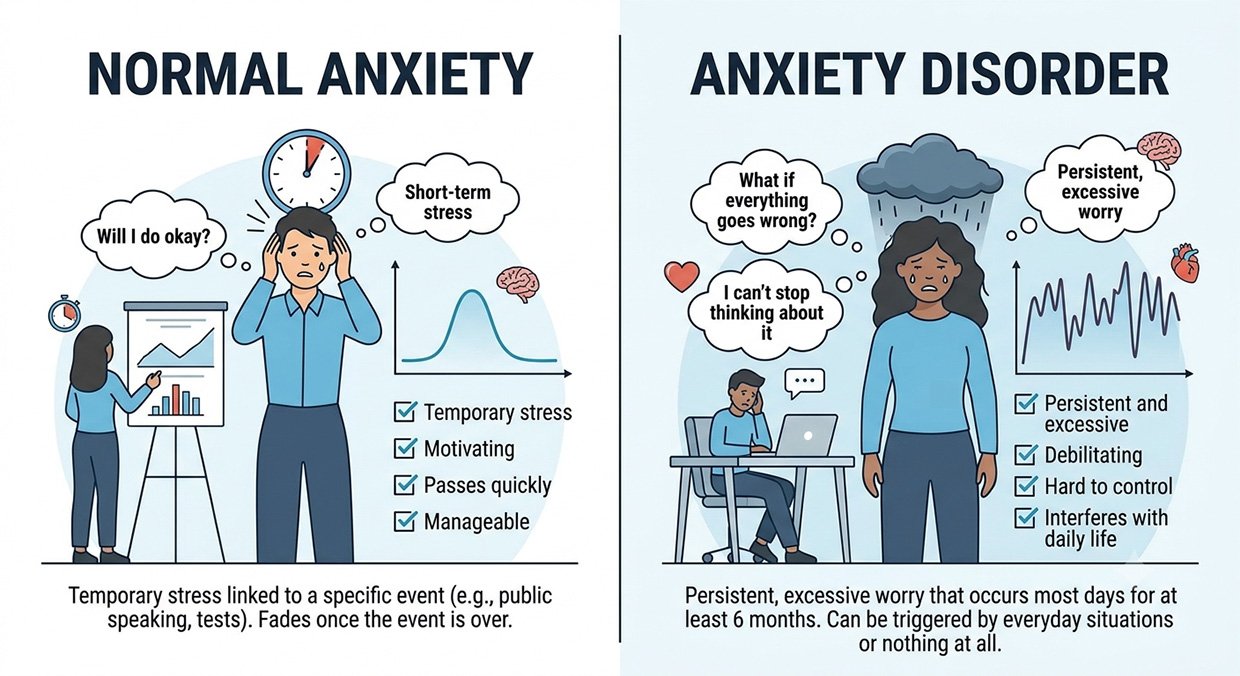
Normal Anxiety vs Anxiety Disorder
| Normal Anxiety | Anxiety Disorder |
|---|---|
| Temporary | Persistent |
| Related to a real-life situation | May occur without an obvious trigger |
| Improves after the event | Continues despite reassurance |
| Does not significantly affect daily functioning | Interferes with work, relationships, sleep, or education |
| Helps prepare for challenges | Causes distress and avoidance |
Clinical Pearl
Individuals often think they just have an "anxious personality." The truth is that having continuous and uncontrollable anxiety is a disorder which, fortunately, can be treated effectively. Timely treatment will help reduce anxiety levels and avoid any possible problems.
“Patient Takeaway
An anxiety attack will not in any way affect one’s manliness. He/She should seek professional help if he/she is finding it difficult to manage his/her anxiety in daily undertakings.”
What are the Symptoms of Anxiety?
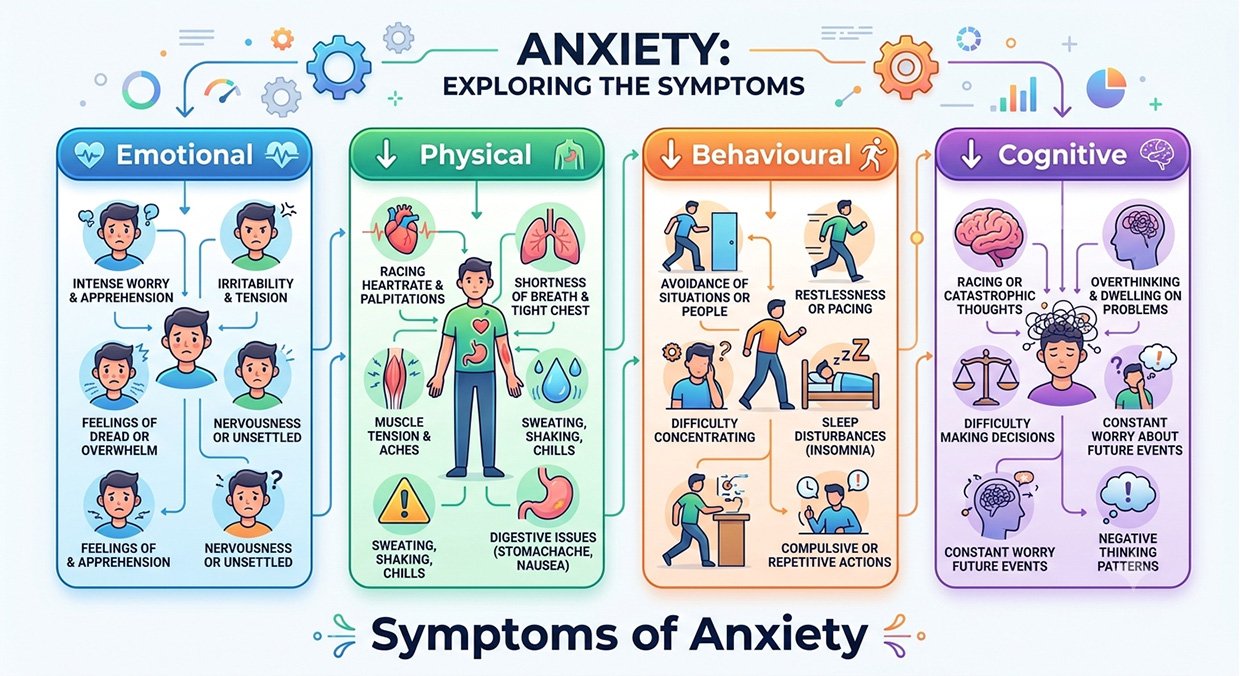
The anxiety disorder symptoms — emotional, physical, cognitive, and behavioral — include: Among undoubtedly anxiety symptoms, the most frequent are anxiety (worry), nervousness, palpitations, changes in electroencephalography, muscle tension, poor concentration, insomnia, irritability, and avoidance of situations that generate fear. The symptoms of anxiety may persist for several months, and can cause problems for the person at work, in their relationships, or anywhere else.
Anxiety disorders vary from individual to individual. Anxiety disorders may manifest themselves in some individuals via worries, whereas some people have anxiety physically through palpitations, lightheadedness, sweating, tightness in the chest, and digestion issues.
People always go to their general practitioners and cardiologists first before they realize that it’s anxiety.
Emotional Symptoms
These include:
- Excessive worry
- Persistent fear
- Overwhelming feeling
- Irritability
- Difficulty relaxing
- Feeling constantly "on edge"
- Anticipating the worst
Physical Symptoms
Anxiety may produce bodily symptoms due to an exaggerated activation of the stress response.
These include:
- Rapid heartbeat
- Palpitations
- Sweating
- Trembling
- Muscle tension
- Shortness of breath
- Dry mouth
- Nausea
- Headaches
- Stomach discomfort
- Dizziness
- Chest tightness
Cognitive Symptoms
They often report:
- Racing thoughts
- Difficulty concentrating
- Constant overthinking
- Difficulty making decisions
- Catastrophic thinking
- Fear of losing control
Behavioural Symptoms
Behaviors may change to:
- Avoiding crowded places
- Avoiding social interactions
- Seeking constant reassurance
- Difficulty completing work
- Procrastination
- Reduced productivity
- Avoiding travel or public transport in some anxiety disorders
Common symptoms of Anxiety
| Symptom Category | Examples |
|---|---|
| Emotional | Overspending time worrying, fear, irritability |
| Physical | Palpitations, sweating, feeling dizzy, muscle tension |
| Cognitive | Obsessive thinking, inability to concentrate |
| Behavioural | Avoiding situations, checking up on things, poor productivity |
| Sleep | Difficulties sleeping, restless sleep |
Clinical Note
The physical symptoms of anxiety can frequently be confused with other health issues such as heart-related disorders and thyroid disorders. Evaluation helps to determine whether the symptoms arise due to anxiety, a physical issue, or both.
Professional Help Is Required If:
● Unrelenting worrying is experienced almost every day over months.
● Anxiety affects working capacity, educational efforts, or relationships.
● Panic attacks occur repeatedly.
● Sleep is consistently disturbed.
● Persistent physical symptoms regardless of normal medical examination.
● Sufferers avoid routine tasks due to anxiety.
● Patients experience anxiety with accompanying depression or suicidal tendencies.
What causes Anxiety Disorders?
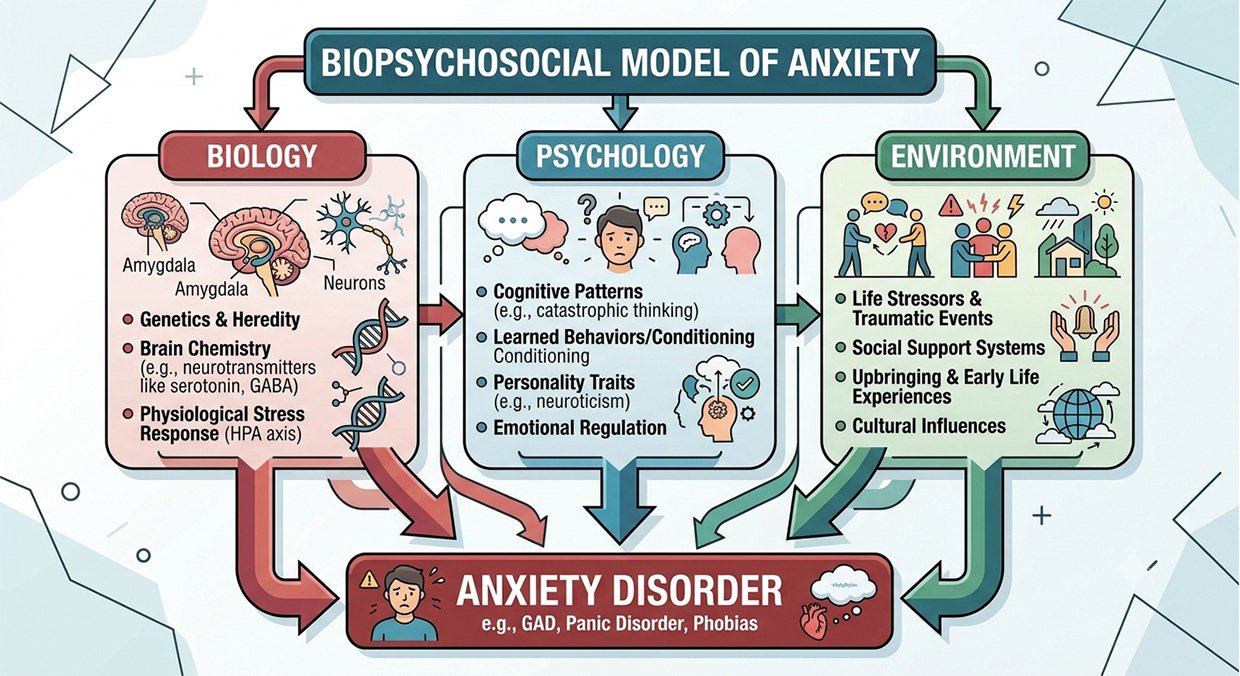
Anxiety disorder can begin due to several causes rather than one single cause, as is usually believed. Genes, biochemistry of the brain, stress, personality, trauma, illness, and a variety of other factors can all contribute to making someone susceptible to anxiety disorders.
Anxiety disorders do not have any one single reason for occurring. The biopsychosocial model has been applied in modern psychiatry to understand anxiety, whereby mental illnesses arise due to the interaction of biology, psychology, and society with each other.
Individuals may have a biological predisposition for suffering from anxiety disorders. Others may have such disorders arising from too much stress, life events, traumas, or sickness. There is usually more than one factor that has to be involved before anxiety is recognized.
There are certain abnormalities in how the circuits in the amygdala, prefrontal cortex, hippocampus, and stress hormones in the body function when it comes to dealing with fear and threats.
Understanding the causes helps in treating the individual accordingly.
Biological Factors
Biological contributors may include:
- Family history of anxiety disorders
- Genetic predisposition
- Neurotransmitter imbalance
- Increased sensitivity of the brain's fear circuits
- Hormonal changes
- Thyroid disorders
- Chronic pain
- Neurological illnesses
Psychological Factors
These include:
- Perfectionism
- Excessive self-criticism
- No self-confidence
- Childhood adversity
- Trauma
- Emotional neglect
- Chronic stress
- Previous episodes of anxiety or depression
Environmental & Social Factors
Common life situations that may contribute include:
- Workplace pressure
- Academic stress
- Financial concerns
- Relationship conflicts
- Family responsibilities
- Bereavement
- Major life transitions
- Social isolation
Lifestyle Factors
Lifestyle issues may contribute to the degree of anxiety.
Examples include:
- Sleep deprivation
- Excess caffeine intake
- Alcohol misuse
- Recreational drug use
- Sedentary lifestyle
- Excessive screen time
- Poor stress management
Risk Factors for Anxiety Disorders
| Risk Factor | Examples |
|---|---|
| Genetic | Family history of anxiety disorders |
| Biological | Altered fear responses |
| Personality | Narcissistic personality disorder |
| Trauma | Early or recent trauma |
| Medical Conditions | Thyroid disease, diabetes |
| Lifestyle | Sleep problems, too much caffeine consumption |
| Social Stress | Monetary stress, work stress, relationship stress |
Can One Suffer from Anxiety without an Identifiable Cause?
✓ Yes
Some people suffer from anxiety without an identifiable cause at all. It is crucial to recognize the fact that the disorder is neither "imagined" nor "in one’s head." The disorder occurs because of several biological and psychological causes, which make one vulnerable to the condition.
Clinical Pearl
It is always good to know the causes of anxiety, but there are instances where it may not be necessary to identify a particular cause that will make coping with the disorder easier.
What are the various Anxiety Disorders?
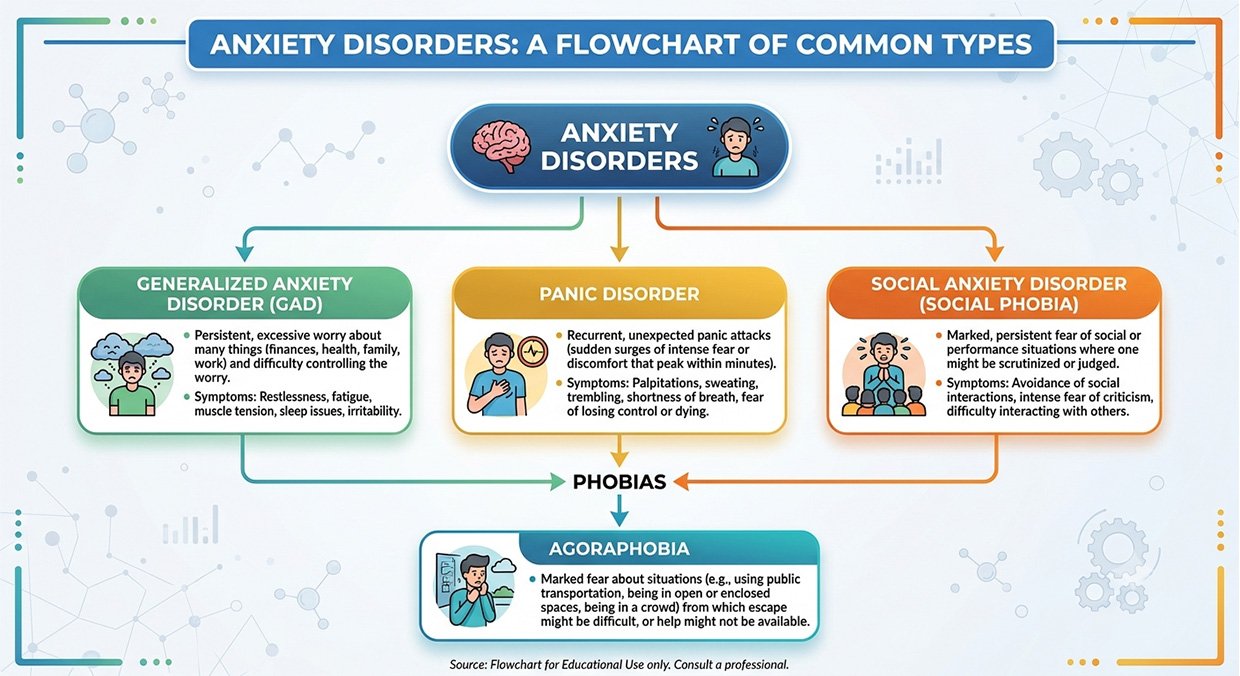
Several anxiety disorders with various symptoms exist. Anxiety disorders types include generalized anxiety disorder (GAD), panic disorder, social anxiety disorder, specific phobia, separation anxiety disorder and agoraphobia.
Generalized Anxiety Disorder
Individuals with GAD usually suffer from:
- Excessive worrying about multiple areas of life
- Difficulty controlling worry
- Restlessness
- Fatigue
- Muscle tension
- Poor concentration
- Sleep disturbances
Symptoms usually persist for six months or longer.
Panic Disorder
Panic disorder includes recurring and sudden panic attacks.
Some symptoms might include the following:
- Sudden intense fear
- Palpitations
- Chest discomfort
- Breathlessness
- Sweating
- Trembling
- Fear of dying
- Fear of losing control
Social Anxiety Disorder
Individuals experience a strong fear of being judged, humiliated, or evaluated while in social situations.
Examples include:
- Public speaking
- Meeting new people
- Interviews
- Eating in public
- Group discussions
Specific Phobias
Anxiety caused by certain circumstances or objects. Examples:
- Heights
- Flying
- Needles
- Blood
- Dogs
- Snakes
- Elevators
Separation Anxiety Disorder
Though separation anxiety disorder is a condition that is mainly seen in children, it may also affect adults. It occurs when people are extremely afraid once they are separated from their loved ones.
Agoraphobia
Those suffering from agoraphobia are afraid of places which cannot be easily exited. Examples:
- Crowded markets
- Public transport
- Shopping malls
- Large gatherings
Types of Anxiety Disorders
| Anxiety Disorder | Main Feature |
|---|---|
| Generalized Anxiety Disorder | Constant and irrational worry |
| Panic Disorder | Often occurring panic attacks |
| Social Anxiety Disorder | Dislike of social environments |
| Specific Phobia | Misfounded fear of particular objects/situations |
| Separation Anxiety Disorder | Fear of being separated from loved ones |
| Agoraphobia | Dislike of areas of hard escape |
Clinical Pearl
Many people suffer from anxiety disorders and multiple diagnoses. In addition, anxiety tends to coexist with depression, OCD, and sleeping problems.
How Are Anxiety Disorders Diagnosed?
Anxiety disorders are diagnosed through a complete psychiatric evaluation but not via a blood test or brain scan. To diagnose and treat an anxiety disorder, symptoms and their time course, causes, medical history, family history, psychological condition, and impact on functioning need to be assessed.
- Whether symptoms represent an anxiety disorder.
- Which type of anxiety disorder is present.
- Whether another medical condition may be contributing.
- If the patient has anxiety along with depression or OCD or some other psychiatric illness.
What takes place during the Consultation?
The Psychiatrist may cover:
- Current symptoms
- Duration of anxiety
- Sleep
- Appetite
- Panic attacks
- Stressors
- Family history
- Medical illnesses
- Substance use
- Previous treatment
- Occupational and social functioning
Mental Status Examination
The evaluation may include:
- Appearance
- Behaviour
- Speech
- Mood
- Anxiety level
- Thought process
- Thought content
- Cognition
- Insight
- Judgment
Anxiety Assessment Components
| Assessment | Purpose |
|---|---|
| Clinical Interview | Understand symptoms |
| Mental Status Examination | Evaluate psychological functioning |
| Medical History | Identify contributing conditions |
| Family History | Assess inherited risk |
| Functional Assessment | Assess the effect on employment and social functioning. |
| Risk Assessment | Identify risk issues when appropriate. |
IMPORTANT NOTE
Anxiety screening tests available online can assist people in identifying their symptoms, but they cannot be used for diagnosing an anxiety disorder or instead of a full psychiatric assessment.
Is Anxiety Interrupting Your Life?
Chronic anxiety is treatable. Through undergoing a comprehensive psychiatric evaluation, you will be able to know the cause of your symptoms and devise an evidence-based treatment plan.
What are the treatments for Anxiety Disorders?
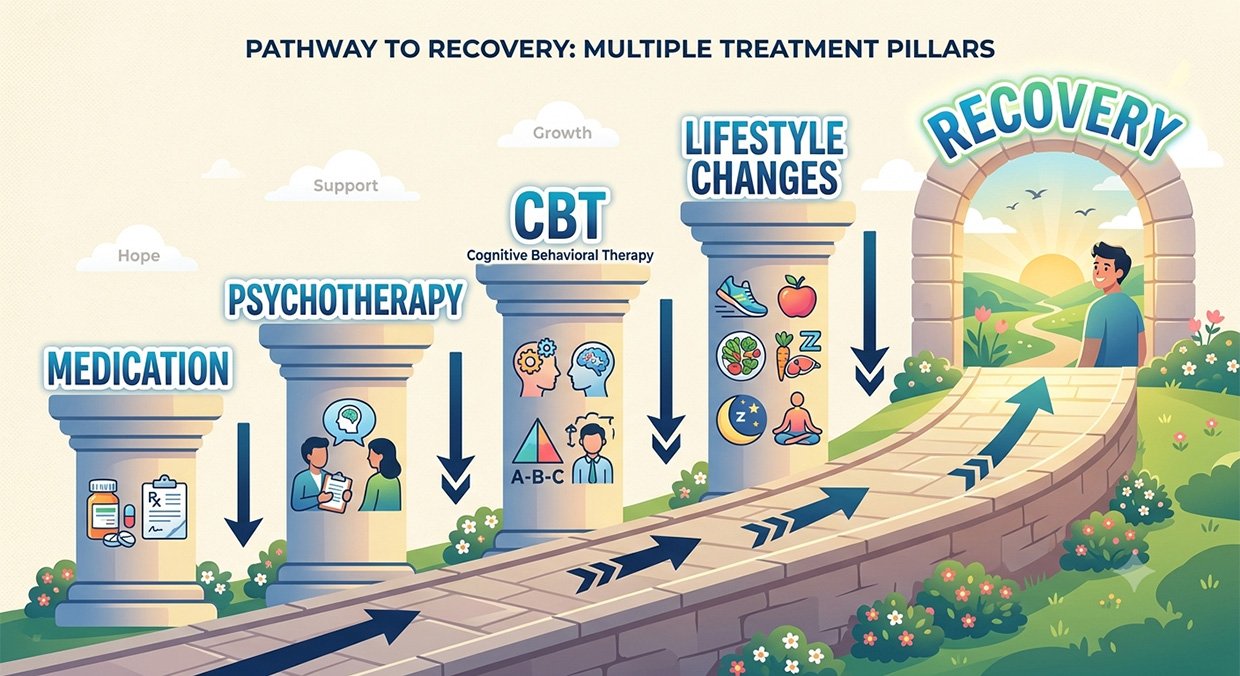
Anxiety disorders can be easily treated using evidence-based treatment. It can consist of psychoeducation, CBT, psychotherapy, medication, lifestyle changes, stress management, and regular follow-ups. The best way to treat the disease depends on its type and the severity of the symptoms, as well as the individual characteristics of each patient.
Objectives of Anxiety Treatment
The objectives of treatment include:
- Reduce excessive worry
- Improve emotional regulation
- Restore daily functioning
- Reduce avoidance behaviours
- Improve sleep quality
- Enhance confidence
- Prevent relapse
- Improve quality of life
Evidence-Based Treatments
| Treatment | Mild | Moderate | Severe |
|---|---|---|---|
| Psychoeducation | ✅ | ✅ | ✅ |
| Lifestyle Modification | ✅ | ✅ | ✅ |
| Cognitive Behavioural Therapy (CBT) | ✅ | ✅ | ✅ |
| Psychotherapy | ✅ | ✅ | ✅ |
| Medication | Sometimes | ✅ | ✅ |
| Combination Therapy | Sometimes | ✅ | ✅ |
| Family Education | ✅ | ✅ | ✅ |
| Hospital Admission | Rare | Rare | Selected Situations |
Clinical Pearl
The success of anxiety treatment depends not only on reduced symptoms but also on increased self-confidence, better performance at work, improvement in relationships, improved sleep, and full participation in one’s daily routine.
How Do Anxiety Medications Work?
Anxiety medications function by helping to bring about stability within specific brain circuits that regulate our emotions, such as fear and stress. They can relieve unnecessary worry, physical manifestations, panic attacks, and improve functioning. The choice of medication will depend on the person’s diagnosis, symptoms, medical background, and desired objectives.
- Type of anxiety disorder
- Symptom severity
- Co-existing depression
- Sleep difficulties
- Medical illnesses
- Previous medication response
- Side-effect profile
Common Types of Medicines Used
These include:
- Selective Serotonin Reuptake Inhibitors (SSRIs)
- Serotonin-Norepinephrine Reuptake Inhibitors (SNRIs)
- Also other evidence-based anti-anxiety medications
- Short-term medicines in selected clinical situations
Frequently Asked Questions About Anxiety Medication
| Question | Answer |
|---|---|
| Is anxiety medication addictive? | The majority of long-term anxiety medications prescribed currently are non-addictive. Some short-term medications may require close monitoring by a doctor. |
| How soon can I expect to see results? | A lot of patients begin seeing improvements gradually over several weeks, but everyone responds differently. |
| Can I stop taking medication when I start feeling better? | Any changes to treatment should be discussed with your psychiatrist first since stopping suddenly can cause adverse effects such as withdrawal or worsening anxiety. |
| Will taking anxiety medication affect my personality? | No. You will not. You will simply have less anxiety. |
| Will everyone with anxiety have to take medication? | No. Many patients improve only with psychotherapy, CBT, and lifestyle measures. |
Clinical Pearl
Medication can be seen as only one part of an overall treatment plan, not a single solution itself. A combination of medication with psychotherapy usually works best for most patients.
“Patient Takeaway
The use of medication for treating anxiety does not differ from any other chronic condition treatment. The goal of this process is to make you better, but not alter your personality.”
Why is Cognitive Behavioural Therapy (CBT) useful in treating Anxiety?
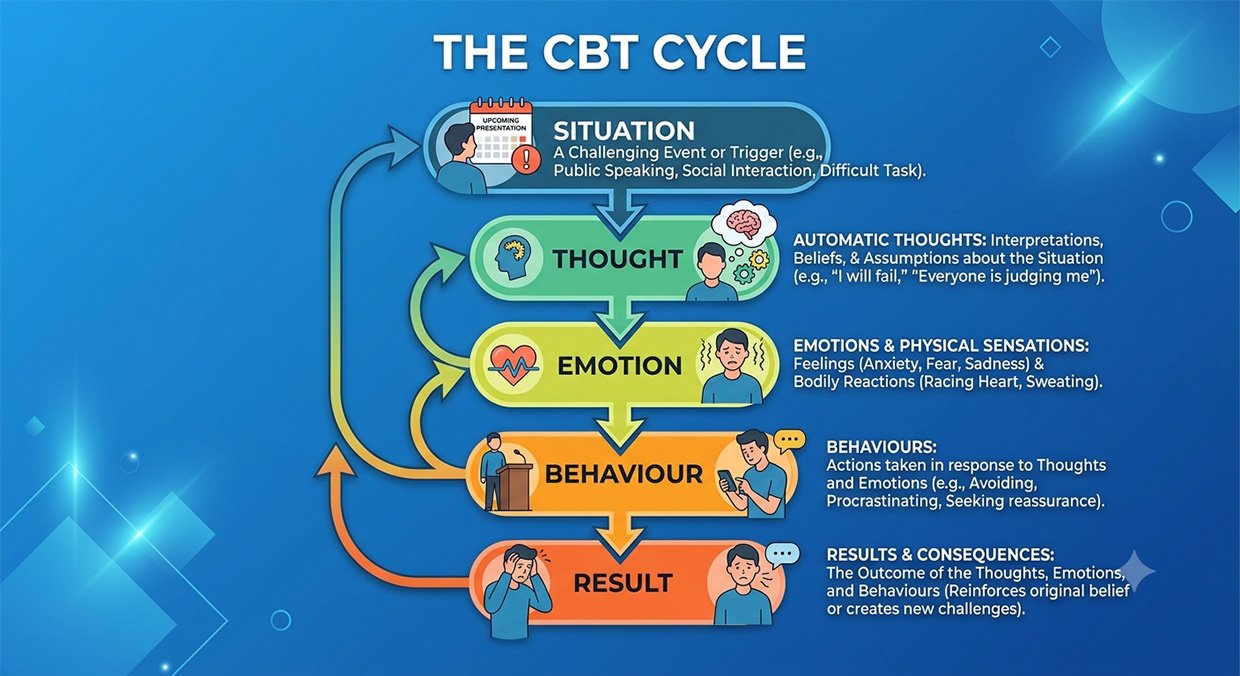
One of the most effective treatments for anxiety disorders is Cognitive Behavioural Therapy (CBT). This type of therapy will help individuals spot irrational patterns of thinking, refute fears, decrease avoidance, and practice skills for coping with their condition.
What Happens During CBT?
The therapist could assist the patients to:
- Identify anxious thought patterns
- Recognise cognitive distortions
- Challenge catastrophic thinking
- Reduce avoidance behaviours
- Practise relaxation techniques
- Develop problem-solving skills
- Build confidence through gradual exposure (when appropriate)
Benefits of CBT
- Reduces excessive worry
- Improves confidence
- Decreases panic symptoms
- Enhances coping skills
- Improves sleep
- Reduces relapse risk
- Encourages long-term self-management
CBT Components
| Component | Purpose |
|---|---|
| Psychoeducation | Coping with anxiety |
| Cognitive Restructuring | Take away faulty cognition and replace negative thought patterns. |
| Behavioural Strategies | Self-regulation of avoidance behaviour |
| Exposure Techniques | Build confidence gradually |
| Relaxation Skills | Reduce physical tension |
| Relapse Prevention | Maintain progress |
Clinical Pearl
Cognitive Behaviour Therapy is an active approach. Maximum gains are achieved when patients apply what they have learned in therapy sessions to their life experiences.
How Does Psychotherapy Benefit Individuals Experiencing Anxiety?
Psychotherapy enables individuals to gain a better understanding of how emotions, behavior, and interactions lead to anxiety. Therapy will involve CBT, psychotherapy, or any number of approaches according to individual need, such as mindfulness techniques, acceptance therapy, or family therapy.
Types of Psychotherapy Used for Anxiety
- Cognitive behavioural therapy
- Acceptance and commitment therapy
- Mindfulness-based cognitive therapy
- Supportive Psychotherapy
- Family Therapy
- Stress Management Counselling
Psychotherapy Benefits
| Benefit | How It Helps |
|---|---|
| Emotional | Understanding anxiety triggers |
| Coping skills | Stress management |
| Behaviour Change | Less avoidant behaviors |
| Interpersonal Skills | Better communication skills |
| Resilience skills | Stress coping mechanisms |
| Relapse Prevention | Long-term recovery skills |
Clinical Pearl
Psychotherapy is not just a conversation about issues; it is an evidence-based process through which the individual is helped to bring about long-term changes in his or her way of thinking and reacting to stress.

Which Anxiety Treatment Is Best for You?
Everyone suffers from anxiety differently. The process of a complete psychological evaluation allows us to understand which method of therapy will work best for you.
Which Lifestyle Modifications Can Assist In Dealing With Anxiety?
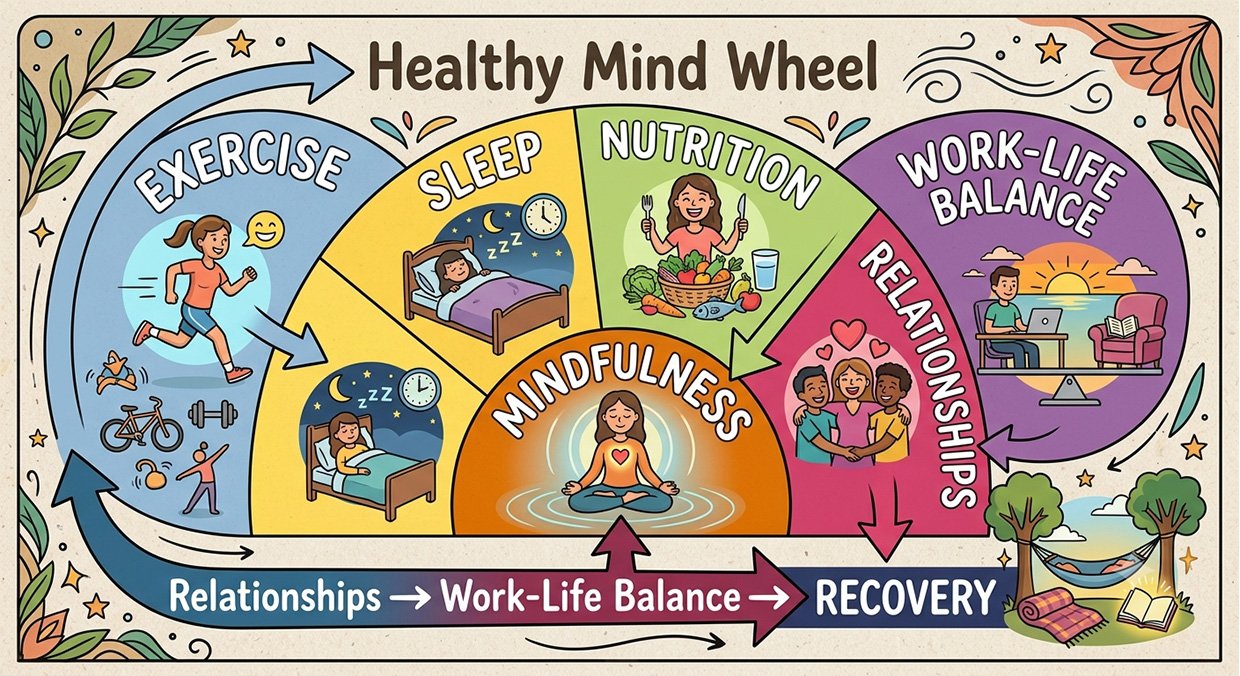
While lifestyle modifications will not substitute for the professional treatment of anxiety disorders, they will greatly facilitate recovery through better sleep, physical exercise, proper diet, stress management, reduced caffeine and alcohol consumption, mindfulness, etc.
Healthy Habits That Can Improve Anxiety Disorder
- Go to bed and wake up at the same times each day.
- Exercise for half an hour almost daily.
- Eat nutritious food regularly.
- Reduce caffeine consumption, especially if it causes anxiety.
- Practice mindfulness or meditation.
- Stay away from alcohol and other drugs.
- Make time for your hobbies.
- Keep socially active among family members and friends.
- Limit screen time too much before bed time.
- Keep attending your follow-up visits.
| Lifestyle Habit | Potential Benefit |
|---|---|
| Regular Exercise | Stress hormone levels are reduced |
| Good Sleep | Helps regulate emotions and helps concentrate |
| Balanced Nutrition | Maintains overall health |
| Mindfulness | Helps to be more emotionally aware and relaxed |
| Social Support | Not feeling isolated and helps recovery |
| Healthy Routine | Makes one more confident and consistent |
Clinical Pearl
Lifestyle modification is most effective when combined with scientifically based therapies such as therapy, cognitive behavioral therapy, or medication where indicated.
What Is the Recovery Timeline for Anxiety Disorders?
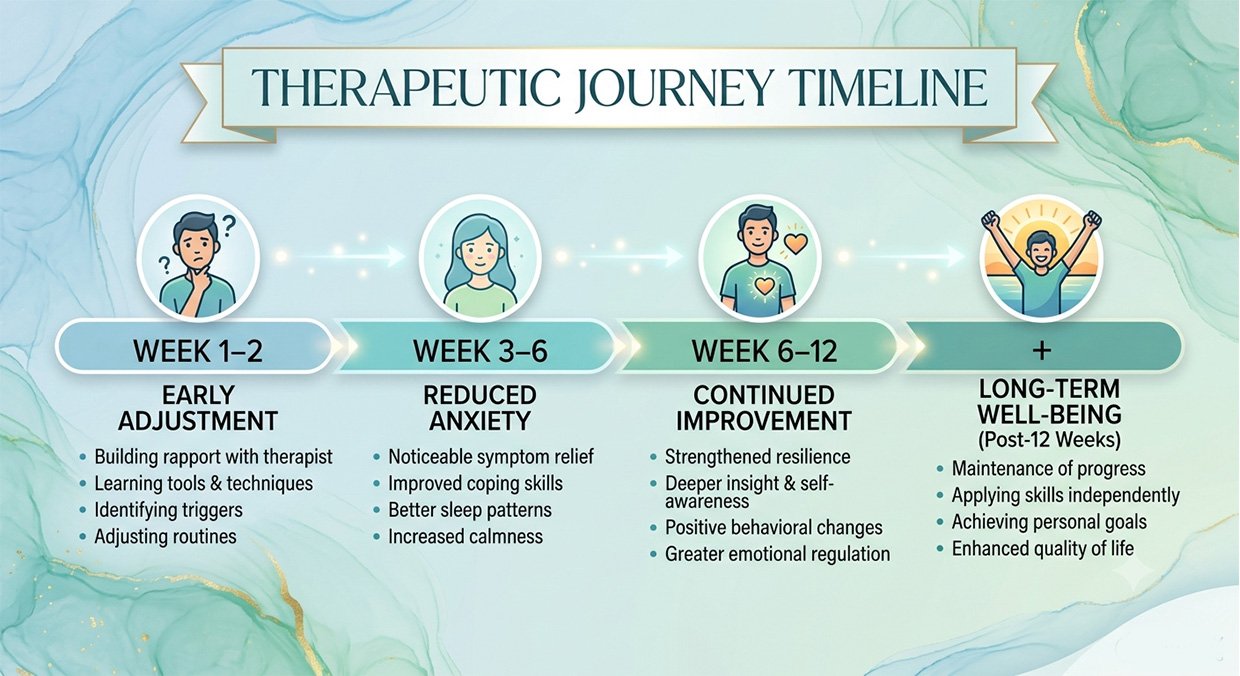
The majority of patients suffering from anxiety disorders recover very well if diagnosed promptly, treated effectively, and followed up on regularly. The process is gradual, and most patients start feeling better in terms of sleep problems, physical issues, and worry before fully recovering emotionally.
- Type of anxiety disorder
- Symptom severity
- Duration of illness
- Presence of depression or other mental health conditions
- Treatment adherence
- Lifestyle factors
Typical Recovery Journey
| Recovery Stage | What You May Notice |
|---|---|
| First Few Weeks | Better sleep and reduced physical tension |
| 1–2 Months | Reduced worrying and improved concentration |
| 2–6 Months | Increased confidence and improved daily functioning |
| Long-Term | Better resilience and reduced relapse risk |
Is Anxiety Curable?
Many people manage to make considerable progress or become symptom-free.
A few people suffer from just one episode, while others might have repeat episodes of anxiety at stressful stages in their lives.
Coping skills and recognizing the triggers minimize the occurrence of episodes in the future.
Clinical Pearl
Recovery must be judged based on improvement in quality of life, confidence, relationships, and functioning—not just on being free from anxiety.
How Can Anxiety Relapse Be Prevented?
The process of preventing relapse includes adhering to treatment for the full amount of time recommended, noticing early signs, keeping up healthy habits, visiting your follow-up appointments, and seeing a professional right away when symptoms start to reappear.
Warning Signs
Seek review if you notice:
- Increasing worry
- Poor sleep
- Frequent panic symptoms
- Avoiding work or social situations
- Reduced concentration
- Irritability
- Physical tension returning
- Declining confidence
Relapse Prevention Strategies
| Strategy | Benefit |
|---|---|
| Continue prescribed treatment | Minimizes risk of recurrence |
| Follow-up appointments | Allows early intervention |
| Stay healthy | Supports resilience |
| Coping with stress | Prevent symptom flare-ups |
| Identify warning signs | Fosters early treatment |
“Patient Takeaway
The need for further treatment during times when your stress increases does not indicate failure on your part. Anxiety disorders are treatable conditions, and early treatment helps to avoid symptoms becoming intense.”
When Should You Seek Emergency Treatment for Anxiety?
Even though anxiety is not an emergency in most cases, you should seek emergency psychiatric evaluation when symptoms become unbearable, you experience recurrent panic attacks, anxiety coexists with depression or suicidal ideation, or an inability to function in daily life develops.
Immediate Treatment Is Necessary If
- There are frequent debilitating panic attacks.
- Anxiety interferes with eating, sleeping, or taking care of oneself.
- The symptoms occur along with serious depression.
- There are suicidal ideas or attempts.
- Alcohol or substance abuse is employed.
- There are any signs of hallucinations, delusions, or confusion.
- The family considers the individual a danger to himself or others.
In case of imminent danger of self-harm or suicide, immediately call for professional help or visit the closest hospital’s emergency department.
Why Choose Headspace Mind Clinic for Anxiety Treatment in Delhi?
Headspace Mind Clinic offers individualized and scientific anxiety treatment using psychiatric evaluation, psychological counseling, CBT (Cognitive Behavioral Therapy), medication therapy, and follow-up. The main aim of our clinic is to restore confidence, emotional wellness, and improve quality of life.
Our Approach
- Comprehensive Psychiatric Evaluation
- Individualised Treatment Plans
- Evidence-Based Medication Management
- Clinical Psychology Services
- Cognitive Behavioural Therapy (CBT)
- Stress Management Counselling
- Family Education
- Long-Term Follow-up
- Confidential Consultations
Services Offered
| Service | Availability |
|---|---|
| Psychiatric Consultation | ✓ |
| Clinical Psychology | ✓ |
| CBT | ✓ |
| Psychotherapy | ✓ |
| Family Counselling | ✓ |
| Follow-up Care | ✓ |
Your First Step To Coping With Anxiety
Phone:
Website:
Frequently Asked Questions (FAQ)
Medically Reviewed By
Dr. Deepak Verma
Consultant Psychiatrist & Neuropsychiatrist, Founder & Medical Director, Headspace Mind Clinic
ABOUT THE MEDICAL REVIEWER
PUBLICATION INFORMATION
| Item | Details |
|---|---|
| Author | Headspace Mind Clinic Editorial Team |
| Medical Reviewer | Dr. Deepak Verma |
| Last Medical Review | July 2026 |
| Next Scheduled Review | January 2027 |
| Content Version | 1.0 |
| Content Type | Evidence-Based Patient Education |
EDITORIAL POLICY
- Evidence-based clinical information
- Review by a qualified psychiatrist
- Patient-friendly language
- Periodic updates
- Clear distinction between educational information and personalised medical advice
REFERENCES
- Indian Psychiatric Society (IPS) Clinical Practice Guidelines
- National Institute for Health and Care Excellence (NICE)
- American Psychiatric Association (APA)
- World Health Organization (WHO)
- National Institute of Mental Health (NIMH)
- PubMed-indexed systematic reviews and meta-analyses