

Behaviour Therapy in Delhi: Understanding and Changing Behaviour Patterns
Behaviour influences how we respond to everyday situations, manage emotions, develop routines, interact with others, and cope with challenges. Sometimes, certain behaviours become persistent or difficult to manage. These may include avoidance, frequent emotional outbursts, difficulty following routines, repetitive habits, or responses that interfere with learning, relationships, or daily functioning.
Behaviour therapy is a psychological approach that focuses on understanding behaviour, identifying factors that maintain it, and developing more helpful responses through structured strategies and practice.
Behaviour therapy may be used with children, adolescents, and adults, depending on the concern and the individual’s needs. The approach may involve learning new skills, changing environmental triggers, reinforcing helpful behaviours, or gradually reducing behaviours that cause difficulty.
At Headspace Mind Clinic, individuals and families interested in psychological support can enquire about available services and the appropriate assessment process. The suitability of behaviour therapy depends on the person’s needs, the nature of the concern, and professional evaluation.
If behavioural difficulties are affecting home life, education, relationships, or everyday activities, a qualified mental health professional can help assess the situation and discuss appropriate options.
Looking for behaviour therapy in Delhi? Contact Headspace Mind Clinic to enquire about available services, appointment options, and the appropriate next step.
What Is Behaviour Therapy?
Behaviour therapy is a form of psychological treatment based on the principles of learning and behaviour. It examines how behaviours are influenced by situations, consequences, environmental conditions, and learned responses.
The aim is to help people develop behaviours that support their wellbeing and daily functioning. Depending on the concern, treatment may focus on building new skills, reducing avoidance, improving routines, or changing patterns that create difficulties.
For example, a child who struggles to complete homework may become frustrated, avoid the task, and receive temporary relief when the work is postponed. If avoidance repeatedly reduces discomfort, the behaviour may become more likely to occur again. A behavioural approach might explore the reasons for avoidance and introduce manageable tasks, predictable routines, and appropriate encouragement.
For example, a child who struggles to complete homework may become frustrated, avoid the task, and receive temporary relief when the work is postponed. If avoidance repeatedly reduces discomfort, the behaviour may become more likely to occur again. A behavioural approach might explore the reasons for avoidance and introduce manageable tasks, predictable routines, and appropriate encouragement.
Behaviour therapy does not assume that every behavioural difficulty is deliberate or that a person is simply being difficult. Behaviour can be influenced by emotional distress, developmental differences, communication needs, learning difficulties, physical health, and environmental factors.
Key principles of behaviour therapy
- Understanding behaviour: Identifying when a behaviour occurs, what happens before it, and what follows it.
- Recognising triggers: Exploring situations, demands, emotions, or environmental factors that may influence behaviour.
- Building skills: Teaching practical alternatives that help the individual meet their needs more effectively.
- Positive reinforcement: Encouraging helpful behaviours through appropriate and meaningful consequences.
- Consistent practice: Supporting the use of new skills across relevant settings.
- Monitoring progress: Reviewing whether strategies are helping and adjusting them when necessary.
The approach should be individualised, respectful, and based on the person’s developmental level, abilities, and circumstances.
How Does Behaviour Therapy Work?
Initial Assessment
The therapist gathers information about the concern, including when it started, how often it occurs, the situations in which it appears, and how it affects everyday life. For children, information from parents or caregivers may be useful. Depending on the concern, input from teachers or other professionals may also be considered with appropriate consent. The assessment may explore communication, sleep, routines, emotional regulation, developmental history, learning needs, and relevant health factors.
Identifying Patterns and Triggers
The therapist helps identify what tends to happen before and after the behaviour. For example, a child may become distressed when an activity ends unexpectedly. The therapist may explore whether transitions, sensory discomfort, difficulty communicating, fatigue, or uncertainty contribute to the response. Understanding the context is important because the same behaviour can have different causes in different individuals.
Setting Treatment Goals
Goals should be clear, realistic, and relevant to daily functioning. These may include improving task completion, developing communication skills, establishing routines, or learning safer ways to express distress. For children, goals should be developmentally appropriate and should support wellbeing, autonomy, communication, and participation rather than simply demanding compliance.
Developing a Behavioural Plan
The therapist selects strategies based on the assessment. These may include positive reinforcement, task breakdown, visual schedules, modelling, prompting, gradual exposure, or environmental adjustments. The plan should specify which skills are being developed, how progress will be observed, and how caregivers or other support people may contribute when appropriate.
Practising Strategies
New skills are practised in structured sessions and, where suitable, in everyday settings. Parents or caregivers may learn ways to reinforce helpful behaviours consistently and respond constructively to difficulties. Strategies should be adapted to the person's needs rather than applied rigidly in every situation.
Reviewing Progress
Progress is monitored over time. If the behaviour does not improve, the therapist may revisit the assessment, reconsider possible triggers, adjust the strategies, or recommend further evaluation.
Common Behaviour Therapy Techniques
Behaviour therapy includes several methods. A therapist chooses techniques according to the individual’s goals and circumstances.
Positive reinforcement

Positive reinforcement involves providing a meaningful consequence after a desired behaviour to increase the likelihood that the behaviour will occur again.
For example, a child may receive specific praise for asking for help calmly or completing a manageable part of a task. Reinforcement should be appropriate, respectful, and tailored to the individual.
The purpose is to encourage useful skills, not to make affection, basic needs, or respect conditional on behaviour.
Behavioural shaping
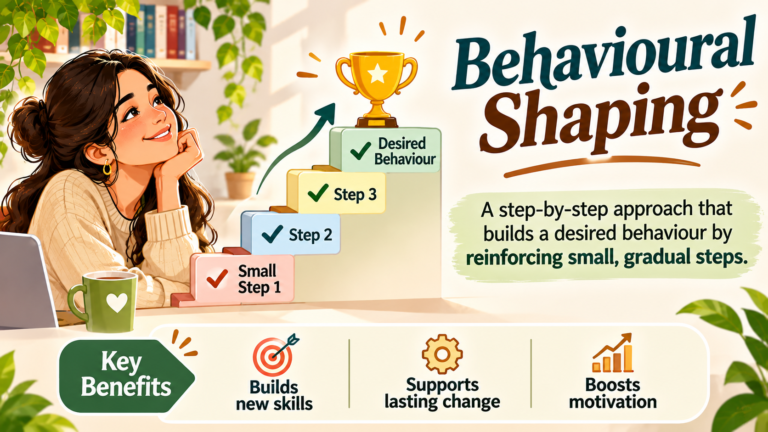
Shaping involves reinforcing successive steps towards a larger goal. For instance, if a child finds a complex morning routine difficult, the initial goal might be completing one step independently. Additional steps can be introduced gradually as the child develops confidence and skills.
Modelling
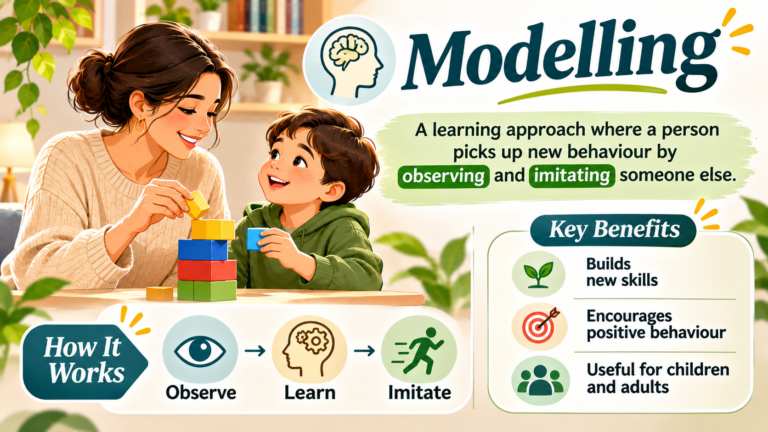
Modelling involves demonstrating a behaviour so that the individual can observe and practise it. A therapist or caregiver might demonstrate how to ask for a turn, respond to a disagreement, or follow a particular routine. The individual is then supported in practising the skill at an appropriate pace.
Prompting and fading
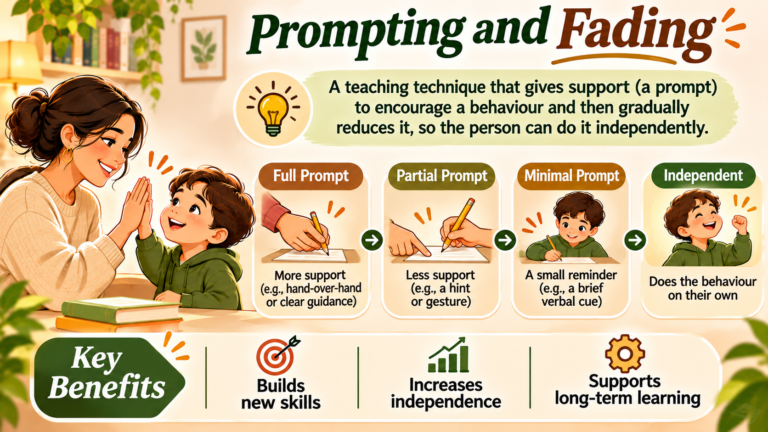
Prompts provide reminders or assistance to help someone perform a skill. As the person becomes more independent, prompts can be gradually reduced.
This may be useful when learning routines, daily living skills, or task sequences. The goal is to promote independence rather than create unnecessary reliance on prompts.
Visual schedules and task breakdown
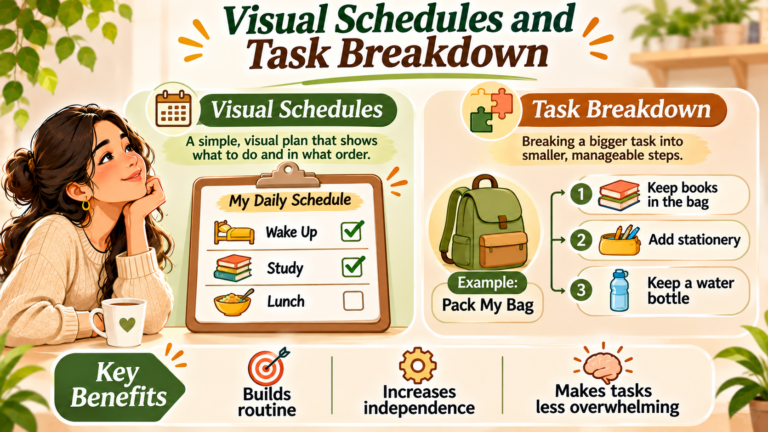
Visual schedules, checklists, and step-by-step instructions can make activities easier to understand and follow.
Breaking a larger task into smaller parts may reduce uncertainty and help individuals organise their actions. These tools can be especially useful when tasks feel overwhelming or when transitions are difficult.
Gradual exposure

When avoidance is linked to fear or anxiety, carefully planned exposure may help the individual approach situations that feel difficult.
Exposure should be appropriate to the concern and carried out with suitable guidance. It should not involve forcing someone into a frightening or unsafe situation.
Self-monitoring and habit strategies
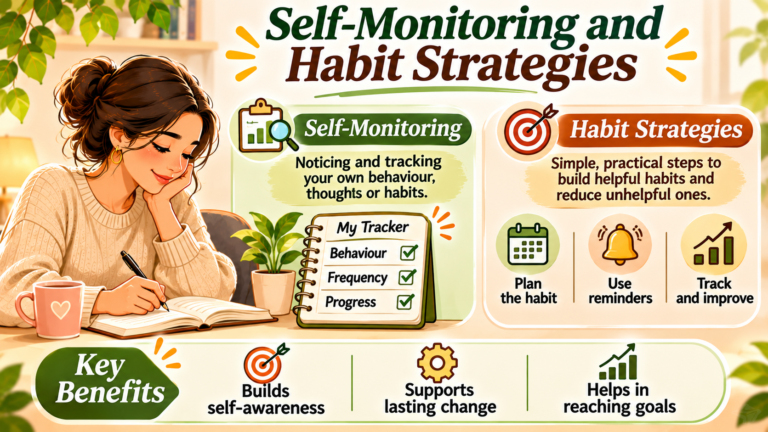
Older children, adolescents, and adults may learn to observe their own behaviour, identify patterns, and practise alternative responses. Strategies may include tracking routines, planning specific actions, or recognising situations that increase the likelihood of an unwanted habit.
The most appropriate technique depends on the underlying difficulty and the person’s ability to use the strategy.
Behaviour Therapy for Children
Children develop behavioural, communication, emotional, and social skills at different rates. Some difficulties are temporary responses to developmental changes or stressful circumstances, while others may persist and interfere with daily functioning.
Behaviour therapy may help children develop practical skills and establish more supportive routines when a behavioural assessment indicates that the approach is appropriate.
It may address concerns such as:
● Difficulty following daily routines.
● Frequent conflict around homework or other tasks.
● Challenges with transitions between activities.
● Difficulty learning specific social or communication skills.
● Behavioural patterns that affect participation at home or school.
● Challenges with emotional regulation and coping.
The purpose is not to label a child as “bad” or force unquestioning obedience. It is to understand the child’s needs, identify what makes situations difficult, and support the development of appropriate skills.
The role of parents and caregivers
Parents and caregivers can play an important role in helping children practise new skills outside therapy sessions.
Depending on the treatment plan, caregivers may learn to provide clear instructions, establish predictable routines, notice positive efforts, and respond consistently to challenging situations.
Strategies should be realistic for the family and should take account of the child’s age, communication, developmental abilities, and emotional needs.
Harsh punishment, humiliation, threats, and physical punishment are not appropriate substitutes for evidence-informed behavioural support.
Behaviour Therapy for Adolescents
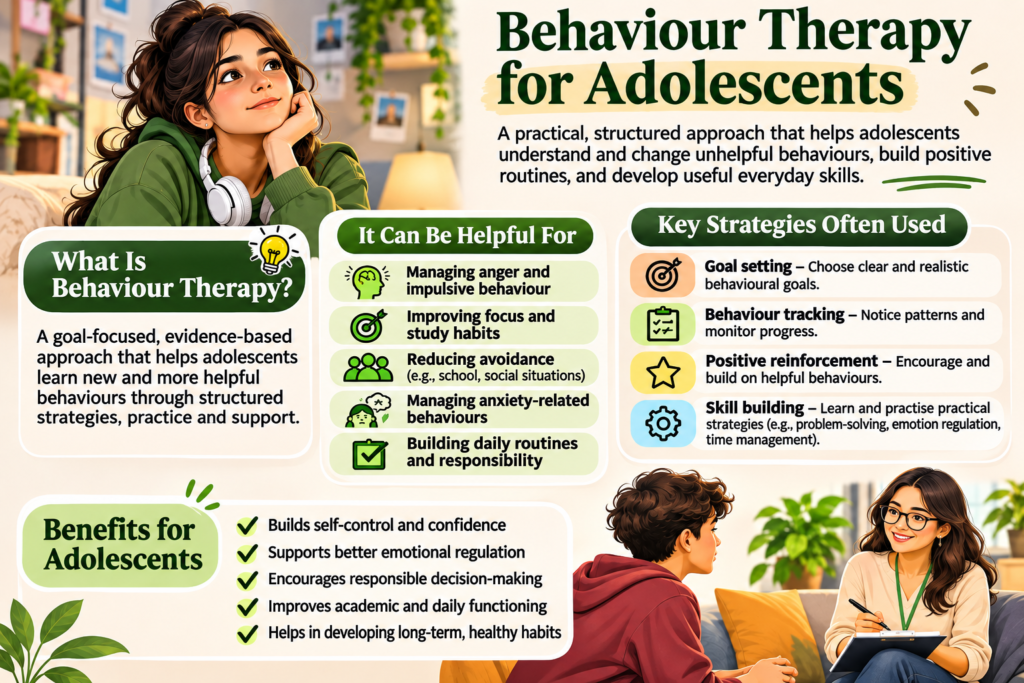
Adolescence brings changes in independence, responsibilities, social relationships, and emotional development. Behavioural difficulties may emerge or become more noticeable during periods of stress, family conflict, academic pressure, or changing routines.
Behaviour therapy may help adolescents develop practical skills for managing responsibilities, following agreed routines, improving communication, and working towards personal goals.
Treatment should involve adolescents in decisions that affect them, in ways appropriate to their age and understanding. Collaboration is generally more constructive than relying entirely on adult-imposed rules.
When behavioural changes are sudden, severe, or accompanied by significant emotional distress, substance use, self-harm concerns, or a marked decline in functioning, a broader mental health assessment may be necessary.
Behaviour Therapy for Adults
Behavioural patterns can also affect adults. Difficulties may involve avoidance, unhelpful routines, habit formation, task completion, or responses that interfere with work, relationships, and personal goals.
Depending on the assessment, behaviour therapy may help adults:
● Develop more consistent daily routines.
● Break complex tasks into manageable steps.
● Practise alternative responses to challenging situations.
● Reduce avoidance through gradual, planned practice.
● Build practical skills for everyday functioning.
● Monitor progress towards specific behavioural goals.
Behavioural methods are sometimes incorporated into other psychological treatments, including Cognitive Behavioural Therapy (CBT). The appropriate approach depends on whether the main concern involves learned behaviour, thinking patterns, emotional difficulties, or a combination of factors.
Persistent behavioural difficulties may also be associated with medical, developmental, psychological, or environmental factors. Assessment should consider these possibilities rather than assuming that behaviour alone explains the problem.
Behaviour Therapy and Neurodevelopmental Conditions
Some individuals with neurodevelopmental conditions may benefit from structured behavioural support when it addresses specific, meaningful needs.
For example, support may focus on communication, daily living skills, transitions, safety, or participation in everyday activities. The goals should be personalised and should respect the individual’s preferences, dignity, sensory needs, and autonomy.
For autistic individuals, behavioural interventions should be carefully selected and should not aim to suppress harmless self-regulatory behaviours or force the person to appear non-autistic. The focus should be on meaningful skills, wellbeing, communication, and reducing distress or genuine barriers to daily life.
Behavioural support does not replace a comprehensive assessment for conditions such as autism spectrum disorder or ADHD. Nor does the presence of a particular diagnosis automatically mean that behaviour therapy is required.
Families should ask the professional how goals will be chosen, how progress will be measured, and how the intervention protects the individual’s wellbeing and independence.
What Happens During a Behaviour Therapy Session?
A behaviour therapy session usually focuses on a specific goal or skill. The format varies depending on the person’s age, needs, and treatment plan.
A session may involve:
Reviewing Progress
Discussing what has happened since the previous session and whether the strategies were useful.
Observing or Discussing Behaviour
Exploring the situations in which a difficulty occurs.
Practising a Skill
Using modelling, guided practice, task breakdown, or another relevant technique.
Planning Everyday Practice
Identifying realistic opportunities to use the skill outside the session.
Reviewing Next Steps
Agreeing on what to practise and what information to bring to the next appointment.
For children, sessions may include structured activities or caregiver guidance, depending on the treatment approach.
Not every session will look the same. The therapist may adjust activities based on the individual’s progress, emotional state, attention, communication, and practical needs.
How Long Does Behaviour Therapy Take?
There is no fixed duration that applies to everyone.
The number and frequency of sessions depend on the goals, complexity of the concern, the individual’s needs, opportunities to practise skills, and progress over time.
A focused behavioural goal may require a different approach from a long-standing difficulty affecting several areas of life. Some individuals may also need additional assessment or coordinated support.
Progress should be reviewed regularly. If the chosen strategies are not helping, the therapist should consider whether the plan needs to change or whether another intervention is more appropriate.
Be cautious of services promising guaranteed results within a fixed number of sessions. Outcomes vary, and meaningful progress should be judged against the individual’s agreed goals and wellbeing.
Behaviour Therapy vs CBT vs Family Therapy
These approaches can overlap, but their primary areas of focus differ.
| Approach | Main Focus |
|---|---|
|
🧩
Behaviour therapy
|
Understanding and changing behavioural patterns through learning-based strategies |
|
🧠
Cognitive Behavioural Therapy (CBT)
|
Addressing the relationship between thoughts, emotions, and behaviours |
|
👨👩👧
Family therapy
|
Exploring communication and interaction patterns among family members |
|
🤝
Parent-focused behavioural support
|
Helping caregivers support specific skills and behavioural goals |
|
📋
Psychological assessment
|
Understanding difficulties and informing recommendations for appropriate support |
A behavioural technique may be used as part of CBT or a family-focused intervention. However, the terms are not interchangeable.
The most appropriate approach depends on the concern being addressed, the person's needs, and professional assessment.
Choosing a Behaviour Therapist in Delhi
When exploring behaviour therapy in Delhi, consider the following:
Relevant Qualifications
Check the professional's recognised qualifications, registration where applicable, and scope of practice.
Experience with the Concern
Ask whether the professional has experience with the specific behavioural difficulty and age group.
Individualised Assessment
Strategies should be based on the person's needs, circumstances, and developmental level.
Respectful Methods
The intervention should protect dignity, wellbeing, communication, and autonomy.
Clear Goals
The therapist should explain what the intervention aims to achieve and how progress will be reviewed.
Caregiver Involvement
Where relevant, ask how parents or caregivers will be involved and what support they may receive.
Practical Arrangements
Confirm availability, fees, session format, and appointment procedures before starting.
A suitable therapist should be able to explain the reasoning behind the proposed strategies and discuss alternatives when a particular approach is not helping.
Behaviour therapy at Headspace Mind Clinic
Headspace Mind Clinic provides mental health services in Delhi. Individuals and families seeking behavioural support can enquire about currently available services, the relevant professional, and the assessment process.
The recommended intervention will depend on the individual’s needs and clinical assessment. Confirm the availability of behaviour therapy, including child-specific services, at your preferred branch before booking.
Contact Headspace Mind Clinic to enquire about behaviour therapy in Delhi and available appointment options.
Frequently Asked Questions About Behaviour Therapy
🧠 What is behaviour therapy? ⌄
Behaviour therapy is a psychological approach that uses learning-based strategies to understand and change behavioural patterns. It may focus on developing skills, improving routines, or reducing behaviours that interfere with daily functioning.
🧒 Can behaviour therapy help children? ⌄
It may help children develop specific skills and manage certain behavioural difficulties when assessment indicates that the approach is appropriate. Treatment should be age-appropriate, respectful, and tailored to the child's needs.
👥 Is behaviour therapy only for children? ⌄
No. Behavioural strategies may also be used with adolescents and adults, depending on the concern and treatment goals.
🔄 What is the difference between behaviour therapy and CBT? ⌄
Behaviour therapy primarily focuses on behaviour and learning processes. CBT addresses the relationship between thoughts, emotions, and behaviours. CBT may incorporate behavioural techniques, but the two terms do not mean exactly the same thing.
💚 Does behaviour therapy involve punishment? ⌄
Evidence-informed behavioural support should not rely on humiliation, intimidation, or physical punishment. Appropriate interventions focus on understanding behaviour, teaching useful skills, and reinforcing constructive responses.
📅 How many sessions are required? ⌄
The number of sessions depends on the goals, the complexity of the concern, and progress. A therapist can discuss an individualised plan after assessment.
🌱 Can behaviour therapy help with autism or ADHD? ⌄
Some behavioural interventions may support specific functional goals for individuals with autism or ADHD. The approach should be personalised, respectful, and based on assessment. Behaviour therapy alone does not establish or replace diagnosis.
🤝 Do parents need to participate in a child's behaviour therapy? ⌄
Caregiver involvement may be helpful, particularly when skills need to be practised at home. The level of participation depends on the child's needs, the treatment plan, and the professional's recommendations.
✉️ How can I enquire about behaviour therapy at Headspace Mind Clinic? ⌄
Contact Headspace Mind Clinic to confirm current availability, the relevant professional, fees, and appointment arrangements.
Take the Next Step Towards Behavioural Support
Behavioural difficulties can affect learning, relationships, routines, and everyday independence. Understanding why a behaviour occurs can help identify practical ways to support change.
Behaviour therapy offers structured strategies for developing skills and changing patterns that interfere with daily life. The approach should always be tailored to the individual and should take account of emotional, developmental, medical, and environmental factors where relevant.
If you are considering behavioural support for yourself or a family member, begin with an assessment by an appropriately qualified professional.
Enquire about behaviour therapy at Headspace Mind Clinic in Delhi. Confirm current service availability, the relevant professional, fees, and appointment options directly with the clinic.
Explore other treatments
PsychotherapyCognitive behavioural therapy (CBT)Dialectical behaviour therapy (DBT)Exposure and response prevention (ERP)Family therapyClinical psychologist in DelhiPsychological assessmentsNeuromodulation (rTMS, tDCS)Antidepressants explainedDepression medication guideAnti-anxiety medicinesAnxiety medication guide