Adult ADHD Treatment in Delhi
Trust Signals




Quick Facts
| Quick Fact | Details |
|---|---|
| Condition | Adult ADHD |
| Usual Onset | Childhood (often diagnosed in adulthood) |
| Core Symptoms | Inattention, Hyperactivity, Impulsivity |
| Treatment | Medication + Behavioural Strategies + Therapy |
| Location | Delhi NCR |
What Is Adult ADHD?
ADHD is a disorder that affects attention, organization, planning, impulse control, and regulation of emotions, which affect the ability of individuals to perform in various settings, including work, learning environments, interpersonal interactions, and other daily tasks. Although it is a child’s problem, many individuals are diagnosed in their adult years.

ADHD in Adults is now gaining recognition as a prevalent disorder.
Many people spend their whole lives thinking of themselves as “lazy”, “careless”, “messy” or “unable to manage time properly”; however, the actual reason for those thoughts may be a neurodevelopmental disorder with impaired executive functioning.
Contrary to the common perception of ADHD patients being characterized by highly active behavior in their childhood years, the Adult ADHD condition is defined by forgetfulness, inability to complete tasks, procrastination, disorganization, distraction, impulsiveness, emotional instability, and planning/prioritization.
While some individuals have been diagnosed with ADHD at a young age, many other people are unaware of their ADHD and all kinds of issues they might have experienced at school, university/college, workplace, and personal lives because of this condition.
ADHD not only impacts the ability to concentrate, but it also has an effect on the brain’s ability to cope with planning, motivation, emotions, memory, organization, and decision-making.
Once identified and appropriately managed, ADHD can be greatly improved, which will help many adults increase their productivity and improve their interaction with others.
Is Adult ADHD Different from Childhood ADHD?
✓ Yes
Attention deficit hyperactivity disorder, even if it begins during childhood, develops different symptoms as time passes by.
Children display overt signs of hyperactivity, while adults experience:
● Lack of concentration
● Procrastination
● Poor organisation
● Restlessness rather than visible hyperactivity
● Difficulty managing time
● Impulsive emotions
● Forgetfulness
● Difficulty finishing projects
Myth vs Reality
| Myth | Reality |
|---|---|
| ADHD is restricted to childhood patients | ADHD commonly persists into adulthood |
| People with adult ADHD are just lazy. | ADHD is a well-acknowledged neurodevelopmental condition impacting executive function |
| Occasionally distractions occur. | Symptoms associated with ADHD continually affect their lives in a significant manner. |
| ADHD results from bad upbringing | ADHD is biologically and genetically founded |
| High intelligence prevents ADHD. | ADHD affects individuals across all intelligence levels |
Clinical Pearl
Most people with ADHD come up with ways of coping which help to hide their condition for many years. The problems usually become evident when there is increased pressure at school, work, or home.
“Patient Takeaway
ADHD in adults is neither a lack of intelligence nor motivation or discipline. It is a known disease that can be treated when properly diagnosed.”
What Are the Symptoms of Adult ADHD?
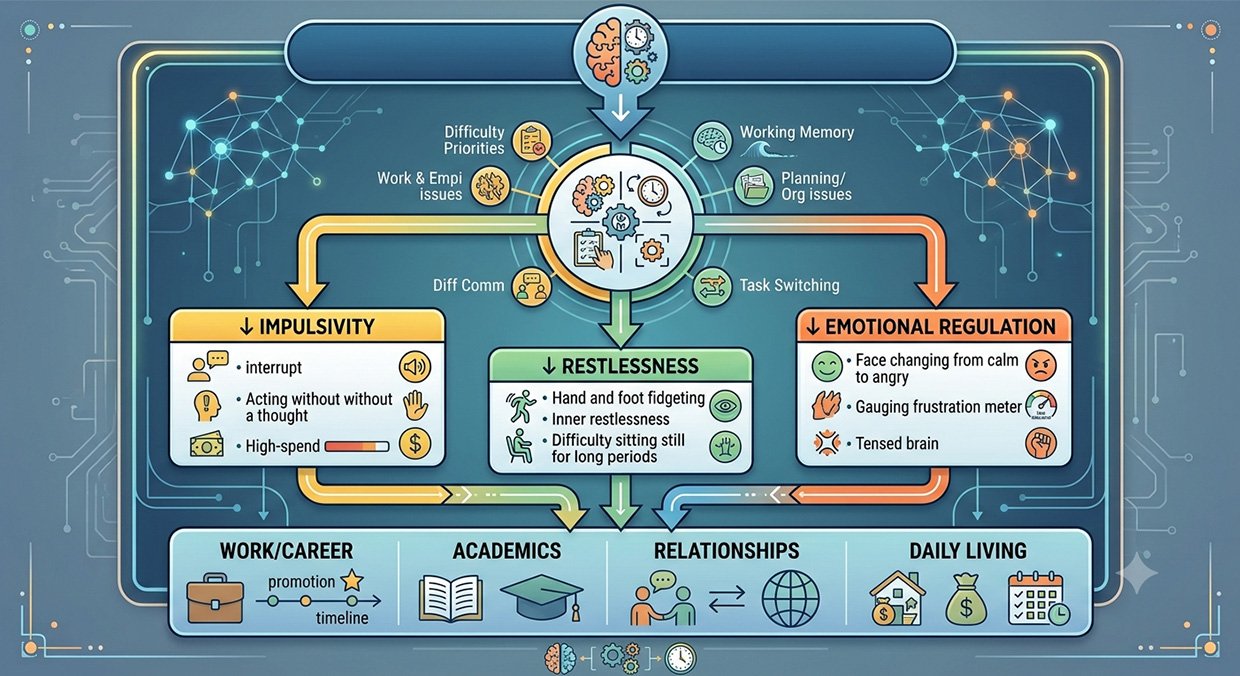
Typically, some of the most common symptoms of ADHD in adults include inattention, disorganization, forgetfulness, procrastination, impulsivity, inability to complete tasks, poor time management skills, emotional instability, and restlessness. There are no standard signs and symptoms of ADHD since each person exhibits different signs and symptoms that should significantly affect their daily activities.
The symptoms of ADHD in adults extend much further than just having trouble concentrating.
Adults have admitted to feeling like their “mind is constantly racing” or not knowing how to prioritize responsibilities, or forgetting appointments due to the fact that they are well-intentioned.
These can affect the individual at the workplace, with money, in relationships, driving, at home, and in self-respect.
Inattentiveness Symptoms
Examples are:
- Susceptible to distractions
- Having problems concentrating
- Frequently losing items
- Forgetting appointments
- Careless mistakes
- Difficulty completing tasks
- Frequently changing between tasks
- Bad attention to detail
Executive Functioning Deficits
Difficulties an adult faces:
- Planning
- Prioritising
- Organisation
- Time management
- Starting tasks
- Completing projects
- Decision-making
- Working memory
Hyperactivity and Impulsivity
These can manifest in adults as follows:
- Inner restlessness
- Talking excessively
- Interrupting conversations
- Difficulty waiting
- Impulsive spending
- Risk-taking
- Impatient behaviour
- Constant mental activity
Emotional Symptoms
Adults also suffer from:
- Emotional sensitivity
- Frustration
- Low self-esteem
- Anxiety arising from problems due to ADHD
- Mood instability
- Difficulty dealing with criticism
- Overwhelm
Functional Impact
Adult ADHD may affect:
- Career progression
- University studies
- Household management
- Parenting responsibilities
- Financial organisation
- Driving safety
- Romantic relationships
- Daily productivity
Adult ADHD Symptom Categories
| Category | Examples |
|---|---|
| Inattention | Distractions, forgetfulness, difficulty concentrating |
| Executive function disorder | Planning, organization, procrastination |
| Hyperactivity | Hyperactive behavior, excessive talking |
| Impulsiveness | Interrupting, being impulsive |
| Emotional problems | Irritation, difficulty regulating emotions |
| Functional impairments | Work, money issues, relationships |
Clinical Note
ADHD is frequently associated with other disorders, including anxiety, depression, insomnia, and learning disabilities among adults. A proper psychiatric evaluation is needed in diagnosing ADHD together with other disorders.
Think About Getting an Evaluation If You:
● Have difficulty paying attention from a young age.
● Frequently miss deadlines despite trying hard.
● Constantly procrastinate.
● Lose important items regularly.
● Feel chronically disorganised.
● Change jobs frequently due to performance issues.
● Have problems in your relationships due to forgetfulness or impulsiveness.
● Are unable to deal with routine tasks such as planning and organizing your schedule.
What causes Adult ADHD?
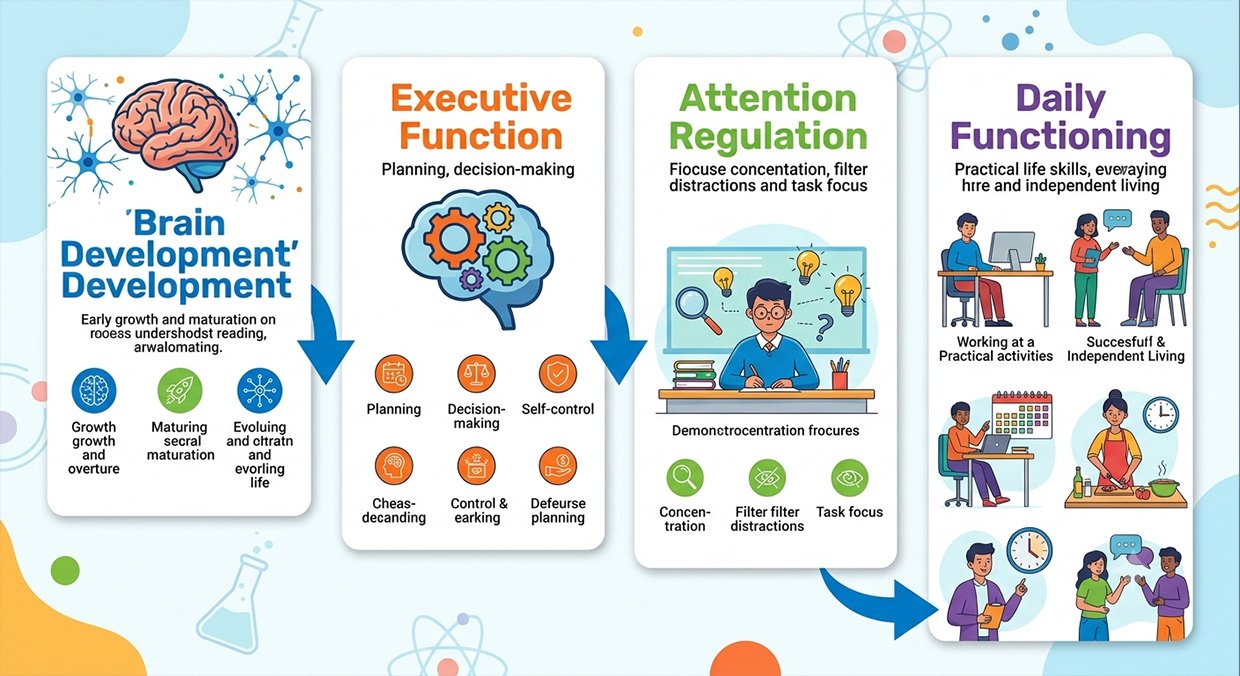
ADHD in adults is a neurodevelopmental disorder that has deep biological and genetic roots. There have been studies to prove that brain development, functioning of neurotransmitters, and executive functions contribute to the development of ADHD. The disorder is not a result of any laziness, poor parenting, lack of discipline, or low intelligence.
ADHD has for a long time been seen merely as a behavioral problem. ADHD is a neurodevelopmental disorder that is characterized by variations in the functioning of the brain in terms of attention, self-regulation, planning, and impulsiveness.
ADHD is a condition in adults that has been present since childhood but becomes apparent in adulthood as the demands become higher.
Causes for ADHD have not been identified yet; however, the existing research shows that ADHD can be attributed to the combination of genes, biology, and environment.
It is necessary to state that ADHD is not caused by poor parenting, lack of motivation, too much time spent with gadgets, or low intelligence.
Genetics
Family history is a very important element.
Research has proven that this disease is hereditary.
Those individuals who are highly vulnerable to developing this syndrome are those who:
- A parent has ADHD
- A sibling has ADHD
- Other close relatives have ADHD symptoms
But not all those who have a family history of ADHD suffer from the condition.
Brain Development
Studies suggest differences in areas of the brain responsible for:
Neurotransmitters
Environmental Factors
Although environmental issues may influence the severity of symptoms, they seldom cause ADHD independently.
They may include:
- Premature birth
- Low birth weight
- Prenatal exposure to tobacco or alcohol
- Prenatal exposure to tobacco or alcohol
- Significant early life stress
- Sleep problems
Factors Associated with Adult ADHD
| Biological Factors | Environmental Influences |
|---|---|
| Genetics | Premature birth |
| Brain development | Early childhood adversity |
| Dopamine pathways | Sleep deprivation |
| Executive function differences | Chronic stress |
| Family history | Substance use may worsen symptoms. |
Clinical Pearl
ADHD is one of the most biologically based psychiatric disorders. Information about the biological nature of this disorder removes the stigma and encourages individuals to go for evaluation and treatment.
Understanding Executive Dysfunction in Adult ADHD
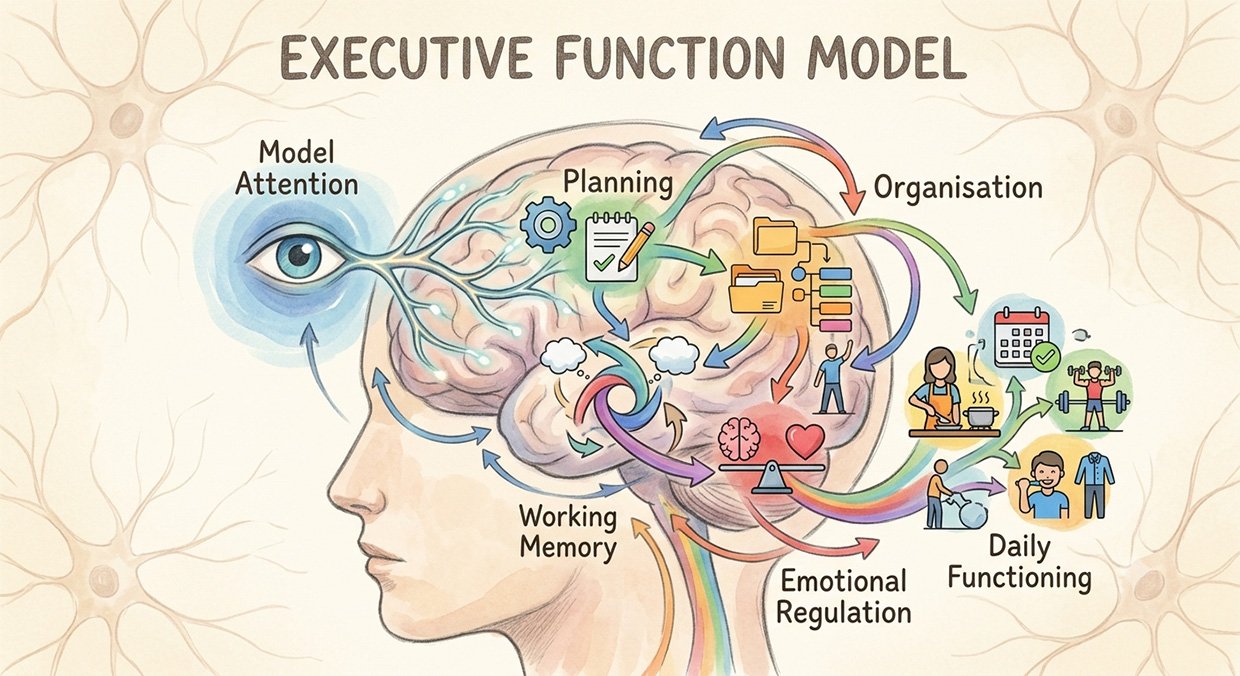
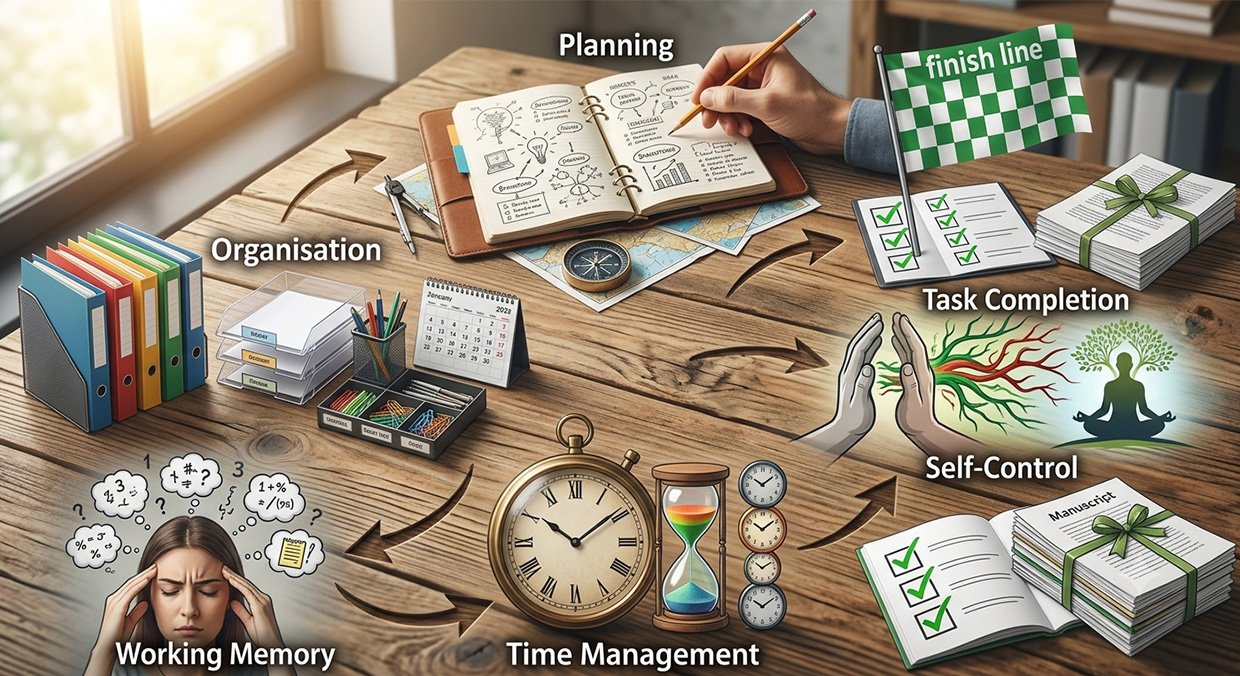
Executive Dysfunction is the lack of capability of an individual to plan, organise, prioritize, initiate activities, manage time, control emotions, and have good working memory. This is one of the fundamental characteristics of Adult ADHD, and more significant to the quality of an individual's life than distraction.
Many adults believe ADHD simply means having a short attention span.
Indeed, executive dysfunction is one of the most debilitating features of Adult ADHD.
Executive function is the “management system” of the brain. It aids in organizing information, planning for the future, completing tasks, controlling emotions, and adapting to new environments.
If someone experiences impairment in executive function, no matter how motivated or intelligent he may be, he will find it hard to deal with his day-to-day responsibilities.
Common Problems Associated With Executive Function
Adults with ADHD may face:
- Difficulty starting tasks
- Chronic procrastination
- Forgetting deadlines
- Losing track of time
- Poor planning
- Difficulty prioritising
- Trouble completing projects
- Disorganisation
- Poor working memory
- Impulsivity
Real-Life Examples
This includes the following:
- Difficulty prioritising
- Beginning several projects but finishing none.
- Paying bills late despite having money.
- Often forgetting about appointments.
- Feeling overwhelmed while dealing with trivial administrative work.
- Often looking for missing keys, wallets, and mobiles.
Executive Function Domains
| Executive Skill | ADHD Difficulty |
|---|---|
| Planning | Difficulty organising future tasks |
| Working Memory | Forgetting instructions |
| Task Initiation | Delaying important work |
| Time Management | Underestimating time required |
| Emotional Regulation | High emotional arousal |
| Cognitive Flexibility | Difficulties in task switching |
Clinical Pearl
It is not intelligence but executive dysfunction that leads to problems faced by people with ADHD both at work and in academia.
“Patient Takeaway
ADHD is not about knowing what to do—it is often about difficulty consistently doing what you already know needs to be done.”
Are There Different Types of Adult ADHD?
There are three main kinds of adult ADHD. These are the predominantly inattentive kind, the predominantly hyperactive/impulsive kind, and the combined kind. In certain cases, symptoms of ADHD may vary, but hyperactivity tends to be less common among adults than when they were kids.
Not everyone with adult ADHD shows similar symptoms.
Some people face difficulty only with attention and organization, while others may also suffer from impulsiveness and restlessness.
There are three types of presentations currently recognized in diagnostic criteria.
Predominantly Inattentive Type
Main characteristics are:
- Easily distracted
- Forgetfulness
- Poor concentration
- Disorganisation
- Losing belongings
- Difficulty completing tasks
- Distracted from details
Predominantly Hyperactive-Impulsive Presentation
Common signs include:
- Restlessness
- Talking excessively
- Interrupting others
- Difficulty waiting
- Acting without thinking
- Impulsive decision-making
- Impatience
Combined Presentation
The combination of inattention and hyperactivity-impulsivity is experienced by many adults. It is one of the commonest presentations diagnosed in adulthood.
ADHD Presentations
| Presentation | Main Characteristics |
|---|---|
| Inattentive | Distractibility, forgetting, disorganization |
| Hyperactive-Impulsive | Restlessness, impulsive behaviour |
| Combined | Features of both presentations |
Adult ADHD in Women
ADHD in women remains unnoticed due to its less clear symptoms like distractibility, emotional turmoil, disorganization, anxiety, and internal hyperactivity. This causes many women to have a later diagnosis.
Historically, ADHD studies have centered around male patients, and this has resulted in the misdiagnosis of many women and girls with the disorder.
To cope with the signs of ADHD, many women end up compensating for their problems by working hard and becoming organized at all costs. It can only come to light once the woman is overwhelmed by life because of education, work, and family obligations.
ADHD in women can easily go undiagnosed when she consults professionals regarding various issues such as depression, anxiety, stress, and low self-confidence.
Common Signs in Adult Females
- Chronic disorganisation
- Often feeling overwhelmed
- Difficulty handling several obligations
- Emotional sensitivity
- Forgetfulness
- Perfectionism with incomplete tasks
- Poor time management
- Persistent procrastination
Clinical Note
Women could be affected by their hormones due to the menstruation period, pregnancy, or menopause. The assessment of this condition is made using a general clinical profile.
Adult ADHD in Men vs Women
| Men | Women |
|---|---|
| More visible hyperactivity | More internal restlessness |
| External impulsivity | Emotional dysregulation |
| Early Identification | Often identified later |
| Behavioural issues | Anxiety may prevail |
How Is Adult ADHD Diagnosed?
ADHD in adults is determined using a full psychiatric evaluation. A psychiatrist will examine the present symptoms, childhood background, functioning at school/occupational level, medical background, and effects of symptoms on day-to-day activities. There are no specific blood tests or imaging tests to determine ADHD.
Diagnosing Adult ADHD requires much more than completing an online questionnaire.
Because ADHD symptoms overlap with several other mental health conditions, psychiatrists conduct a detailed assessment to determine whether ADHD best explains the individual’s difficulties.
A diagnosis is based on established diagnostic criteria and evidence that symptoms have been present since childhood, even if they were not recognised at the time.
During the Assessment, the Psychiatrist May Explore
- Current symptoms
- Childhood behaviour
- Academic history
- Employment history
- Relationships
- Emotional regulation
- Medical history
- Sleep patterns
- Substance use
- Family history
Psychological Rating Scale in Diagnosis of ADHD
The standardised ADHD rating scale and questionnaire can prove useful for the process of assessment of ADHD. They will provide a structured way of gathering information; however, the diagnosis is always clinical.
Conditions that may Mimic ADHD
Some other conditions can exhibit symptoms like ADHD.
| Condition | Why It Can Resemble ADHD |
|---|---|
| Anxiety Disorders | Poor concentration due to excessive worry |
| Depression | Reduced motivation and attention |
| Bipolar Disorder | Distractibility during mood episodes |
| Sleep Disorders | Fatigue causing poor focus. |
| OCD | Inability to concentrate due to obsessive thoughts |
| Thyroid Disorders | Energy and attention changes |
| Substance Use Disorders | Cognitive difficulties associated with substance use |
Adult ADHD Assessment Components
| Assessment Area | Purpose |
|---|---|
| Clinical interview | Gain insight into symptoms and functioning. |
| Childhood history | Establish consistent pattern of symptoms. |
| Functional assessment | Assess employment, academic, and interpersonal functioning. |
| Medical examination | Exclude physical causes |
| Psychiatric evaluation | Diagnosis of coexisting disorders |
| Rating scales | Support clinical assessment |
IMPORTANT NOTE
Online ADHD tests cannot make diagnosis of ADHD as well as rule out ADHD. ADHD is diagnosed by a psychiatrist or mental health specialist only after conducting an extensive examination of the person.
Struggling with Focus, Organisation, or Procrastination?
In case you have difficulty concentrating, poor organization, or impulsivity problems, then an assessment will help establish the cause of the problem, and the correct treatment can be suggested.
How Is Adult ADHD Treated?
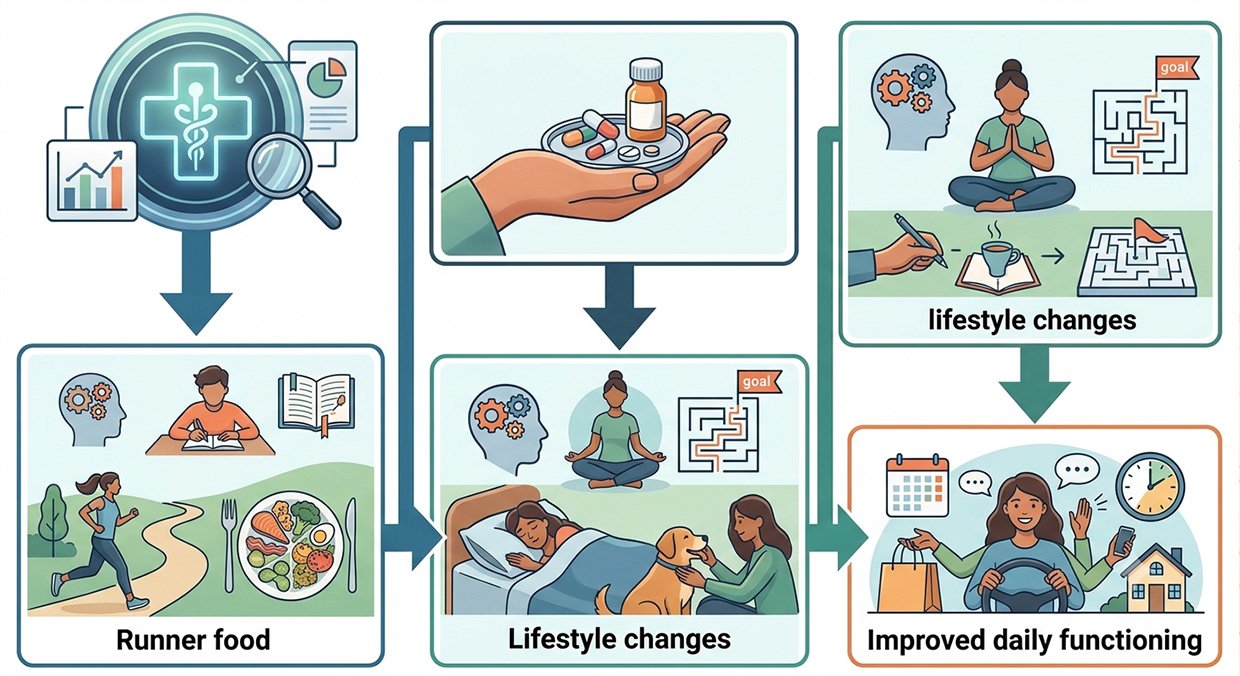
Treatment of Adult ADHD will be personalized treatment that may include medications, CBT, psychoeducation, organization, lifestyle modification, and psychiatric monitoring. This treatment will aid in the improvement of attention span, executive function, mood regulation, and quality of life.
- Symptom severity
- Occupational demands
- Academic responsibilities
- Co-existing anxiety or depression
- Sleep quality
- Medical history
- Personal goals
- Previous treatment experience
Goals of Treatment
Treatment should enable individuals to:
- Enhance sustained attention
- Reduce distractibility
- Strengthen executive functioning
- Improve organisation
- Reduce impulsive behaviour
- Manage emotions more effectively
- Improve academic and workplace performance
- Build healthier routines
- Enhance quality of life
Components of Adult ADHD Treatment
| Treatment | Purpose |
|---|---|
| Medication | Increase concentration and self-control |
| Psychoeducation | Gain knowledge about ADHD and coping skills. |
| Cognitive Behavioural Therapy (CBT) | Enhance thought processes and behaviors |
| Organisational Skills Training | Improve organization and productivity. |
| Lifestyle Modifications | Help with brain and daily functioning. |
| Regular Psychiatric Follow-up | Review progress and revise treatment plan. |
Clinical Note
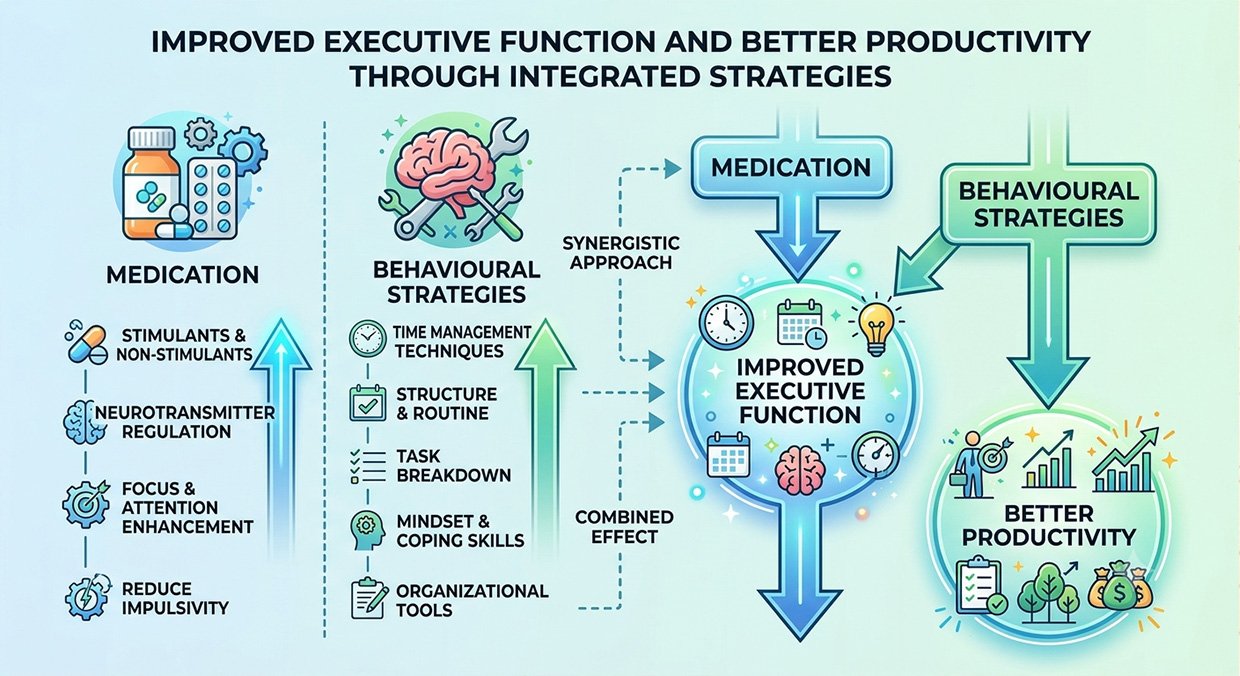
The best results tend to be attained when these three approaches—medication, behavior modification, and lifestyle changes—are combined in one long-term treatment plan.
Medications for Adult ADHD
Medication remains one of the most reliable ways to treat Adult ADHD. Based on the needs and medical history of the person, the psychiatrist may prescribe stimulant or non-stimulant medications for treating the disorder. Medication must be taken under medical supervision.
- Symptom profile
- Medical conditions
- Lifestyle
- Previous treatment response
- Potential side effects
- Patient preferences
Stimulant Medications
The stimulant medications are often prescribed to treat ADHD and have been researched extensively.
They operate through increasing the levels of certain neurotransmitters that affect attention, motivation, and executive functions.
Their possible advantages are:
- Better concentration
- Reduced distractibility
- Improved task completion
- Enhanced working memory
- Better impulse control
Non-Stimulant Medications
Non-stimulant medication can be considered in cases where:
- Stimulants are not suitable
- Side effects occur
- Certain medical conditions are present
- Additional clinical considerations influence treatment choice
Medication Overview
| Medication Type | General Features |
|---|---|
| Stimulants | Often provide relatively rapid improvement in core ADHD symptoms. |
| Non-Stimulants | May be appropriate for selected individuals depending on clinical needs. |
| Note | Medication needs to be individualised and done in conjunction with a psychiatrist. |
Clinical Pearl
Medication increases the brain’s capacity to control focus; however, medication is not meant to substitute good habits or planning.
“Patient Takeaway
Medication will work better if combined with tools for organisation in everyday life.”
Cognitive Behavioural Therapy (CBT) for Adult ADHD
This therapy is effective in the treatment of adults suffering from ADHD as it offers them techniques to cope with organisational, time management, emotional, procrastination and problem-solving difficulties. CBT is highly effective in treating adults with ADHD if it is applied as a therapy.
CBT May Help With
- Procrastination
- Poor organisation
- Time management
- Perfectionism
- Emotional regulation
- Negative self-talk
- Stress management
- Goal setting
CBT Techniques Used to Help People with ADHD
- Decomposing big tasks into small steps
- Creating realistic schedules
- Prioritising tasks
- Managing distractions
- Developing reminder systems
- Building consistent routines
- Challenging self-critical thoughts
CBT Benefits
| Challenge | CBT Strategy |
|---|---|
| Procrastination | Task breakdown |
| Forgetfulness | External reminder systems |
| Time Blindness | Structured scheduling |
| Emotional Overwhelm | Cognitive restructuring strategies |
| Disorganisation | Environmental organisation strategies |
Clinical Pearl
Although CBT does not help in the cure of ADHD, it helps in developing skills that will aid in improving daily functions.
Lifestyle Changes That Support ADHD Treatment
Maintaining a healthy lifestyle through good sleeping habits, exercising, nutrition, scheduling, handling stress, and avoiding distractions is good for ADHD treatment and helps improve one’s health. They work along with medical treatment.
Sleep
Sleep deprivation may result in worsening of:
- Inattention
- Memory
- Emotional regulation
- Impulsivity
Physical Activity
Regular exercise may help:
- Improve attention
- Reduce restlessness
- Improve mood
- Support stress management
- Enhance sleep quality
Nutrition
Good nutrition contributes to optimal brain health.
In place of restrictive dieting programs, most individuals would gain more by:
- Modest amounts of caffeine when needed
- Avoiding skipped meals
- Support stress management
- Enhance sleep quality
Organisational Systems
Effective methods include:
- Digital calendars
- Task lists
- Reminder apps
- Time-blocking
- Visual planners
- Decluttering workspaces
Lifestyle Strategies
| Strategy | Potential Benefit |
|---|---|
| Regular Sleep | Better concentration |
| Exercise | Improved mood and focus |
| Structured Routine | Better organisation |
| Planning Tools | Reduced forgetfulness |
| Balanced Diet | Stable energy levels |
| Stress Management | Better emotional control |
Clinical Pearl
Routine practices done on a daily basis can make an impact when done regularly.
ADHD at Work and College
ADHD in adults could interfere with one’s productivity, organization, deadline, and academic results. Suitable therapy, techniques, accommodation in the work place, if possible, and planning would assist an individual in being successful at work and study environments.
Some typical problems are:
- Missing deadlines
- Difficulty organising projects
- Forgetting meetings
- Frequent interruptions
- Poor prioritisation
- Difficulties reading long passages
- Overwhelmed by many duties
Helpful Workplace Strategies
- Time-blocking
- Breaking large projects into smaller tasks
- Using digital reminders
- Noise-reducing headphones when appropriate
- Written task lists
- Calendar scheduling
- Minimising unnecessary distractions
- Scheduling demanding tasks during peak concentration periods
Strategies for College Students
They can be helped by:
- Structured study schedules
- Active learning techniques
- Short study sessions with planned breaks
- Organised note-taking
- Early assignment planning
- Seeking academic support services where available
Work-related Challenges and Solutions
| Challenge | Practical Strategy |
|---|---|
| Missed Deadlines | Calendar reminders and task planning |
| Disorganisation | Daily planning system |
| Distraction | Maintaining a distraction-free environment |
| Time Blindness | Timing and alarms |
| Forgetfulness | Lists and reminders |
Clinical Pearl
ADHD is common among many highly successful professionals, entrepreneurs, scientists, and creative people. The right kind of therapy and effective systems make it possible for the strengths to emerge and the executive function problems become less pronounced.
Personalised Adult ADHD Treatment at Headspace Mind Clinic
Everyone’s experience of Attention Deficit Hyperactivity Disorder (ADHD) is unique. Our ADHD treatment includes a thorough psychiatric assessment, medication where relevant, psychological therapy and practical ways to help you become more focused, organised and productive.
Living Successfully with Adult ADHD
Individuals diagnosed with ADHD can lead productive lives both personally and professionally. Through proper diagnosis and treatment, among others, individuals with ADHD can increase their effectiveness, interpersonal relationships, self-confidence, and well-being.
Adult diagnosis of ADHD may stir up mixed emotions in several people.
A person can feel relieved to know that their lifelong issues with being organized and having poor concentration skills finally have an explanation, but, on the contrary, a person may feel unhappy about the delayed diagnosis.
However, getting diagnosed with ADHD is not a hindrance but an opening for you to learn how your brain functions and find ways to make your life more manageable.
There are people with ADHD in every single career field – entrepreneurs, doctors, teachers, engineers, artists, researchers, and businessmen.
The purpose of the treatment is not perfection; the aim is to enable you to use your strengths and minimize the effects of the condition in your everyday life.
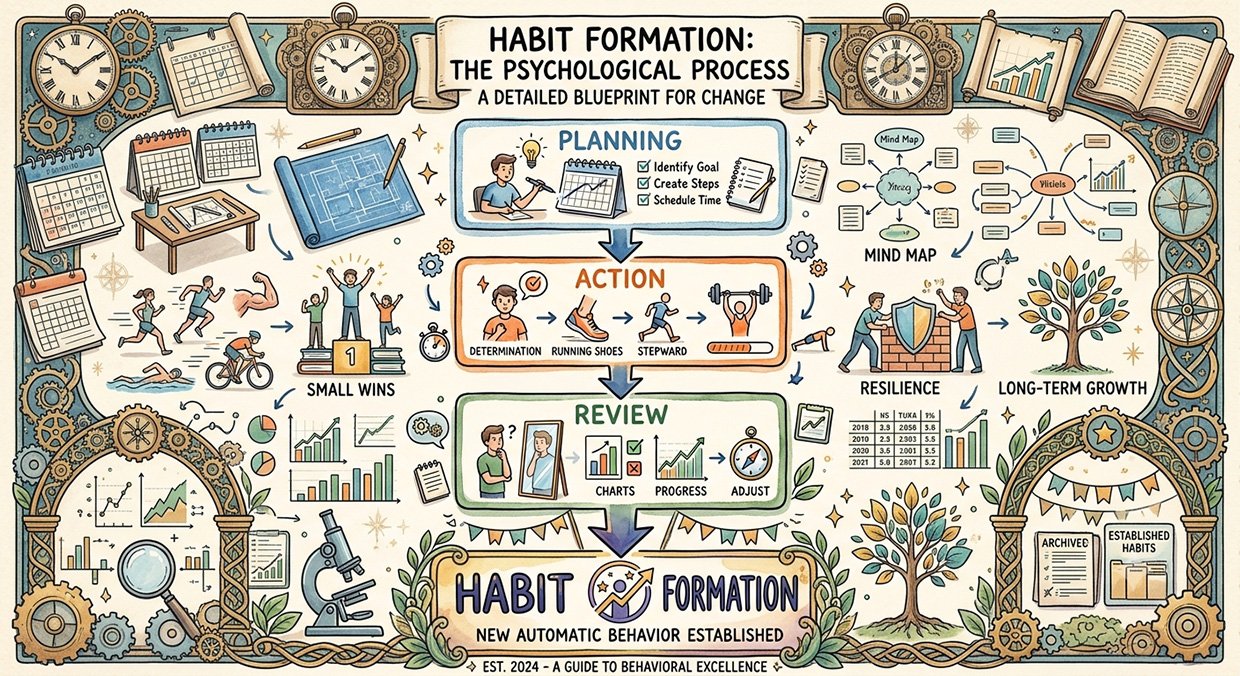
Developing Sustainable Habits Every Day
Consistent small habits tend to produce great long-term changes.
Some good habits are
- Scheduling for the following day the previous night
- Keeping important items in designated places
- Using digital reminders
- Developing a steady morning routine
- Splitting big projects into small steps
- Scheduling regular breaks during demanding work
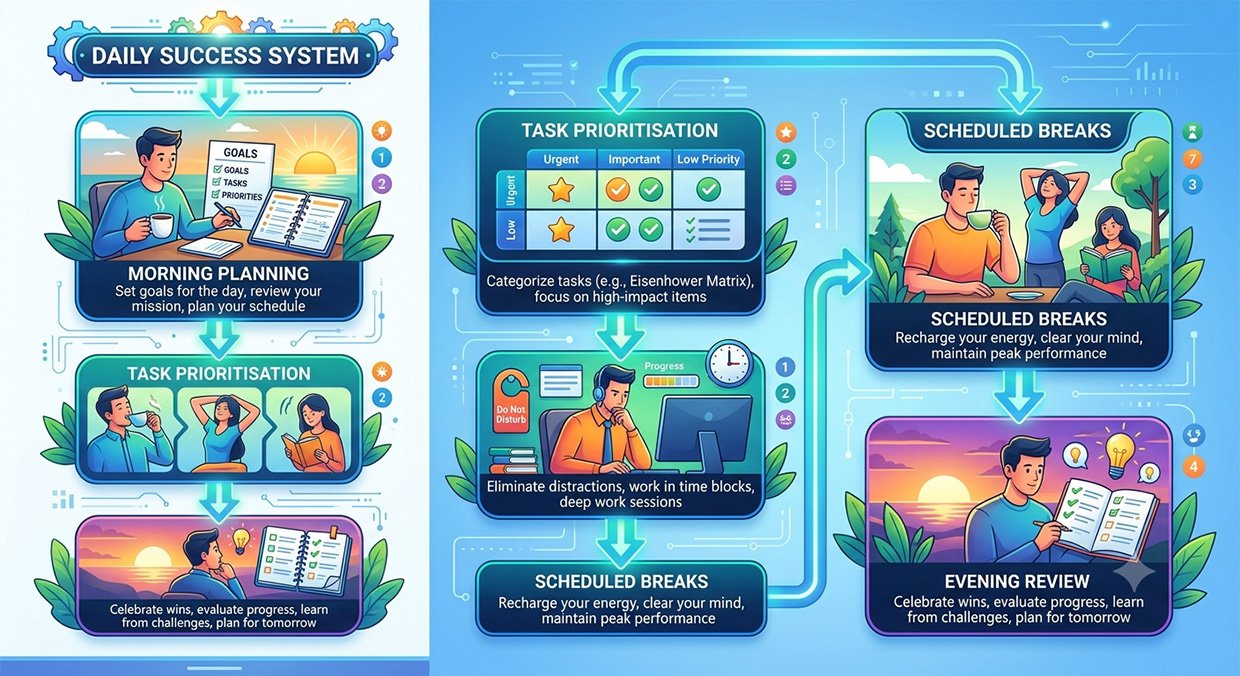
- Reviewing priorities at the start and end of the day
Identifying One's Strengths
Individuals with ADHD have many strengths, which include:
- Creativity
- Curiosity
- High energy
- Innovative thinking
- Problem-solving ability
- Adaptability
- Enthusiasm
- Ability to think outside conventional approaches
ADHD Challenges and Practical Solutions
| Common Challenge | Practical Strategy |
|---|---|
| Forgetfulness | Digital reminders and checklists |
| Poor Organisation | Daily planning system |
| Time Blindness | Calendar blocking and alarms |
| Procrastination | Divide tasks into smaller actions. |
| Distractibility | Reduce environmental distractions |
| Emotional Overload | CBT approaches and organized breaks |
Clinical Pearl
ADHD treatment is successful when systems are established to decrease dependence on memory and willpower only. Routines work better than motivation.
Adult ADHD and Other Mental Health Conditions
Most adults who have attention deficit/hyperactivity disorder (ADHD) also have an anxiety disorder, depressive disorder, insomnia, or a substance use disorder. In a psychiatric evaluation, these additional disorders should be considered so that the therapy will be effective for all the symptoms and not just ADHD alone.
ADHD is also frequently associated with other conditions.
Typically, adults will be assessed psychologically because of anxiety, stress, bad mood, or burnout without understanding that they may have ADHD.
ADHD left untreated will lead to numerous difficulties with studying, working, and social interactions, affecting their self-esteem and emotions negatively.
Having all the information about the condition, the psychiatrist will be able to decide how to treat it.
ADHD and Anxiety
Anxiety in Adults With ADHD May Be Associated With:
- Missed deadlines
- Disorganisation
- Fear of making mistakes
- Constant mental overload
- Management problems
ADHD and Depression
Being continuously underachieving or stressed could be an indication of depression in some people. It is necessary to know if the problem with concentration is related to ADD, depression, or both.
ADHD and Sleep
ADHD sufferers tend to have trouble sleeping. Insomnia has the potential to make the following worse:
- Attention
- Working memory
- Emotional regulation
- Productivity
Common Co-Existing Conditions
| Condition | Why Assessment Matters |
|---|---|
| Anxiety Disorders | Symptoms may overlap with ADHD. |
| Depression | Can also impair attention and motivation |
| Sleep Disorders | May worsen ADHD symptoms |
| OCD | Requires different treatment strategies |
| Bipolar Disorder | Careful evaluation is essential before starting treatment. |
| Substance Use Disorders | May complicate diagnosis and management |
Clinical Pearl
Treating ADHD without recognising co-existing mental health conditions—or vice versa—may result in incomplete symptom improvement. A comprehensive psychiatric evaluation is essential.
When Should You See a Psychiatrist for Adult ADHD?
However, in case you still face challenges in managing issues like attention, organizing, being impulsive, and managing your time despite having made improvements, it would be wise for you to have an ADHD evaluation done.
Consult The Professional Immediately When:
- You consistently miss deadlines even when you plan.
- You often forget about appointments or responsibilities.
- Feel constantly overwhelmed by everyday tasks.
- Have struggled with attention since childhood.
- Frequently lose important belongings.
- Experience chronic procrastination.
- Have difficulty maintaining employment or academic performance.
- Notice impulsive decisions affecting finances or relationships.
- Have persistent symptoms despite using productivity tools.
“Patient Takeaway
Seeking assessment is not about finding an excuse—it is about understanding the cause of long-standing difficulties and identifying effective solutions.”
Why Choose Headspace Mind Clinic for Adult ADHD Treatment in Delhi?
The Headspace Mind Clinic provides an extensive Adult ADHD assessment and treatment program through carrying out extensive psychiatric assessments, providing proper medication, using psychological interventions, and applying personalized methods that seek to improve executive functioning, productivity, and overall well-being.
Our Approach
- Comprehensive Adult ADHD Assessment
- Consultant Psychiatrist
- Evidence-Based Diagnosis
- Individualised Treatment Plans
- Medication Management
- Cognitive Behavioural Therapy Support
- Lifestyle and Executive Function Guidance
- Long-Term Follow-up
- Confidential Consultations
Services Offered
| Service | Available |
|---|---|
| Adult ADHD Assessment | ✓ |
| Psychiatric Consultation | ✓ |
| Medication Management | ✓ |
| Clinical Psychology | ✓ |
| Cognitive Behavioural Therapy | ✓ |
| Follow-up Care | ✓ |
Struggling with Focus, Organisation, or Procrastination?
Phone:
Website:
Frequently Asked Questions (FAQ)
Medically Reviewed By
Dr. Deepak Verma
Consultant Psychiatrist & Neuropsychiatrist, Founder & Medical Director, Headspace Mind Clinic
ABOUT THE MEDICAL REVIEWER
PUBLICATION INFORMATION
| Item | Details |
|---|---|
| Author | Headspace Mind Clinic Editorial Team |
| Medical Reviewer | Dr. Deepak Verma |
| Last Medical Review | July 2026 |
| Next Scheduled Review | January 2027 |
| Content Version | 1.0 |
| Content Type | Evidence-Based Patient Education |
EDITORIAL POLICY
- Evidence-based clinical information
- Medical review by a qualified psychiatrist
- Patient-centred, stigma-free language
- Regular updates aligned with current clinical guidelines
- Clear distinction between educational information and personalised medical advice
REFERENCES
- Indian Psychiatric Society (IPS)
- National Institute for Health and Care Excellence (NICE)
- American Academy of Child and Adolescent Psychiatry (AACAP)
- American Psychiatric Association (APA)
- World Federation of ADHD
- National Institute of Mental Health (NIMH)
- PubMed-indexed systematic reviews and meta-analyses on Adult ADHD