OCD Treatment in Delhi
Trust Signals





Quick Facts
| Quick Fact | Details |
|---|---|
| Condition | Obsessive-Compulsive Disorder (OCD) |
| Age of Onset | Late adolescence to early adulthood |
| Primary Psychological Treatment | Exposure and Response Prevention (ERP) |
| Medical Treatment | Medication + Cognitive Behavioural Therapy (CBT) when clinically appropriate |
| Location | Delhi NCR |
What is obsessive-compulsive disorder (OCD)?
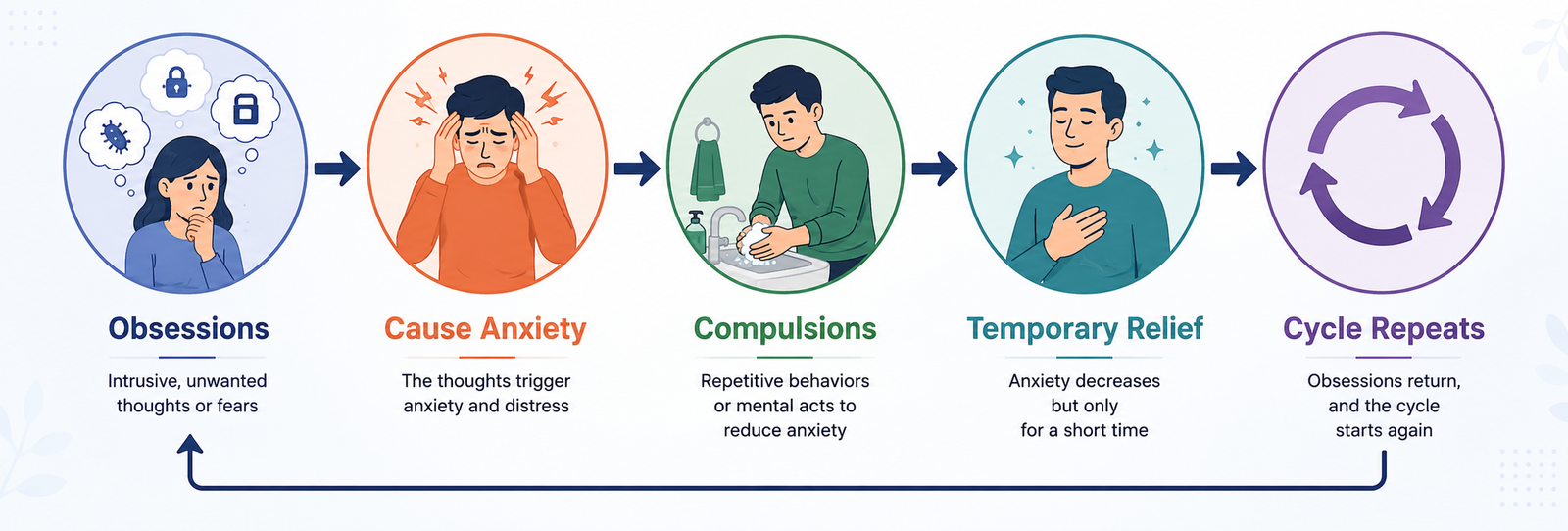
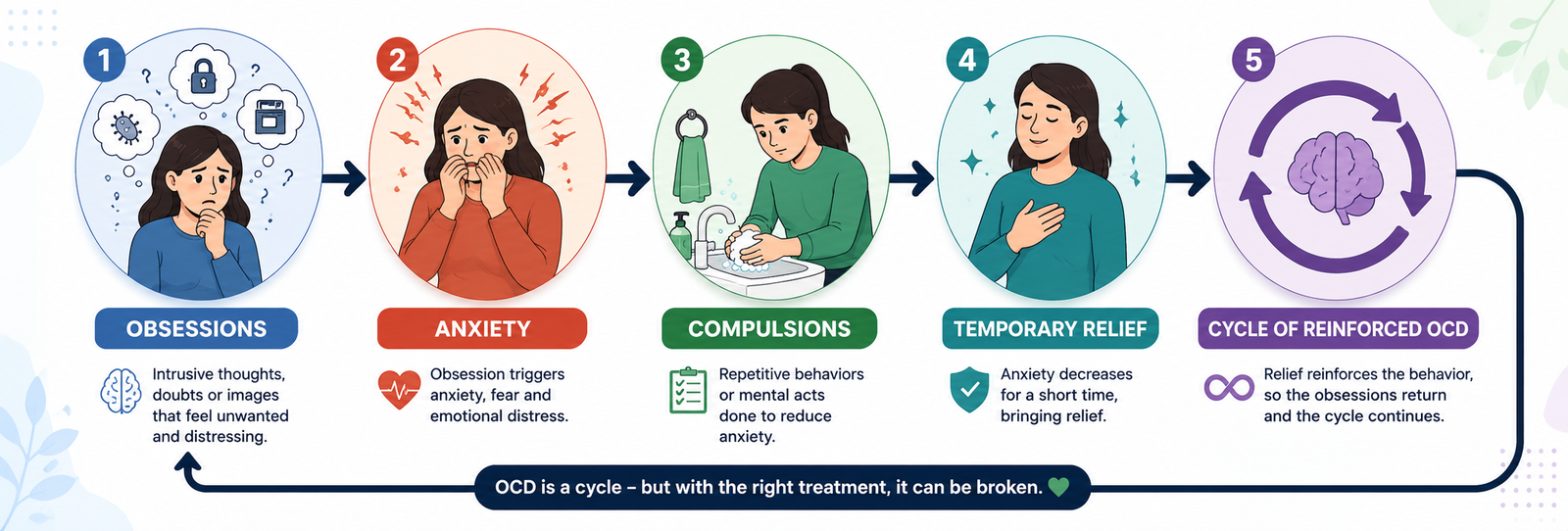
Obsessive-Compulsive Disorder is an illness that is defined by recurrent thoughts that intrude on one’s mind (obsessions), as well as repeated actions done to alleviate anxiety. Such actions include ritualistic behaviors, and the problem consumes a lot of time, interfering with one’s job, relationships, studies, and daily activities.

The condition is not just about being organized, perfectionist, and very clean. This is usually followed by a delayed diagnosis and treatment of the disease.
Individuals suffering from obsessive-compulsive disorders usually have obsessions that manifest through recurring or intrusive ideas, images, and impulses, thus leading to stress and anxiety for them. The patients of obsessive-compulsive disorders resort to compulsions to deal with their stress. Compulsions are certain actions and thoughts that should be performed following specific rules.
For instance, an individual might repeatedly check the door even though he knows the door is already locked. Some examples of compulsions are washing hands due to the fear of contamination, praying to prevent the thoughts from intruding, and seeking assurance from one’s family members.
Despite knowing that these fears or obsessions of people suffering from OCD are irrational or even exaggerated, it would be highly challenging for them to disbelieve them because these rituals make them feel safe and comfortable.
Obsessive-compulsive disorder (OCD) is medically proven to be related to abnormal functioning of brain areas responsible for decision-making, formation of habits, error detection, and emotion processing, specifically the orbitofrontal cortex, anterior cingulate cortex, and basal ganglia.
Luckily, OCD belongs to those illnesses that respond very effectively to treatment. There are many cases of individuals recovering from treatment such as ERP, CBT, medication, or a combination of all three.
Is OCD Only About Cleanliness?
✘ No
While contamination fear and excessive washing are some of the commonly observed symptoms of OCD, they do not apply to everyone.
OCD may involve:
- Intrusive violent thoughts
- Religious obsessions
- Sexual intrusive thoughts
- Excessive checking
- Reassurance seeking
- Ordering and symmetry
- Mental rituals
- Counting
- Hoarding behaviours (in some cases)
Common Myth vs Reality
| Myth | Reality |
|---|---|
| OCD means being neat. | OCD is a psychiatric disorder comprising obsessions and compulsions. |
| Individuals with OCD have fun cleaning. | Compulsions arise from anxiety, not enjoyment. |
| Everyone has "a little OCD". | OCD causes clinically significant distress and impairment. |
| Patients can simply stop the behaviours. | Compulsions temporarily reduce anxiety and are difficult to resist without treatment. |
| OCD is rare. | OCD affects millions of people worldwide. |
Clinical Pearl
Stigma is one of the major causes for the lack of treatment in those with OCD. Patients feel ashamed of the intrusive thoughts that plague them because these intrusive thoughts are symptoms of OCD rather than an individual's true character.
“Patient Takeaway
These intrusive thoughts are symptoms of OCD and not indicators of one’s character, morality, or intent. The right treatment should be able to alleviate both the thoughts and the necessity for compulsion.
What are the Common Symptoms of OCD?
OCD has features of obsession, like recurring thoughts, impulses, and images, along with compulsion, which is a repetitive act or thought that will help reduce stress generated by the obsessions. Symptoms of OCD have wide variation and include contamination obsessions, checking, ordering, violent intrusive thoughts, religiosity, or reassurance-seeking.
The symptoms of OCD can be very diverse for different patients. Put another way, it is possible that two individuals who have OCD can have entirely different obsessions and compulsions.
While some people may be affected by contamination obsessions, others might have intrusive thoughts of harming their loved ones, making a mistake, and defying their own principles.
A great number of compulsions remain unnoticed because they are not physical but mental.
Common Obsessions
These include:
- Fear of contamination
- Fear of harming others
- Intrusive violent thoughts
- Intrusive sexual thoughts
- Religious or moral obsessions (scrupulosity)
- Excessive doubt
- Fear of making mistakes
- Fear of causing accidents
- Need for certainty
Common Compulsions
Examples include:
- Excessive hand washing
- Repeated checking
- Counting rituals
- Arranging objects symmetrically
- Repeating words or prayers silently
- Seeking repeated reassurance
- Mental reviewing
- Avoiding certain situations
Emotional Symptoms
- Persistent anxiety
- Shame
- Guilt
- Frustration
- Fear
- Emotional exhaustion
Functional Impact
Untreated OCD may affect:
- Academic performance
- Work productivity
- Relationships
- Family life
- Decision-making
- Daily routines
- Confidence
- Quality of life
Common OCD Symptom Categories
| Category | Examples |
|---|---|
| Obsessive | Intrusive thoughts, doubts, fears |
| Compulsive | Washing, checking, counting, repetition |
| Emotional | Anxiety, guilt, shame |
| Behavioural | Avoidance, seeking reassurance |
| Functional Problems | Limited work, social isolation, family conflict |
Clinical Note
"Pure Obsessive-Compulsive Disorder," also known as "Pure-O," arises when there are cases of numerous people who have compulsions, but these compulsions are purely psychological and not physical at all. People who have "Pure-O" always try to analyze their thoughts, find out the truth about their thoughts, and repeat words endlessly.
Seek Professional Help If:
● Intrusive thoughts daily.
● Rituals consume more than one hour each day.
● OCD interferes with work, studies, or daily functioning.
● Family members become involved in compulsive behaviours or reassurance rituals.
● Anxiety symptoms become overwhelming or unbearable.
● Symptoms continue to worsen despite self-help measures.
● OCD is accompanied by depression or suicidal thoughts.
What causes Obsessive-Compulsive Disorder?
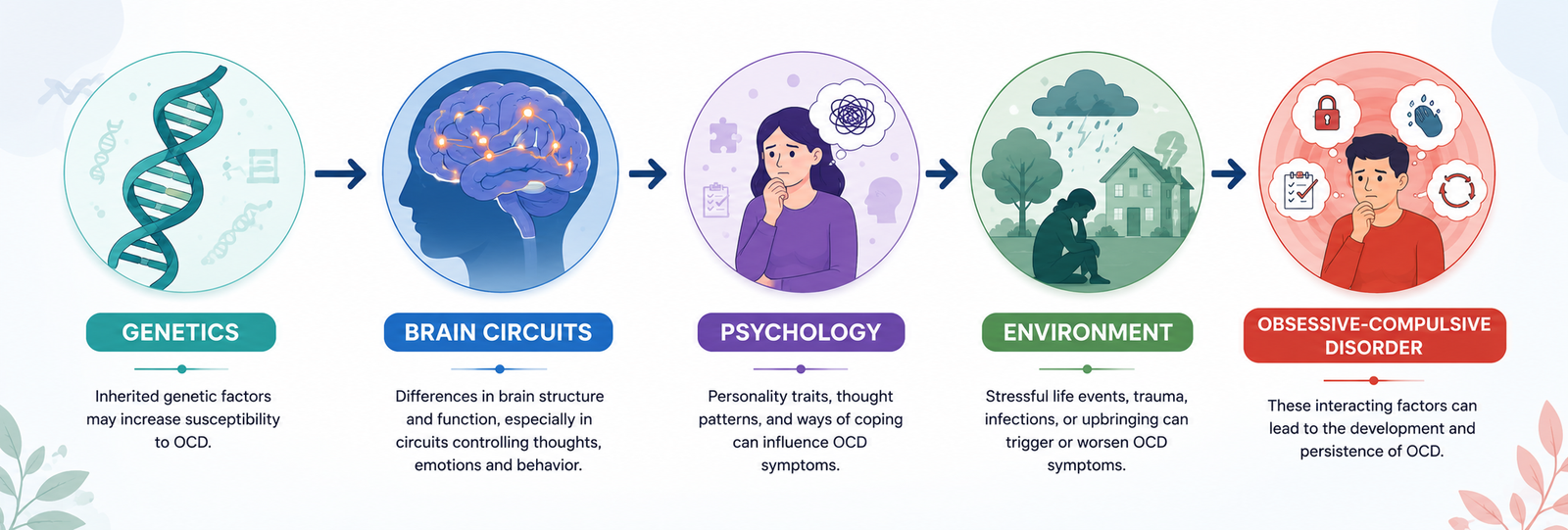
The origin of OCD can be attributed to the combined factors that include biological, genetic, environmental, and psychological elements. The variation between the circuits in the brain associated with decision-making, habitual responses, and stress responses, along with genetic predispositions and environmental stresses, results in OCD.
There is no single cause for OCD. OCD in modern psychiatry has come to be regarded as a neuropsychiatric illness because of the influence of biological, psychological, and environmental determinants.
However, some studies show that the pathophysiology of obsessive-compulsive disorder is linked to dysfunction of the CSTC pathway that plays an important role in error detection, habit formation, emotionality, and behavioral control.
At the point when these pathways start working too much, then all the intrusive thoughts seem threatening and important; thus, people perform their compulsions to overcome their anxiety.
Stress does not lead to OCD, although it can worsen its symptoms.
Biological Factors
Research has identified several biological contributors:
- Family history of OCD
- Genetic susceptibility
- Altered serotonin signalling
- Overactivity in the orbitofrontal cortex
- Increased activity within the anterior cingulate cortex
- Dysfunction involving the basal ganglia
- Neurodevelopmental influences
Psychological Factors
The psychological factors which are generally attributed to OCD are as follows:
- Perfectionism
- Intolerance of uncertainty
- Inflated sense of responsibility
- Need for certainty
- Fear of making mistakes
- Excessive guilt
- Difficulty accepting intrusive thoughts
Environmental Factors
Some possible contributors may be:
- Significant life stress
- Family conflict
- Childhood adversity
- Traumatic experiences
- Major life transitions
- Academic or occupational pressure
Such factors usually affect symptoms’ intensity rather than being the only cause.
Neurobiology of OCD
According to current studies using brain imaging technology, there is greater activity in regions of the brain that control:
- Error detection
- Habit formation
- Threat assessment
- Decision making
- Behavioural inhibition
- Neurodevelopmental influences
It helps understand why OCD patients understand that their worries are excessive but still cannot do anything about them.
Risk Factors for OCD
| Risk Factor | Examples |
|---|---|
| Genetics | Family history of OCD |
| Brain Circuits | CSTC pathway dysfunction |
| Personality Traits | Perfectionism, intolerance of uncertainty |
| Stress | Major life events |
| Childhood Factors | Early adversity in some individuals |
| Medical Factors | Certain neurological illnesses (less commonly) |
Can OCD Develop Suddenly?
✓ Yes
A slow onset may be observed in some people, while others have a relatively sudden onset of symptoms after going through high stress and life changes.
Early psychiatric evaluation usually results in a better prognosis.
Clinical Pearl
Understanding the cause of the disorder can help in the treatment process, but discovering what exactly caused OCD is not necessary for effective treatment.
What are the different types of OCD?
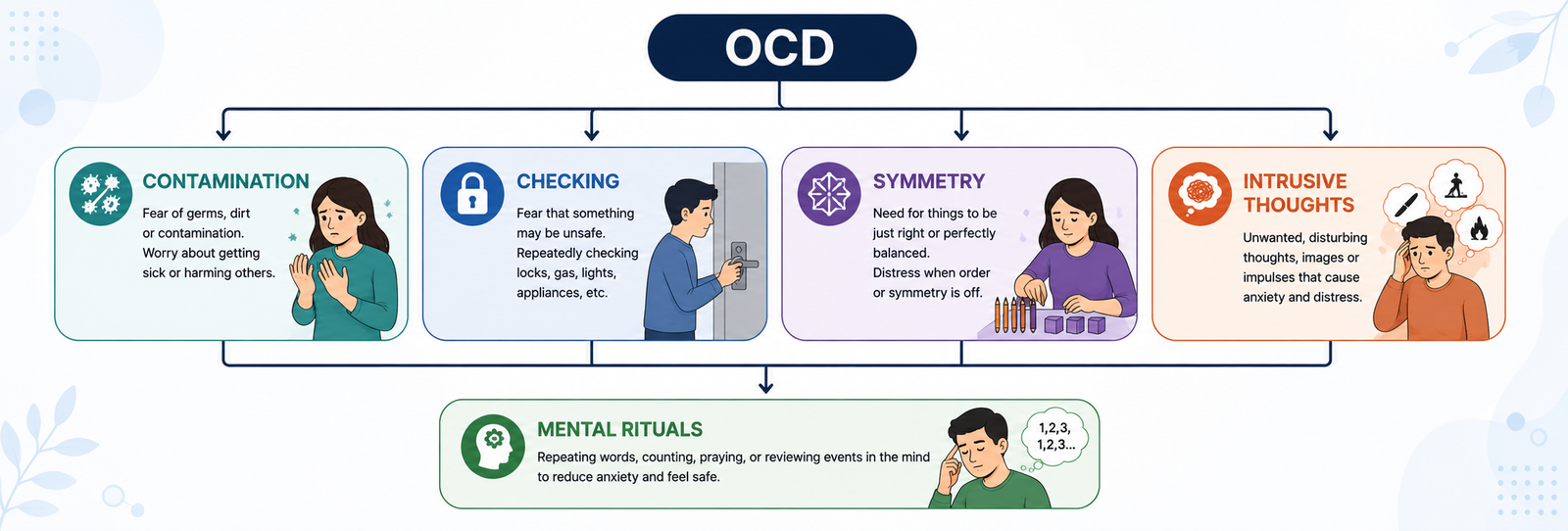
Different individuals are affected by OCD in different ways. Some of the symptom clusters associated with OCD include fear of contamination, checking behaviors, symmetry and ordering, intrusive unacceptable thoughts, and hoarding symptoms. Most people have symptoms from more than one dimension.
Despite being a single disorder, OCD can be described by distinct symptoms.
The recognition of such symptoms allows both the patient and the clinician to recognize that they are not alone and helps to formulate an individualized treatment plan.
Contamination OCD
Common obsessions include:
- Germs
- Dirt
- Bodily fluids
- Illness
- Environmental
- Contamination
Common compulsions include:
- Excessive washing
- Repeated cleaning
- Avoiding public places
- Changing clothes repeatedly
Checking
Obsessions include fears of:
- Fire
- Burglary
- Harm
- Forgetting important tasks
- Making mistakes.
Compulsions include:
- Repeated checking
- Photographing locks
- Returning home multiple times
- Seeking reassurance
Symmetry and Ordering OCD
Individuals feel compelled to:
- Arrange objects perfectly
- Count repeatedly
- Balance actions
- Repeat movements until they feel "just right"
Intrusive Thoughts OCD
Obsessions may involve:
- Violent thoughts
- Sexual intrusive thoughts
- Religious obsessions
- Fear of acting against one's values. Compulsions are often mental:
- Mental reviewing
- Silent praying
- Reassurance seeking
- Thought neutralisation
- Contamination
- Environmental
Hoarding Symptoms
Some individuals experience:
- Difficulty discarding possessions
- Excessive saving
- Distress when throwing items away
Hoarding Disorder is now recognised as a separate diagnosis, although overlap with OCD may occur.
Common OCD Symptom Dimensions
| OCD Dimension | Common Compulsions |
|---|---|
| Contamination | Washing, cleaning |
| Checking | Checking locks, appliances |
| Symmetry | Arranging, counting |
| Intrusive Thoughts | Mental rituals, seeking reassurance |
| Hoarding-related Symptoms | Difficulty discarding things |
Clinical Pearl
Many patients present with several OCD symptoms at once and have fluctuating symptom profiles without changing their diagnosis.
How is OCD Diagnosed?
Diagnosis of OCD is done through a thorough psychiatric evaluation. This entails a comprehensive evaluation by a psychiatrist of the obsessions, compulsions, their severity, time spent performing them, their interference with everyday activities, their insight, and any co-occurring disorders.
- The nature of intrusive thoughts
- Repetitive behaviours
- Mental rituals
- Time spent performing compulsions
- Functional impairment
- Degree of insight
- Associated anxiety or depression
What to Expect During Your Consultation
The psychiatrist may ask about:
- Intrusive thoughts
- Compulsive behaviours
- Mental rituals
- Avoidance
- Time consumed by symptoms
- Family history
- Previous treatment
- Sleep
- Anxiety
- Depression
- Occupational functioning
Mental Status Examination
This includes:
- Appearance
- Behaviour
- Speech
- Mood
- Anxiety level
- Thought process
- Thought content
- Insight
- Judgment
- Cognitive functioning
Differential Diagnosis
Comprehensive evaluation can assist in differentiation between OCD and other diseases that have similar symptoms.
| Condition | How it is Different from OCD |
|---|---|
| Generalized Anxiety Disorder (GAD) | Trouble is caused by worries about general problems, not obsessive thoughts. |
| Obsessive-Compulsive Personality Disorder (OCPD) | A personality style characterised by perfectionism and rigidity, without intrusive obsessions and compulsions. |
| Psychotic Disorders | Beliefs are typically held with diminished insight, unlike the intrusive thoughts experienced in OCD. |
| Depression | Rumination is primarily mood-related rather than driven by obsessions. |
| Autism Spectrum Disorder (ASD) | Repetitive behaviours generally serve different functions than OCD compulsions. |
OCD Assessment Components
| Assessment | Purpose |
|---|---|
| Clinical Interview | Understand symptoms |
| Obsession Assessment | Identify intrusive thoughts |
| Compulsion Assessment | Evaluate rituals |
| Functional Assessment | Measure impact on daily life |
| Insight Assessment | Assess understanding of symptoms |
| Risk Assessment | Assess safety where appropriate |
IMPORTANT NOTE
Most OCD questionnaires available on the Internet are useful in identifying the presence of symptoms but not for diagnosing the condition itself. A formal diagnosis should always be made through a comprehensive psychiatric assessment by a qualified mental health professional.
Do You Think You Have OCD?
An accurate diagnosis and treatment can be very beneficial for you to reduce the impact of OCD in your life.
Visit the Headspace Mind Clinic for a private appointment to receive a comprehensive assessment and personalized treatment plan.
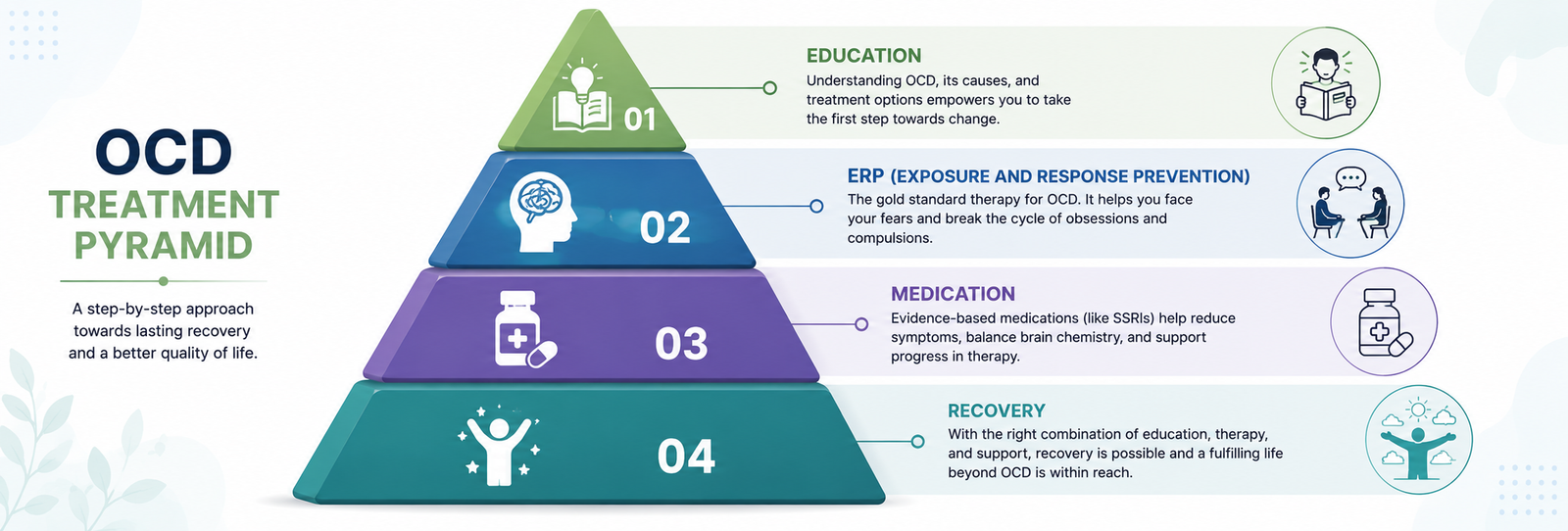
What Are the Available Treatments for OCD?
It is however essential to understand that Obsessive-Compulsive Disorder can be treated through various types of therapy. ERP (exposure and response prevention), CBT (cognitive behavioral therapy), drugs, psychoeducation, family therapy, among others, are some of the common modes of treatment used. People show considerable improvement once treated and the process begun at an early stage.
- OCD severity
- Type of obsessions and compulsions
- Duration of illness
- Insight into symptoms
- Presence of depression or anxiety
- Previous treatment response
- Occupational and social functioning
OCD Treatment objectives
Treatment aims at:
- Reduce obsessive thoughts
- Reduce compulsive behaviours
- Improve quality of life
- Restore work and academic functioning
- Reduce family accommodation
- Improve emotional resilience
- Prevent relapse
Evidence-Based OCD Treatments
| Treatment | Mild | Moderate | Severe |
|---|---|---|---|
| Psychoeducation | ✅ | ✅ | ✅ |
| ERP Therapy | ✅ | ✅ | ✅ |
| Cognitive Behavioural Therapy (CBT) | ✅ | ✅ | ✅ |
| Medication | Sometimes | ✅ | ✅ |
| Combined Therapy | Sometimes | ✅ | ✅ |
| Family Education | ✅ | ✅ | ✅ |
| Intensive OCD Programs | Rare | Selected Cases | Selected Cases |
Clinical Pearl
The objective of OCD therapy is not to rid patients of all their obsessive thoughts. Rather, therapy aids patients in dealing with their anxiety over these thoughts and resisting the compulsion for certain actions.
How Do Medications Help Treat OCD?
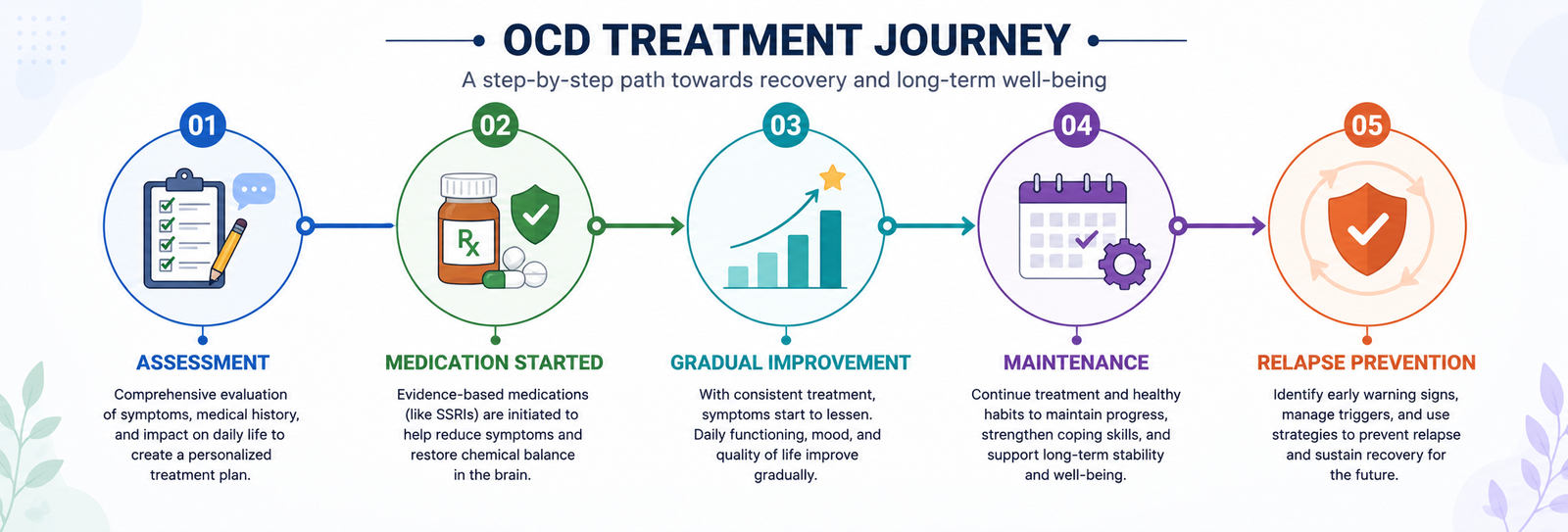
Medications assist in lowering the severity of obsessive thoughts and compulsions as they enhance brain connections that control anxiety and form habits. Medications are frequently prescribed in cases where patients have moderate to severe OCD symptoms that considerably affect their normal activities.
Unlike short-term anxiety, OCD should be constantly treated since intrusive thoughts keep on recurring as long as there are nerve connections.
- OCD severity
- Age
- Co-existing depression
- Anxiety symptoms
- Sleep pattern
- Previous treatment response
- Side-effect profile
Medicines Commonly Prescribed
Evidence-based medications may comprise:
- Selective Serotonin Reuptake Inhibitors (SSRIs)
- Others as recommended in clinical guidelines, if applicable
Frequently Asked Questions About OCD Medication
| Question | Answer |
|---|---|
| Is medication always necessary? | Not always. Mild OCD may respond well to Exposure and Response Prevention (ERP) therapy alone. |
| How long before improvement? | Improvement is usually gradual over several weeks, although the timeline varies between individuals. |
| Can medicines be stopped suddenly? | No. Any changes to medication should only be made under the supervision of a psychiatrist. |
| Is medication addictive? | Medications commonly used to treat OCD are generally not considered addictive. |
| Does medicine cure OCD? | Medication helps reduce symptoms and is often combined with psychological therapy for the best outcomes. |
Clinical Pearl
Medication often becomes most effective when combined with Exposure and Response Prevention (ERP). Together they address both the biological and behavioural aspects of OCD.
Patient Takeaway
It makes it possible for people to participate in exposure and response prevention (ERP) therapy because the medication reduces the intensity of symptoms.
What is Exposure and Response Prevention (ERP) Therapy?
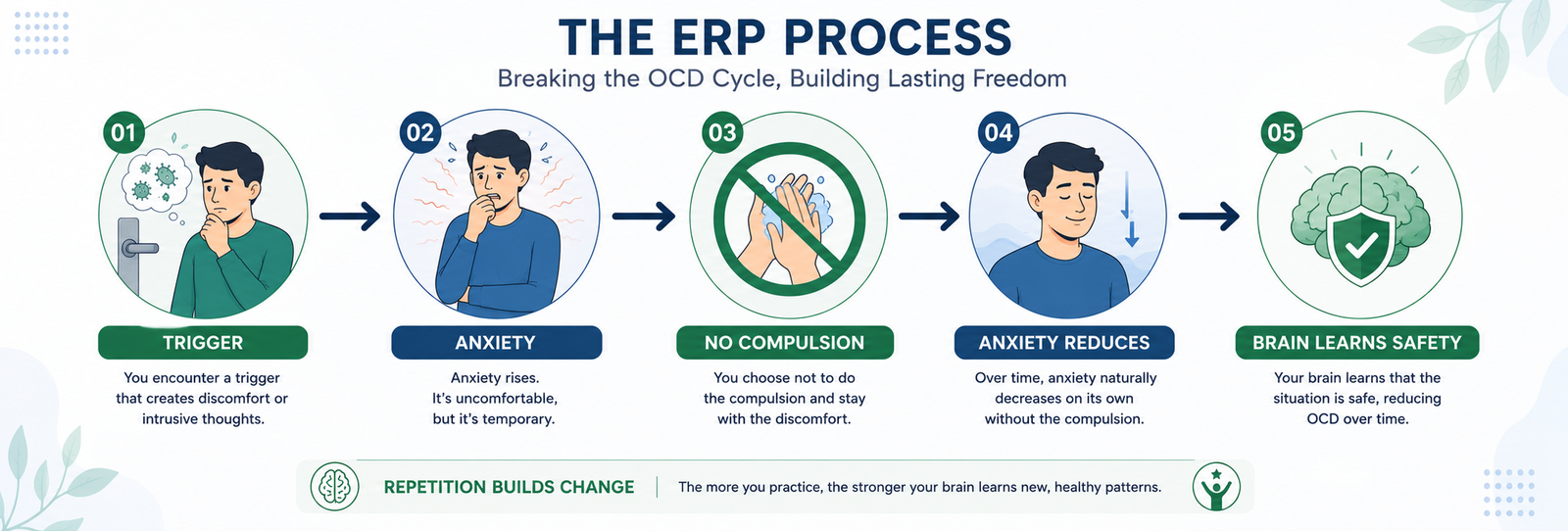
The fact is that ERP therapy is considered the gold standard in psychology when it comes to treating OCD. Such therapy is about exposing oneself to situations that trigger feelings of anxiety without performing any compulsions.
How does ERP work?
ERP follows three key steps:
- Identify obsessive triggers.
- Gradually face these situations.
- Resist performing compulsions.
Repeated practice allows new learning to replace the OCD cycle.
Example of ERP Contamination OCD
Trigger: Touching a door handle. Old Response:
- Immediately washing hands repeatedly. ERP Response:
- Touch the handle and gradually delay handwashing under therapist guidance. Outcome:
- Anxiety naturally decreases without the ritual.
ERP Cycle
| Traditional OCD Cycle | ERP Recovery Cycle |
|---|---|
| Obsession | Trigger |
| Anxiety | Controlled Exposure |
| Compulsion | Response Prevention |
| Temporary Relief | Anxiety Naturally Declines |
| OCD Strengthens | OCD Weakens |
Clinical Pearl
ERP does not make intrusive thoughts go away immediately. Instead, it alters the brain's response to them, thereby lessening the emotion associated with them and the need for compulsions.
Patient Takeaway
ERP teaches an important life skill:
"I can tolerate uncertainty without performing compulsions."
How Can CBT Assist People Suffering from OCD?
CBT assists patients suffering from OCD in understanding how the interactions between thoughts, feelings, and behavior can cause OCD. Along with ERP, CBT is an effective method of learning new ways of reacting to intrusions instead of resorting to repetitive actions.
CBT Techniques Used in OCD
- Psychoeducation
- Cognitive restructuring
- Behavioural experiments
- Acceptance of uncertainty
- Reducing reassurance seeking
- Thought challenging
- Relapse prevention planning
CBT Benefits
| Benefit | How It Helps |
|---|---|
| Understand OCD | Learn why symptoms occur. |
| Challenge Thinking Patterns | Reduce catastrophic interpretations. |
| Reduce Anxiety | Build confidence and reduce fear over time. |
| Improve Coping | Develop healthier responses to intrusive thoughts. |
| Prevent Relapse | Maintain long-term progress and symptom control. |
Clinical Pearl
CBT does not seek to prevent the occurrence of intrusive thoughts. Instead, it involves the realization on the part of the patient that thoughts are simply mental events and do not need to be acted upon or ritualized.
How Does Psychotherapy Support OCD Recovery?
Psychotherapy is useful for helping people gain insights about their illness, develop coping strategies, decrease family accommodation, become resilient, and ultimately achieve recovery apart from ERP and medications.
- Emotional distress
- Shame
- Family conflict
- Relationship difficulties
- Workplace functioning
- Building confidence
- Preventing relapse
Benefits of Psychotherapy
- Better understanding of OCD
- Improved coping skills
- Reduced shame
- Family education
- Better communication
- Greater confidence
- Long-term recovery planning
Psychotherapy Benefits
| Focus Area | Benefit |
|---|---|
| Emotional Support | Reduces distress |
| Family Work | Reduces accommodation |
| Behaviour Change | Supports ERP |
| Coping Skills | Helps to build resiliency |
| Relapse Prevention | Long-term recovery |
Clinical Pearl
Effective treatment for OCD usually consists of the patient and his or her family. Educating family about OCD helps minimize reinforcement of the compulsions.
What If Obsessive-Compulsive Disorder Does Not Respond to Conventional Therapy?
The majority of patients react well to treatment with exposure and response prevention, cognitive behavioral therapy, and medications. However, there is always a certain percentage of patients who do not respond to this kind of therapy at all. In this case, it is up to the psychiatrist to reconsider their treatment and so forth.
- Diagnostic accuracy
- Medication adherence
- ERP intensity and quality
- Co-existing depression or anxiety
- Autism spectrum disorder
- ADHD
- Substance use
- Medical conditions
Advanced Treatment Options
Depending on the individual's clinical situation, options may include:
- Optimising medication
- Intensive ERP programmes
- Day-care or structured therapy programmes
- Multidisciplinary treatment
- Neuromodulation techniques such as rTMS, where supported by evidence and considered clinically appropriate for selected individuals
IMPORTANT NOTE
rTMS is not regarded as first-line treatment for OCD. It may be considered in carefully selected patients after specialist assessment, often as an adjunct to standard evidence-based treatments rather than a replacement.
Treatment for OCD Could Help You Feel Better
If the obsession and compulsion interfere with your daily routine, a proper assessment and treatment may be very useful.
Book an OCD Assessment at Headspace Mind Clinic and find out how to treat your condition with the help of ERP, CBT, drugs, and other approaches if necessary.
What Lifestyle Changes Can Help in Managing OCD?
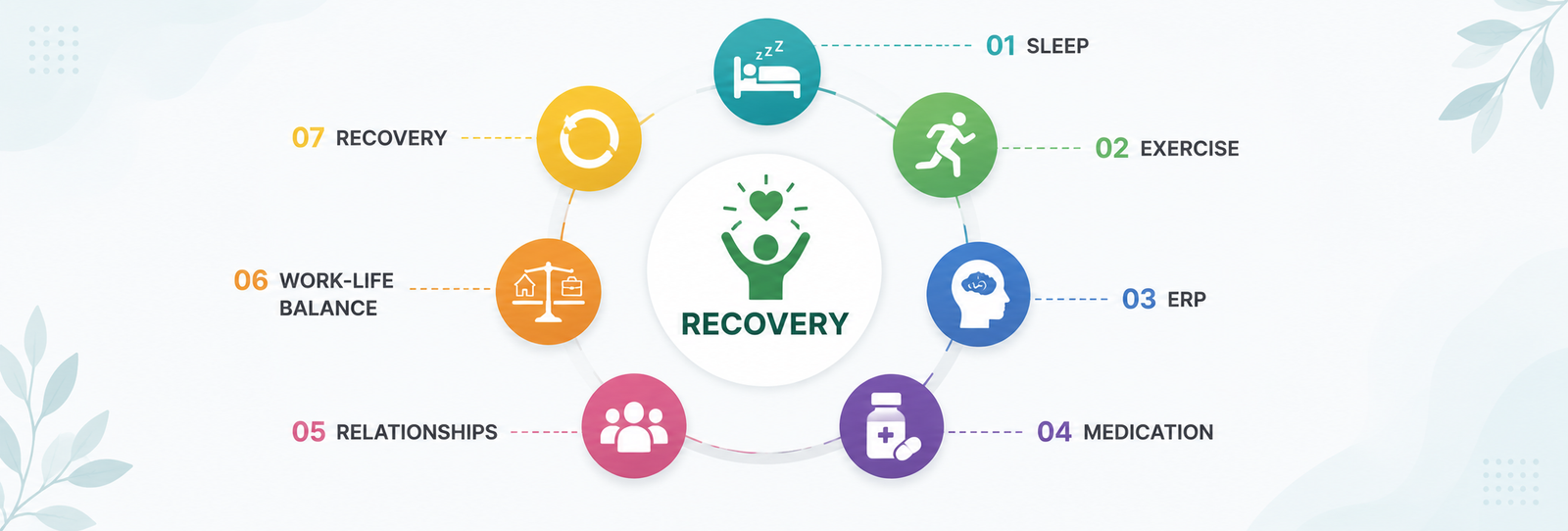
Lifestyle modifications will not substitute for evidence-based OCD therapy; however, they may increase the well-being of the patient and aid in their recovery in the future. Good sleep, physical exercise, stress reduction, healthy relationships, and practicing ERP techniques will improve the chances of treatment success.
Health Behaviors That Promote Recovery
- Follow your ERP practice plan consistently.
- Keep a consistent sleeping pattern.
- Exercise regularly, at least five days a week.
- If caffeine triggers your anxiety, it is better to avoid it.
- Avoid taking any sort of alcoholic drinks or drugs.
- Be mindful without getting into compulsions.
- Hobbies are a must.
- Stay social.
- Keep up with scheduled follow-ups.
INFORMATION TABLE
| Healthy Habit | Potential Benefit |
|---|---|
| Sleeping Regularly | Good emotional control |
| Exercising | Lowers anxiety levels and enhances moods |
| ERP Practice | Weakens compulsive behaviours |
| Healthy Eating | Maintains general health |
| Healthy Habits | Fosters self-confidence |
| Family Support | Encourages recovery |
Clinical Pearl
However, the avoidance of anxiety is not the aim of therapy. There can be no recovery unless one learns how to deal with the anxiety without falling back on compulsions.
Patient Takeaway
Recovery is built through many small daily choices rather than one breakthrough.
What Is the Recovery Timeline for OCD?
The recovery process for OCD patients tends to be a gradual one and differs from person to person. Most patients tend to see great improvement with continued treatment, though not within weeks but over several months. Early identification, adherence to ERP, medications, and follow-ups can ensure better results.
- Less time spent performing compulsions
- Reduced anxiety intensity
- Better tolerance of uncertainty
- Improved concentration
- Increased confidence
- Better relationships
- Improved work and academic performance
Typical Recovery Journey
| Stage | What Patients May Notice |
|---|---|
| First Few Weeks | Better understanding of OCD and its treatment. |
| 1–3 Months | Reduced compulsions and increased confidence in managing symptoms. |
| 3–6 Months | Improved daily functioning, reduced anxiety, and better emotional control. |
| Long-Term | Relapse prevention, sustained recovery, and improved quality of life. |
Is OCD Curable?
Many people manage to see a great reduction in symptoms and live an active and satisfying life.
Some people can still get intrusive thoughts from time to time, but those thoughts lose their disturbing nature and stop controlling one's daily routine.
The goal of treatment is management and recovery.
Clinical Pearl
Successful OCD treatment changes how the brain responds to intrusive thoughts—not necessarily whether those thoughts ever occur.
What Are the Ways to Avoid OCD Relapse?
It refers to continuing the recommended treatment, consistent use of ERP procedures, knowledge of signs of relapse, good habits, follow-up procedures, and seeking professional help once symptoms start to come back.
WARNING SIGNS
Seek review if you notice:
- Increasing intrusive thoughts
- Returning compulsions
- More reassurance seeking
- Increased avoidance
- Poor sleep
- Declining confidence
- Family involvement in rituals increasing
- Reduced work or academic functioning
Prevention Strategies
| Strategy | Benefit |
|---|---|
| Continue ERP Skills | Maintains progress |
| Get Involved in Follow-ups | Intercepts the problem |
| Healthy Life Habits | Enhances resilience |
| Family Education | Reduces accommodation |
| Stress Management | Reduces symptom worsening |
Clinical Pearl
A temporary exacerbation of the signs and symptoms does not indicate that treatment is not working. An early start will assist patients in regaining control before OCD becomes a major issue again.
When should you seek urgent professional help?
If your Obsessive Compulsive Disorder symptoms become too much to bear, hinder you from taking care of yourself, or are along with depression or suicidal thoughts, then a psychiatric evaluation is urgently needed.
SEEK PROMPT EXPERT ASSISTANCE IF THERE ARE
- The thought process becomes very troublesome.
- Compulsion takes up the major portion of the day.
- Hard to eat, sleep, take care of yourself.
- Depression develops alongside OCD.
- There are thoughts of self-harm or suicide.
- The use of alcohol or drugs for coping.
- Fear for your own safety among family members.
In case of any threat of self-injury or suicide, get immediate medical help.
Why Should You Choose Headspace Mind Clinic For OCD Management in Delhi?
The approach to treating OCD at Headspace Mind Clinic follows scientific understanding and entails a holistic treatment process that comprises psychiatric assessment, ERP, CBT, pharmacological therapy, family therapy, and personalized treatment planning.
OUR APPROACH
- Comprehensive Psychiatric Evaluation
- OCD-focused Assessment
- Exposure and Response Prevention
- Cognitive Behavioural Therapy
- Medication Management
- Clinical Psychology Services
- Family Education
- Long-Term Follow-up
- Confidential Consultations
SERVICES OFFERED
| Service | Availability |
|---|---|
| Psychiatric Consultation | ✓ |
| ERP Therapy | ✓ |
| CBT | ✓ |
| Clinical Psychology | ✓ |
| Medication Management | ✓ |
| Family Counselling | ✓ |
| Follow-up Care | ✓ |
Take the First Step Towards Managing OCD
Book an appointment now at Headspace Mind Clinic.
FREQUENTLY ASKED QUESTIONS
Many individuals have experienced tremendous improvements in their health state and can lead normal lives because of proper medication. Although these people still have experiences with thoughts coming to invade their minds, it has become a lot easier for them to handle such thoughts.
It is common knowledge that Exposure and Response Prevention (ERP) treatment is considered one of the most successful methods, and it is part of Cognitive Behavioral Therapy (CBT).
The severity may differ at times, but OCD will always be a persistent disease and can cause harm to you while performing tasks like work and studies.
Intrusive thoughts are regarded as a symptom of OCD, but the individual does not have an urge to act on such intrusive thoughts. These are unwanted and distressing thoughts that go against the individual’s own personal beliefs and moral values.
This answer differs from one person to another, as well as depends on the severity of the disorder, how it responds to therapy, and how often it is done. Some people experience improvements within several months of regular practice.
Yes. OCD can occur in childhood and adolescent years.
No. Stress itself doesn’t lead to OCD; however, it may exacerbate the symptoms or cause an episode in a person with certain vulnerability.
Yes. The knowledge of the disorder by family members can help with the recovery process.
Medically Reviewed By
Dr. Deepak Verma
Consultant Psychiatrist & Neuropsychiatrist, Founder & Medical Director, Headspace Mind Clinic
ABOUT THE MEDICAL REVIEWER
PUBLICATION INFORMATION
| Item | Details |
|---|---|
| Author | Headspace Mind Clinic Editorial Team |
| Medical Reviewer | Dr. Deepak Verma |
| Last Medical Review | July 2026 |
| Next Scheduled Review | January 2027 |
| Content Version | 1.0 |
| Content Type | Evidence-Based Patient Education |
EDITORIAL POLICY
- Evidence-based clinical information
- Review by a qualified psychiatrist
- Patient-friendly language
- Periodic review and updates
- Clear distinction between educational information and personalised medical advice
REFERENCES
- Indian Psychiatric Society (IPS) Clinical Practice Guidelines
- National Institute for Health and Care Excellence (NICE)
- American Psychiatric Association (APA)
- World Health Organization (WHO)
- National Institute of Mental Health (NIMH)
- PubMed-indexed systematic reviews and meta-analyses