Autism Spectrum Disorder (ASD) Treatment in Delhi
Trust Signals


Quick Facts
| Quick Fact | Details |
|---|---|
| Condition | Autism Spectrum Disorder (ASD) |
| Typical Onset | Early childhood |
| Core Areas | Social communication, behaviour, sensory processing |
| Management | Individualised therapies + family support + educational planning |
| Location | Delhi NCR |
What Is Autism Spectrum Disorder?
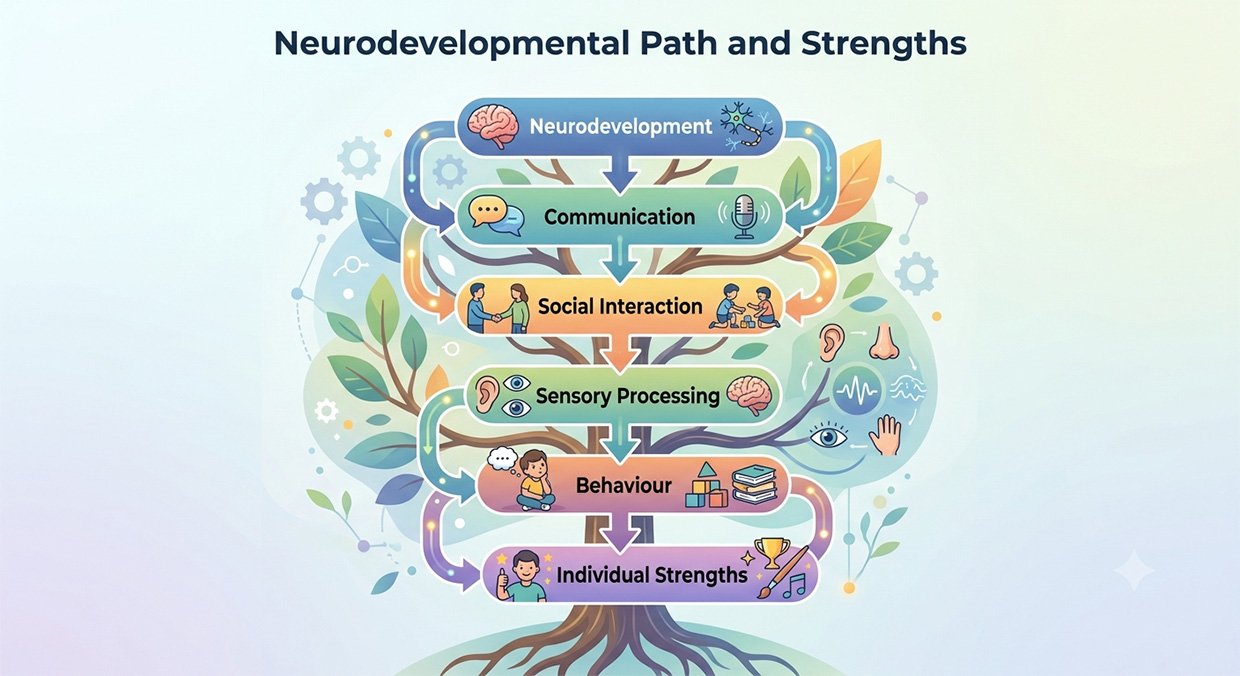
Autism Spectrum Disorder is a neurodevelopmental condition that impacts the way an individual communicates, socializes, perceives sensations, and behaves throughout his or her life. It is referred to as a "spectrum" because everyone has his or her own unique strengths, weaknesses, and support requirements. Autism is not a psychiatric disorder, nor is it caused by bad parenting or vaccinations.
- Social communication
- Social interaction
- Behaviour
- Sensory experiences
- Flexibility of thinking
- Interests and routines
These distinctions are present from childhood, but in some cases, people are only identified as autistic later in life when social and communication demands increase.
Autism cannot be brought on by the way you raise your child or the way we lived our lives (emotionally neglectful parenting, vaccinating, or depriving children of love). There are decades of evidence that proves without any doubt that vaccines don’t cause autism.
Rather than trying to find a “cure” for autism, modern intervention aims to focus on and build strengths of each individual.
Why Is It Called a Spectrum?
No two individuals with autism are the same.
- Speak fluently
- Excel academically
- Need minimal day-to-day support
Others may:
- Have delayed speech
- Experience intellectual disability
- Need considerable help with daily tasks
- Being extremely detail-oriented
- Strong memory
- Deep knowledge in areas of interest
- Logical thinking
- Creativity
- Pattern recognition
Myth vs Reality
| Myth | Reality |
|---|---|
| Autism results from poor parenting | Autism is a neurodevelopmental disorder |
| Vaccines trigger autism | There is no scientific evidence linking vaccines to autism |
| All people with autism have intellectual disabilities | Intellectual capacities differ greatly in people with autismm |
| Autism can be "outgrown" | Autism is lifelong, although skills and independence can improve with appropriate support |
| Every autistic child behaves the same way | Autism presents differently in every individual |
Clinical Pearl
Autism is a condition that affects neurodevelopment but not because of bad parenting or insufficient discipline. Early detection and individualized intervention strategies can make a great contribution to the development of communication and adaptive skills.
“Patient Takeaway
Each autistic person is different from the other. It is not about changing who the person is but providing him/her with the necessary support, tools, and surroundings that can allow him/her to achieve his/her maximum potential.”
What Are the Early Signs and Symptoms of Autism?
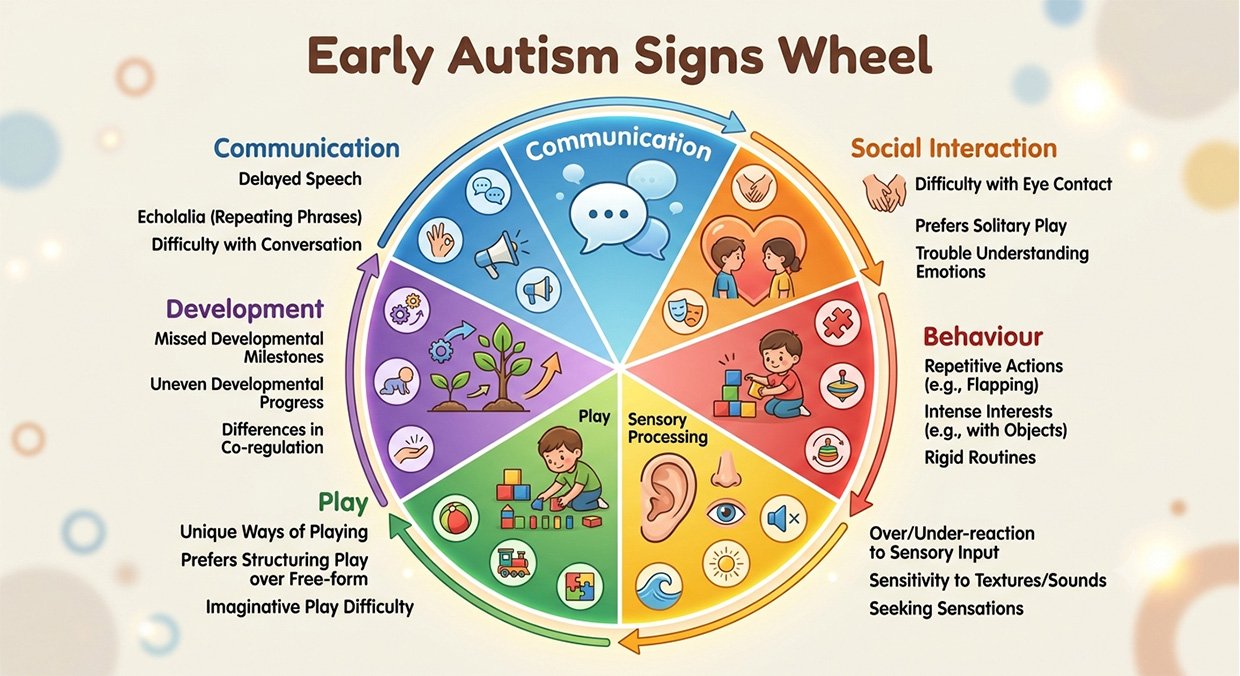
Possible early symptoms of Autism Spectrum Disorder may include late language development, reduced eye contact, decreased reaction to their own names, difficulties with social interactions, repetition, strong interests, sensory issues, and a need for predictable routine. However, not all children with autism have all these symptoms and symptoms differ from person to person.
However, signs of autism become apparent in early childhood years, but diagnosis may vary with age.
Although some have developmentally unique characteristics that are evident by 18 to 24 months, there are those who are identified far later in life because their disorder is relatively mild or they have taken adaptive steps.
Parents noticing their child grow up differently than other children or siblings is hardly a rare thing.
Social Communication Differences
Children may:
- Respond inconsistently to their name
- Make limited eye contact
- Prefer playing alone
- Find it difficult to share interests
- Have difficulty understanding facial expressions
- Use fewer gestures
- Experience delayed language development
Behavioural Characteristics
Some autistic children may:
- Repeat movements such as hand flapping or rocking
- Become distressed by changes in routine
- Develop highly focused interests
- Repeat words or phrases (echolalia)
- Prefer predictable activities
- Arrange toys or objects in specific ways
Sensory Differences
Many autistic people have sensory differences.
Such as:
- Sensitivity to loud sounds
- Sensitivity to bright lights
- Strong reactions to certain clothing textures
- Limited tolerance for particular food textures
- Seeking movement or deep pressure
- Fascination with spinning objects or visual patterns
Emotional and Functional Differences
Children may also experience:
- Difficulty expressing emotions
- Challenges understanding social situations
- Difficulty making friends
- Emotional distress during unexpected changes
- Different play styles
- Challenges adapting to new environments
Common Signs of Autism
| Area | Examples |
|---|---|
| Social Communication | Limited eye contact, delayed language development, problems with conversation skills |
| Behaviour | Strange movements, rituals, repetitive actions |
| Sensory Processing | Over-sensitive to sound, texture, light, smell |
| Emotional Regulation | Hard time dealing with change, feeling overwhelmed |
| Play & Learning | Varied Play & Social Skills |
Clinical Note
Autistic people can be intelligent, even highly intelligent, and not necessarily have delayed speech. Others require substantial communication and daily living support. Because autism presents differently in every person, diagnosis should always be based on a comprehensive developmental assessment rather than a single symptom.
Consider a Professional Developmental Evaluation If Your Child:
● Takes no notice of his/her name by 12 months.
● Has limited eye contact or social interaction.
● Has delayed speech or loss of previously acquired language.
● Repeats behaviours or movements frequently.
● Becomes extremely distressed by changes in routine.
● Shows unusual sensory sensitivities.
● Fails to communicate and interact with people consistently.
It is possible for early evaluation to provide appropriate treatment for children at crucial times in their development.
What Causes Autism Spectrum Disorder?
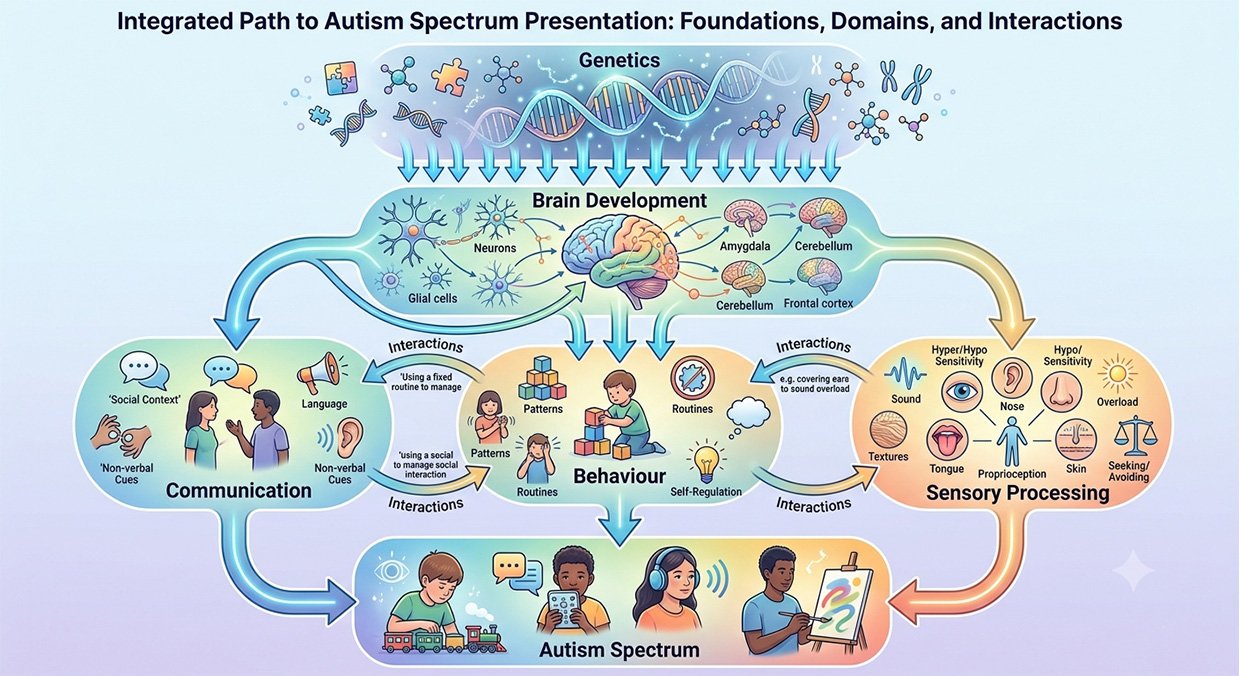
Autism spectrum disorder arises from a combination of neurodevelopmental and genetic issues. Scientific research shows that autism is related to brain developmental issues and genetic susceptibility. Poor parenting, emotional neglect, or vaccinations in children do not cause autism spectrum disorder.
The first question asked by most parents when faced with an autism diagnosis is:
“Why has this happened?”
Based on current scientific knowledge, Autism Spectrum Disorder results from the interaction of various genetic, biological, and neurodevelopmental factors. No one factor can cause autism in all children.
Autism arises at an early stage of the brain development process, which usually happens even before birth. It may be unnoticed until the baby grows into infancy or toddlerhood.
It is important to know that autism is not caused by parenting or lack of attention and love, or screen time or vaccinations. This is the consensus, and it is informed by science.
Rather than searching for culprits, we need to get to know what a child needs.
Genetics
Separate studies have proven that genetics is a major contributor to Autism Spectrum Disorder.
Experiments with twins and families have revealed the following:
- There is usually a family history of autism.
- Multiple genes contribute to autism.
- Different individuals may have different genetic influences.
- The majority of autistic children have no family history of autism.
Genetics makes people susceptible to autism but doesn’t predetermine its form in everyone.
Brain Development
Research suggests that autistic brains develop differently in areas responsible for:
- Social communication
- Language
- Sensory processing
- Learning
- Executive functioning
- Emotional regulation
Environmental Influences
Certain prenatal and early developmental factors may influence risk alongside genetics.
Examples include:
- Advanced parental age
- Premature birth
- Low birth weight
- Certain pregnancy complications
Current Understanding of Autism
| Scientific Evidence | What We Know |
|---|---|
| Genetics | Strong contributor |
| Brain Development | Differences begin early in development |
| Neurodevelopment | Lifelong condition |
| Vaccines | No evidence that vaccines cause autism |
| Parenting Style | Does not cause autism |
Clinical Pearl
Autism is a natural variation in human neurodevelopment. Understanding that autism has a scientific basis will help to remove stigma and enable the family to focus on therapy and progress instead of self-blame.
What Are the Different Levels of Autism Spectrum Disorder?
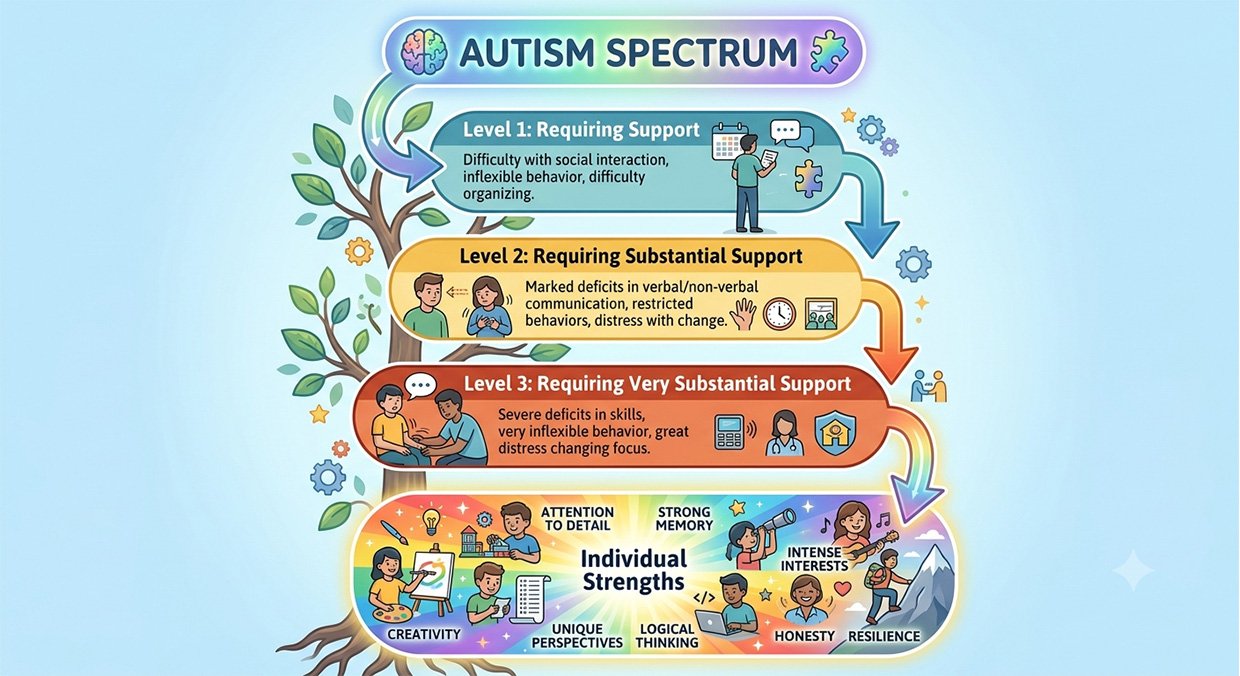
Autism Spectrum Disorder is characterized by three different support needs levels. These levels assist in providing information on the level of support that an individual might need in their day-to-day living. The level reflects support needs rather than intelligence or future potential.
Every autistic individual is unique.
Some children only need help now and then, while others need more intensive help with communication, learning, or activities of daily life.
Today’s diagnostic criteria define autism in terms of the amount of help needed, not labels like “mild” or “severe.”
Needs for support can vary over time with skill acquisition and changes in environment.
Level 1 – Requiring Support
Individuals may:
- Communicate verbally
- Attend mainstream education
- Experience social communication difficulties
- Need support with organisation or flexibility
- Find changes in routine challenging
Level 2 – Requiring Substantial Support
Individuals may:
- Have more noticeable communication differences
- Require structured teaching
- Need assistance in social situations
- Display repetitive behaviours more frequently
- Require ongoing therapeutic support
Level 3 – Requiring Very Substantial Support
Individuals may:
- Have limited spoken communication
- Require significant daily assistance
- Experience pronounced sensory differences
- Need intensive educational and behavioural support
- Require continuous supervision in some settings
Important Note:
Support levels describe current support needs and should not be viewed as permanent labels.
Many individuals develop new skills and greater independence with appropriate intervention and support.
Autism Support Levels
| Level | Typical Support Needs |
|---|---|
| Level 1 | Requires support for communication and daily functioning |
| Level 2 | Requires substantial support across multiple settings |
| Level 3 | Needs very significant assistance on a day-to-day basis |
Clinical Pearl
The need for assistance is no indication of intelligence, personality, or potential success. People differ widely in their individual abilities within the spectrum of autism.
Autism in Girls
Autism diagnosis in girls usually comes later than in boys due to the fact that girls usually have milder social communication challenges, different interests, and higher levels of masking. Due to this, some girls first receive diagnoses of anxiety, depression, or social challenges.
Traditionally, the study of autism has mostly centered around male patients.
With better understanding, healthcare providers now know that autism in females can look different.
And women and girls with autism tend to learn to copy their peers in an effort to fit into social situations – which has been called ‘masking.’
Although masking may make differences less apparent, it can also lead to significant emotional exhaustion.
Common Characteristics in Girls
Girls may:
- Copy classmates' social behaviour
- Have fewer obvious repetitive behaviours
- Develop highly focused interests that appear socially acceptable
- Experience significant anxiety
- Become emotionally exhausted after social interaction
- Struggle internally despite appearing socially successful
Clinical Note
Girls may not reveal their challenges, making it difficult for teachers and parents to recognize their needs. An assessment of the developmental process takes into account both external actions and internal feelings.
Autism in Boys vs Girls
| Boys | Girls |
|---|---|
| Earlier diagnosis | Frequently diagnosed later |
| More visible repetitive behaviours | More subtle repetitive behaviours |
| Less social masking | Greater masking and camouflaging |
| Behaviour more easily recognised | Anxiety may become the presenting concern |
How Is Autism Spectrum Disorder Diagnosed?
Autism Spectrum Disorder is diagnosed through a thorough developmental evaluation done by qualified health care providers. Diagnosis is done through the developmental history, observation, communication, social interactions, behaviors, and functioning. There is no blood test or brain scan that can diagnose autism.
Autism can be diagnosed by a thorough process of assessment, and not by any one question or test.
It involves finding out how the child communicates, interacts, learns, plays, and adjusts in various environments.
If at all possible, information is gathered from several sources, such as parents, caretakers, teachers, and direct clinical observation.
Components of an Autism Assessment
The evaluation may include:
- Detailed developmental history
- Pregnancy and birth history
- Medical history
- Family history
- Language development
- Social communication assessment
- Behavioural observation
- Adaptive functioning assessment
- School information
- Psychological assessment when indicated
Standardised Assessment Tools
Based on the age and requirements of the child, clinicians may utilize validated measures of assessment in conjunction with clinical judgment.
These assessments assist – but do not substitute for – a thorough diagnostic assessment.
Conditions That May Resemble Autism
Certain developmental or medical disorders can have some commonalities with autism. An accurate diagnosis is important to differentiate between these disorders.
| Condition | Why It May Appear Similar |
|---|---|
| ADHD | Inattention, impulsivity, social difficulties |
| Speech and Language Disorder | Delayed communication |
| Intellectual Disability | Developmental delay |
| Social Anxiety Disorder | Challenges in interacting with people |
| Hearing Impairment | Delayed speech development |
| Selective Mutism | Limited communication in specific situations |
Autism Assessment Components
| Assessment Area | Purpose |
|---|---|
| Developmental History | Understand early milestones |
| Clinical Observation | Evaluate social communication and behaviour |
| Family Interview | Gather long-term developmental information |
| School Information | Assess functioning in educational settings |
| Psychological Testing | Evaluate cognitive and adaptive functioning where appropriate |
| Medical Evaluation | Evaluate the presence of co-morbid medical conditions |
Important Note:
While online questionnaires can assist in identifying children that need further evaluation, it is important to note that they will not diagnose Autism Spectrum Disorder in children. Diagnosis should always be done through an appropriate developmental evaluation.
Are You Worried About Your Child’s Development?
If you feel that there are changes in your child in terms of communication, social skills, repetitive behavior, and sensory response, then an early assessment of your child will clear things up for you.
How Is Autism Spectrum Disorder Treated?
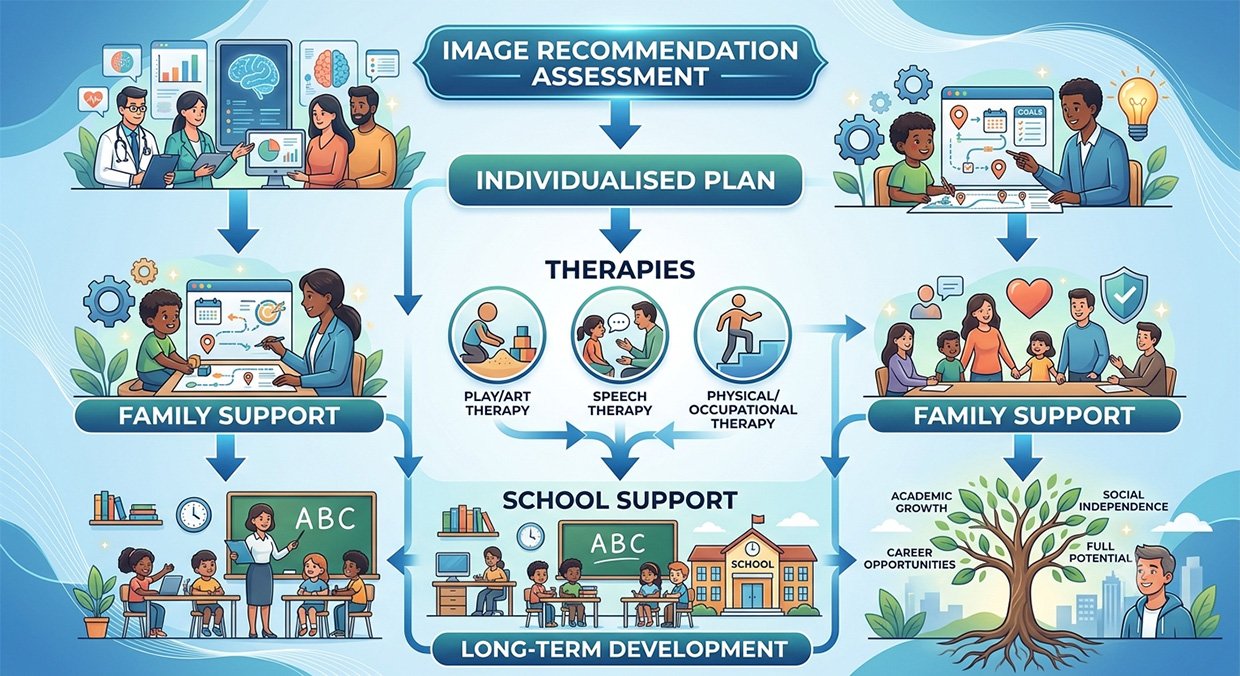
Autism Spectrum Disorder is treated by a personalized program which involves developmental therapy, speech and language therapy, occupational therapy, behavioral interventions, education therapy, family counseling, and management of any other existing medical or psychological disorders. There is no one type of therapy that will suit all patients, and this must be tailored to fit individual needs.
Autism is a neurodevelopmental disorder that persists throughout life.
The goal of the treatment is not to “cure” autism or to change the personality of an individual. Rather, the treatment of autism has evolved to focus on enabling autistics to communicate, function, become independent, and have a better quality of life.
Each autistic child is unique.
While some autistic children require help in communicating, there are others who require intervention for sensory integration, behavioral issues, emotional problems and even adaptive skills.
Treatment must always be individualized following a developmental assessment of the child.
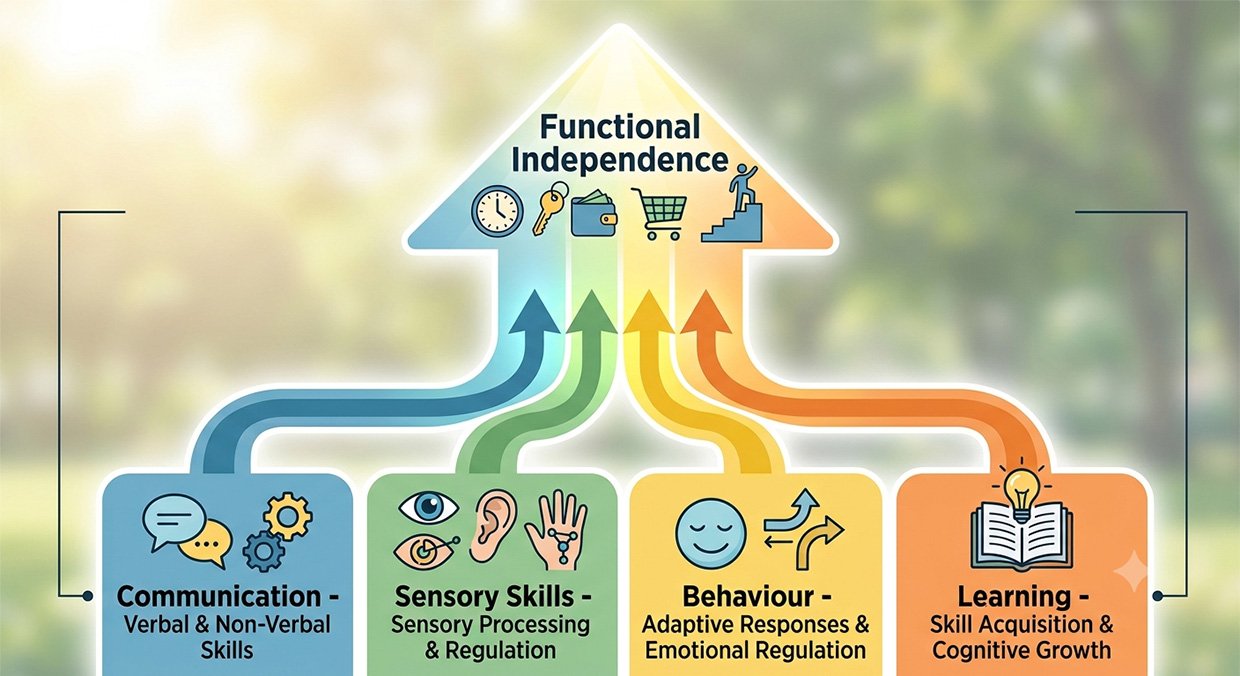
Goals of Autism Intervention
Treatment aims to help individuals:
- Improve communication skills
- Strengthen social interaction
- Develop daily living skills
- Enhance emotional regulation
- Improve learning and participation
- Increase independence
- Support family wellbeing
- Improve overall quality of life
Components of Autism Management
| Intervention | Purpose |
|---|---|
| Speech & Language Therapy | Improve communication |
| Occupational Therapy | Improve sensory processing and daily living skills |
| Behavioural Interventions | Teach adaptive skills and reduce challenging behaviours |
| Parent Training | Help families support development at home |
| Educational Support | Improve school participation |
| Psychiatric Care | Manage co-occurring conditions when present |
Clinical Pearl
Intervention for autism will be most effective when the intervention is personalized, evidence based, family-centered, and tailored according to the development stage of the individual.
Evidence-Based Therapies for Autism Spectrum Disorder
There are a number of treatments that can help people with autism to learn about communication, adaptive behavior, social skills, and independence. Treatment is based on several factors including age and development of the person among others.
A particular type of treatment may not necessarily work for all autistic children in the same way.
Rather, treatments are recommended based on full development evaluation and regular review to see if the treatment is suitable.
Parents need to be wary of programmes that promise to cure autism since such claims are scientifically unfounded.
Speech and Language Therapy
Speech and language therapy addresses the challenges some children have with:
- Expressive language
- Understanding language
- Conversation skills
- Social communication
- Alternative communication methods when required
Occupational Therapy
Occupational therapy is focused on enhancing involvement in daily life activities. Support can be provided in the following areas (but not limited to):
- Fine motor skills
- Handwriting
- Self-care
- Feeding skills
- Sensory regulation
- Daily routines
- Play skills
Behavioural Interventions
Behavior-based interventions can assist in teaching children:
- Communication skills
- Daily living skills
- Social interaction
- Emotional regulation
- Adaptive behaviours
Social Skills Training
Children, teenagers, and even adults may require chances for practicing:
- Conversations
- Friendship skills
- Emotional understanding
- Problem-solving
- Group participation
Common Autism Therapies
| Therapy | Main Focus |
|---|---|
| Speech Therapy | Communication |
| Occupational Therapy | Daily living and sensory regulation |
| Behavioural Intervention | Adaptive learning and functional skills |
| Social Skills Training | Peer interaction |
| Parent Training | Home-based support |
Clinical Pearl
The intervention should concentrate on increasing the communication, independence, and participation of the child, taking into account their unique personality and preferences.
Why Is Early Intervention Important?
Early intervention gives children a chance to acquire communication, socialization, learning, and adaptive skills during important periods of brain growth. Early treatment onset may support future participation and independence; however, treatments can be effective at any age.
These early phases of life are critical for brain development.
At this stage, kids learn language, how to socialize, regulate their emotions, and more at a dizzying pace.
Early interventions are a means through which these foundational areas of development can be supported. Important to this is that stated that there is never a point at which it’s “too late”.
Teenagers and even adults with autism may also need help – provided through therapy, education, job training and psychological services.
Benefits of Early Support
Early intervention may improve:
- Communication
- Language development
- Social participation
- Play skills
- Daily living abilities
- Behavioural flexibility
- School readiness
Benefits of Early Intervention
| Area | Possible Benefits |
|---|---|
| Communication | Better language development |
| Learning | Improved classroom participation |
| Behaviour | Greater flexibility |
| Daily Living | Increased independence |
| Family Wellbeing | Better understanding and confidence |
Clinical Pearl
In early intervention, strength building is emphasized instead of identity change. Regular support enables children to take part in life activities confidently.
Educational Planning and School Support
Educational support enables children with autism to be active in education, and it is able to offer answers for issues related to communication, learning, sensory processing, behaviour and social inclusion. The collaboration between family, teacher and health care professional is crucial.
School plays an important role in the development of a child.
Autistic children do well when their learning environment is tailored according to their personal needs.
Educational planning must emphasize making learning available for children instead of demanding that every child learns in the same manner.
Helpful Classroom Strategies
Teachers may help autistic children by:
- Visual schedules
- Predictable routines
- Clear instructions
- Reduced sensory distractions
- Extra processing time
- Structured transitions
- Positive reinforcement
Individualised Educational Planning
Some children may benefit from:
- Learning accommodations
- Classroom support
- Behaviour support plans
- Communication aids
- Collaboration with therapists
- Regular progress reviews
School Support Strategies
| Challenge | Helpful Support |
|---|---|
| Communication | Visual supports |
| Sensory Sensitivity | Quiet spaces |
| Organisation | Structured routines |
| Social Interaction | Guided peer activities |
| Learning | Individualised teaching strategies |
Clinical Pearl
Educational success depends not only on a child's abilities but also on how effectively the learning environment supports those abilities.
Managing Co-occurring Conditions in Autism
Some individuals with autism also have other related medical, developmental, or psychological conditions such as ADHD, anxiety disorders, sleep disorders, epilepsy, gastrointestinal problems, or intellectual disabilities. The treatment of these coexisting conditions can lead to substantial improvements in a person's functioning and quality of life.
Autism commonly presents with other health problems.
It is important to be aware of these associated health problems as they may need to be assessed and treated.
However, not all people with autism have these other problems.
ADHD
Some autistic children also have ADHD.
They may experience:
- Poor attention
- Hyperactivity
- Impulsivity
- Difficulty remaining seated
- Executive functioning challenges
Anxiety Disorders
Anxiety may present as:
- Avoidance
- Worry
- Emotional distress
- School refusal
- Increased repetitive behaviours
Sleep Difficulties
Sleep problems are common and may include:
- Difficulty falling asleep
- Irregular sleep routines
- Frequent waking
Other Co-occurring Conditions
Assessment may uncover the following:
- Intellectual disability
- Learning disorders
- Epilepsy
- Feeding difficulties
- Gastrointestinal problems
- Emotional regulation difficulties
Other Related Co-Existing Problems
| Condition | Why Assessment Matters |
|---|---|
| ADHD | May require additional intervention |
| Anxiety | Can affect participation and learning |
| Sleep Disorders | Influence behaviour and attention |
| Intellectual Disability | Guides educational planning |
| Epilepsy | Requires neurological care |
| Feeding Problems | May need nutritional or therapy help |
Clinical Pearl
Treatment of associated problems will not treat the core features of autism, but can result in substantial improvements in comfort, learning, behaviour, participation and quality of life.
“Family Takeaway
Autistic children, like all children, develop and mature at varying rates, and for that reason, comparing children is never productive. Personalized goals, patience, and celebrating success are often most effective.”
Comprehensive Autism Care at Headspace Mind Clinic
Every child with autism deserves a diagnosis that looks at more than just their difficulties, but at their strengths as well.
The Headspace Mind Clinic provides full developmental assessments, psychiatric review of any co-morbidities, family counselling and individual management to maximise the outcomes achievable for the children.
What Is the Long-Term Outlook for Autism Spectrum Disorder?
Autism Spectrum Disorder is a lifetime disorder that affects the brain and development of an individual. While there is no cure for autism, many individuals diagnosed with the condition develop communicative, educational, social, and other skills necessary for daily living through life. The prognosis depends largely on the strengths and needs of each individual.
- Will my child speak?
- Will my child go to school?
- Can my child become independent?
- What will the adult life look like?
The answer is that every person with autism has his/her own path of development.
Some individuals will need little assistance and turn out to be very independent and successful adults. Other people can still require assistance at certain times during their adult lives.
It is better not to try and predict every next step but rather help every individual reach their potential.
The process is a gradual one that occurs throughout the entire life of the person.
Positive Long-Term Outcomes May Include
Many autistic individuals achieve:
- Improved communication
- Greater independence
- Academic success
- Employment
- Meaningful friendships
- Independent or supported living
- Community participation
- Better emotional wellbeing
Recovery vs Development
| Goal | Autism Care Focus |
|---|---|
| Communication | Improve functional communication |
| Learning | Support educational development |
| Independence | Build daily living skills |
| Relationships | Improve social participation |
| Employment | Develop vocational abilities |
| Quality of Life | Maximise participation and wellbeing |
Clinical Pearl
Autism should not be defined by just limitations alone. Many people suffering from autism lead fruitful lives, given adequate opportunities and support.
Supporting Autistic Adolescents and Adults
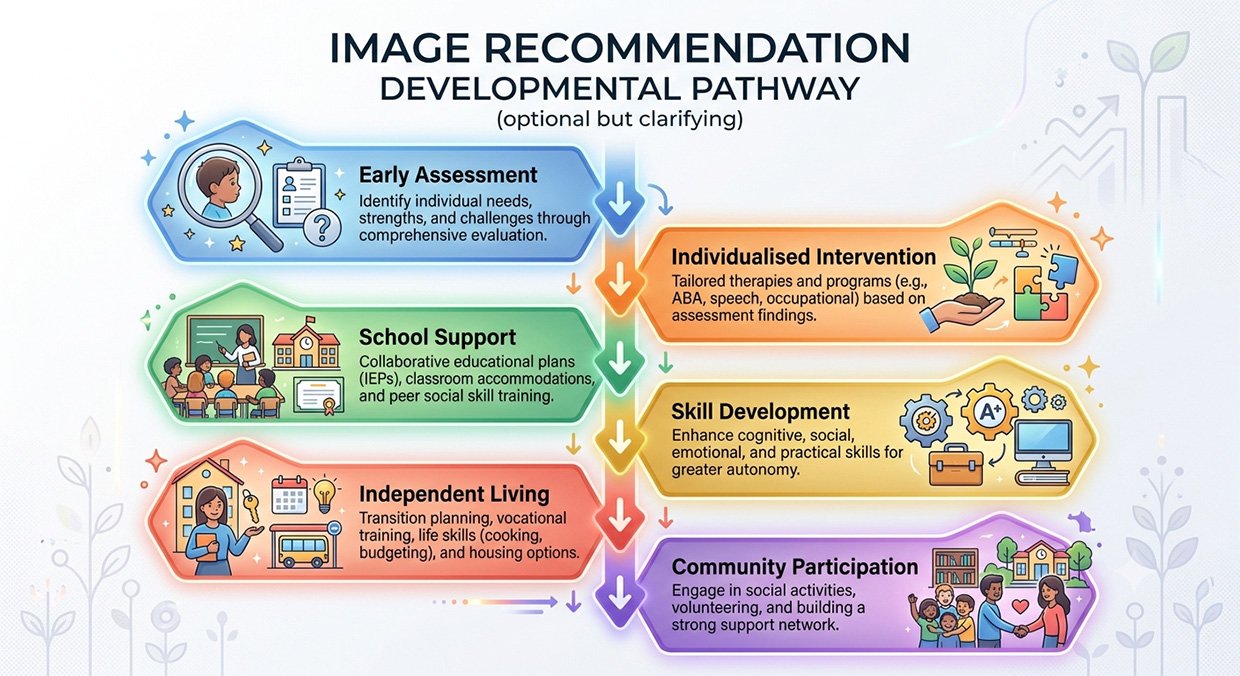
The degree of support needed may differ for people as they become adults. Teenagers and adults need assistance with education, work, living skills, emotional well-being and the move to college or employment.
- Secondary school transitions
- College admissions
- Employment
- Independent living
- Relationships
- Emotional wellbeing
- Self-advocacy
Transition to Adulthood in Adolescence
Areas that need to be addressed are:
- Career planning
- Vocational training
- Independent living skills
- Financial literacy
- Public transport skills
- Healthcare transition
- Social relationships
- Community participation
Mental Disorders in Teenagers and Adults
In addition to this, autistic teenagers and adults could be affected by:
- Anxiety disorders
- Depression
- Burnout
- Sleep difficulties
- ADHD
- Obsessive-compulsive disorder
Transition Planning
| Area | Goal |
|---|---|
| Education | Academic success |
| Employment | Meaningful work |
| Daily Living | Greater independence |
| Healthcare | Independent healthcare management |
| Relationships | Healthy social participation |
Clinical Pearl
The process of successful transition planning must be started many years prior to adulthood and must focus on the strengths, interests, and future plans of the individual.
How Can Families Help Autistic Children?
The family is an important factor contributing to the good development of an autistic child. Learning about autism, establishing routines, teaching communication, working with therapists and schools, and noticing strengths are just a few of the things that will help the family and the child for the long term.
Practical Suggestions for Parents to Help
- Keep to regular daily routines.
- Use clear and simple communication.
- Stimulate through play
- Highlight small successes.
- Collaborate with teachers and therapists
- Understand sensory preferences
- Allow additional processing time
- Support independence in daily activities.
Looking After Caregivers
Having an autistic child can be fulfilling but also physically and emotionally challenging.
Parents should also prioritise:
- Adequate rest
- Emotional support
- Parent support groups
- Sharing caregiving responsibilities
- Professional guidance when needed
Helpful vs Less Helpful Approaches
| Helpful | Less Helpful |
|---|---|
| Consistent routines | Frequent unpredictable changes |
| Positive encouragement | Constant criticism |
| Cooperation with experts | Assessment/Intervention delay |
| Respect for sensory requirements | Subjecting kids to overwhelming experiences |
| Recognizing improvements | Comparing children with other kids |
Clinical Pearl
Many myths about autism can lead to a delay in identification and the stigmatization of people with autism. Science shows that autism is a disorder of the mind, not caused by bad parenting, vaccines, or neglect.
Common Myths About Autism
Autism is subject to numerous myths which can lead to delayed diagnoses and stigma. The scientific evidence suggests that autism is a neurodevelopmental disorder and not caused by any particular type of parenting, vaccinations, or lack of discipline.
Autism Myths vs Facts
| Myth | Fact |
|---|---|
| Vaccines cause autism. | There is no demonstrated causative association between vaccines and autism. |
| Autism is due to poor parenting. | Parenting does not play any role in autism. |
| All autistic individuals are intellectually disabled. | Intellectual capabilities are highly variable. |
| Autistic individuals cannot have friends. | Many autistic individuals desire friends but communicate differently. |
| Autism is curable | The condition is lifelong; however, therapy helps with communication and independence. |
| All autistic children are alike. | Each autistic individual is unique. |
“Patient Takeaway
Acceptance, understanding and intervention based on science have much better outcomes than the myths, blame and false hope for a cure.”
When Should You Consult a Child Psychiatrist?
If there is an ongoing struggle with any of the above aspects, it is recommended that the parents get a proper evaluation from a professional. The child psychiatrist can also evaluate if there are any other associated issues like ADHD, anxiety, sleep issues, and behaviour problems.
Seek Professional Assistance If
- Your child shows poor language development.
- Eye contact and social interaction remain limited.
- Repetitive behaviours interfere with daily life.
- Sensory sensitivities significantly affect functioning.
- Behaviour becomes increasingly difficult to manage.
- School reports persistent developmental concerns.
- Anxiety, aggression, self-harm, or sleep disorders emerge.
- There are concerns regarding the development of your child.
Why Choose Headspace Mind Clinic for Autism Spectrum Disorder Assessment and Support in Delhi?
Headspace Mind Clinic provides complete evaluation for Autism Spectrum Disorder, developmental assessments, psychiatric treatment for comorbidities, parental counseling, and individualized intervention strategies. Our methods are based on research and geared towards the development of communication and independent skills.
Our Approach
- Comprehensive Developmental Assessment
- Child & Adolescent Psychiatric Evaluation
- Parent Guidance and Psychoeducation
- Management of ADHD, Anxiety, Sleep and Behavioural Concerns
- Individualised Intervention Planning
- Collaboration with Schools and Therapists
- Long-Term Follow-up
- Confidential Consultations
Services Offered
| Service | Available |
|---|---|
| Autism Assessment | ✓ |
| Child Psychiatric Consultation | ✓ |
| Parent Counselling | ✓ |
| ADHD Assessment | ✓ |
| Behavioural Guidance | ✓ |
| Long-Term Follow-up | ✓ |
Early Awareness Leads to Better Options
Phone:
Website:
Frequently Asked Questions (FAQ)
Medically Reviewed By
Dr. Deepak Verma
Consultant Psychiatrist & Neuropsychiatrist, Founder & Medical Director, Headspace Mind Clinic
ABOUT THE MEDICAL REVIEWER
PUBLICATION INFORMATION
| Item | Details |
|---|---|
| Author | Headspace Mind Clinic Editorial Team |
| Medical Reviewer | Dr. Deepak Verma |
| Last Medical Review | July 2026 |
| Next Scheduled Review | January 2027 |
| Content Version | 1.0 |
| Content Type | Evidence-Based Patient Education |
EDITORIAL POLICY
- Based on current evidence and recognised clinical guidelines
- Medically reviewed by a qualified psychiatrist
- Written using respectful, person-centred language
- Regularly updated as new evidence becomes available
- Intended for education and should not replace personalised medical advice
REFERENCES
This page should be reviewed against current guidance from:
- National Institute for Health and Care Excellence (NICE)
- American Psychiatric Association (APA)
- American Academy of Child and Adolescent Psychiatry (AACAP)
- World Health Organization (WHO)
- Indian Psychiatric Society (IPS)
- Indian Academy of Pediatrics (IAP)
- PubMed-indexed systematic reviews on Autism Spectrum Disorder