
Supportive therapy: steady help when life feels too much
Supportive therapy (supportive psychotherapy) is a talking therapy that focuses on helping you cope with current difficulties, rebuild confidence and keep daily life going. The therapist listens closely, offers reassurance and practical guidance, and helps you use the strengths and support you already have.
It is often used during a crisis, alongside medicines for depression or psychosis, for people living with long-term mental or physical illness, and for family caregivers. It can stand alone or be combined with more structured therapies such as CBT.
For education only. This page explains a treatment in general terms. It is not medical advice and cannot replace a consultation with a qualified doctor who knows your history. Whether a treatment suits you can only be decided after an assessment. If you are in danger or think you may harm yourself, call 112 or Tele-MANAS 14416 now.
What supportive therapy involves
Supportive therapy is less about digging into the past and more about getting through the present with greater stability. Typical elements:
- A safe, non-judgemental space to talk
- Understanding what is happening and why
- Practical problem-solving for current difficulties
- Strengthening coping skills you already use
- Encouragement to keep up routine, sleep and activity
- Support with sticking to treatment and follow-up
- Involving family, when you want that
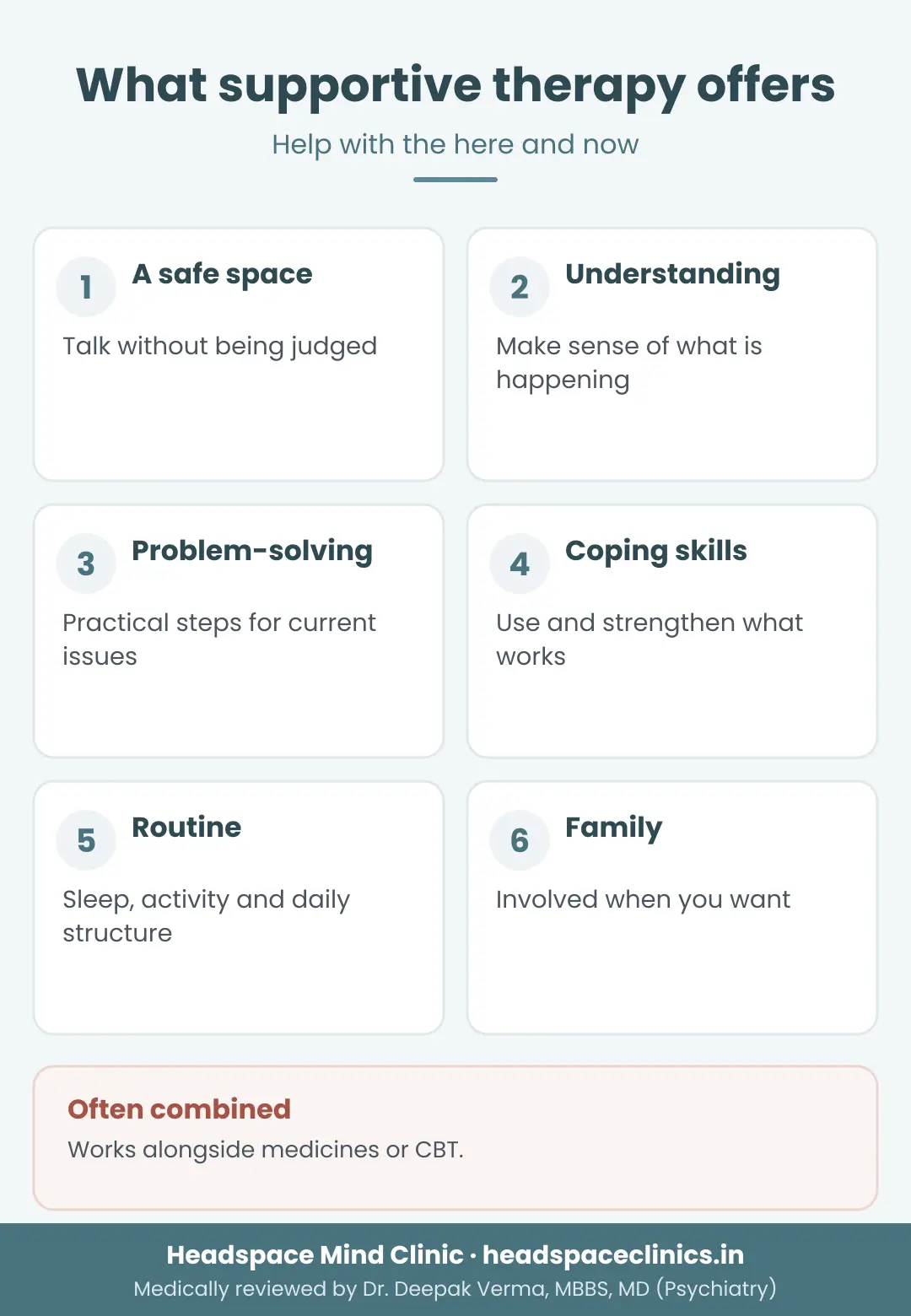
What supportive therapy offers. Tap the image to enlarge.

I often recommend supportive therapy when someone needs emotional support, help coping with a difficult life situation or guidance in managing ongoing psychological distress. Unlike structured therapies such as CBT, supportive therapy places greater emphasis on emotional validation, strengthening coping abilities and helping people feel understood. It can also help families understand how to support someone without increasing pressure or conflict.
Dr. Deepak Verma, MBBS, MD (Psychiatry), Consultant Psychiatrist, Headspace Mind Clinic
Who supportive therapy can help
Supportive therapy can be useful for:
- people going through a crisis or major life change, such as bereavement, divorce or job loss
- depression and anxiety, especially alongside medicines
- people living with long-term conditions such as schizophrenia or bipolar disorder, to stay well and keep daily life on track
- people coping with serious physical illness
- family caregivers of someone with a mental illness or dementia
- people who are not ready for, or do not need, a more intensive therapy
Research on supportive therapy for depression shows it helps many people, although structured therapies such as CBT tend to have stronger effects for specific conditions. Your clinician will suggest the approach that fits your goals.
Why supportive therapy helps
The relationship with a therapist who understands and does not judge is one of the most consistent ingredients of benefit in any talking therapy. Supportive therapy builds on this: it reduces isolation, restores hope, and helps you use practical coping strategies so that problems feel more manageable. It is often part of a wider plan:
Talking therapy matched to your needs
Structured help for specific problems
Support for the whole family
Treatment and support
Long-term care and recovery
Support for patients and carers
What to expect from supportive therapy
Flexible and paced to your needs.
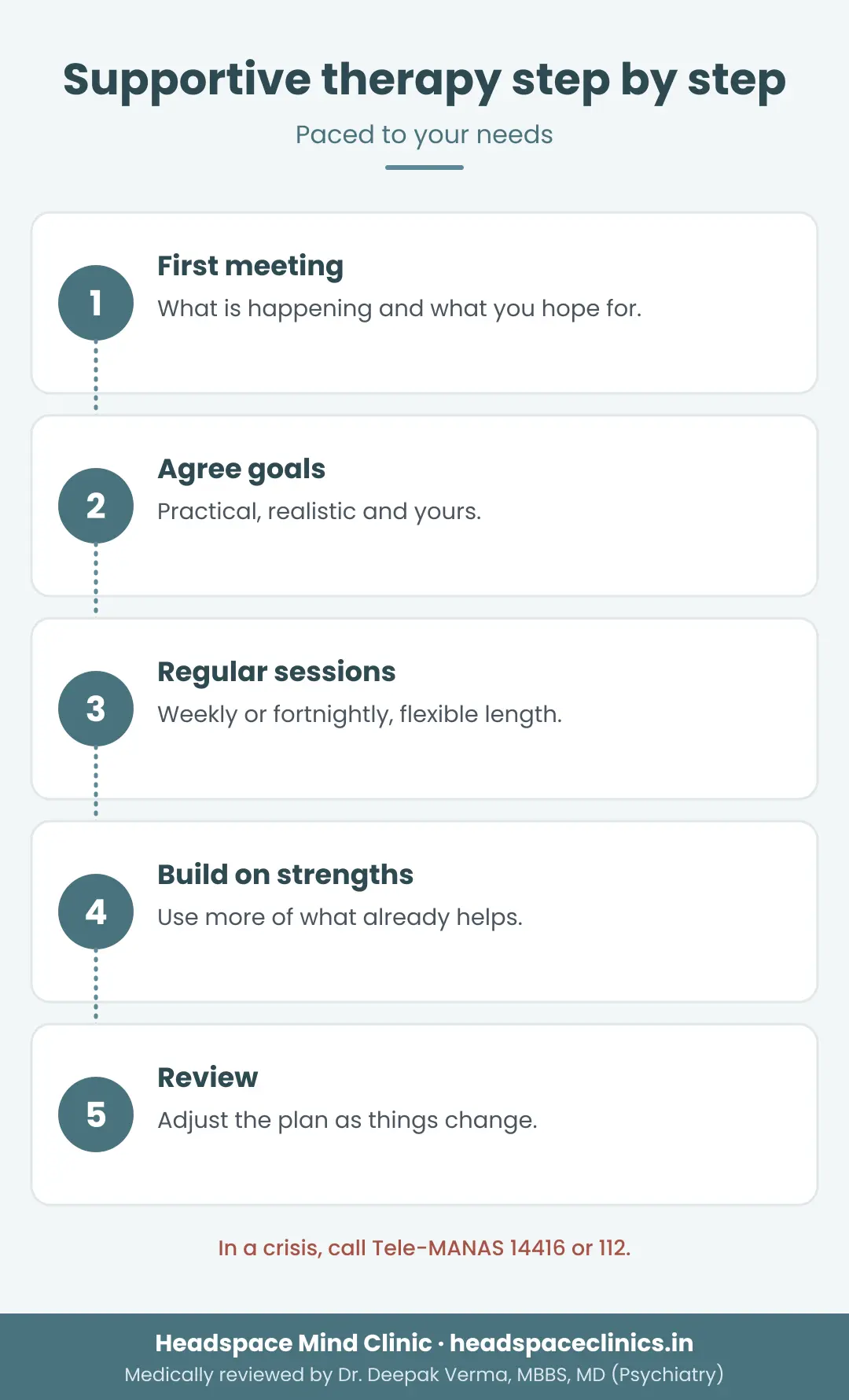
Supportive therapy step by step. Tap the image to enlarge.
First meeting. You talk about what is happening now, what you are struggling with and what you hope to get from therapy.
Agreeing goals. Goals are practical and realistic, such as sleeping better, managing a difficult situation or returning to work.
Regular sessions. Usually weekly or fortnightly at first. The number of sessions is flexible and depends on your situation.
Building on strengths. The therapist helps you notice what is already helping and use it more.
Review. Progress is reviewed regularly. If a more structured therapy would help, this is discussed with you.
Is supportive therapy right for me?
Supportive therapy may suit you if you are going through a hard time and need steady support, if you are taking medicines for a mental health condition and want help coping day to day, or if you are caring for someone who is unwell.
If you have a specific problem such as OCD, panic disorder or PTSD, a more targeted therapy may work better, and supportive therapy can sit alongside it. An assessment helps decide.
Supportive therapy at Headspace Mind Clinic
Supportive therapy is offered by our clinical psychologists and is often combined with psychiatric care, so medicines and talking therapy work together.
- Assessment to find the right approach for you
- Sessions with our clinical psychologists
- Medicines, when needed, prescribed and reviewed by our psychiatrist
- Video sessions for existing clients
सपोर्टिव थेरेपी क्या है? (Supportive therapy in Hindi)
सपोर्टिव थेरेपी एक बातचीत वाली थेरेपी है जो मुश्किल समय में सहारा देती है। थेरेपिस्ट ध्यान से सुनते हैं, समझाते हैं, व्यावहारिक सलाह देते हैं और आपकी अपनी ताक़त और सहारे को मज़बूत करने में मदद करते हैं। यह संकट, लंबी बीमारी, दवाइयों के साथ इलाज और देखभाल करने वाले परिवारजनों के लिए उपयोगी है। यह जानकारी केवल शिक्षा के लिए है। अपॉइंटमेंट के लिए कॉल करें: +91 99711 66040
Founder of Headspace Mind Clinic. Dr. Verma sees patients at our Paschim Vihar, Rohini and Narela clinics. About our psychiatry service →
Three clinics in West and North Delhi
Psychiatrist consultation fee: ₹1,800 at Paschim Vihar and Rohini, ₹500 at Narela. All appointments are scheduled; please call or book online.
Frequently asked questions
They overlap. Supportive psychotherapy is delivered by a trained clinician as part of mental health care, with clear goals and links to psychiatric treatment where needed.
It varies. Some people need a few sessions during a crisis; others with long-term conditions benefit from regular sessions over months. This is agreed with you and reviewed regularly.
Yes, if you want them to. Family involvement can be very helpful, especially for long-term conditions.
For some people it is. For others it works best with medicines or a more structured therapy such as CBT. Your clinician will discuss the options.
Video sessions are available for existing clients. The first appointment takes place at one of our clinics.
Yes. What you discuss is confidential, except in rare situations where there is a serious risk to your life or someone else’s, which your therapist would discuss with you.
Related symptom guides
Explore other treatments
PsychotherapyCognitive behavioural therapy (CBT)Dialectical behaviour therapy (DBT)Exposure and response prevention (ERP)Family therapyBehaviour therapyMindfulness therapyClinical psychologist in DelhiPsychological assessmentsNeuromodulation (rTMS, tDCS)rTMS for depressionrTMS for OCDrTMS for anxietyAntidepressants explainedDepression medication guideAnti-anxiety medicinesAnxiety medication guide
Book a consultation
Choose your preferred clinic and our team will call you to confirm a time. This form is for appointments only; please do not use it in an emergency.
References
- Winston A, Rosenthal RN, Roberts LW. Learning Supportive Psychotherapy: An Illustrated Guide. 2nd ed. Washington, DC: American Psychiatric Association Publishing; 2020.
- Cuijpers P, Driessen E, Hollon SD, et al. The efficacy of non-directive supportive therapy for adult depression: a meta-analysis. Clinical Psychology Review. 2012;32(4):280–291.
- National Institute for Health and Care Excellence (NICE). Depression in adults: treatment and management (NG222). nice.org.uk
- Tele-MANAS, National Tele Mental Health Programme, Ministry of Health and Family Welfare, Government of India. Helpline 14416.
Medically reviewed by Dr. Deepak Verma (MBBS, MD Psychiatry; DMC Reg. No. 37616). Last reviewed: 15 November 2026.
Medical disclaimer. The information on this page is provided for general educational purposes only. It is not medical advice and is not intended to diagnose, treat, cure or prevent any condition. Reading this page or using the self-check does not create a doctor–patient relationship with Dr. Deepak Verma or Headspace Mind Clinic. Please consult a qualified doctor about any symptom, diagnosis or treatment, and do not start, stop or change any medicine without talking to the doctor who prescribed it. Do not ignore professional advice, or delay seeking it, because of something you have read here. Symptoms, causes and responses to treatment differ from person to person, and no particular result is promised. Links to other websites are given for reference only, and we are not responsible for their content. If you think you or someone else may be facing a medical or mental health emergency, call 112, call Tele-MANAS on 14416 (free, 24×7) or go to the nearest hospital emergency department.