
rTMS Therapy in Delhi
Trust Strip




Quick Facts
| Item | Details |
|---|---|
| Service | Repetitive Transcranial Magnetic Stimulation (rTMS) |
| Procedure Type | Non-Invasive Brain Stimulation |
| Admission | Outpatient |
| Anaesthesia | Not Required |
| Conscious During Procedure | Yes |
| Session Duration | Varies depending on protocol |
| Available At | Headspace Mind Clinic |
Note: The number of sessions and procedure depends on the nature of the condition and the customized treatment program.
What is rTMS Therapy?
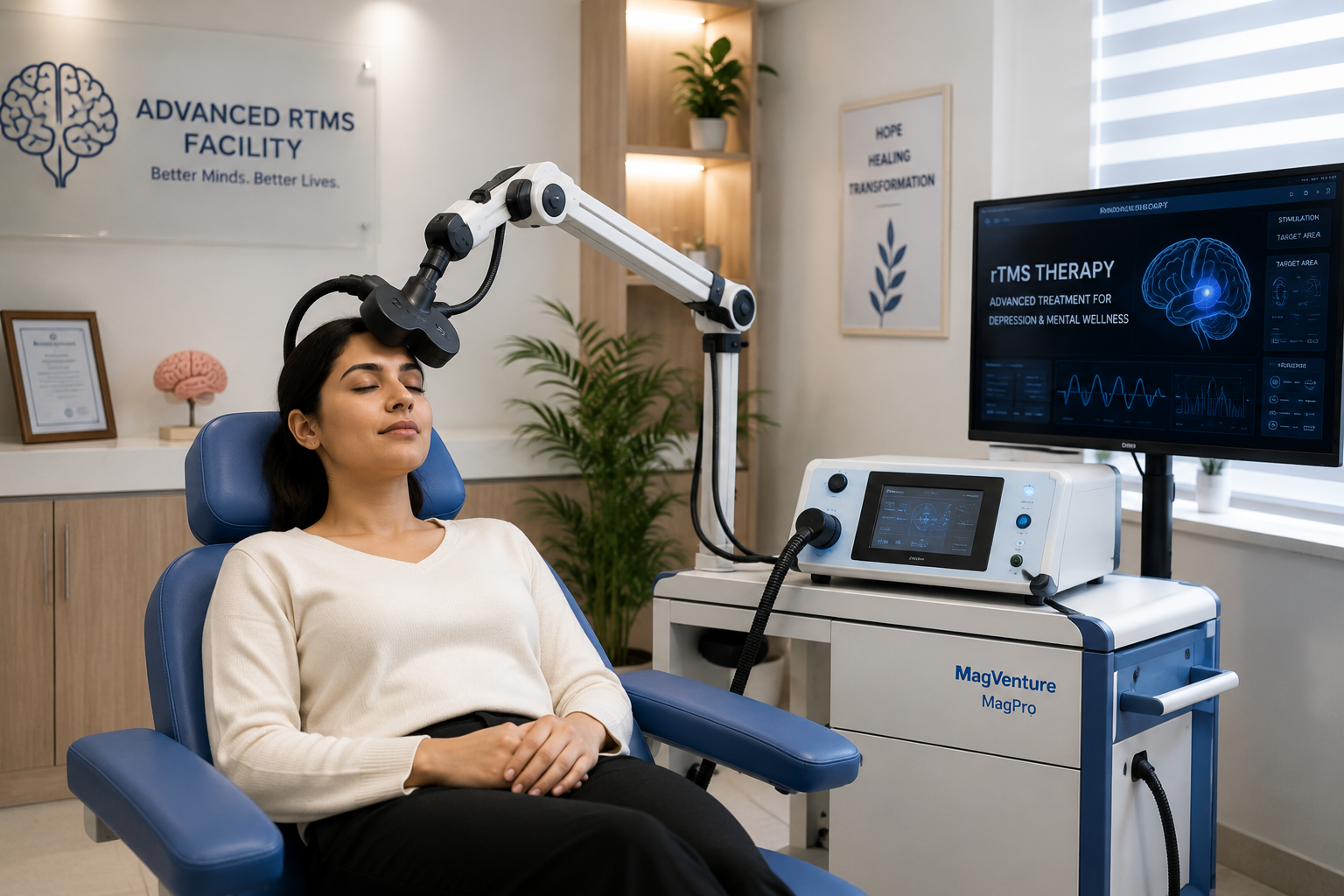
Repetitive Transcranial Magnetic Stimulation (rTMS) refers to a new technology of non-invasive treatment whereby magnetic waves are used to stimulate particular areas of the brain that are responsible for moods, behavior, and cognitive functions. This procedure is carried out with the patient awake and does not involve any surgery.
- Non-invasive
- Performed on an outpatient basis
- Conducted while the patient is awake
- Does not require anaesthesia
- Enables patients to resume their normal activities after the treatment session
How Does rTMS Work?
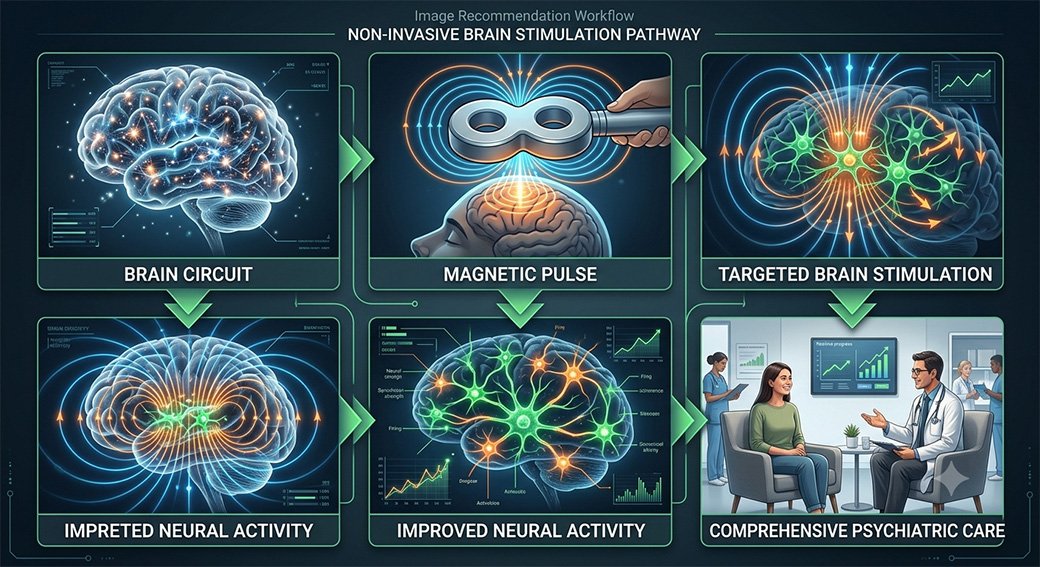
The electromagnetic coil is positioned on the scalp over predetermined parts of the brain.
Electric impulses are produced through magnetic pulses delivered by the device to the brain tissues.
This causes changes in brain activity and helps correct abnormal brain functions related to mood regulation and other psychiatric problems.
Is rTMS the Same as Electroconvulsive Therapy (ECT)?
| rTMS | ECT |
|---|---|
| No anaesthesia required | Requires anaesthesia |
| Patient remains awake | Patient is asleep |
| Does not intentionally induce seizures | Controlled therapeutic seizure is part of treatment. |
| Done on an outpatient basis | Conducted in the hospital |
| Magnetic stimulation without anesthesia | Stimulation with electrical energy under anesthesia |
Deciding to use one over another is dependent on the diagnosis, condition of the patient, medical history, and so forth.
Clinical Pearl
The rTMS treatment is one that is conducted only after undergoing a thorough psychiatric evaluation, which helps to decide if the treatment is suitable for the particular individual.
“Patient Takeaway
The rTMS treatment is not an alternative to psychiatric treatment; it is just one part of the treatment that will help to achieve better results.”
Who Can Benefit from rTMS Therapy?
rTMS can be recommended for people who have certain psychiatric disorders following a psychiatric assessment. The technique is usually mentioned in instances where symptoms remain even though medication is taken, if medications cause side effects, or if there is a need for a non-invasive and evidence-based treatment option.
You May Be a Candidate If
- You have persistent symptoms despite recommended treatment.
- You are unable to tolerate certain medications because of side effects.
- You are looking for a non-invasive treatment option.
- Your psychiatrist believes neuromodulation may be clinically appropriate.
- You wish to discuss all evidence-based treatment options before making a decision.
Conditions Where rTMS May Be Considered
Depending on current clinical evidence and individual assessment, rTMS may be considered in selected patients with:
- Depression
- Obsessive-Compulsive Disorder
- Selected anxiety-related conditions
- Some other neuropsychiatric disorders in which there is sufficient scientific basis for its use
Conditions Managed
Each card links to the corresponding flagship condition page.
- Depression Treatment in Delhi
- Anxiety Treatment in Delhi
- Schizophrenia Treatment in Delhi (adjunctive use only where clinically appropriate)
- Insomnia Treatment in Delhi (when associated with underlying psychiatric illness)
- OCD Treatment in Delhi
- Bipolar Disorder Treatment in Delhi (where appropriate discussion exists)
- Addiction Treatment in Delhi (selected situations)
rTMS May Be Considered For
| Situation | Why Assessment Matters |
|---|---|
| Persistent symptoms | Evaluate additional treatment options. |
| Medication intolerance | Explore alternative approaches |
| Partial improvement | Consider augmentation strategies |
| Complex treatment history | Individualized planning |
Clinical Pearl
Not all people who suffer from depression, OCD, or any other psychiatric disorder require rTMS treatment. Proper selection of patients is crucial for both safety and efficacy of the therapy.
How Can rTMS Therapy Help?
The objective of rTMS treatment is to enhance the functioning of particular brain networks that play a role in moods, behaviors, and thinking. When rTMS is used as one of the components of an overall therapy program, it can be useful for symptom relief and recovery.
Potential Benefits
Based on individual characteristics and the specific diagnosis, treatment may be designed to assist with:
- Reduction in depressive symptoms
- Improvement in emotional regulation
- Better daily functioning
- Enhanced quality of life
- Improved engagement in psychotherapy
- Decreased severity of symptoms
An Integrated Treatment Approach
At Headspace Mind Clinic, rTMS is viewed as one component of comprehensive psychiatric care. Treatment planning may include:
- Psychiatric consultation
- Medication management (when indicated)
- Cognitive Behavioural Therapy
- ERP Therapy (for OCD)
- Psychological support
- Lifestyle interventions
- Regular follow-up
Wondering Whether rTMS Is Right for You?
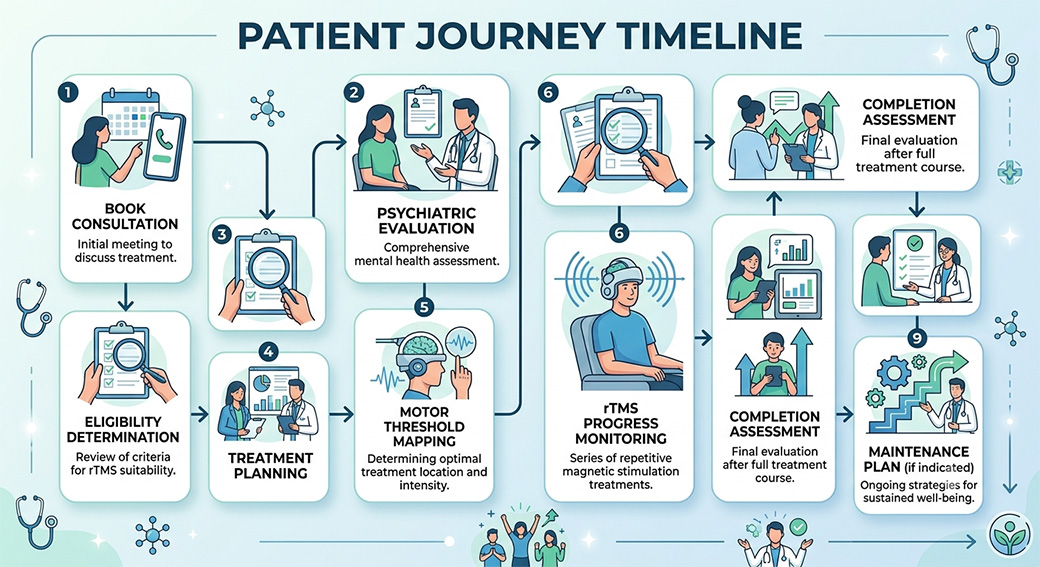
Your rTMS Journey at Headspace Mind Clinic
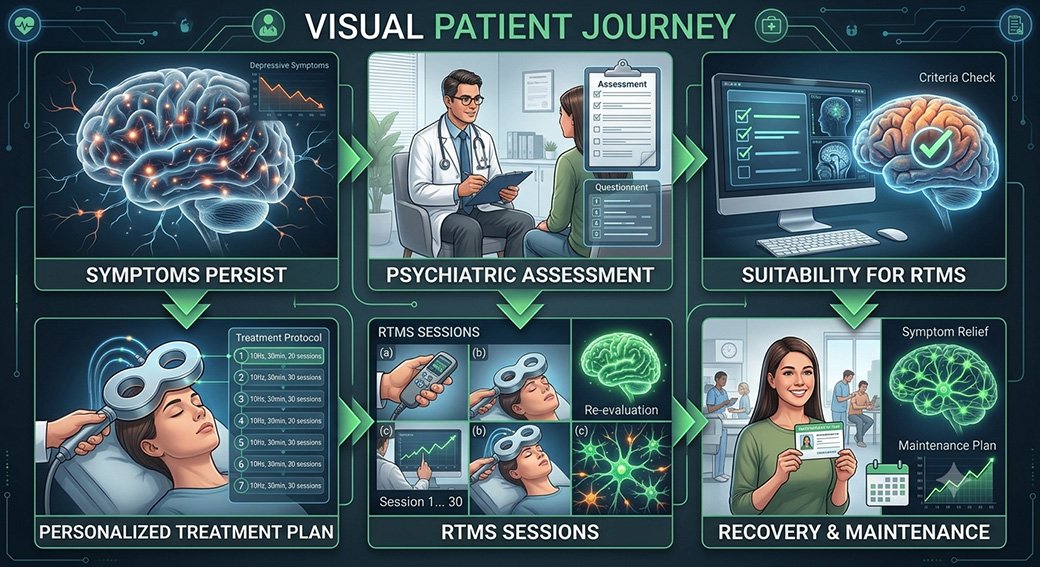
The rTMS treatment process starts with a thorough evaluation of one’s mental health in order to see if it is right for you. If suitable, an individualized treatment plan is created, followed by a series of outpatient rTMS sessions with regular monitoring of progress and ongoing clinical review.
Clinical Pearl
Successful rTMS treatment begins with accurate diagnosis—not simply with access to the machine. Patient selection is one of the most important determinants of clinical outcomes.
Who Is Eligible for rTMS Therapy?
Eligibility for rTMS is assessed through a thorough psychiatric and medical evaluation. The decision depends on the individual’s diagnosis, history of treatment, symptoms, medical history, medications, and overall clinical suitability, instead of being based on any one test.
During the Eligibility Assessment, Your Psychiatrist May Review
- Current psychiatric diagnosis
- Duration and severity of symptoms
- Previous medication trials
- Previous psychotherapy
- Response to earlier treatments
- Current medications
- Medical illnesses
- Neurological history
- Previous brain surgery or trauma (where relevant)
- Treatment goals and expectations
Conditions Commonly Evaluated Before Recommending rTMS
Assessment may include consideration of:
- Major Depressive Disorder
- Obsessive-Compulsive Disorder
- Anxiety disorders
- Other psychiatric conditions where evidence supports
Eligibility Assessment
| Assessment Area | Why It Matters |
|---|---|
| Diagnosis | Confirms appropriate indication |
| Symptom Severity | Guides treatment planning |
| Previous Treatment | Determines next therapeutic step |
| Medical History | Ensures safety |
| Medication Review | Identifies important considerations |
| Patient Goals | Supports shared decision-making |
Clinical Pearl
The goal of assessment is not simply to determine whether someone can receive rTMS, but whether rTMS is the most appropriate treatment option at that stage of care.
What Happens Before Starting rTMS?
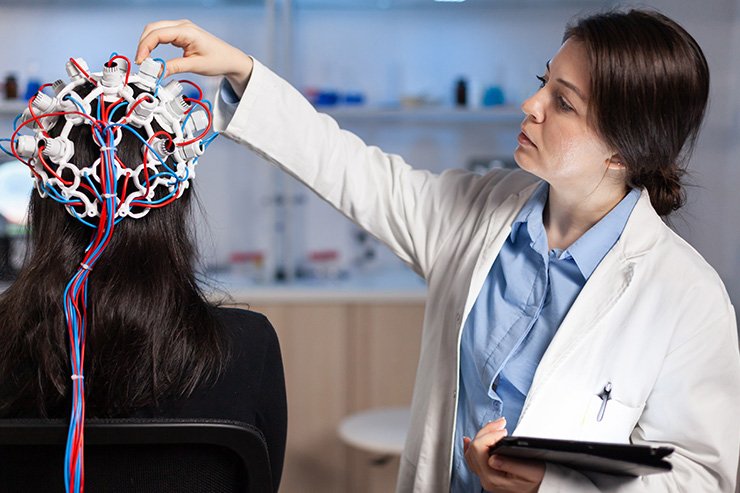
Before your first session of treatment, the psychiatrist will conduct an assessment and explain the process. The psychiatrist will answer any of your queries, obtain consent, and formulate a treatment protocol for you. An assessment of motor thresholds will be done next.
- Expected treatment schedule
- Potential benefits
- Possible side effects
- Safety precautions
- Follow-up visits
- Treatment goals
Motor Threshold Mapping
Amongst the most crucial pre-treatment activities is motor threshold mapping.
Treatment Planning
The psychiatrist decides on:
- Target brain region
- Stimulation intensity
- Frequency of sessions
- Overall treatment protocol
- Clinical monitoring schedule
Before Treatment Begins
| Step | Purpose |
|---|---|
| Psychiatric Evaluation | Confirm diagnosis |
| Medical Review | Assess suitability |
| Consent | Shared decision-making |
| Motor Threshold | Individualize treatment |
| Treatment Planning | Develop personalized protocol |
Clinical Pearl
Individualized treatment planning is a hallmark of evidence-based rTMS care.
What Happens During an rTMS Session?
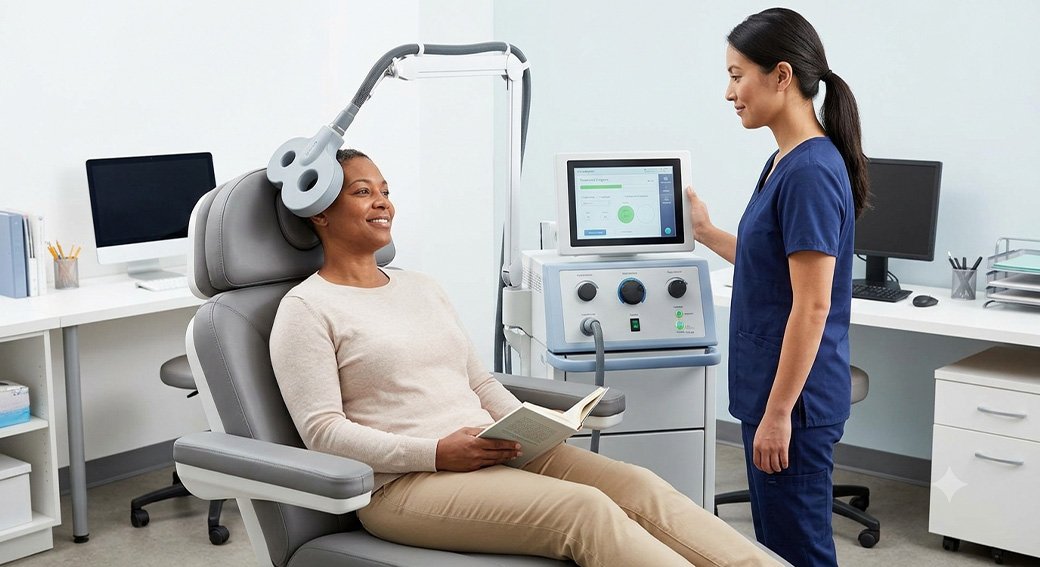
The rTMS process starts with the patient being comfortably seated and placing the coil against their scalp. The magnetic pulses are applied in a controlled manner as per the patient’s individual treatment plan. The patient stays awake during the process and can get back to their routine activities soon.
A Typical Session
During treatment:
- You remain fully awake.
- You sit comfortably in a treatment chair.
- The magnetic coil is positioned over the planned treatment area.
- Controlled magnetic pulses are delivered.
- Clinical staff monitor your comfort throughout the session.
- Gentle tapping sensations
- Mild scalp discomfort
- Twitching of facial muscles when stimulated
After the Session
Most individuals:
- Leave the clinic shortly afterward
- Resume normal daily activities
- Drive themselves home if otherwise medically appropriate
- Return to work or study
During Treatment
| What Happens | Patient Experience |
|---|---|
| Awake throughout | Yes |
| Anaesthesia | No |
| Surgery | No |
| Hospital Admission | Usually No |
| Outpatient Procedure | Yes |
Clinical Pearl
Unlike several other neuromodulation procedures, rTMS is typically performed without sedation, allowing patients to continue most normal activities after treatment.
Is rTMS Safe?
The rTMS treatment is generally recognized as being a tolerable and non-invasive one as long as it is performed by a professional under safety precautions. As any form of treatment, it can have possible risks and side effects, which should be covered at the informed consent stage.
Commonly Experienced Side Effects
Certain individuals might feel:
- Mild scalp discomfort
- Temporary headache
- Tingling at the treatment site
- Facial muscle twitching during stimulation
Rare but Important Risks
Serious adverse effects, though rare, may arise.
Who may need additional evaluation?
Extra assessment may be required for individuals with:
- Certain implanted metallic or electronic medical devices
- Previous neurological conditions
- History of seizures
- Other medical situations where individualized safety review is necessary
Safety Overview
| Safety Aspect | Summary |
|---|---|
| Non-invasive | Yes |
| Anaesthesia Required | No |
| Outpatient Treatment | Yes |
| Medical Supervision | Required |
| Individual Safety Assessment | Required Before Treatment |
Clinical Pearl
Appropriate screening before treatment is essential for maintaining the excellent safety profile of rTMS.
Frequently Asked Questions Before Starting rTMS
Thinking About rTMS Therapy?
Benefits of rTMS Therapy
One benefit of rTMS is that it provides a non-surgical and non-anesthetized therapy for certain psychological problems. When carefully selected individuals receive rTMS, there is a possibility that it will be effective in alleviating their condition and improving the quality of their lives.
The Possible Advantages of rTMS
Patients who are suitable candidates may experience:
- Improvement in depressive symptoms
- Better emotional regulation
- Decreased obsessive thoughts (select patients only)
- Increased focus and cognitive abilities
- Better quality of life
- Enhanced participation in psychotherapy
- Increased daily functioning
- Confidence in their long-term prognosis
Why Many Patients Consider rTMS
Compared with invasive procedures, rTMS offers several practical advantages.
Advantages include
- Non-invasive treatment
- No surgery
- No general anaesthesia
- Outpatient procedure
- Awake throughout treatment
- Usually able to return to normal activities afterwards
- Individualized treatment planning
- Can be integrated with medication and psychotherapy
Benefits
| Feature | rTMS Therapy |
|---|---|
| Surgery Required | No |
| Anaesthesia | No |
| Hospital Admission | Usually No |
| Outpatient Treatment | Yes |
| Awake During Procedure | Yes |
| Individualized Protocol | Yes |
| Psychiatrist Supervision | Yes |
Clinical Pearl
The purpose of rTMS is not merely reducing symptoms but rather improving functionality, emotional health, and recovery as an integral component of a broader psychiatric treatment approach.
“Patient Takeaway
rTMS will be most effective when it is included in an individualized treatment plan along with medications, psychotherapy, life-style changes, and ongoing psychiatric follow up.”
Conditions That May Be Treated with rTMS
rTMS can be employed in the treatment of various psychiatric and neurological disorders. There is variability in the strength of evidence across the disorders and personalized treatment is always done after psychiatric evaluation.
Condition Cards
Major Depressive Disorder
One of the most established clinical uses of rTMS.
Anxiety Disorders
Research is ongoing to examine the possible use of rTMS on selective anxiety disorders where the condition persists despite treatment.
Obsessive-Compulsive Disorder (OCD)
Certain patients with OCD could be eligible for the use of special rTMS protocols along with other treatments.
Other Conditions Under Specialist Evaluation
Depending on individual circumstances and evolving evidence, psychiatrists may discuss rTMS for selected patients with:
- Bipolar Depression
- Post-traumatic Stress Disorder
- Chronic Pain Syndromes
- Smoking/Nicotine Dependence
- Other neuropsychiatric disorders
| Condition | Role of rTMS |
|---|---|
| Depression | Well-established indication |
| OCD | Selected patients |
| Anxiety Disorders | Emerging evidence |
| Bipolar Depression | Selected clinical situations |
| Other Conditions | Individual assessment required |
Clinical Pearl
Every psychiatric disorder is not an indication for the use of rTMS. It depends on the nature of symptoms, previous treatment used, patient choice, safety issues, and the evidence base for every condition.
Why Early Intervention Matters
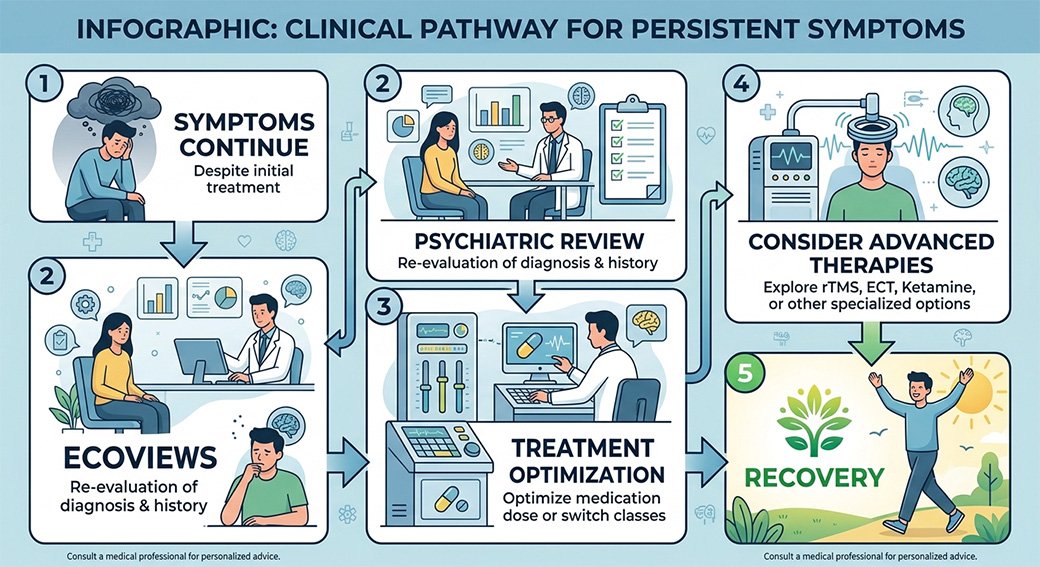
Early specialist evaluation can aid in diagnosing more accurately, minimize any delay in the commencement of treatment, and allow the patient to review all available treatments, including rTMS when applicable.
- Work performance
- Academic functioning
- Relationships
- Physical health
- Quality of life
Early Intervention Benefits
It can be helpful to:
- Confirm the diagnosis
- Optimize medication
- Begin psychotherapy sooner
- Identify treatment resistance earlier
- Reduce disability
- Improve long-term outcomes
Clinical Pearl
Early intervention does not mean initiating rTMS earlier. It means providing the best possible care to all patients according to the stage of their disease.
rTMS as Part of Comprehensive Mental Healthcare
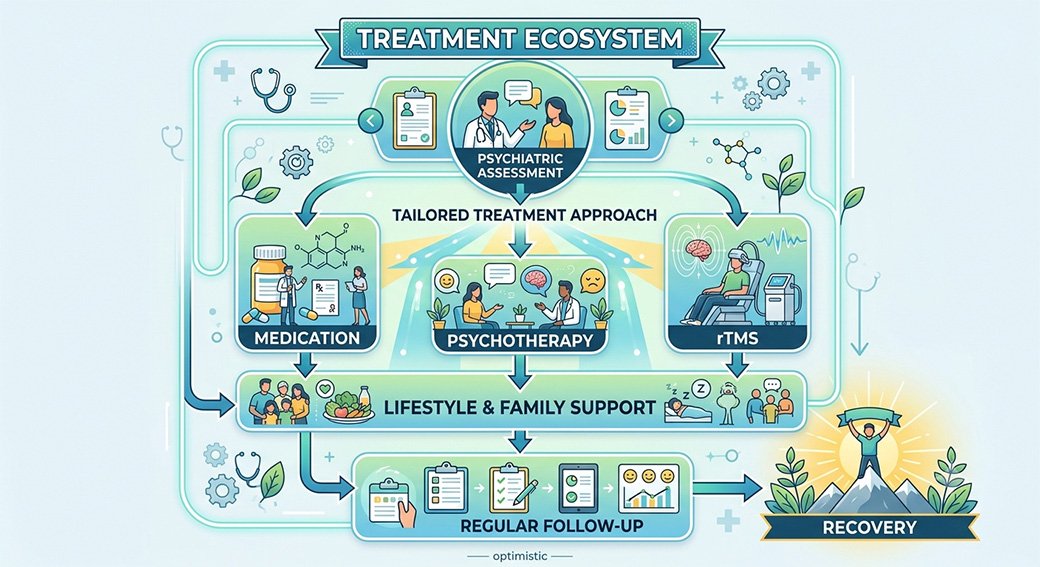
rTMS is most successful when incorporated into a comprehensive treatment regime as opposed to using rTMS alone as a therapeutic method. Comprehensive psychiatric treatment takes into consideration biological, psychological and social issues related to mental disorders.
- Psychiatric consultation
- Medication management
- Cognitive Behavioral Therapy
- Exposure and Response Prevention
- Family Therapy
- Behaviour Therapy
- Lifestyle interventions
- Sleep management
- Stress reduction strategies
- Regular follow-up consultations
Related Treatment
Psychiatric Consultation
Total diagnosis and treatment strategy.
Exposure & Response Prevention (ERP)
Specialized treatment for OCD.
Medication Management
Personalized pharmacological treatment under psychiatrist supervision.
Cognitive Behavioural Therapy (CBT)
Psychotherapy based on evidence for many mental illnesses.
Clinical Psychology Services
Psychological assessment and therapy.
Family Therapy
Supporting recovery through family involvement when appropriate.
Clinical Pearl
Rehabilitation is hardly done using just one treatment method. It is best done by combining a range of treatments in accordance with the needs of an individual.
Explore Whether rTMS Is the Right Treatment for You.
Why Choose Headspace Mind Clinic for rTMS Therapy?
The process of selecting an rTMS facility goes beyond just choosing one that has all the necessary tools for conducting the treatment. For a successful treatment to be achieved, it takes a correct diagnosis, the right patient selection, a customized treatment plan, among others. In Headspace Mind Clinic, rTMS forms part of psychiatric treatment as a whole.
Our Approach
Comprehensive Psychiatric Evaluation
Every form of treatment begins with an extensive evaluation of your symptoms, diagnosis, treatment history, and overall mental health needs.
Evidence-Based Clinical Practice
Our treatment decisions are based on recent scientific research, international standards of clinical practice, and personal evaluation of our patients.
Integrated Mental Health Care
Where appropriate, rTMS is combined with:
- Psychiatric consultations
- Medication management
- Cognitive Behavioural Therapy
- Exposure and Response Prevention
- Family support
- Lifestyle counselling
Personalized Treatment Planning
One size does not fit all. Our treatment protocols are customized to:
- Diagnosis
- Symptom profile
- Previous response to treatment
- Safety considerations
- Recovery goals
Regular Progress Monitoring
Clinical improvement is reviewed throughout treatment, allowing adjustments to the overall care plan whenever needed.
Why Headspace Comparison
| General Treatment Approach | Headspace Mind Clinic |
|---|---|
| Standardized treatment for everyone | Individualized treatment planning |
| Focus on one treatment. | Overall multidisciplinary treatment |
| Follow-up problems | Sustained monitoring of the patient |
| Technology-oriented approach | Patient-oriented approach |
| Single intervention | Coordinated management of the condition |
Clinical Pearl
The most important factor in successful rTMS treatment is not the machine itself—it is delivering the right treatment to the right patient at the right time under expert psychiatric supervision.
Meet Your Psychiatrist

Dr. Deepak Verma
Consultant Psychiatrist & Neuropsychiatrist
Founder & Medical Director — Headspace Mind Clinic
Qualifications
- MBBS
- MD Psychiatry
- Senior Residency – G.B. Pant Hospital
- International Clinical Experience (Melbourne, Australia)
- ECFMG Certified (USA)
Areas of Clinical Interest
- Depression
- Obsessive-Compulsive Disorder
- Anxiety Disorders
- Adult ADHD
- Bipolar Disorder
- Schizophrenia
- Neurostimulation Therapies (including rTMS)
“Clinical Philosophy
Every patient deserves an individualized treatment plan based on scientific evidence, compassionate care, and long-term recovery—not simply symptom control.”
Frequently Asked Questions
No.
Patients stay conscious while being treated.
Based on individual circumstances, there may be instances in which patients can go about their daily activities, including driving, after treatment.
Each session’s length will vary depending on the treatment regimen that is prescribed. Your psychiatrist will give you a treatment schedule prior to starting the treatment.
No.
Psychotherapy remains one of the key elements in the treatment of most mental illnesses. rTMS and psychotherapy complement each other.
No.
Suitability is established after psychiatric assessment.
Related Services
Psychiatric Consultation
Full assessment and management of all psychiatric issues.
Cognitive Behavioural Therapy (CBT)
Psychotherapy for treating depression, anxiety disorders, OCD, and other illnesses.
Psychological Assessment
Complete cognitive and psychological assessments.
Clinical Psychologist
Psychological evaluation and therapy.
Exposure and Response Prevention (ERP Therapy)
Specialized behavioural therapy for OCD.
Related Conditions
Depression Treatment in Delhi
Learn how rTMS may fit into comprehensive depression management.
Anxiety Treatment in Delhi
Find out the different treatment methods for anxiety disorders.
Schizophrenia Treatment
Integrated management for psychotic disorders.
OCD Treatment in Delhi
Understand the role of rTMS alongside ERP therapy and medication.
Bipolar Disorder Treatment
Psychiatry services for mood disorders.
Addiction Treatment
Psychiatric assistance.
Available at Headspace Mind Clinic
Rohini
Daily OPD
Paschim Vihar
Narela
Choose the location most convenient for you while maintaining continuity of care across all Headspace centres.
Book Your rTMS Consultation
Get Ready to Find Out If rTMS Can Help You!
Book Now
- Comprehensive Psychiatric Evaluation
- Individualized Treatment Planning
- Evidence-Based Care
- Long-Term Follow-Up
Medical Reviewer
Dr. Deepak Verma
Consultant Psychiatrist & Neuropsychiatrist,
Founder & Medical Director, Headspace Mind Clinic
Editorial Policy
This page is created in accordance with the Headspace Mind Clinic Editorial Policy to ensure that all patient education content is:
- Evidence-based
- Medically reviewed
- Written in patient-friendly language
- Regularly updated
- Based on recognized national and international clinical guidelines
References
- American Psychiatric Association (APA)
- Clinical TMS Society
- World Health Organization (WHO)
- National Institute for Health and Care Excellence (NICE)
- Indian Psychiatric Society (IPS)
- U.S. Food and Drug Administration (FDA) guidance on TMS devices
Experience
Headspace Mind Clinic provides comprehensive psychiatric care with experience in the assessment and management of a wide range of mental health conditions, including advanced treatment options such as rTMS where clinically appropriate.
Expertise
Treatment recommendations are provided by qualified psychiatrists and are based on current scientific evidence, individualized assessment, and accepted clinical practice.
Authoritativeness
Our content is developed and medically reviewed by mental health professionals and aligns with guidance from recognized psychiatric organizations.
Trustworthiness
- Medically Reviewed
- Evidence-Based
- Patient-Centred
- Privacy-Focused
- Regularly Updated
Original Graphics To Create
To make this page distinctive and improve engagement, develop custom illustrations rather than relying on stock images:
- The rTMS Treatment Journey – Consultation → Eligibility Assessment → Motor Threshold Mapping → Treatment Sessions → Progress Reviews → Recovery.
- How rTMS Works – Magnetic coil, targeted brain region, modulation of neural activity, symptom improvement.
- rTMS vs ECT Comparison – Side-by-side infographic highlighting procedural
- Integrated Care Model – rTMS at the centre connected to psychiatric consultation, medication management, CBT, ERP, lifestyle interventions, and family support.
- Patient Eligibility Flowchart – “Could rTMS Be Right for You?” outlining assessment steps rather than self-diagnosis.