
Mindfulness therapy: learning a different relationship with your thoughts
Mindfulness therapy teaches you to notice thoughts, feelings and body sensations as they happen, without getting caught up in them or judging them. Structured programmes such as mindfulness-based cognitive therapy (MBCT) combine meditation practice with ideas from CBT.
MBCT has good evidence for preventing relapse in people who have had several episodes of depression, and mindfulness approaches can help with stress, anxiety and overthinking. It is a skill learned through regular practice, usually over about eight weekly sessions plus short daily exercises at home.
For education only. This page explains a treatment in general terms. It is not medical advice and cannot replace a consultation with a qualified doctor who knows your history. Whether a treatment suits you can only be decided after an assessment. If you are in danger or think you may harm yourself, call 112 or Tele-MANAS 14416 now.
What mindfulness therapy involves
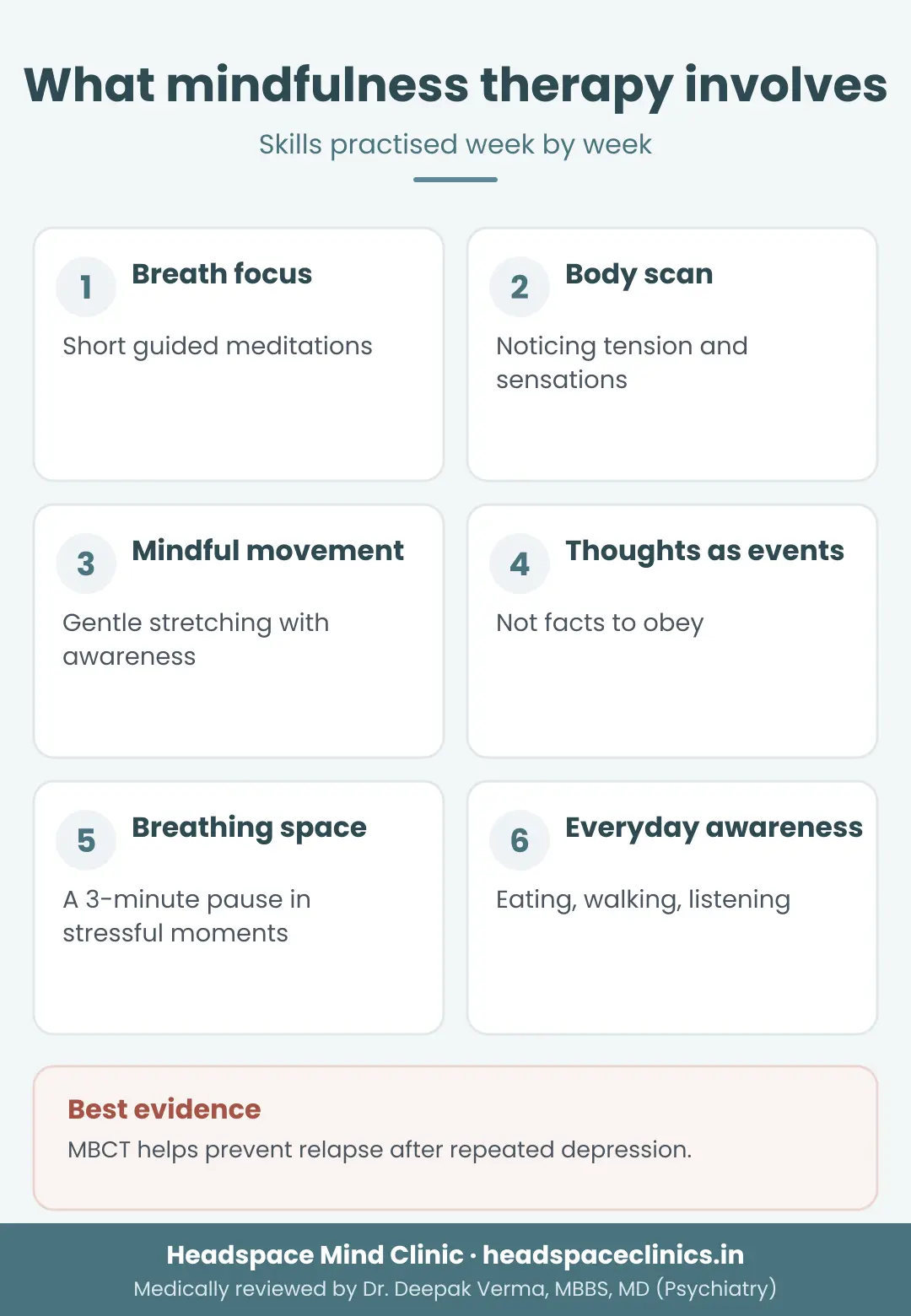
Mindfulness is about paying attention on purpose, in the present moment, with curiosity rather than criticism. In therapy, this is practised in a structured way:
- Short guided meditations focusing on the breath and body
- A "body scan" to notice tension and sensations
- Mindful movement such as gentle stretching
- Noticing thoughts as passing events, not facts
- A brief "breathing space" to use during stressful moments
- Bringing awareness to everyday activities like eating or walking
- CBT-based exercises on how low mood and worry take hold
What mindfulness therapy involves. Tap the image to enlarge.

In my clinical experience, mindfulness therapy can be particularly helpful for people who struggle with repetitive thinking, excessive worry, emotional reactivity and difficulty staying present. One common challenge is that people initially expect their minds to become completely blank. I explain that mindfulness is not about stopping thoughts, but learning to notice them without automatically getting caught up in them.
Dr. Deepak Verma, MBBS, MD (Psychiatry), Consultant Psychiatrist, Headspace Mind Clinic
Who mindfulness therapy can help
The strongest evidence is for preventing relapse of depression: for people who have recovered from several episodes, MBCT reduces the chance of depression returning, and guidelines recommend it for this purpose. It is usually offered when someone is well or recovering, not in the middle of severe depression.
Mindfulness approaches can also help with:
- overthinking and rumination
- everyday stress and worry
- anxiety, as part of a wider treatment plan
- coping with long-term physical illness and pain
- sleep problems linked to a busy mind
Mindfulness is not a replacement for medical treatment of severe depression, psychosis or active suicidal thoughts. In those situations other treatment comes first.
Why mindfulness can help
Low mood and anxiety are often kept going by habits of the mind: replaying the past, rehearsing the future and fighting unpleasant feelings. Mindfulness practice helps you notice these habits early and step out of them. Over time people describe being less carried away by thoughts and more able to choose how to respond. Mindfulness is often combined with other treatments:
Changing unhelpful thoughts and behaviours
Mindfulness plus emotion-regulation skills
Talking therapy matched to your needs
Treatment and relapse prevention
Treatment for persistent worry and fear
Help for long-term sleep problems
What to expect from mindfulness therapy
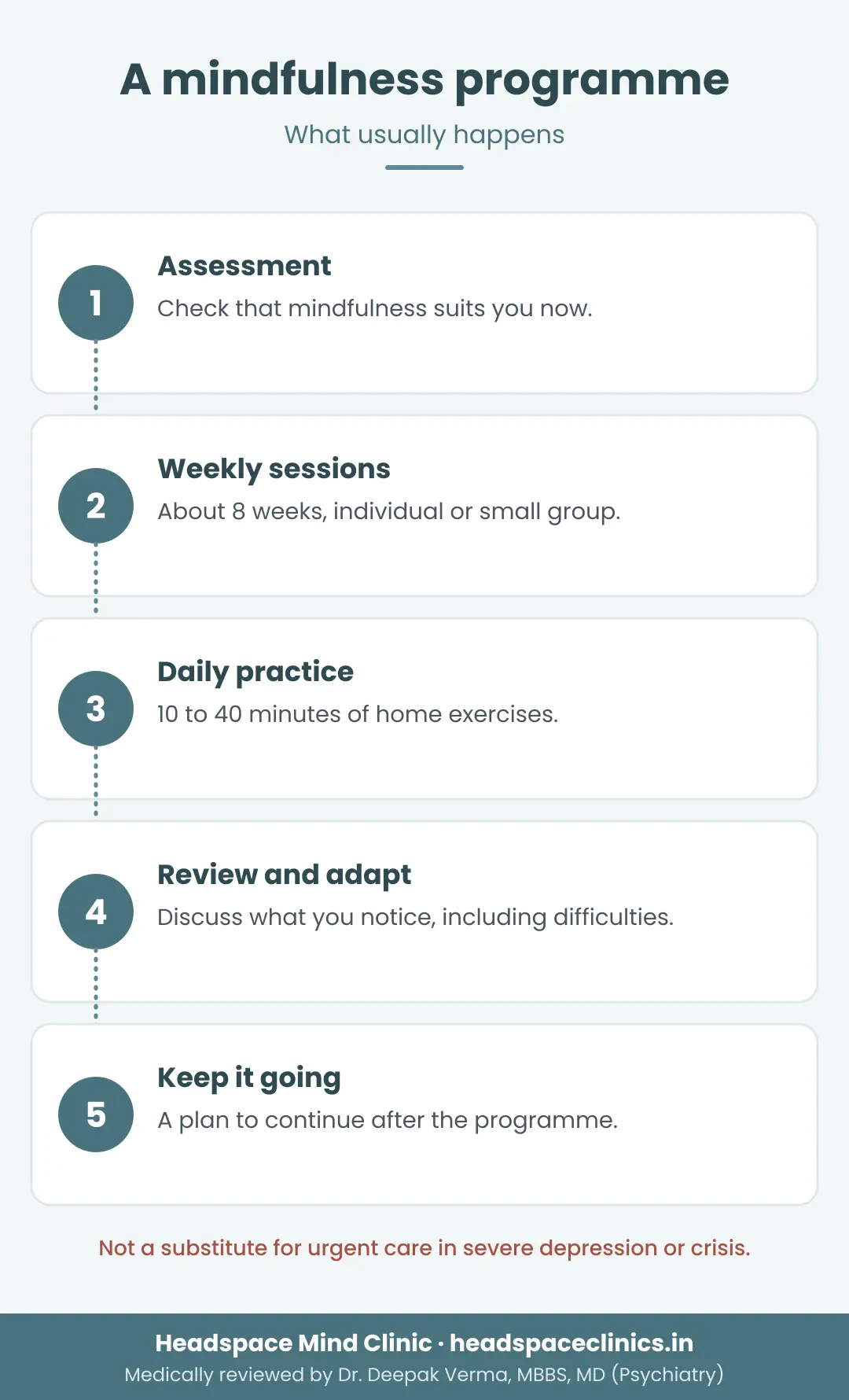
A typical structured programme.
A mindfulness programme. Tap the image to enlarge.
Assessment. We first check that mindfulness suits your current situation and whether other treatment is needed.
Weekly sessions. Structured programmes usually run for about eight weeks, individually or in a small group, led by a clinical psychologist.
Home practice. Short daily exercises, often 10 to 40 minutes, are central. Benefits come from regular practice.
Reviewing and adapting. You discuss what you notice, including difficulties. It is normal for the mind to wander; the skill is in noticing and returning.
Keeping it going. At the end you plan how to keep practising, so the skills stay available when stress or low mood returns.
Some people find that meditation brings up difficult feelings or memories. Your therapist will adapt the practice and can pause it if needed.
Is mindfulness therapy right for me?
Mindfulness therapy may suit you if you have recovered from depression and want to reduce the risk of it coming back, if stress, worry or overthinking are affecting your life, or if you want practical skills alongside other treatment.
It may not be the right first step if you are currently severely depressed, having thoughts of suicide, experiencing psychosis, or dealing with recent trauma. An assessment helps decide what will help most right now.
Mindfulness at Headspace Mind Clinic
Mindfulness-based work is offered by our clinical psychologists, on its own or as part of CBT or DBT. Your psychiatrist can also review whether medicines are needed alongside it.
- Assessment to find the right approach for you
- Sessions with our clinical psychologists
- Medicines, when needed, prescribed and reviewed by our psychiatrist
- Video sessions for existing clients
माइंडफुलनेस थेरेपी क्या है? (Mindfulness therapy in Hindi)
माइंडफुलनेस थेरेपी में आप अपने विचारों, भावनाओं और शरीर की संवेदनाओं को बिना उलझे और बिना ख़ुद को दोष दिए, इसी पल में ध्यान से देखना सीखते हैं। MBCT जैसी संरचित थेरेपी डिप्रेशन के बार-बार लौटने का ख़तरा कम करने में मददगार है, और तनाव, चिंता और ज़्यादा सोचने में भी उपयोगी हो सकती है। यह जानकारी केवल शिक्षा के लिए है। अपॉइंटमेंट के लिए कॉल करें: +91 99711 66040
Founder of Headspace Mind Clinic. Dr. Verma sees patients at our Paschim Vihar, Rohini and Narela clinics. About our psychiatry service →
Three clinics in West and North Delhi
Psychiatrist consultation fee: ₹1,800 at Paschim Vihar and Rohini, ₹500 at Narela. All appointments are scheduled; please call or book online.
Frequently asked questions
Meditation is one way to practise mindfulness. Mindfulness therapy uses meditation alongside discussion and exercises drawn from CBT, with a clear structure and goals.
Many people notice small changes within a few weeks of regular practice. The benefits for preventing depression relapse build over the full programme and with continued practice afterwards.
Do not stop any medicine on your own. For some people with recurrent depression, MBCT can be an alternative to long-term antidepressants, but this decision should be made with your psychiatrist and any change should be gradual.
It can help many people relate differently to worry and physical tension. For anxiety disorders, it usually works best as part of a wider plan that may include CBT.
That is normal and part of the practice. Sessions can be shortened and movement-based exercises used. Your therapist will help you find a way that works.
No. Although mindfulness has roots in contemplative traditions, mindfulness therapy is a secular, evidence-based psychological approach.
Related symptom guides
Explore other treatments
PsychotherapyCognitive behavioural therapy (CBT)Dialectical behaviour therapy (DBT)Exposure and response prevention (ERP)Family therapyBehaviour therapySupportive therapyClinical psychologist in DelhiPsychological assessmentsNeuromodulation (rTMS, tDCS)rTMS for depressionrTMS for OCDrTMS for anxietyAntidepressants explainedDepression medication guideAnti-anxiety medicinesAnxiety medication guide
Book a consultation
Choose your preferred clinic and our team will call you to confirm a time. This form is for appointments only; please do not use it in an emergency.
References
- Kuyken W, Warren FC, Taylor RS, et al. Efficacy of mindfulness-based cognitive therapy in prevention of depressive relapse: an individual patient data meta-analysis from randomized trials. JAMA Psychiatry. 2016;73(6):565–574.
- Goldberg SB, Tucker RP, Greene PA, et al. Mindfulness-based interventions for psychiatric disorders: a systematic review and meta-analysis. Clinical Psychology Review. 2018;59:52–60.
- Hofmann SG, Sawyer AT, Witt AA, Oh D. The effect of mindfulness-based therapy on anxiety and depression: a meta-analytic review. Journal of Consulting and Clinical Psychology. 2010;78(2):169–183.
- National Institute for Health and Care Excellence (NICE). Depression in adults: treatment and management (NG222). nice.org.uk
- Tele-MANAS, National Tele Mental Health Programme, Ministry of Health and Family Welfare, Government of India. Helpline 14416.
Medically reviewed by Dr. Deepak Verma (MBBS, MD Psychiatry; DMC Reg. No. 37616). Last reviewed: 15 November 2026.
Medical disclaimer. The information on this page is provided for general educational purposes only. It is not medical advice and is not intended to diagnose, treat, cure or prevent any condition. Reading this page or using the self-check does not create a doctor–patient relationship with Dr. Deepak Verma or Headspace Mind Clinic. Please consult a qualified doctor about any symptom, diagnosis or treatment, and do not start, stop or change any medicine without talking to the doctor who prescribed it. Do not ignore professional advice, or delay seeking it, because of something you have read here. Symptoms, causes and responses to treatment differ from person to person, and no particular result is promised. Links to other websites are given for reference only, and we are not responsible for their content. If you think you or someone else may be facing a medical or mental health emergency, call 112, call Tele-MANAS on 14416 (free, 24×7) or go to the nearest hospital emergency department.