
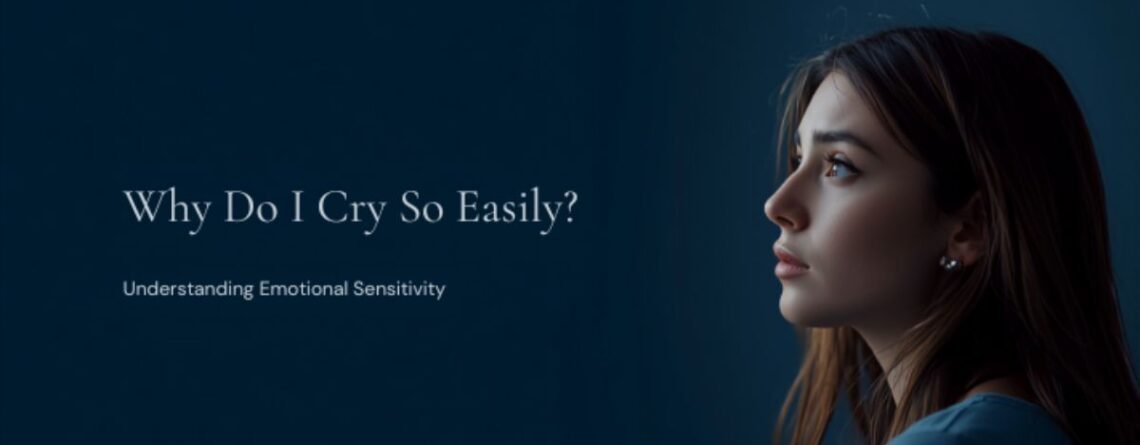
The most frequent way you show your emotions is through crying. There are plenty of reasons for your tears. You can cry because of sadness, pain, stress, anger, happiness, and joy. However, having knowledge about the fact that you are a very emotional person who cries a lot will help you to find out all the factors that trigger your tears easily.
Heavy crying and loss of control are absolutely natural since all people express their feelings differently. You cannot help but cry owing to reasons like stress, anxiety, depression, and burnout.
Understanding the reasons for your crying instead of thinking “Why do I cry easily?” will assist you in realizing what you really need.
Is Crying Easily Normal?
Surely, crying is an appropriate emotional response. Some cry more easily compared to others in certain situations. Some of the potential variables that may play a role in this incident include personality characteristics, personal experience, emotional sensitivity, and situation.
However, what must be understood is that when the act of crying occurs often and seems difficult to comprehend, professional help becomes necessary.
Some signs you might notice are:
- Sudden and unexpected crying
- Being overwhelmed with emotions
- Tearfulness even because of minor incidents
- Being unable to control your emotions
- Emotional distress or exhaustion
- Sleep problems, mood, and motivation
While it’s one thing to recognize that you tend to cry, it is essential to know what emotions can trigger you to excessive crying, how these emotions manifest themselves in you, and their effect on you.
Why Do I Cry Easily?
There are various possible explanations for the tendency to cry easily. Crying may be a transient reaction to a hard situation. There are times when people cry due to continuous emotional pain.
Stress, anxiety, depression, sadness, burnout, among other things, may cause people to become emotionally sensitive. At a time when there are too many issues, a very small thing can make a person experience emotions very intensely.
Tears are sometimes how the brain decides to let out the emotions that one has been suppressing. It is better to be emotionally aware than to self-blame when people cry.
Common Mental Health Reasons for Frequent Crying
Stress and Emotional Overwhelm
In addition to that, stress also affects your emotional regulation abilities. Work-related stress, personal life-related stress, financial-related stress, family-related stress, or any other type of stressful situation could eventually affect you emotionally.
In case of chronic stress on your emotions, coping with smaller stress factors may prove to be difficult. Even a conflict or an argument may provoke crying as your emotional resources have been exhausted.
Should you face the problem of emotional overload, frequent crying might be a sign that you need some assistance.
Anxiety and Worry
Anxiety affects both your mental and physical health negatively. The fear, worrying, overthinking, and thoughts put additional stress on your brain no matter what you do to relax.
Your crying may be due to worrying. Anxiety is often associated with such symptoms as irritability, agitation, inability to concentrate, insomnia, and so forth.
If you cry and feel anxious simultaneously from time to time, it would be a great idea to handle the problem of your anxiety.
Depression and Low Mood
Crying is an indication of depression when either sadness or mood swings are involved.
Depression includes such symptoms as reduced energy levels, low motivation, insomnia, eating disorders, inability to concentrate, and no desire to participate in daily life activities.
However, not all depressed people cry all the time; thus, you need to have a correct diagnosis.
Burnout and Emotional Exhaustion
Burnout could develop due to continual pressure leading to exhaustion of the mind and emotions. It could be caused by work stress, educational stress, caregiver stress, or even personal stress.
If one experiences emotional exhaustion, they realize that they find it difficult to perceive what was previously considered a normal thing as something impossible. The person gets irritated easily, frustrated, tired, emotional, and cannot concentrate or get motivated.
It is therefore necessary to identify the symptoms of emotional exhaustion early enough so that it does not affect one’s day-to-day activities.
Grief and Emotional Pain
The loss could be due to the passing away of a person whom you have known, or it could be as a result of the end of a relationship, unemployment, and other significant events in life.
Grief usually comes unexpectedly. It might happen that you will start to cry only because something you have seen has brought to mind your deceased beloved one due to songs and memories.
Crying is the normal response to grief. There is neither a right nor a wrong way of handling your grief.
Trauma and Difficult Experiences
Past or present trauma can also impact your emotional state. It is a mixture of many different things, such as experience, language, memory, and relationships, that can affect you so much that you will cry for no reason at all.
The shock of emotions is connected to fear, anxiety, anger, insomnia, numbness, and insecurity. If you are crying due to shock, it means that psychotherapy will work.
Why Do I Cry Easily Over Small Things?
The fact that you usually cry due to minor issues as others might see them does not necessarily imply that you are overreacting.
At times, it may be that something that happens right now just serves as a trigger for your behavior, and it may have some relation to issues of stress, loneliness, sleep issues, interpersonal conflicts, or other concerns you have been thinking about for some time.
In cases when your emotional resources are drained, minor issues begin to matter a lot more than before. One way to be aware of one’s emotional triggers is an important aspect of acquiring emotional awareness.
Why Do I Cry Easily When I Am Angry?
Not only does sadness make one cry. One might cry when being angry, frustrated, disappointed, helpless, or misunderstood.
The expression of one’s emotions through crying is likely to occur when they get out of control in any form of struggle or stressful condition.
You will find it much more beneficial to develop the skill of controlling your emotions instead of crying out of frustration.
How Can You Control Frequent Crying?
This does not have to mean stopping yourself from crying every time.
There are other techniques that you can adopt to improve your emotional well-being, and these are listed below:
- Have a consistent sleep pattern
- Take a break whenever you are feeling stressed out
- Conduct some breathing exercises
- Communicate with people you trust
- Write down your thoughts and feelings
- Make time for activities you enjoy
- Set healthy personal boundaries
- Conduct self-awareness and self-regulation of your emotions
As mentioned above, the use of these coping mechanisms will help to overcome normal emotional stress; however, if the source of the issue lies in a mental disorder, it is essential to consult specialists.
When Should You Consult Specialists?
You should see a professional in case you:
- Tend to cry without knowing the reason
- Frequently feel sad and anxious
- Find it difficult to cope with routine things
- Experience persistent emotional exhaustion
- Lose interest in activities you once enjoyed
- Have difficulty concentrating
- Experience major sleep or appetite changes
- Withdraw from friends and family
- Inability to cope with the challenges of everyday living
If frequent crying is affecting your daily life, speaking with the Best Psychiatrist doctor in Delhi can help you understand the possible reasons behind your emotional responses. A Best Psychiatrist in Delhi can evaluate your symptoms and suggest appropriate treatment or support based on your individual needs.
A professional can help in determining the cause of your symptoms, whether it is due to anxiety disorders, depression, stress, grief, trauma, mood disorders, or any other psychological disorders.
How Can Mental Health Treatment Help?
Depending on your concerns, you may also consider consulting a Neuropsychiatrist in Delhi for a comprehensive assessment of mental and neurological factors. A Psychotherapist in Delhi can help you explore emotional triggers, manage stress, and develop healthier ways to cope with difficult emotions.
Your frequent crying should be treated depending on the cause. A psychiatric evaluation will aid in the detection of your symptoms that affect your emotional health and whether any form of treatment is necessary.
The psychotherapy approach will offer the chance to explore your emotional triggers, deal with your experiences in the past, and adopt better coping strategies. The use of cognitive behavioral therapy (CBT) can be helpful in the identification of your inappropriate behaviors and thoughts.
In this case, the psychiatrist may still prescribe some medicines in the course of the therapy. The important thing here is your symptoms, diagnosis, medical history, and your own preference.
One should understand that the purpose of the therapy is not to deprive you of emotions. You will learn to control them in the course of the therapy.
Find Support for Your Emotional Well-Being
You should not worry, “Why do I cry easily?” because of your poor personality. It is a form of emotion, which implies that there is immense emotional pressure within you.
There may be various causes behind your crying, which can range from stress to anxiety, depression to burnout, sadness to trauma. You should always find out the cause and do not try to control your feelings.
Mental health professionals at Headspace Mind Clinic, including Dr. Deepak Verma, can help you discover the reasons for your emotional responses. All that you need is some guidance on how to manage your emotions.
If your crying habit is affecting you in your personal and professional spheres of life, then you definitely require professional assistance.
When you have availed of the appropriate kind of help, you will learn to manage your emotions.


Leave a Reply