

When someone you love is depressed, home can start to feel heavy. They may stay in bed, stop talking, snap at small things or say they feel like a burden. Families often swing between trying to cheer them up and losing patience, and then feel guilty about both.
This guide is for parents, partners, children and siblings. It explains what depression looks like from the outside, what helps, what usually makes things worse, and how to encourage someone to see a doctor without a fight.
First, understand what depression is
Depression is a health condition, not laziness, weakness or a bad attitude. It changes sleep, appetite, energy, concentration and the ability to enjoy things. A person with depression cannot simply “think positive” or “snap out of it”, in the same way that someone with a high fever cannot wish it away.
In many families depression shows up as body complaints first: tiredness, headaches, body pain or poor sleep. Older adults may seem forgetful or irritable rather than sad. Teenagers may seem angry, withdraw into their phone or fall behind at school. You can read more in our guide to depression symptoms (in Hindi) and the depression section of our Knowledge Centre.
Mood
Sad, empty, irritable or tearful most days
Sleep
Sleeping too much or too little, or waking very early
Interest
No longer enjoys things they used to like
Energy
Tired and slow; everyday tasks take much longer
Withdrawal
Avoids family, friends, calls and outings
Hopelessness
Talks about being a burden or having no future
What helps: listen more than you advise
The most useful thing you can offer is a calm, regular presence. You do not need perfect words.
- Choose a quiet time and ask simply: “You haven’t seemed yourself lately. How are you really feeling?”
- Listen without interrupting, correcting or jumping to solutions
- Accept what they say, even if it doesn’t make sense to you: “That sounds really hard”
- Ask what would help today, rather than deciding for them
- Keep checking in, even when the answers are short
What to say, what to avoid
| Instead of | Try saying |
|---|---|
| “Just be positive” | “I can see this is really hard for you” |
| “Others have it worse” | “Your feelings matter to me” |
| “It’s all in your mind” | “Depression is a health problem, and it can be treated” |
| “You’re being lazy” | “Shall we do one small thing together today?” |
| “Why can’t you just snap out of it?” | “I’m here, and I’m not going anywhere” |
Help with small daily things
Depression makes ordinary tasks feel huge. Practical help, offered without fuss, often means more than advice.
- Keep a simple routine at home: regular meal times, a set waking time, lights out at night
- Invite them for a short walk or to sit outside in daylight, without pressure
- Share one small task together, such as cooking or a short errand
- Help with things that have piled up, like bills or forms, if they agree
- Notice small steps and acknowledge them gently, without making a big deal
Try this: a 10-minute daily check-in
- Sit together somewhere quiet, phones away
- Ask one open question: “How has today been?”
- Listen for a few minutes without trying to fix anything
- Ask: “Is there one thing I can help with tomorrow?”
- End with something kind: “I’m glad we talked.”
How to suggest seeing a doctor
Many people resist help because of stigma (“log kya kahenge”), fear of medicines, or the belief that nothing will change. Pushing hard usually backfires. A gentle, steady approach works better.
- Mention specific changes you have noticed, such as poor sleep or not eating, rather than labels
- Present it as a health check: “Let’s see a doctor about the sleep and the tiredness”
- Offer to book the appointment and go with them
- If they are not ready, don’t argue; bring it up again in a few days
- For some people, an online session with a psychologist is an easier first step
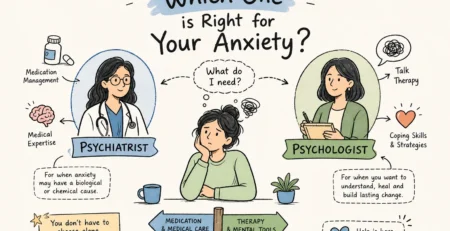
A first consultation with a psychiatrist usually takes 20 to 30 minutes, longer if needed. It is a conversation: the doctor asks about symptoms, sleep, health and family history, and explains the options. Treatment may include talking therapy, medicines or both, and the person is part of every decision. If you are unsure where to start, read psychologist or psychiatrist: who to see.
Getting a loved one to help, step by step
Note changes in sleep, eating, mood and work over a couple of weeks
Choose a calm moment and gently share what you have seen
Suggest a doctor visit, and offer to book it and go along
Help with appointments and keep checking in
Support treatment once it starts
- Encourage them to keep appointments, and offer a lift or company
- If medicines are prescribed, they often take a few weeks to show benefit; encourage them not to stop suddenly without talking to the doctor
- With their permission, share the changes you notice at home with the doctor
- Expect ups and downs; a bad week is not a failure
Warning signs that need urgent help
Take any talk of death or suicide seriously. Asking directly about suicidal thoughts does not put the idea in someone’s head; it often brings relief.
- Talking about wanting to die, being a burden, or there being no point
- Giving away belongings, saying goodbyes or writing notes
- Looking for ways to harm themselves
- Sudden calm after a long period of deep depression
- Heavy drinking or drug use on top of low mood
If you are worried that someone is in immediate danger, do not leave them alone. Call 112 or Tele-MANAS on 14416, or take them to the nearest hospital emergency department.
When to get help
Try self-care
A few low days after a setback, but still eating, sleeping and managing work. Stay close and keep talking.
Book an appointment
Low mood, poor sleep or loss of interest for more than two weeks, or struggling with work, study or home. Book a consultation.
Get help today
Any talk of suicide or self-harm, not eating or drinking, or confusion. Do not leave them alone. Call 112 or Tele-MANAS 14416.
Look after yourself too
Caring for someone with depression is tiring. Families often feel helpless, angry or guilty, and these feelings are normal.
- Share the load with other family members or a trusted friend
- Keep some time for your own sleep, food and activities
- You do not have to have all the answers or fix everything
- If you are struggling yourself, talking to a psychologist can help you too
Frequently asked questions
What should I not say to someone with depression?
Avoid phrases that blame or dismiss, such as “Just be positive”, “Others have it worse” or “It’s all in your mind”. They make the person feel misunderstood. Try “I’m here for you” or “This isn’t your fault” instead.
My family member refuses to see a doctor. What can I do?
Stay calm and keep the door open. Talk about specific changes you have noticed, offer to go with them, and suggest a health check rather than a ‘mental health’ appointment. If there are signs of danger to their life, get emergency help even if they refuse.
Can depression get better?
Yes. With the right treatment most people improve, though it can take some weeks and the plan may need adjusting. Family support makes a real difference.
Should I tell other relatives?
Ask the person first and respect their privacy. But if their safety is at risk, involving another trusted adult is the right thing to do.
Reviewed by Dr. Deepak Verma, Consultant Psychiatrist (MBBS, MD Psychiatry). Last reviewed: 25 November 2026.





Leave a Reply