
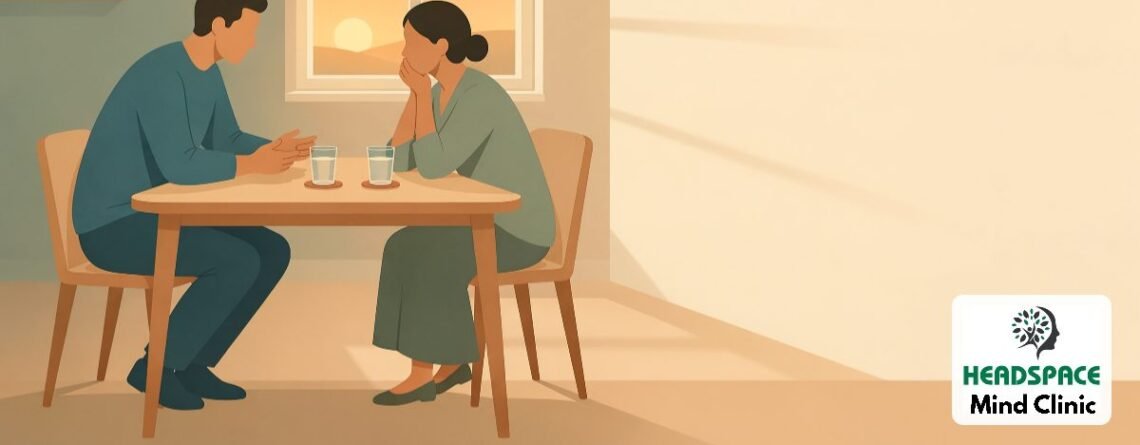
Watching someone you love drink too much is painful. You may have tried hinting, pleading, hiding bottles or shouting, and nothing seems to change. Many families also stay silent for years out of shame, or because the person is the earning member or an elder.
This guide explains how to have that conversation in a way that is more likely to be heard, and what to do if the answer is “I don’t have a problem”. It is written for spouses, parents, children and siblings.
Signs the drinking has become a problem
Alcohol becomes a problem when it starts to take control, not only when someone drinks every day. You do not need to be sure it is “addiction” before you talk. For a fuller picture, see the alcohol and drugs section of our Knowledge Centre.
Amount
Drinking more, or more often, than before
Control
Drinks more than planned; can’t cut down
Morning drink
Needs a drink to steady shaking or nerves
Family and work
Missed work, arguments, broken promises
Risk
Drink-driving, falls, fights or injuries
Health
Poor sleep, acidity, weight change, low mood
Before you talk: prepare
- Pick a time when they are sober and calm, ideally in the morning, never during or after drinking
- Choose a private place, not in front of children or guests
- Decide on one or two specific incidents you want to mention
- Agree with other close family members so you are not giving mixed messages
- Expect denial or anger, and decide in advance that you will stay calm
During the conversation
The aim of the first talk is not to win an argument. It is to let them know that you are worried, that you care, and that help exists.
- Start with care: “I love you and I’m worried about you”
- Describe what you saw, not who they are: “Last Saturday you fell on the stairs” instead of “You’re a drunkard”
- Use “I” statements: “I feel scared when you drive after drinking”
- Listen to their side, even if you disagree
- Ask what they think, and whether they would be willing to see a doctor
- Keep it short; one calm talk is better than a long fight
What to say, what to avoid
| Avoid | Try instead |
|---|---|
| “You’re a drunkard” | “I’m worried about how much you’ve been drinking” |
| “You always ruin everything” | “On Saturday you missed our daughter’s function, and she was upset” |
| Talking when they have been drinking | Talking in the morning, when they are sober |
| Threats you won’t carry out | One clear boundary that you will keep |
| Lecturing for an hour | A short, calm talk, and coming back to it later |
If they deny there is a problem
Denial is very common and does not mean the conversation failed. Many people need several talks before they accept help.
- Don’t argue about labels like “alcoholic”; focus on the effects and on health
- Stop covering up for them, such as making excuses to their office or paying off drinking debts
- Let natural consequences happen where it is safe to do so
- Bring it up again calmly after a few days or after another incident
- Keep the offer open: “Whenever you’re ready, I’ll come with you”
Set boundaries that protect you and your family
Boundaries are not punishment. They are limits you set for your own safety and peace. Say them calmly, and keep them.
- “I won’t get in the car if you have been drinking”
- “I won’t lend money that may be spent on alcohol”
- “If there is shouting at night, I’ll take the children to my mother’s”
- If there is violence or a threat of it, your safety comes first: call 112
From conversation to help
Calm and private, when sober; share specific worries
Suggest a doctor visit and offer to go along
A psychiatrist checks the drinking, health and withdrawal risk
Safe withdrawal, counselling and regular follow-up
What treatment looks like
Many people can stop drinking safely through regular outpatient visits, without admission, as long as withdrawal is planned with a doctor. Heavy daily drinkers should not stop suddenly on their own, because withdrawal can cause shaking, fits or confusion.
A psychiatrist assesses the drinking and any health problems, plans withdrawal, and treats anxiety, depression or sleep problems that often go along with it. Counselling helps with cravings, triggers and rebuilding routines. Read how to quit alcohol safely, the Hindi guide sharab chhodne ke upay, or our de-addiction treatment page.
When to get help
Try self-care
Drinks occasionally, stays in control, no problems at home or work. Keep an open conversation.
Book an appointment
Drinking more than planned, failed attempts to cut down, arguments or missed work. Book a consultation.
Get help today
Fits, confusion, or seeing or hearing things after stopping, vomiting blood, or any talk of self-harm. Call 112 or Tele-MANAS 14416.
Look after yourself
Living with someone’s drinking can leave you anxious, exhausted and alone. Children in the home are often affected too, even if they say nothing.
- Talk to someone you trust about what is happening at home
- Keep your own routines, sleep and health going
- Remember that you did not cause the drinking and cannot control it on your own
- Counselling for yourself can help, even if your loved one isn’t ready
Frequently asked questions
What should I not say to someone about their drinking?
Avoid insults, labels and threats you won’t carry out, such as calling them a drunkard or raising it in front of others. Don’t start the conversation when they have been drinking.
Can someone stop drinking without being admitted?
Many people can, with regular outpatient follow-up, if withdrawal is planned with a doctor. People with severe withdrawal or other health problems may need hospital admission; the doctor will advise.
What if they get angry when I raise it?
Stay calm, don’t argue, and end the conversation if it gets heated. Try again another day when they are sober. If you ever feel unsafe, leave and call 112.
Should I hide or throw away their alcohol?
It rarely works and often leads to fights or secret drinking. For heavy drinkers, stopping suddenly can also be risky. It is better to focus on getting a medical plan.
Reviewed by Dr. Deepak Verma, Consultant Psychiatrist (MBBS, MD Psychiatry). Last reviewed: 25 November 2026.





Leave a Reply