Schizophrenia Treatment in Delhi
Trust Signals





Quick Facts
| Quick Fact | Details |
|---|---|
| Condition | Schizophrenia |
| Typical Onset | Late adolescence to early adulthood |
| Major Symptoms | Hallucinations, Delusions, Disorganised Thinking |
| Treatment | Medication + Rehabilitation + Psychotherapy |
| Location | Delhi NCR |
What Is Schizophrenia?
Schizophrenia is an extremely serious psychological condition characterized by difficulties with thoughts, perception, mood, and behavior. Symptoms of this condition include hallucinations, delusions, disorganized speech, lack of motivation, and social withdrawal. If diagnosed early and treated effectively, patients usually get well from their condition.

The most misunderstood psychological disorders are those of schizophrenia.
As it is commonly believed, schizophrenic disorder has nothing to do with split personality. Neither do schizophrenic patients tend to be aggressive or be disabled for their entire lives. These ideas can even be termed as stigmatizing, as they would result in delayed treatment for this illness.
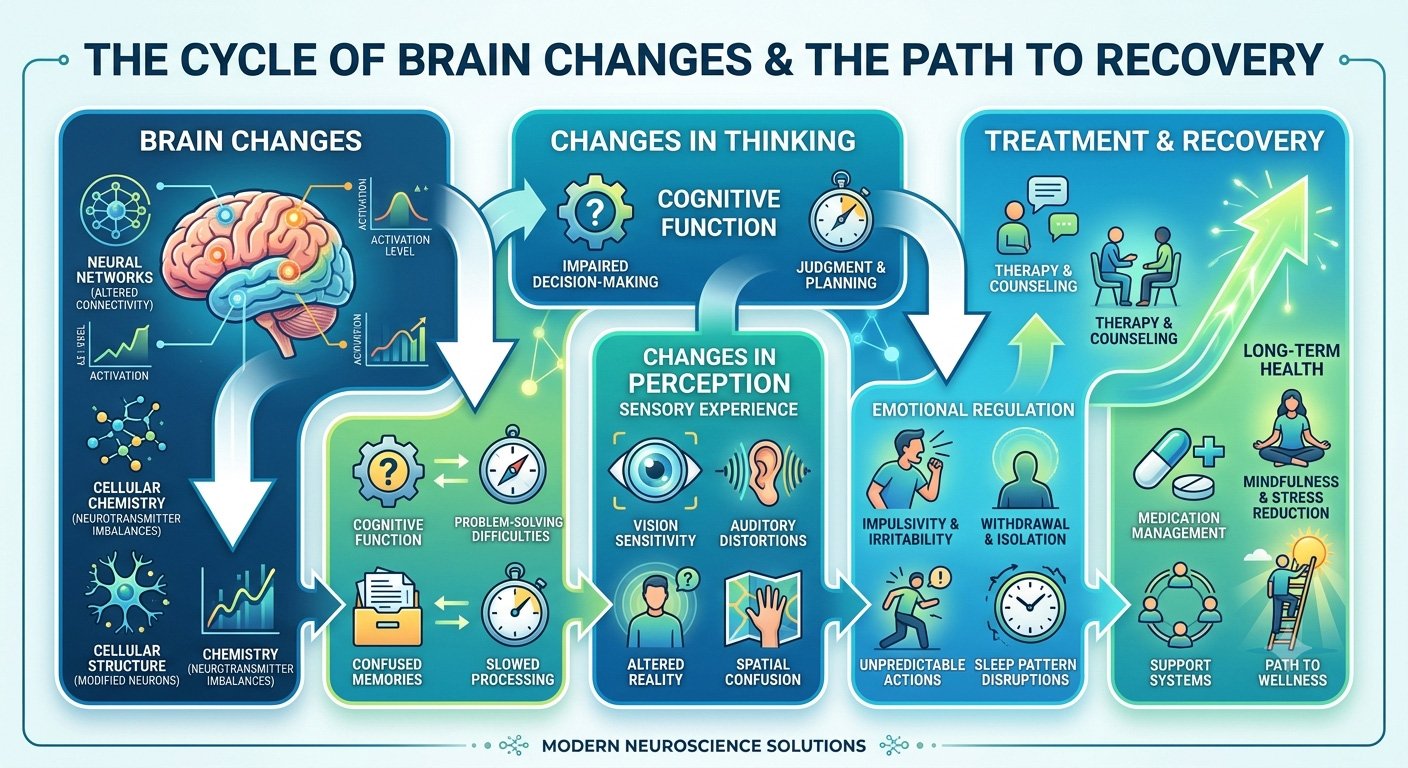
Schizophrenia involves one’s process of perception of experience and reality. This is because of this reason, one would suffer from auditory hallucinations, fixed delusions, and logical reasoning problems.
Apart from these “positive” symptoms, most patients also have trouble expressing their emotions, lack of initiative, isolation, and concentration problems.
Though symptoms may develop over several months or even years, in certain instances, the emergence of symptoms takes place much more quickly. Intervention is key to gaining favorable outcomes as well as reducing the impact of subsequent occurrences.
After treatment provided through the cooperation between psychiatry, rehabilitation, and the family environment, they are able to attend schools, go to work, live alone, and even have relationships.
Is Schizophrenia the Same as Split Personality?
x No
It should be observed that there are distinct mental diseases called Schizophrenia and Dissociative Identity Disorder (previously known as Multiple Personality Disorder).
The disease of Schizophrenia is mainly related to:
● Thinking
● Perception
● Reality testing
● Behaviour
● Emotional expression
It does not involve having multiple personalities.
Myth vs Reality
| Myth | Reality |
|---|---|
| “Schizophrenia” translates to “multiple personalities”. | Schizophrenia impacts one’s perception, thought process, and behavior, not identity. |
| All schizophrenics are violent. | The majority of these patients are not violent; rather, they require assistance. |
| Recovery is impossible. | Many people improve significantly with treatment. |
| Medication takes care of everything. | There are multiple ways of achieving recovery apart from medication. |
| The disease impacts intelligence level. | There are different intelligence levels among patients with this disease. |
Clinical Pearl
In most cases, the onset of symptoms is usually preceded by a steady deterioration in function before hallucinations or delusions are noted. Early detection of such symptoms results in early treatment and therefore an improved prognosis.
“Patient Takeaway
Schizophrenia is a sickness—it’s not about you failing as a person. Getting diagnosed early and being treated can have a big impact on your life.”
What Are the Symptoms of Schizophrenia?
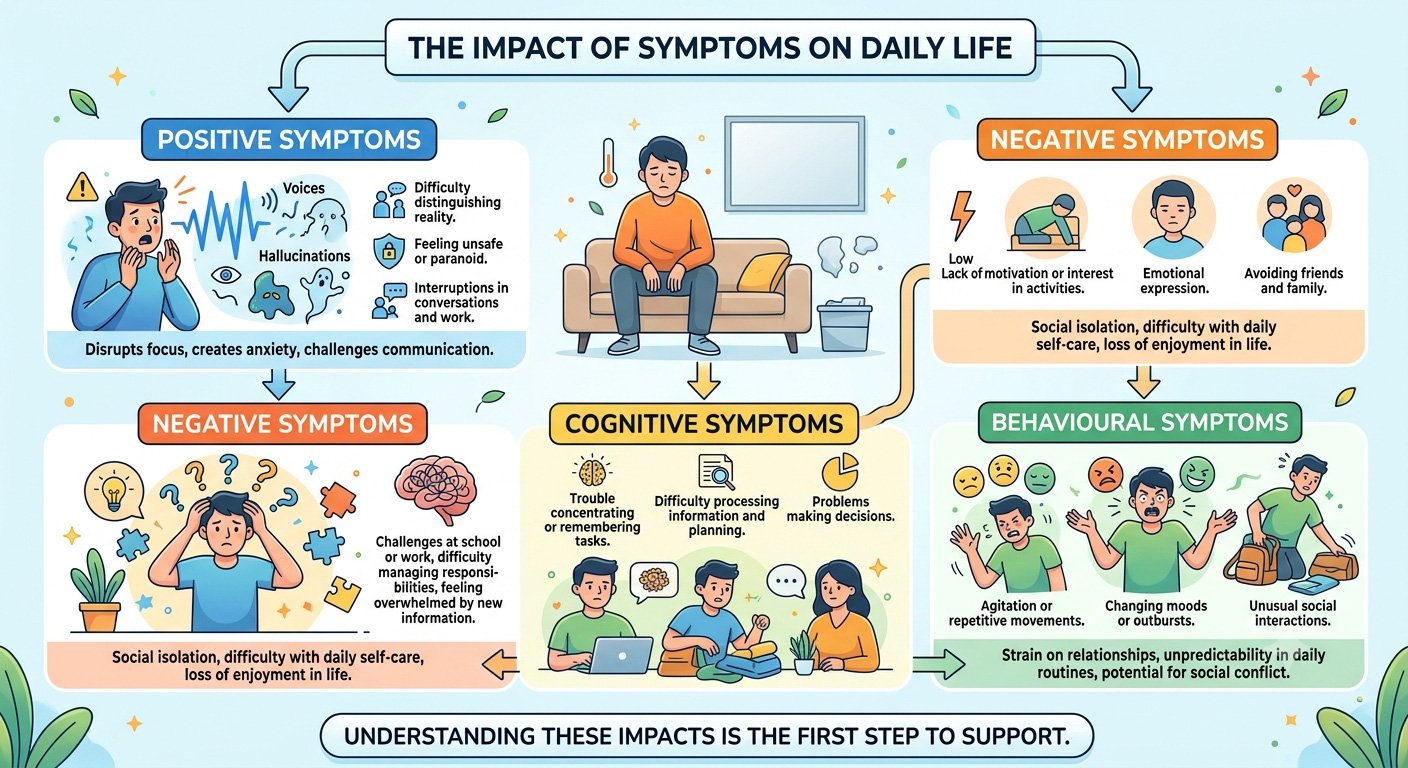
Schizophrenia symptoms can be broadly divided into four broad groups that include positive symptoms, negative symptoms, cognitive symptoms, and behavioral symptoms. Some of these symptoms include hallucinations, delusions, bizarre language, lack of motivation, social isolation, poor concentration skills, and inability to perform daily activities.
Positive Symptoms
Positive symptoms refer to experiences that are added to normal functioning.
Examples include:
- Hearing voices
- Seeing things others do not see
- Delusions
- Suspiciousness
- Paranoid thinking
- Disorganised speech
- Disorganised behaviour
Negative Symptoms
Negative symptoms refer to those symptoms where there is a reduction in the functioning of emotions and behavior. Examples include:
- Reduced emotional expression
- Loss of motivation
- Social withdrawal
- Reduced speech
- Difficulty experiencing pleasure
- Poor self-care
- Reduced interest in activities
Cognitive Symptoms
Many people experience:
- Poor concentration
- Memory difficulties
- Slower information processing
- Difficulty planning tasks
- Problems with decision-making
- Reduced attention
Behavioural Changes
Family members may notice:
- Social isolation
- Declining academic or work performance
- Neglect of personal hygiene
- Talking to oneself
- Reduced emotional responsiveness
- Increased suspiciousness
- Sleep disturbances
Common Symptoms of Schizophrenia
| Symptom Category | Examples |
|---|---|
| Positive Symptoms | Hallucinations, delusions, disorganised speech |
| Negative Symptoms | Low motivation, social withdrawal, reduced emotional expression. |
| Cognitive Symptoms | Poor concentration, memory problems, impaired planning |
| Behavioural Symptoms | Isolation, neglect of hygiene, reduced work or academic functioning |
Clinical Note
It is also important to mention that schizophrenic patients do not always have their delusions and hallucinations at all times. These symptoms are sporadic, and patients tend to improve after more treatment.
Professional Evaluation Required If:
● Someone starts hearing voices that other people can’t hear.
● Strong beliefs develop despite clear evidence to the contrary.
● Behaviour becomes increasingly disorganised.
● Social withdrawal becomes severe.
● Personal hygiene declines significantly.
● The individual performs poorly in studies or work.
● There is any worry about suicidal ideation or self-care ability.
What Causes Schizophrenia?
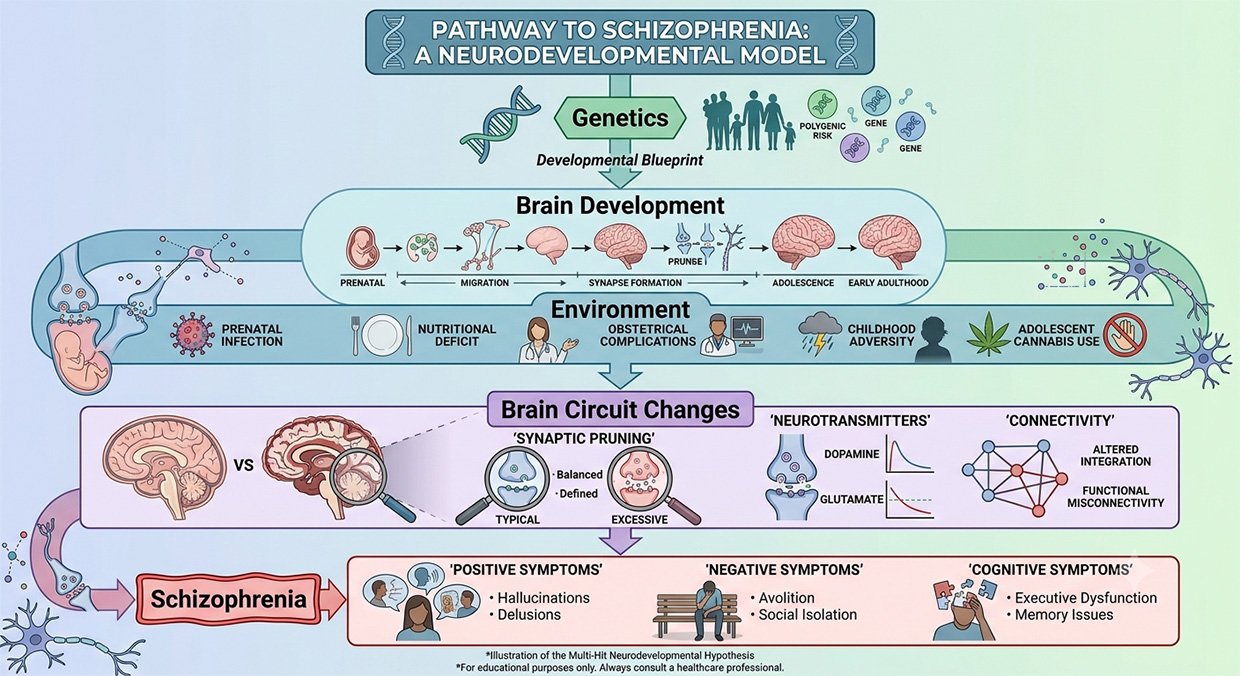
Schizophrenia develops due to a combination of several biological, environmental, developmental, and genetic factors. Schizophrenia is not caused by bad parenting, weakness of character, or any deficiency in one’s willpower. The development of schizophrenia is related to brain development, genetics, and environment.
Schizophrenia is among the most studied psychiatric conditions, but there is no universal cause that leads to all cases of schizophrenia.
The prevailing scientific knowledge on the topic shows that the biopsychosocial model can be applied in the case of schizophrenia when biological predisposition meets environmental factors at different stages of development.
Abnormalities exist in the development of the brain, neuron interaction, neurochemicals, and neural circuits for perception, cognition, emotions, and behavior in schizophrenia patients.
One important thing is that schizophrenia has nothing to do with upbringing, personality disorder, or any supernatural factors.
Genetic Factors
Family history makes one susceptible to schizophrenia, even though genetics alone does not decide whether or not one gets the disorder.
According to research, the following points have been established:
- Multiple genes contribute to risk.
- Possession of a first-degree family member with schizophrenia increases susceptibility.
- Many people who have a family history of schizophrenia do not get it.
- Many patients have no known family history.
Brain Biology
Neuroimaging and neuroscience research suggest differences involving:
- Dopamine pathways
- Glutamate signalling
- Prefrontal cortex
- Temporal lobes
- Hippocampus
- Brain connectivity
- Neural development
Developmental Factors
Studies indicate that the risk may increase because of interactions that take place either before or during the brain's development.
Examples include:
- Genetic vulnerability
- Certain pregnancy complications
- Birth complications
- Neurodevelopmental differences
These are predisposing factors but do not necessarily cause schizophrenia.
Environmental Factors
Examples of environmental factors that may be associated with this condition are:
- Severe psychological stress
- Childhood adversity
- Social isolation
- Substance misuse
- Urban living
- Migration-related stress in some populations
Risk Factors for Schizophrenia
| Risk Factor | Examples |
|---|---|
| Genetics | Family history |
| Brain Development | Neurodevelopmental differences |
| Neurotransmitters | Pathways involving dopamine and glutamate |
| Environmental Stress | Major life changes |
| Substance Use | Some recreational drugs |
| Social Factors | Isolation, chronic stress |
Is it Possible to Prevent Schizophrenia?
At present, there is no way of preventing the occurrence of this disease.
However, the early recognition of the symptoms, abstaining from taking drugs, being under treatment, and visiting a psychiatrist will produce better results in the long term.
Clinical Pearl
The occurrence of schizophrenia is caused by both biological and environmental factors. Identifying the cause of the disease helps eliminate its stigma.
What are the early warning signs of Schizophrenia?
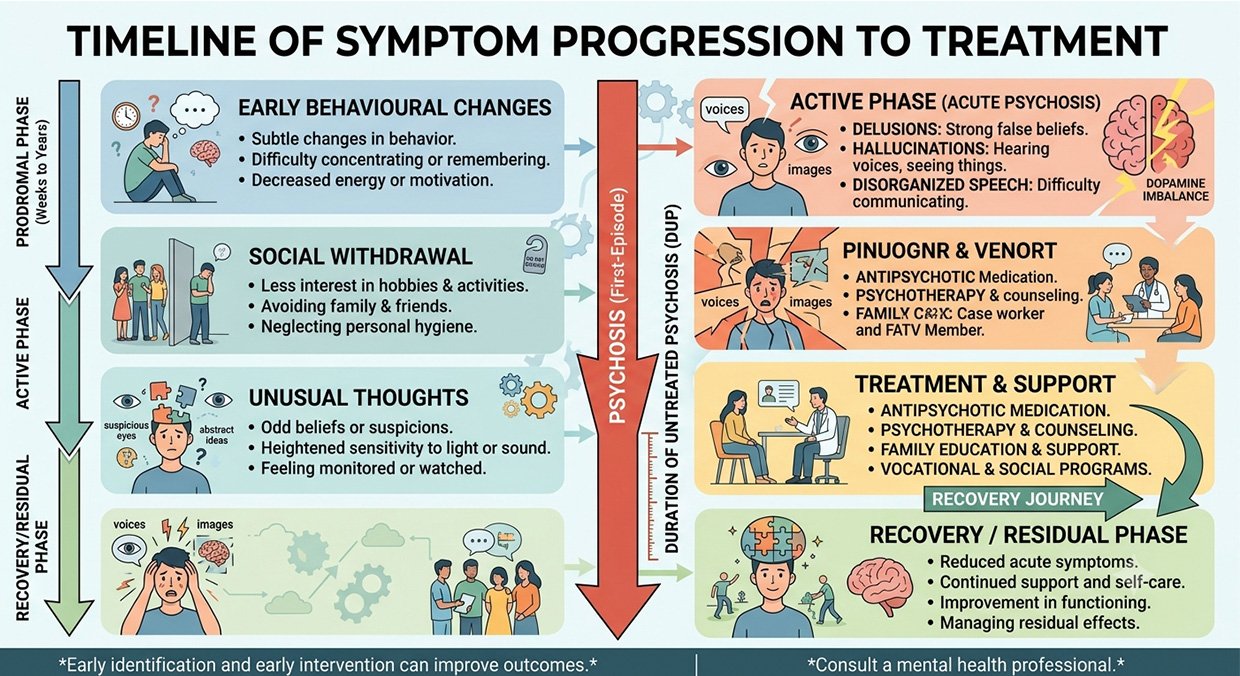
Schizophrenia is usually manifested through gradual onset. Early signs of this mental condition include social withdrawal, reduced effectiveness academically and professionally, paranoia, low drive to act, unusual sleeping patterns, emotional withdrawal, poor concentration, and bizarre thoughts or perceptions. The mentioned signs assist in making a diagnosis of schizophrenia at its early stages.
It is widely thought that schizophrenia erupts quickly through either delusions or hallucinations.
However, many patients go through a prodromal stage where there is gradual development of some psychological and behavioural changes before any signs of psychosis manifest themselves.
Understanding these changes makes it possible for earlier intervention.
Emotional Changes
Individuals may experience:
- Reduced emotional expression
- Anxiety
- Depression
- Irritability
- Emotional withdrawal
Behavioural Changes
Family members often notice:
- Spending more time alone
- Declining personal hygiene
- Loss of interest in hobbies
- Reduced social interaction
- Declining school or work performance
- Increased suspiciousness
Cognitive Changes
Examples include:
- Poor concentration
- Memory difficulties
- Difficulty organising thoughts
- Reduced attention
- Difficulty making decisions
Early Perceptual Changes
Some people may notice:
- Feeling that things seem "different"
- Increased suspiciousness
- Difficulty distinguishing imagination from reality
- Mild unusual sensory experiences
- Increased sensitivity to sounds or surroundings
Early Warning Signs
| Category | Examples |
|---|---|
| Emotional | Anxiety, emotional withdrawal |
| Behavioural | Isolation, poor hygiene |
| Cognitive | Poor concentration, memory difficulties |
| Functional | Declining work or academic performance |
| Perceptual | Mild unusual experiences |
Clinical Pearl
It is important to understand that early intervention will give positive effects in the future. If one sees that there are gradual changes in the behavior of a person, then this individual should have psychiatric evaluation conducted.
How Is Schizophrenia Diagnosed?
Schizophrenia is determined using an extensive psychiatric evaluation. A psychiatrist looks at the symptoms, how long they last, behavior, cognition, and the influence of the illness on the individual’s life. There is no specific blood test or scan of the brain that can diagnose schizophrenia.
Diagnosis involves conducting an extensive clinical evaluation.
As many other medical and psychiatric disorders can mimic schizophrenia, the symptoms are carefully evaluated by psychiatrists to rule out a diagnosis.
The purpose of the evaluation is to find out if:
- Whether psychosis is
- Schizophrenia is the appropriate diagnosis for the symptoms.
- Whether substance use or medical illness may be
Occasionally, laboratory testing and brain imaging may be required to rule out other medical disorders, but they don’t help in diagnosing schizophrenia.
What Happens During the Consultation?
The psychiatrist may ask about:
- Hallucinations
- Delusions
- Changes in behaviour
- Sleep
- Mood
- Concentration
- Family history
- Substance use
- Previous treatment
- Occupational and social functioning
Mental Status Examination
The following may be included during assessment:
- Appearance
- Behaviour
- Speech
- Mood
- Affect
- Thought process
- Thought content
- Hallucinations
- Insight
- Judgment
- Cognitive functions
Differential Diagnosis
Several conditions may present with psychotic symptoms.
| Condition | How It Differs From Schizophrenia |
|---|---|
| Bipolar Disorder | The occurrence of psychosis occurs during the mood episodes. |
| Psychotic Depression | Psychosis occurs only if there is severe depression. |
| Schizoaffective Disorder | Psychosis is always persistent, and there are mood episodes. |
| Substance-Induced Psychosis | The symptoms are associated with substance use. |
| Brief Psychotic Disorder | The symptoms are present for a short duration of time. |
Schizophrenia Assessment Components
| Assessment | Purpose |
|---|---|
| Clinical Interview | Understand symptoms |
| Mental Status Examination | Evaluate psychological functioning |
| Medical Assessment | Exclude physical illness |
| Family History | Assess inherited risk |
| Functional Assessment | Monitor impact on daily activities. |
| Risk Assessment | Determine safety and necessity of urgent treatment. |
IMPORTANT NOTE
Internet-based schizophrenia assessment tests may be used to increase awareness but not for diagnosing schizophrenia.
Diagnosis must be made through a full psychiatric assessment performed by a psychiatrist.
Concerned About Early Signs of Psychosis?
Early diagnosis will make a positive difference in your recovery process, which in turn will decrease the influence of schizophrenia on studies, career, social life, etc.
What are the treatment options for Schizophrenia?
This mental condition is referred to as schizophrenia, and it’s a lifelong brain disorder. Some of the treatment methods that can be used include antipsychotics, psychoeducation, psychological intervention, social recovery, family therapy, occupation, and psychiatry. Early diagnosis and treatment contribute to successful recovery.
- Reduce hallucinations and delusions
- Improve thinking and behaviour
- Restore daily functioning
- Improve independence
- Reduce relapse
- Improve quality of life
- Support community reintegration.
- Symptom severity
- Duration of illness
- First episode versus recurrent illness
- Medical conditions
- Previous treatment response
- Family support
- Occupational functioning
Goals of Treatment
Treatment aims to:
- Control psychotic symptoms
- Improve insight
- Restore social functioning
- Improve self-care
- Support employment or education
- Strengthen family support
- Prevent relapse
- Improve long-term recovery
Evidence-Based Treatment for Schizophrenia
| Treatment | First Episode | Acute Episode | Long-Term Care |
|---|---|---|---|
| Antipsychotic Medication | ✅ | ✅ | ✅ |
| Psychoeducation | ✅ | ✅ | ✅ |
| Family Intervention | ✅ | ✅ | ✅ |
| Psychological Therapy | After Stabilisation | Selected Patients | ✅ |
| Psychosocial Rehabilitation | After Stabilisation | — | ✅ |
| Vocational Rehabilitation | — | — | ✅ |
Clinical Pearl
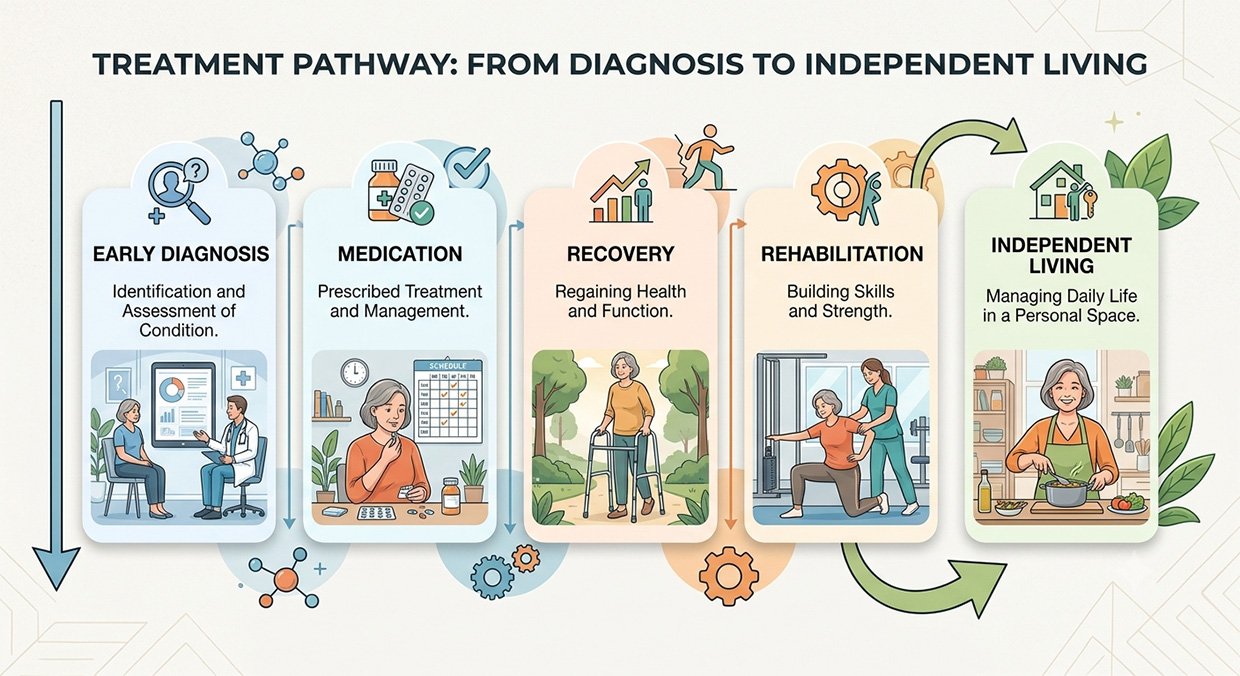
In schizophrenia treatment, apart from working to control hallucinations and delusions, there is an effort to restore people to education, work, independent living, and significant social interactions.
How Do Medications Help Treat Schizophrenia?
The use of antipsychotics is central to treating schizophrenia. This type of medication is essential to reducing hallucinations, delusions, disorganized thoughts, and agitation, besides decreasing the chances of future psychotic attacks. Medications should always be prescribed by a qualified psychiatrist.
Treatment is individualized in terms of:
- First episode or recurrent illness
- Symptom severity
- Previous response
- Side-effect profile
- Medical conditions
- Lifestyle
- Personal preferences where appropriate
Medications Generally Administered
Treatment will consist of:
- Atypical antipsychotics
- Classical antipsychotics (as appropriate)
- Adjunctive medications when clinically indicated
The choice of medications will be entirely based on clinical judgment.
Long-Acting Injectable Medications
In some situations, LAI antipsychotics may be prescribed by psychiatrists.
The advantages would include the following:
- Better compliance
- Reduced relapse risk
- Fewer missed doses
- Simplified medication schedules
- Regular clinical follow-up
Frequently Asked Questions On Medication
| Question | Answer |
|---|---|
| Are there any medicines that can cure schizophrenia? | No medicine can cure schizophrenia; rather, it helps to manage the symptoms. |
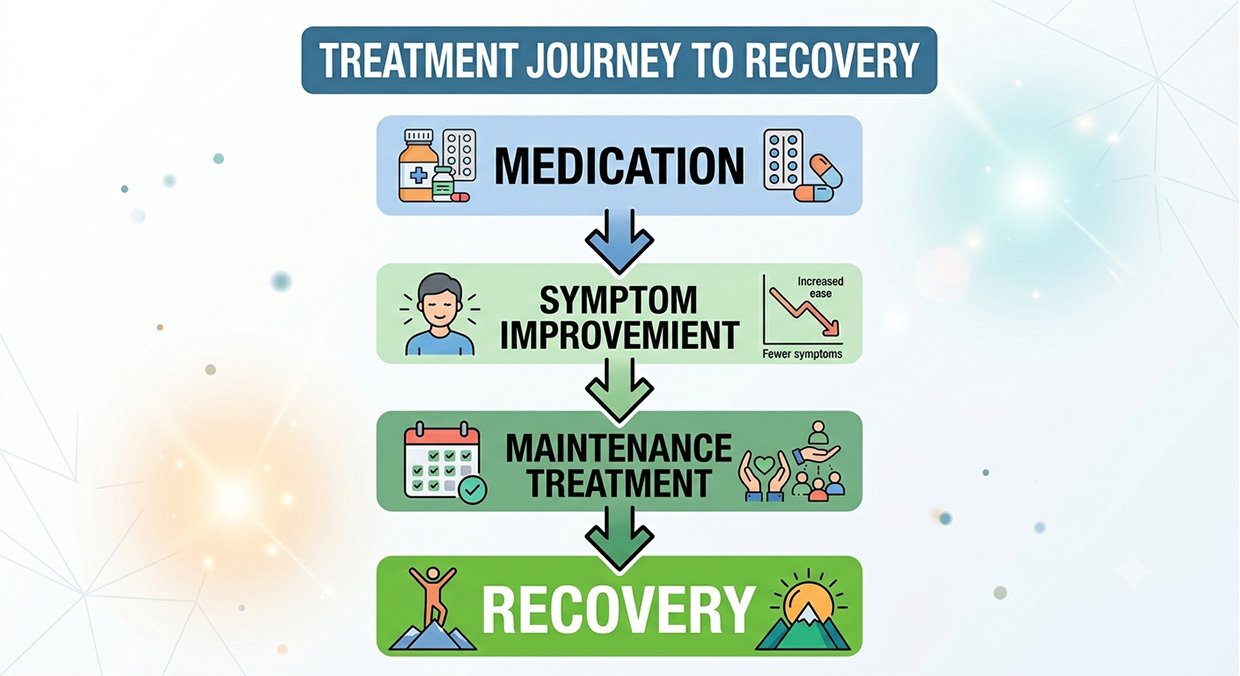
| How long should one keep taking medicines? | Many patients are helped through maintenance treatment for a longer period. |
| Can one discontinue the use of medications when symptoms improve? | Discontinuation of any medication needs to be done under psychiatric care. |
| Can one develop dependency on medicines? | There is no chance of being dependent on antipsychotic drugs. |
| Why is follow-up required? | Follow-up helps assess symptoms, side effects, and efficacy of medicines. |
Clinical Pearl
Relapse is more likely when a patient stops taking medication without professional guidance. Shared decision-making and follow-ups will improve treatment compliance.
“Patient Takeaway
Medication is most effective when used along with rehabilitation, family support, psychological treatment, and healthy daily living.”
How Do Psychological Therapies Help People With Schizophrenia?
These psychological therapies help the individual to know more about the disease and to cope with stress. Therapy can be very beneficial if started once the individual has recovered from the acute phase of the psychosis.
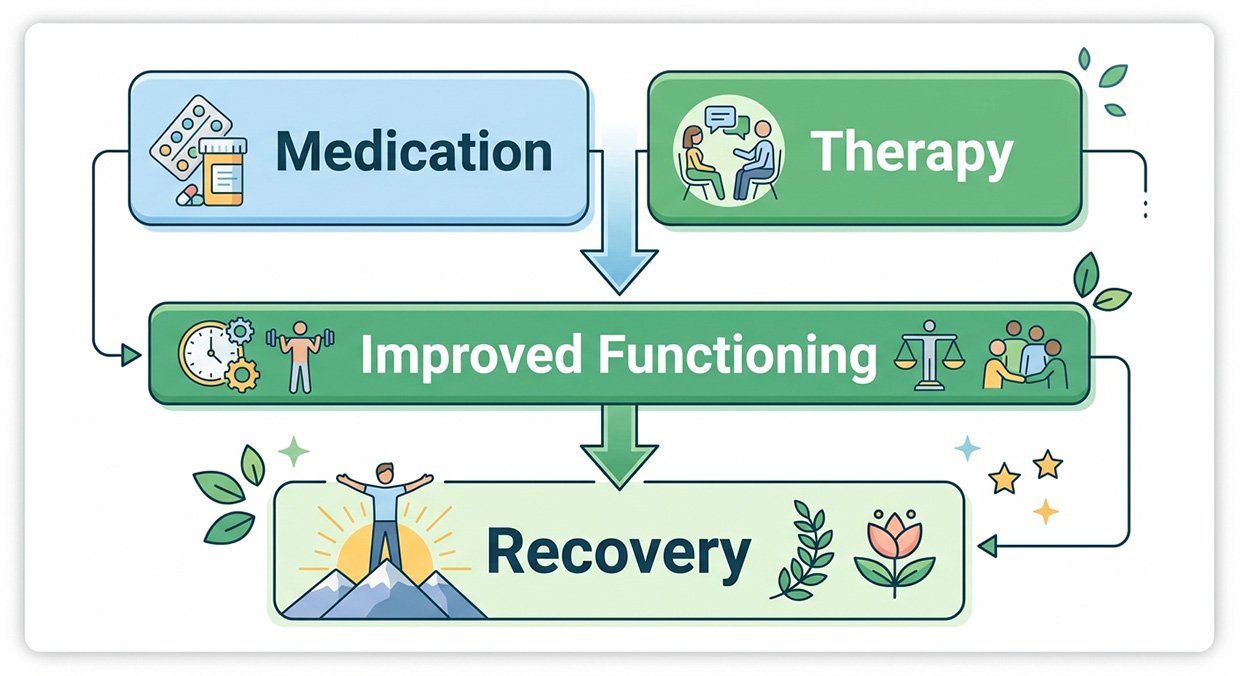
Medicines cure the biological aspects of the disease while psychological treatment helps the patients cope with the disease.
Therapy aims at enhancing functionality as opposed to medication.
Several treatments may be used in the treatment program.
Psychological Interventions
Examples include:
- Psychoeducation
- Cognitive Behavioural Therapy for Psychosis (CBTp)
- Supportive Psychotherapy
- Social Skills Training
- Stress Management
- Relapse Prevention Planning
- Occupational Rehabilitation
Benefits of Therapy
Therapy may help individuals:
- Understand symptoms
- Improve insight
- Reduce distress
- Improve coping
- Increase confidence
- Improve communication
- Return to work or education
- Improve quality of life
Psychological Treatment Benefits
| Focus Area | Benefit |
|---|---|
| Education | Better understanding of illness |
| Coping Skills | Improved emotional adjustment |
| CBT for Psychosis | Reduces distress associated with symptoms |
| Social Skills | Improves relationships |
| Relapse Prevention | Earlier recognition of warning signs |
Clinical Pearl
Psychological therapies are designed to improve functioning and wellbeing alongside medication rather than replace medical treatment.
What Is Psychosocial Rehabilitation?
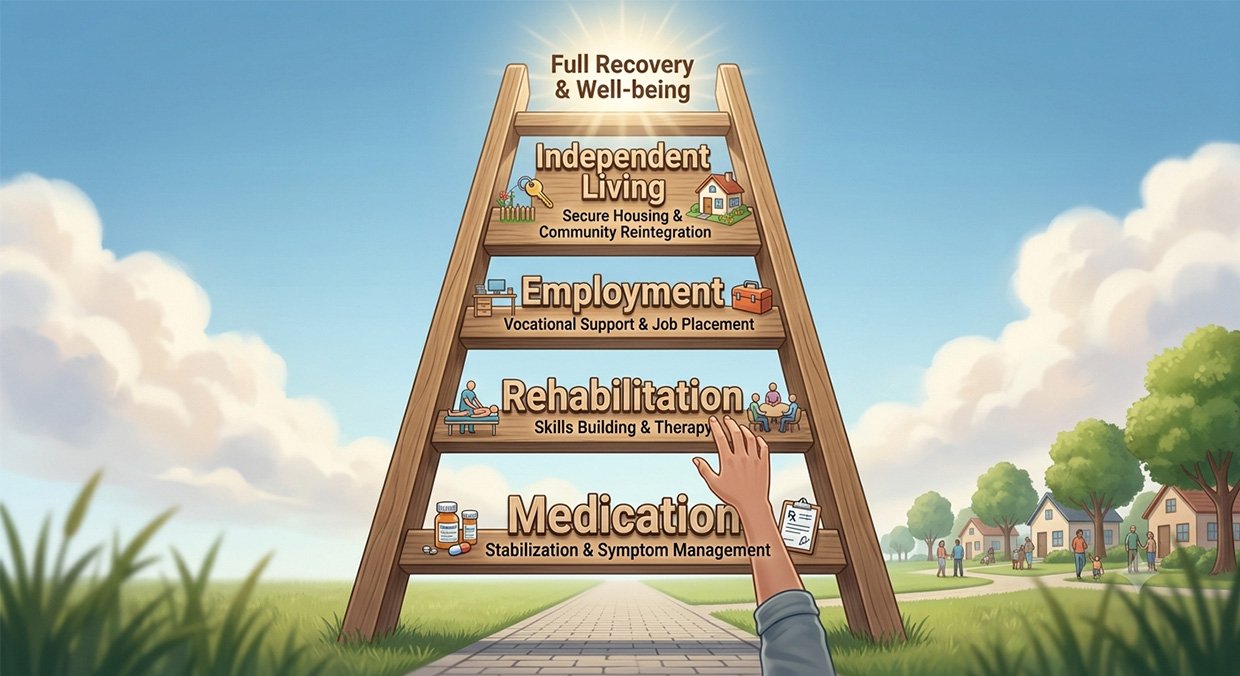
Psychosocial rehabilitation assists those suffering from schizophrenia in becoming independent through enhancing their life skills, social skills, job opportunities, education, and community engagement. The rehabilitation process is an important component of the recovery process.
Treatment goes far beyond merely treating symptoms.
In psychosocial rehabilitation, emphasis is placed on enabling people to engage in their daily functions and gain increased independence.
Rehabilitation programs are customized based on the strengths and functional status of an individual.
Rehabilitation May Include
- Daily living skills training
- Social skills training
- Supported employment
- Vocational rehabilitation
- Educational support
- Cognitive remediation
- Community rehabilitation
- Occupational therapy referrals where appropriate
Areas of Rehabilitation
| Area | Goal |
|---|---|
| Self-care | Greater independence |
| Social Skills | Better relationships |
| Education | Return to studies |
| Employment | Improve vocational functioning |
| Community Participation | Improved quality of life |
Clinical Pearl
The approach of recovery takes into account the reality that individuals with schizophrenia can lead productive lives by working, learning, making relationships, and being independent as long as they get the right treatment.
Why Is Family Education Important in Schizophrenia?
The family has an extremely vital role in the management of schizophrenia. Psychoeducation is used in educating the family on the symptoms, early signs, developing better communication skills, adhering to medications, and coping with the illness.
Schizophrenia usually impacts the whole family.
Furnishing the family with correct information prevents misconceptions, which in turn facilitates the creation of an encouraging recovery environment.
Involving the family helps in improving compliance and lowers the chances of relapses.
Families Can Help By
- Learning about schizophrenia
- Encouraging regular medication
- Supporting appointments
- Recognising early warning signs
- Promoting healthy routines
- Avoiding criticism and confrontation during acute illness
- Encouraging rehabilitation goals
Helpful vs Less Helpful Responses
| Helpful | Less Helpful |
|---|---|
| Encourage treatment | Blaming the individual |
| Stay calm | Arguing about delusions |
| Support routines | Ignoring worsening symptoms |
| Learning about schizophrenia | Misconceptions about schizophrenia |
| Seeking help early | Late onset of seeking help |
Clinical Pearl
Family psychoeducation is considered to be one of the vital evidence-based components in the management of schizophrenia because it improves understanding and communication skills.
What Happens If Symptoms Do Not Improve?
Though most individuals respond well to the appropriate treatment, there are those who continue experiencing the symptoms despite receiving the appropriate treatment. This means that the psychiatrists go ahead and re-evaluate their diagnosis, review their compliance with the medication, and think about advanced forms of treatment.
- Diagnosis
- Medication adherence
- Duration of treatment
- Substance use
- Physical health
- Co-existing psychiatric conditions
- Family support
- Rehabilitation needs
Advanced Treatment Approaches
Depending on the individual's clinical situation, treatment may include:
- Medication optimisation
- Clozapine for resistant schizophrenia where clinically appropriate
- Long-Acting Injectable Medication
- Intensive rehabilitation programmes
- Community mental health support
- Cognitive remediation
- Supported employment programmes
IMPORTANT NOTE
A psychiatrist should assess the case of treatment-resistant schizophrenia. Treatment-resistant schizophrenia should be managed according to set clinical guidelines while monitoring its potential benefits and risks.
Comprehensive Schizophrenia Care at Headspace Mind Clinic
The important determinants that would ensure positive results for people who have schizophrenia include early diagnosis, proper treatment according to scientific research, rehabilitation, and family participation.
What Is the Long-Term Outlook for Schizophrenia?
Schizophrenia is a disease that cannot be cured. Schizophrenia is an incurable mental illness. A person suffering from schizophrenia cannot be cured. Proper treatment, early diagnosis, psychiatric intervention, and social and psychological rehabilitation can help such patients to live a normal life.
- Education
- Employment
- Independent living
- Family life
- Social activities
- Personal goals
Can People Recover from Schizophrenia?
✓ Yes
Many individuals experience:
● Significant reduction in psychotic symptoms
● Better emotional wellbeing
● Improved insight
● Better relationships
● Greater independence
● Stable employment or education
● Long periods without relapse
The sooner the treatment is initiated, the more chances there are to maintain one’s functioning.
What Recovery Looks Like
| Early Recovery | Long-Term Recovery |
|---|---|
| Hallucinations reduce | Better social functioning |
| Delusions become less distressing. | Independent living |
| Better sleep | Stable employment or education |
| Improved self-care | Improved quality of life |
| Better insight | Fewer hospital admissions |
Clinical Pearl
Recovery is measured by improved functioning, independence, and quality of life—not simply by the absence of hallucinations or delusions.
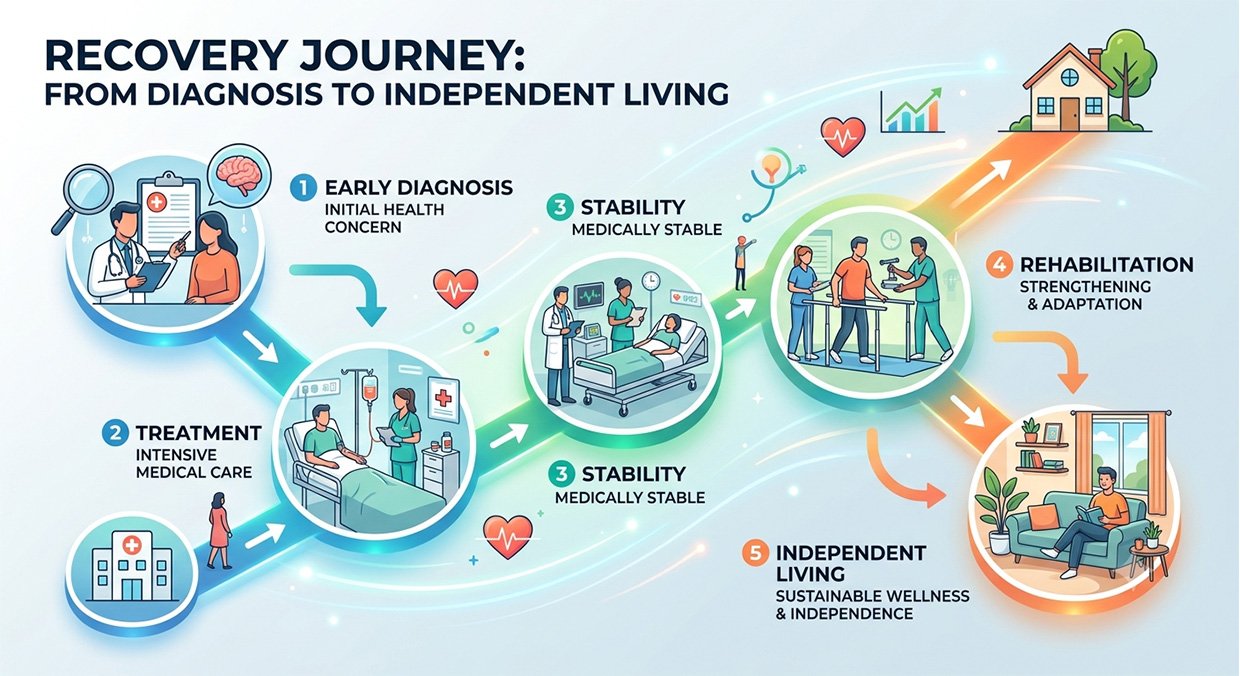
How Can Relapse Be Prevented in Schizophrenia?
Rehabilitation for relapse entails the consistent intake of the prescribed medicine, regular psychiatry checkups, early symptom detection, following healthy routines, controlling stress levels, avoiding the use of recreational drugs, and involvement of family members.
Early Warning Signs of Relapse
Relapsing patients or their families might observe:
- Increased suspiciousness
- Hearing voices returning
- Social withdrawal
- Declining personal hygiene
- Sleep disturbances
- Increased irritability
- Difficulty concentrating
- Reduced medication adherence
- Poor self-care
- Increased confusion
Strategies for Minimizing Risk of Relapse
- Take the medications prescribed exactly as directed.
- Attend follow-up consultations on schedule.
- Avoid alcohol and drug abuse.
- Maintain good sleeping habits.
- Limit sources of stress.
- Keep up with rehabilitation therapy.
- Facilitate the participation of family members.
- Contact professionals if symptoms start appearing again.
Relapse Prevention Checklist
| Strategy | Benefit |
|---|---|
| Continue Medication | Reduces relapse risk |
| Regular Psychiatric Review | Allows early intervention |
| Family Education | Recognises warning signs early |
| Healthy Sleep | Supports brain recovery |
| Avoid use of substances. | Less recurrence of symptoms |
| Rehabilitation | Better functioning |
Clinical Pearl
A relapse usually happens gradually. Identifying small behavioural changes can help make treatment changes before the symptoms become serious enough for hospitalization.
“Patient Takeaway
Seeking help early during relapse is a sign of good illness management—not failure.”
Can Individuals Suffering from Schizophrenia Lead an Independent and Purposeful Life?
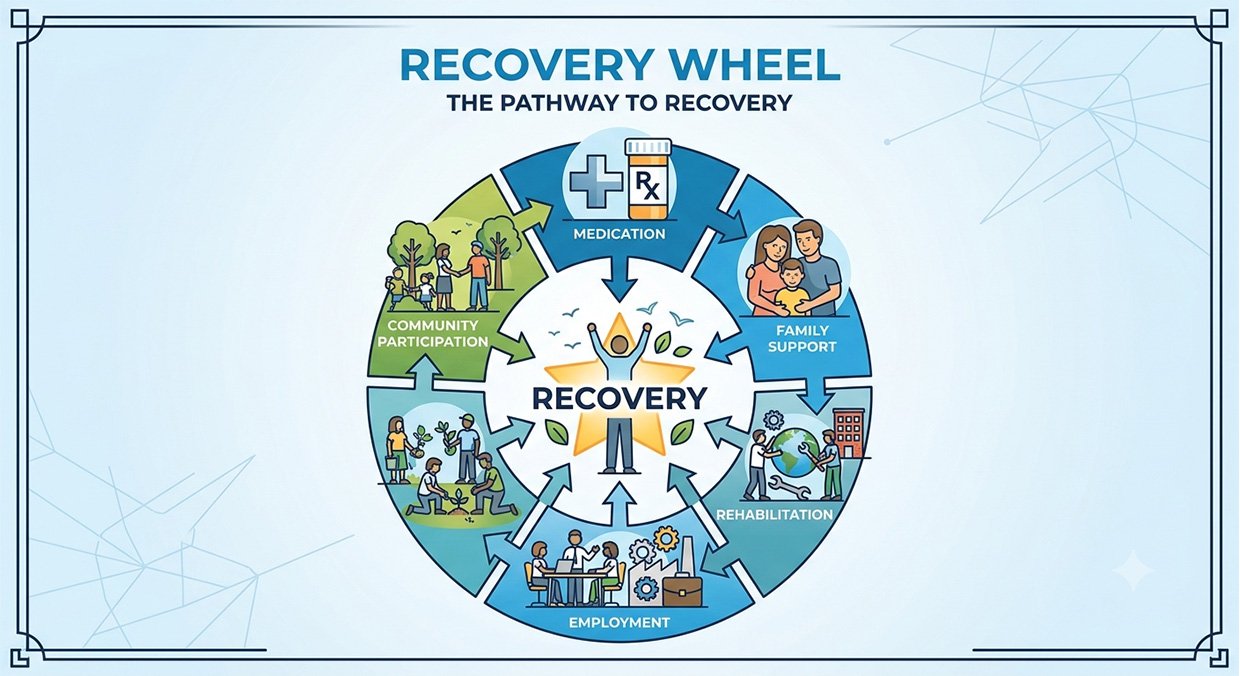
Individuals suffering from schizophrenia and yet managed to acquire an education, work, socialize, and even live on their own are common. This is possible due to early diagnosis of the disease, treatment, rehabilitation, family input, and realistic expectations.
- Return to college or university
- Resume employment
- Live independently
- Manage finances
- Build meaningful relationships
- Pursue hobbies and interests
- Participate in community life
Skills That Rehabilitation Supports
- Self-care
- Communication
- Money management
- Problem solving
- Social interaction
- Workplace skills
- Independent living
- Community participation
Recovery-Oriented Goals
| Area | Long-Term Goal |
|---|---|
| Health | Stable mental health |
| Education | Return to studies |
| Employment | Meaningful work |
| Relationships | Healthy social connections |
| Daily Living | Greater independence |
| Community | Active participation |
Clinical Pearl
Recovery is not defined by diagnosis—it is defined by helping each individual achieve the highest possible level of independence and well-being.
When should you seek urgent psychiatric help?
The psychiatric assessment must be done right away since the individual is showing signs such as hallucinations, delusions, disorganized behavior, suicidal tendency, or inability to take care of oneself.
SEEK IMMEDIATE HELP IF
- Delusions lead to unsafe behaviour
- There is increasing aggression or severe agitation.
- The individual refuses food or fluids.
- Personal hygiene deteriorates severely.
- Medication has been stopped, and symptoms are worsening.
- Suicidal thoughts or self-harm occur.
- Family members believe the individual is unsafe.
If there is any immediate danger of any sort, which may pose any kind of physical danger to yourself or anybody nearby, then kindly contact emergency services.
Why Choose Headspace Mind Clinic for Schizophrenia Treatment in Delhi?
The HeadSpace Mind Clinic addresses all aspects of schizophrenia, which include diagnosis, medication, psychotherapy, psychoeducation for families, psychosocial rehabilitation, and aftercare. We try our best to see that our patients have their symptoms stabilized and become independent.
Our Approach
- Consultant Psychiatrist
- Early Psychosis Assessment
- Individualised Medication Management
- Clinical Psychology Services
- Family Psychoeducation
- Psychosocial Rehabilitation Guidance
- Relapse Prevention Planning
- Long-Term Follow-up
- Confidential Consultations
Services Offered
| Service | Available |
|---|---|
| Psychiatric Consultation | ✓ |
| Medication Management | ✓ |
| Clinical Psychology | ✓ |
| Family Counselling | ✓ |
| Psychosocial Rehabilitation Guidance | ✓ |
| Long-Term Follow-up | ✓ |
Early Treatment Can Change the Course of Schizophrenia
Phone:
Website:
Frequently Asked Questions (FAQ)
Medically Reviewed By
Dr. Deepak Verma
Consultant Psychiatrist & Neuropsychiatrist, Founder & Medical Director, Headspace Mind Clinic
ABOUT THE MEDICAL REVIEWER
The Headspace Mind Clinic’s clinical content is reviewed by Dr. Deepak Verma to make sure that the information provided is scientific, evidence-based, and up to date, not to mention easy for the patient to understand.
PUBLICATION INFORMATION
| Item | Details |
|---|---|
| Author | Headspace Mind Clinic Editorial Team |
| Medical Reviewer | Dr. Deepak Verma |
| Last Medical Review | July 2026 |
| Next Scheduled Review | January 2027 |
| Content Version | 1.0 |
| Content Type | Evidence-Based Patient Education |
EDITORIAL POLICY
- Evidence-based clinical information
- Review by a qualified psychiatrist
- Patient-centred and stigma-free language
- Regular updates based on current psychiatric guidelines
- Clear distinction between educational information and personalised medical advice
REFERENCES
- Indian Psychiatric Society (IPS) Clinical Practice Guidelines
- National Institute for Health and Care Excellence (NICE)
- American Psychiatric Association (APA)
- World Health Organization (WHO)
- National Institute of Mental Health (NIMH)
- PubMed-indexed systematic reviews and meta-analyses on schizophrenia and psychotic disorders