
CBT Therapy in Delhi: Understand Your Thoughts, Emotions and Behaviour
What is Cognitive Behavioural Therapy?
What Is CBT Therapy?
Cognitive Behavioural Therapy, commonly called CBT is a psychological treatment
that examines how thoughts, emotions, physical sensations and behaviours can
influence one another.
People sometimes develop patterns of thinking or behaviour that unintentionally
maintain distress. For example a person who worries about making mistakes may
repeatedly avoid tasks. Avoidance can provide short-term relief. It may also
prevent the person from discovering that the situation is manageable.
CBT helps people recognise these patterns and practise ways of responding. The
aim is not to force thinking or deny real problems. Instead therapy helps people
evaluate their experiences accurately develop useful coping strategies and take
practical steps towards their goals.
CBT is often collaborative and goal-oriented. The therapist and patient work
together to understand the difficulty agree on treatment priorities practise
relevant skills and review progress.
Core elements of CBT

1. Thoughts Notice
Notice interpretations, assumptions and predictions that may influence how a situation feels. Therapy may help distinguish a fact from an assumption or an automatic conclusion.
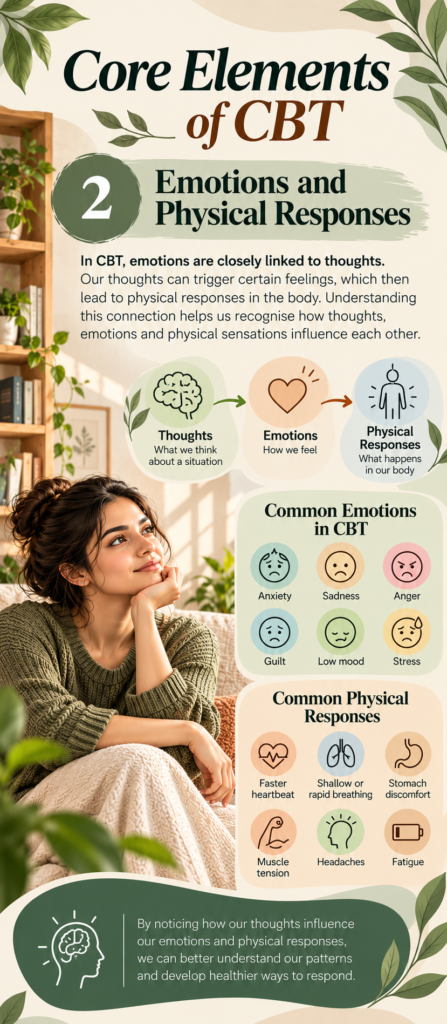
2. Emotions and physical Responses
Understand how situations may trigger emotions such as anxiety, sadness, guilt or anger, alongside physical sensations such as muscle tension or a racing heart.
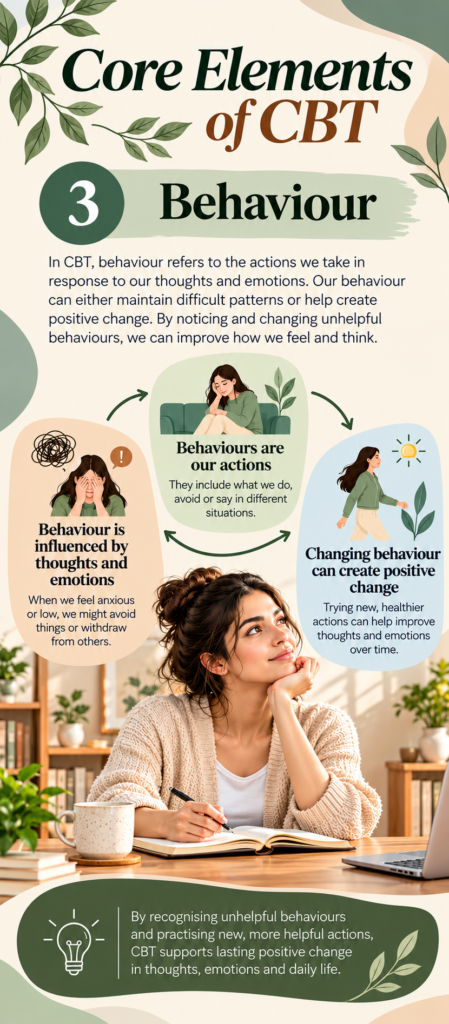
3. Behaviour
Identify actions such as avoidance, withdrawal, reassurance-seeking or repeated checking that may provide temporary relief but maintain a difficulty over time.
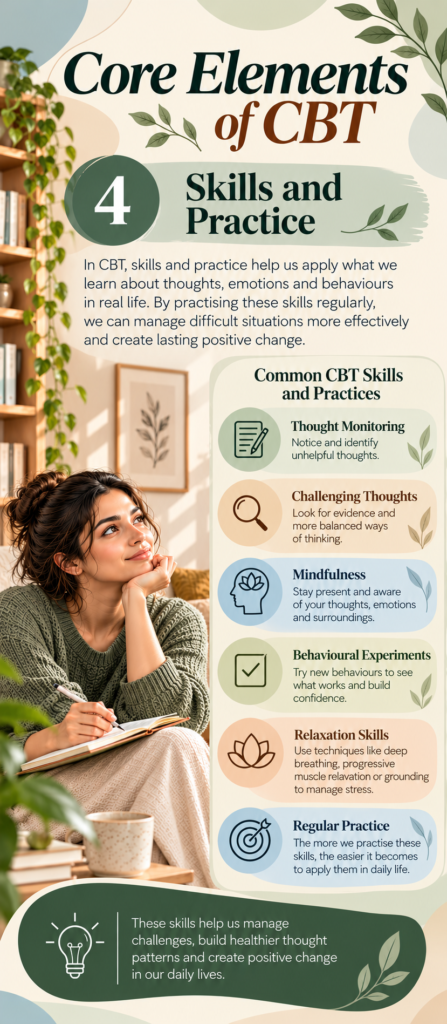
4. Skills and Practice
Develop and practise strategies to respond to difficult thoughts, emotions and situations in ways that support the person’s treatment goals.
Does CBT mean that your problems are “all in your head”?
No. CBT does not mean that distress is imaginary or that a person is responsible for every difficulty they experience.
Mental health is influenced by multiple factors, which may include biological, psychological, social, family, environmental and life circumstances. CBT focuses on the parts of this picture that can be explored and addressed through psychological treatment.
Patient takeaway: CBT is not about blaming yourself for how you feel. It is about understanding patterns and learning ways to respond more effectively.
How does CBT work?
How Does Cognitive Behavioural Therapy Work?
Understand the concern
The therapist learns about the person's symptoms, current difficulties, history and goals. A fuller assessment may be needed before a treatment plan is finalised.
Identify patterns
Together, the patient and therapist explore links between triggering situations, interpretations, emotions, physical reactions and behaviour.
Set practical goals
Treatment goals may focus on daily functioning, reducing avoidance, managing worry, improving routines or addressing other concerns identified during assessment.
- Daily functioning
- Reducing avoidance
- Managing worry
- Improving routines
- Other concerns identified during assessment
Learn and practise skills
Sessions may include guided exercises, thought records, behavioural strategies, problem-solving or other techniques relevant to the treatment plan.
Review progress
The therapist and patient review what is helping, identify obstacles and adjust the treatment plan when needed.
- Review what is helping
- Identify obstacles
- Adjust the treatment plan when needed
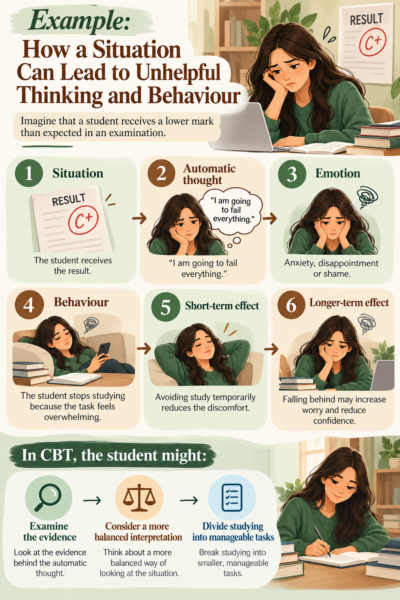
An example of CBT in everyday life
Imagine that a student receives a lower mark than expected in an examination.
- Situation: The student receives the result.
- Automatic thought: “I am going to fail everything.”
- Emotion: Anxiety, disappointment or shame.
- Behaviour: The student stops studying because the task feels overwhelming.
- Short-term effect: Avoiding study temporarily reduces the discomfort.
- Longer-term effect: Falling behind may increase worry and reduce confidence.
In CBT, the student might learn to examine the evidence behind the automatic thought, consider a more balanced interpretation and divide studying into manageable tasks.
A balanced thought could be: “This result is disappointing, but it does not determine every future result. I can identify what went wrong and prepare differently.”
The aim is not to replace a negative thought with an unrealistically positive one. It is to develop a more accurate, helpful response that supports constructive action.
What are the main goals of CBT?
Goals and Potential Benefits of CBT Therapy
CBT goals are individualised. They depend on the presenting concern, the person’s priorities and the treatment plan developed with the therapist.
Possible goals include:
● Recognising automatic thoughts and unhelpful thinking patterns.
● Understanding how behaviour can maintain emotional distress.
● Developing more balanced interpretations of challenging situations.
● Reducing avoidance when avoidance is maintaining a problem.
● Practising problem-solving and decision-making skills.
● Improving coping with uncertainty and everyday stress.
● Building routines that support functioning.
● Improving confidence in managing difficult situations.
● Learning strategies that can continue to be used after therapy ends.
What benefits can CBT offer?
CBT is an evidence-supported approach for several mental health conditions. The effectiveness of CBT depends on the condition the intervention, the persons circumstances and the quality and suitability of treatment.
Some people notice changes in how they respond to situations. Others may need a period of practice or a different treatment approach. No outcome can be guaranteed.
CBT should not be presented as a solution for every mental health concern. When a person has symptoms, significant safety concerns or needs beyond the scope of CBT additional clinical assessment or coordinated care may be required
Who may benefit from CBT?
Who Is CBT Therapy Suitable For?
CBT may be considered for people who experience psychological difficulties that can be addressed through structured cognitive and behavioural strategies.
Depending on the person’s clinical presentation and the specific CBT approach, treatment may be considered for:
● Anxiety-related difficulties.
● Depression and persistent low mood.
● Panic symptoms.
● Certain presentations of obsessive-compulsive disorder (OCD), with appropriate condition-specific techniques.
● Some sleep difficulties, including insomnia when a suitable CBT-based sleep intervention is indicated.
● Stress-related difficulties and unhelpful coping patterns.
● Certain fears and avoidance behaviours.
● Other concerns where a CBT approach is clinically appropriate.
This list is educational, not a diagnosis tool. A person does not need to identify their condition before asking for professional help.
When might a different or additional approach be needed?
Some issues need treatment or a more complete plan from a doctor. For example exposure and response prevention (ERP) is a treatment that has been proven to work for OCD. Cognitive Behavioural Therapy for Insomnia (CBT-I) is a way to treat insomnia and is not the same as regular CBT.
A person with bad symptoms big changes in how they function or a risk to themselves or others may need quick help. A trained doctor can help decide if CBT alone another treatment, medical care or a plan that involves people is the right choice
Is CBT suitable for everyone?
No single therapy suits every person or every clinical situation. Suitability depends on the individual’s needs, preferences, symptoms, goals and available treatment options. People should be encouraged to ask questions and discuss concerns with the professional recommending treatment.
Cognitive Restructuring: Understanding and Reframing Thoughts
What Is Cognitive Restructuring in CBT?
Cognitive restructuring is a CBT technique that helps people recognise, examine and reconsider thoughts that may contribute to emotional distress or unhelpful behaviour.
People often have automatic thoughts in response to difficult situations. These thoughts may occur so quickly that they feel like facts. Cognitive restructuring creates an opportunity to slow down, examine the available evidence and consider a more balanced interpretation.
The goal is not to eliminate negative thoughts or force positive thinking. It is to develop a more flexible and accurate way of interpreting experiences.
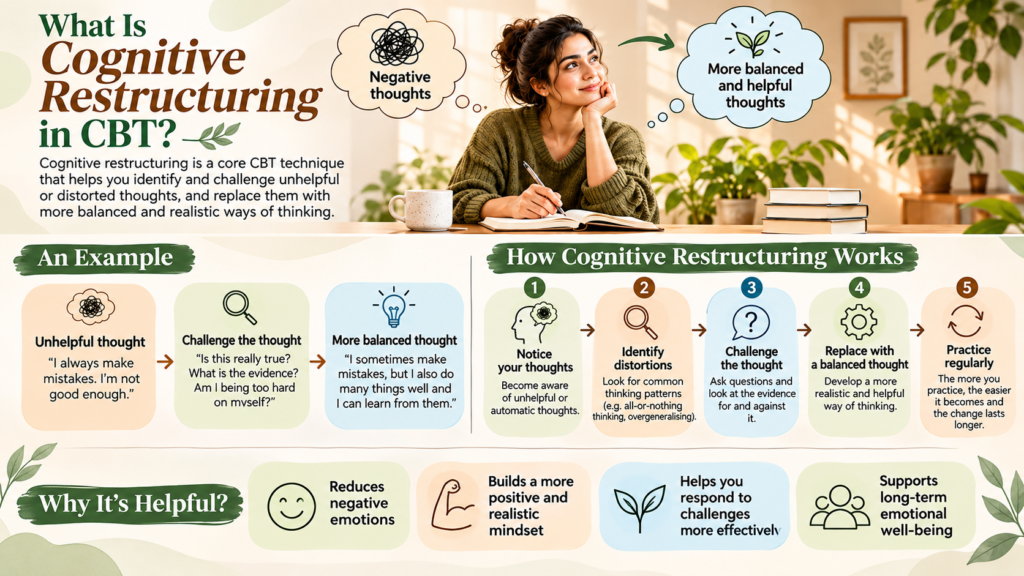
How cognitive restructuring works
A Step-by-Step Example
|
1
Identify the automatic thoughtNotice what went through your mind when a difficult situation occurred. |
Example
“My manager did not reply. I must have done something wrong.” |
|
2
Notice the emotional responseIdentify what you felt and how strongly you felt it. |
Example
Anxiety, with an urge to repeatedly check messages. |
|
3
Examine the evidenceAsk what supports the thought, what does not support it and what information is still missing. |
Example
The manager may be busy or may not have seen the message. |
|
4
Develop a balanced responseConsider an interpretation that takes the available evidence into account. |
Example
“I do not know why there has been no reply yet. I can wait a reasonable amount of time before deciding what to do.” |
Questions a CBT therapist may ask
- What evidence supports this thought?
- Is there evidence that does not fit the thought?
- Am I treating a possibility as a certainty?
- What would I say to a friend in a similar situation?
- Is there another reasonable explanation?
- What practical step would help me respond to the situation?
These questions are examples, not a test. The purpose is to explore thoughts collaboratively rather than argue with the patient.
Patient takeaway: A thought can feel convincing without being the only possible interpretation. CBT helps you investigate thoughts, not automatically reject them.
Common Thinking Patterns Explored in CBT
How Does CBT Help with Negative Thinking Patterns?
People sometimes develop habitual ways of interpreting situations, particularly when they are anxious, low in mood or under stress. Some patterns can make problems feel more certain, permanent or overwhelming than the available evidence supports.
CBT may help people recognise these patterns and consider alternative interpretations.
Common Thinking Patterns and More Balanced Questions
| Thinking pattern | What it means | Example | A more balanced question |
|---|---|---|---|
|
1
All-or-nothing thinking
🚦
|
Seeing a situation in extremes. | “If I am not perfect, I have failed.” | “What would partial progress look like?” |
|
2
Catastrophising
🌩️
|
Predicting the worst possible outcome. | “One mistake will ruin my career.” | “What outcomes are realistically possible?” |
|
3
Mind reading
💭
|
Assuming you know what someone else thinks. | “They did not smile, so they dislike me.” | “What do I actually know about their thoughts?” |
|
4
Overgeneralisation
📅
|
Drawing a broad conclusion from one event. | “I failed once, so I always fail.” | “Does one event establish a consistent pattern?” |
|
5
Personalisation
🙍
|
Taking excessive responsibility for an outcome. | “The whole meeting went badly because of me.” | “What other factors contributed?” |
|
6
Discounting positives
🏆
|
Dismissing evidence of success. | “That achievement does not count.” | “What does this achievement tell me?” |
|
7
Emotional reasoning
🧠
|
Treating a feeling as proof. | “I feel unsafe, so danger must be certain.” | “What does the feeling tell me, and what does the external evidence show?” |
|
8
Should statements
📋
|
Rigid rules about how things must be. | “I should never feel nervous.” | “What is a realistic expectation in this situation?” |
These labels describe possible patterns, not character flaws or psychiatric diagnoses. Sometimes a negative interpretation is accurate, and a strong feeling may reflect a genuine risk. CBT should help people assess circumstances thoughtfully, not dismiss legitimate concerns.
How to use this table
Patients can begin by noticing a recurring thought and asking whether it is helping them understand the situation accurately. They do not need to classify every thought or complete every exercise perfectly.
When a thought relates to abuse, discrimination, unsafe surroundings or another real problem, the response may need to focus on safety and practical action rather than reframing the situation as a thinking error.
Behavioural Activation: Taking Action When Motivation Is Low
What Is Behavioural Activation in CBT?
Behavioural activation is a method used mostly in treating depression. It helps people see how activity, avoidance, mood and daily habits may be connected.
When someone feels low, tired or overwhelmed they may stop doing things that used to bring structure, connection, joy or a sense of success. Less activity can sometimes make low mood worse making it harder to start again.
Behavioural activation helps the person plan steps that match their needs and what is important to them. The goal is not to be busy all the time or ignore the need to rest
Breaking an overwhelming task into smaller steps
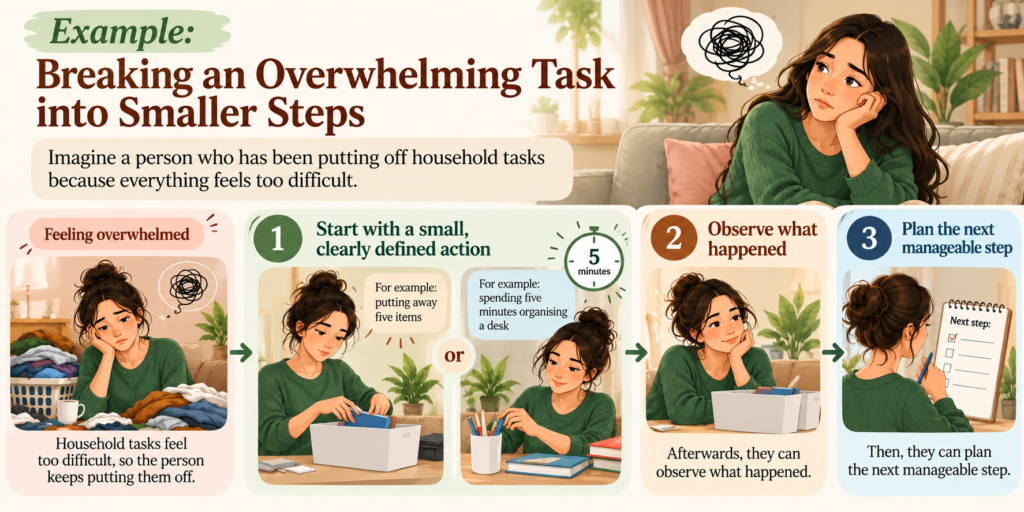
Imagine a person who has been putting off household tasks because everything feels too difficult.
Instead of setting a goal to complete the entire housework routine, they might begin with one small, clearly defined action, such as putting away five items or spending five minutes organising a desk.
Afterwards, they can observe what happened and plan the next manageable step.
Common behavioural activation strategies
- Scheduling a small, achievable activity.
- Reintroducing activities associated with enjoyment or meaning.
- Building regular routines around daily needs.
- Breaking large tasks into smaller steps.
- Identifying barriers that lead to repeated avoidance.
- Tracking activity and mood to notice pattern.
- Planning realistic social contact where appropriate.
Is behavioural activation the same as forcing yourself to be productive?
No. The approach aims to support meaningful and manageable activity, not constant productivity. A good plan takes account of physical health, fatigue, disability, responsibilities and the person’s current capacity.
Depression Treatment in Delhi.
Exposure-Based Techniques and Avoidance
How Does CBT Address Avoidance and Fear?
Avoidance can keep anxiety going. When a person runs away from a situation that’s actually manageable their anxiety might go down for a moment. However they do not get the chance to learn if they could handle it or if the bad thing they were afraid of would even happen.
Exposure-based CBT techniques help people face feared situations, feelings or thoughts in a planned and safe way.
Exposure is not about making someone feel overwhelmed or forcing them into a situation without their agreement. The method, speed and goals depend on the problem. Should be decided with a trained professional.
An illustrative example
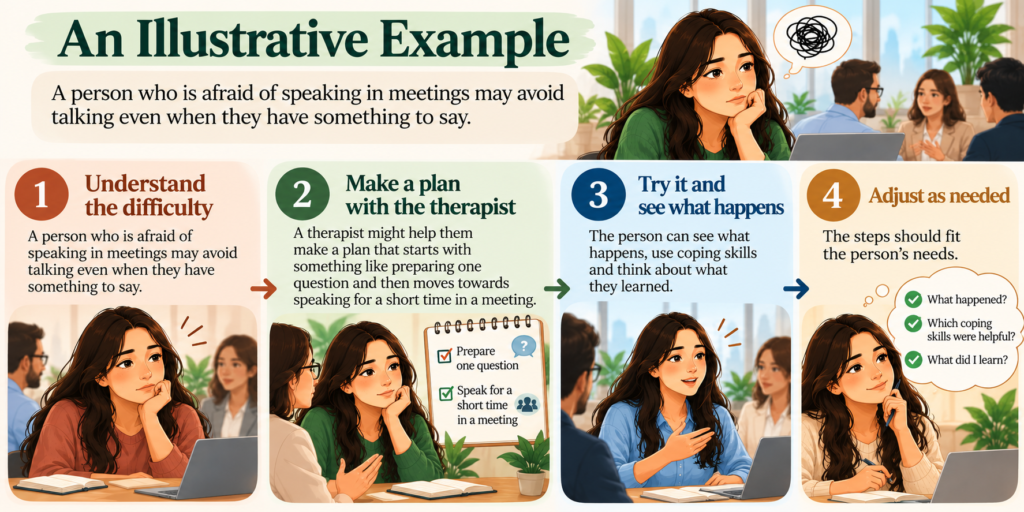
A person who is afraid of speaking in meetings may avoid talking even when they have something to say.
A therapist might help them make a plan that starts with something like preparing one question and then moves towards speaking for a short time in a meeting.
The person can see what happens use coping skills and think about what they learned. The steps should fit the person’s needs
Exposure is not the same as ERP
Exposure is used in different forms of CBT. Exposure and Response Prevention (ERP) is a specific treatment approach particularly associated with obsessive-compulsive disorder (OCD).
In ERP, a person works with a trained professional to approach relevant triggers while reducing compulsive responses. General exposure strategies should not be presented as interchangeable with a complete ERP treatment plan.
Important safety note
Exposure should not be used to encourage a person to enter genuinely dangerous situations, tolerate abuse or disregard medical advice. A qualified professional should assess the concern and select an appropriate treatment approach.
Problem-Solving and Coping Strategies
How Does CBT Help with Everyday Stress?
Not every difficulty is primarily a thinking problem. Sometimes a person faces a practical challenge that requires planning, communication, decision-making or changes in circumstances.
CBT may incorporate structured problem-solving to help people move from feeling overwhelmed to identifying practical next steps.
A simple problem-solving framework
Other coping strategies that may be used in CBT
A Simple Problem-Solving Framework
Define the problem
Describe the issue clearly and specifically. Separate what is known from what is assumed.
known?
assumed?
List possible options
Consider several realistic ways to respond before selecting one.
Evaluate the options
Consider feasibility, possible benefits, risks, resources and likely consequences.
Choose one manageable step
Decide what can reasonably be done first and when.
Review the outcome
Examine what worked, what did not and whether the plan needs to change.
Depending on the treatment plan, sessions may include relaxation strategies, assertive communication, activity scheduling, sleep-related behavioural changes or practical planning.
Not every technique is appropriate for every concern. For example, relaxation alone may not address the mechanisms maintaining OCD, and a sleep problem may require a specific CBT-I approach rather than general stress-management advice.
CBT Homework and Between-Session Practice

Does CBT Require Homework?
CBT often includes practice between sessions. This may involve observing thoughts, completing a brief worksheet, testing a prediction, scheduling an activity or applying a skill in everyday life.
Between-session practice helps people apply what they learn to situations outside the therapy room. The nature and amount of practice should be agreed with the therapist and adapted to the person’s circumstances.
Examples of CBT practice
Examples of CBT Practice
Thought record
Identify a situation, automatic thought, emotion and alternative interpretation.
Activity schedule
Plan manageable activities and review their effect.
Behavioural experiment
Test a prediction in a planned, appropriate way.
Trigger tracking
Notice situations and patterns associated with distress.
Problem-solving worksheet
Break a practical problem into manageable steps.
Skills practice
Apply a strategy discussed during the session.
What if I cannot complete the practice?
Missing an exercise does not mean that therapy has failed. It can be useful information about barriers, including time, low energy, uncertainty about the instructions or a task that feels too difficult.
Patients should tell their therapist what got in the way. The exercise can be simplified, adapted or reconsidered.
Does CBT homework mean the therapist expects me to solve everything alone?
No. Between-session practice supports therapy; it does not replace professional guidance. The therapist remains responsible for working collaboratively with the patient, reviewing difficulties and adapting the plan when appropriate.
What Happens During a CBT Session?
What to Expect During CBT Therapy Sessions
The structure of a CBT session varies according to the individual’s needs, the treatment stage and the specific approach being used.
A session may include:
1. Check-in: Discussing recent experiences, mood and any important changes since the previous session.
2. Review of goals or practice: Looking at what the patient tried and what they learned.
3. Focused discussion: Exploring a specific situation, thought pattern, behaviour or treatment target.
4. Skill development: Learning or practising a technique relevant to the treatment plan.
5. Planning next steps: Agreeing on manageable practice or an action to try before the next appointment.
6. Feedback: Discussing what was helpful and what may need to be adjusted.
Not every session follows this sequence, and the therapist may change the plan when new concerns arise.
Do I have to share everything in the first session?
You can ask questions and discuss your concerns at a pace that feels manageable. The therapist will need enough information to assess your needs and plan treatment, but you can ask why certain information is relevant.
If there are immediate safety concerns, it is important to communicate them promptly so that appropriate support can be arranged.
Will the therapist tell me that my thoughts are wrong?
CBT should be collaborative rather than an argument between the therapist and patient. The therapist may help you examine evidence, consider alternative explanations and understand behavioural patterns. You should be able to ask questions and discuss interpretations that do not feel accurate.
CBT Thought Record: An Educational Example
How Is a CBT Thought Record Used?
A thought record is one way to organise information about a difficult situation. It can help a person notice links between events, thoughts, emotions and behaviour.
The example below is educational and does not replace an individually tailored clinical exercise.
CBT Thought Record
Situation
A friend has not replied to a message.
Automatic thought
“They are upset with me.”
Emotion
Anxiety and uncertainty.
Evidence supporting the thought
There was a disagreement earlier in the week.
Evidence not supporting the thought
The friend has not said they are upset and may be busy.
Balanced alternative
“I am uncertain about the reason for the delay. I can wait and communicate directly if needed.”
Planned response
Continue with the day's activities and avoid repeatedly checking the phone.
A balanced alternative does not have to be cheerful. It should reflect the evidence and help the person decide what to do next.
Optional interactive reflection exercise
Optional educational exercise. Avoid entering identifying or highly sensitive information.
- What happened?
- What thought came to mind?
- What did you feel?
- What evidence do you have?
- What is another reasonable interpretation? Copy My Reflection
This exercise is for reflection only. It does not provide a diagnosis or determine whether a thought is true. If the situation involves actual danger or abuse, prioritise safety and appropriate support.
How Long Does CBT Take?
How Many CBT Sessions Are Needed?
There is no single number of sessions that applies to everyone. CBT is often delivered as a time-limited, structured treatment, but the duration depends on the presenting concern, symptom severity, treatment goals, the specific CBT approach and how the person responds.
Some treatment protocols use a defined course, while more complex or persistent difficulties may require a longer or more specialised plan. A condition-specific intervention such as CBT-I may follow a different structure from CBT for depression or anxiety.
What influences treatment duration?
- The nature and severity of the presenting concern.
- Whether one or several difficulties need to be addressed.
- The person's goals and preferences.
- The type of CBT being provided.
- The opportunity to practise techniques between sessions.
- Other clinical, social or practical factors affecting progress.
- Whether additional treatment or psychiatric care is indicated.
How is progress reviewed?
Progress can be checked by talking about symptoms, daily activities, behavior patterns and how well someone is moving toward the goals they have set. If needed the therapist might use tools or other structured methods.
Improvement does not always happen in a line. A tough week does not automatically mean the treatment has failed. If progress stops the patient and the therapist can look again at the plan the goals the methods being used and whether a different way might work better.
Important: Do not say that a certain number of sessions will definitely work or promise a result unless a trained doctor has checked that the statement correctly matches a certain treatment plan—and even then it should not be seen as a guarantee for every person.
CTA: Learn Whether CBT May Suit Your Needs
Considering CBT Therapy in Delhi?
CBT may be helpful for some types of anxiety, low mood, avoidance and unhelpful ways of coping. The right treatment depends on the persons needs and the kind of problem they are dealing with. A trained mental health professional can help you understand the choices available and whether CBT, a kind of therapy or coordinated care might be the right fit.
Get Ready to Ask Questions to a CBT Therapist. Learn About the Evaluation Process. For the page connect the main CTA to a verified appointment or contact link. Make sure to check the availability of CBT services and the details of the clinician before publishing.
CBT for Anxiety: Understanding Worry, Fear and Avoidance
How Does CBT Help With Anxiety?
Cognitive Behavioural Therapy (CBT) is an evidence-based psychological treatment used for several anxiety-related difficulties. It helps people understand how their interpretations, physical sensations, emotions and behaviours can reinforce anxiety.
Anxiety is not always caused by inaccurate thinking. Sometimes a person faces genuine uncertainty, difficult circumstances or real threats. CBT does not aim to eliminate all worry or make someone ignore danger. Instead, it helps people respond to situations more flexibly and develop practical coping skills.
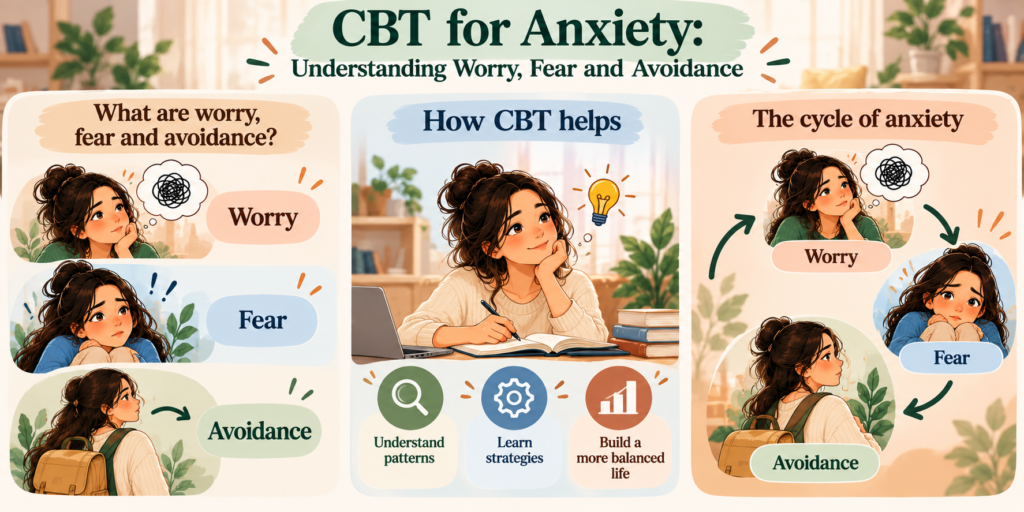
The anxiety cycle
A common anxiety cycle involves five interconnected elements:
- Trigger: A situation, thought, memory or physical sensation activates
- Interpretation: The person predicts a negative outcome or perceives a
- Physical response: The body may respond with a racing heart, sweating, muscle tension or stomach discomfort.
- Behaviour: The person may avoid the situation, repeatedly seek reassurance or engage in checking.
- Short-term relief: Avoidance or reassurance may temporarily reduce distress but can make the feared situation feel more threatening over time.
Illustrative example: Anxiety before a meeting
Trigger
Thought
Response
CBT approach
This is an educational example, not a diagnosis or an individual treatment plan.
CBT techniques that may help with anxiety
Depending on the person’s difficulties and assessment, CBT may involve:
- Identifying anxious predictions and examining the evidence behind
- Distinguishing a possibility from a probability.
- Reducing unhelpful avoidance and excessive reassurance-
- Using graded exposure when clinically
- Developing practical problem-solving and coping
- Learning to tolerate uncertainty without trying to obtain complete
- Practising skills between sessions and reviewing the
Important: The exact approach varies according to the anxiety presentation. Generalised anxiety, social anxiety, specific phobias and panic disorder may require different CBT strategies.
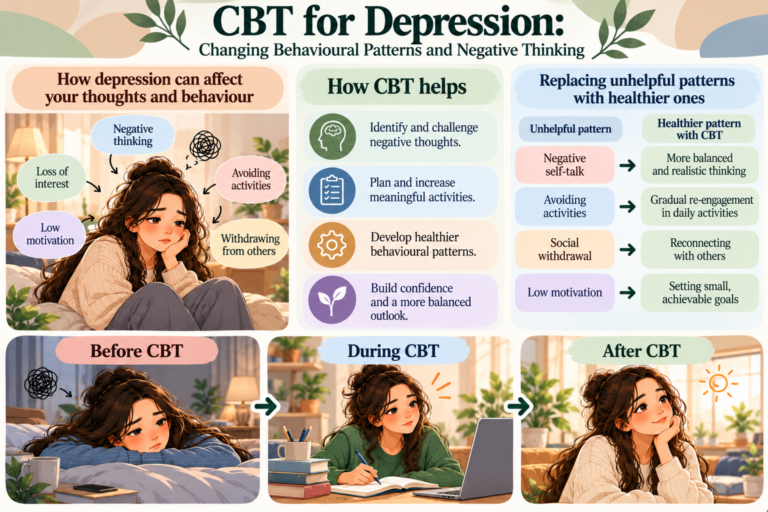
CBT for Depression: Changing Behavioural Patterns and Negative Thinking
Can CBT Help With Depression?
CBT is one of the psychological treatments used for depression. It can help people identify unhelpful thinking patterns, reduce withdrawal from meaningful activities and develop more effective ways to respond to daily difficulties.
Depression is not simply negative thinking or a lack of motivation. It can affect energy, sleep, appetite, concentration, relationships, physical functioning and the ability to experience pleasure. Biological, psychological and social factors may all contribute.
CBT should therefore be presented as a structured treatment option, not as a suggestion that someone can overcome depression by thinking positively.
Understanding the depression cycle
A person experiencing depression may find it increasingly difficult to participate in activities that previously provided pleasure, connection or a sense of accomplishment.
For example:
- Low mood makes it harder to begin daily
- Reduced activity can decrease opportunities for pleasure and
- Isolation may reduce social
- Negative interpretations may reinforce feelings of
- The resulting distress may make activity even more
CBT can help interrupt this cycle through a combination of behavioural and cognitive strategies.
Behavioural activation
Behavioural activation involves gradually increasing meaningful, manageable activities rather than waiting until motivation returns.
A therapist may help the person:
- Establish a realistic daily
- Break larger tasks into smaller
- Reintroduce activities that provide pleasure, connection or
- Identify patterns between activity and
- Reduce avoidant patterns where
- Review what worked without treating setbacks as personal
For example, someone who has stopped meeting friends might initially arrange a short phone call rather than immediately committing to a long social event.
The purpose is not to force constant productivity. It is to rebuild contact with meaningful activities at a manageable pace.
Working with negative thoughts
CBT may also help a person examine thoughts such as:
- “Nothing will ever ”
- “I have failed at ”
- “I am a burden to”
- “If I cannot do something perfectly, there is no point ”
The therapist and patient explore how these thoughts relate to the person’s experiences, evidence, emotions and behaviour. The goal is to develop a more balanced and useful perspective, not to replace every negative thought with a positive one.
When additional support may be needed
Some people benefit from psychotherapy alongside psychiatric assessment and medication. The appropriate approach depends on symptom severity, duration, personal preferences, prior treatment response, safety concerns and other clinical factors.
Thoughts of suicide or self-harm should be taken seriously. A person at immediate risk should seek emergency help rather than relying on a routine therapy appointment.
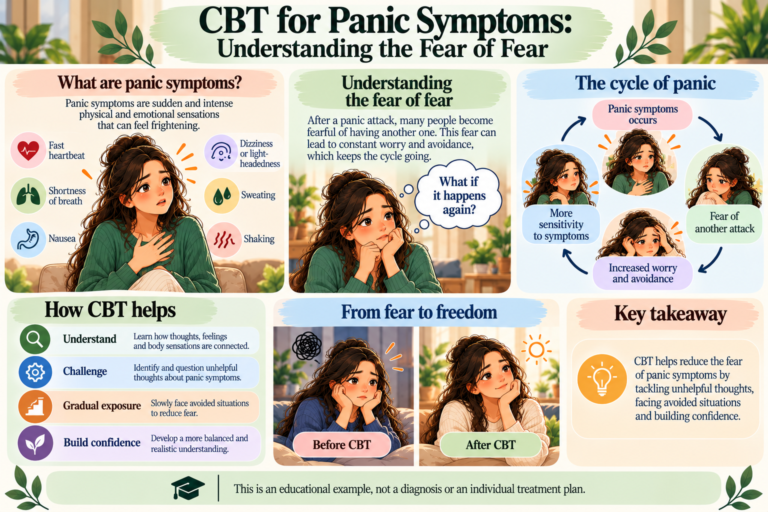
CBT for Panic Symptoms: Understanding the Fear of Fear
How Does CBT Work for Panic Attacks?
Panic attacks are strong feelings of fear or discomfort. They might include a heartbeat, trouble breathing, dizziness, shaking, sweating, chest pain or a feeling of losing control.
These feelings can be scary. However not every chest pain trouble breathing or dizziness should be blamed on anxiety. New, serious or worrying physical symptoms should be checked by a doctor
The panic cycle
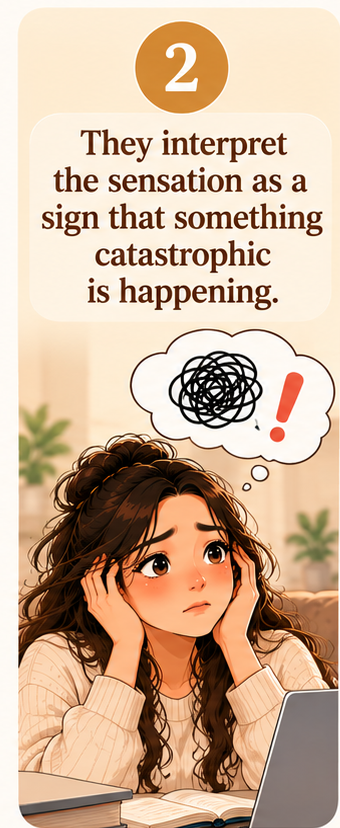
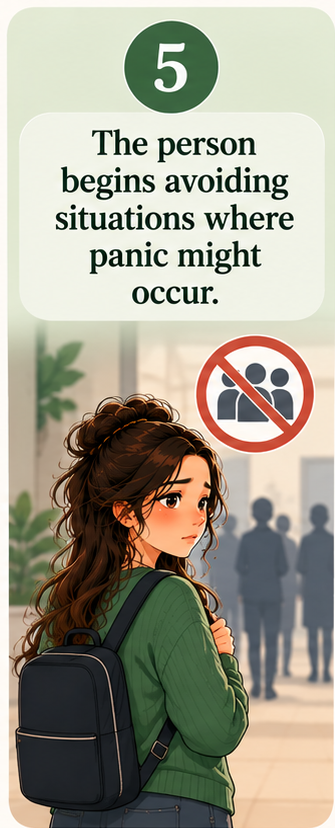
In some people, panic is maintained by a cycle in which physical sensations are interpreted as signs of imminent danger.
For example:



How CBT may address panic
A CBT programme for panic symptoms may include:
A CBT programme for panic symptoms may include:
Psychoeducation
Understanding the relationship between anxiety, physical arousal and threat interpretation.
Cognitive work
Examining catastrophic predictions and considering alternative explanations.
Attention and coping skills
Learning to respond to sensations without automatically treating them as proof of danger.
Behavioural experiments
Testing specific predictions in a safe, planned manner.
Exposure, when indicated
Gradually approaching feared situations or sensations under appropriate clinical guidance.
Relapse planning
Recognising early warning signs and responding constructively.
Interoceptive exposure—planned exposure to feared bodily sensations—may be included in some CBT protocols for panic disorder. It should be selected and supervised by a suitably trained clinician after considering medical history and relevant risks. It is not an exercise that every patient should attempt independently.
What CBT does not promise
CBT cannot guarantee that panic attacks will never recur. A more realistic aim is to help a person understand the panic cycle, reduce fear-driven avoidance and respond more effectively when symptoms arise.
CBT for Obsessive-Compulsive Disorder (OCD)
Is CBT Used to Treat OCD?
Yes. CBT is an important psychological treatment for obsessive-compulsive disorder. However, OCD-specific CBT commonly includes Exposure and Response Prevention (ERP), a structured approach that helps a person face obsession-related fears while reducing compulsive responses.
OCD is not simply a preference for cleanliness or organisation. It may involve intrusive thoughts, images or urges and repetitive behaviours or mental acts that a person feels driven to perform to reduce distress or prevent a feared outcome.
How the OCD cycle may operate
An illustrative cycle can include:
- An intrusive thought or doubt
- The person experiences anxiety or a sense of resposibility
- They perform a ritual, repeatedly check, seek reassurance or mentally review
- Distress temporarily decreases
- The temporary relief reinforces the urge to repeat the ritual in the
Not everyone with OCD experiences visible rituals. Some compulsions occur primarily in the form of mental checking, reviewing, neutralising or reassurance-seeking.
How ERP works
ERP is usually planned collaboratively and gradually. Depending on the person’s symptoms, treatment may involve:
- Creating a hierarchy of feared
- Beginning with appropriately selected exposure
- Learning to experience uncertainty or discomfort without performing the usual
- Reviewing what the person learned from the
- Repeating and progressing through tasks at a suitable
ERP is not intended to humiliate, punish or overwhelm the patient. Exposure plans should be collaborative, clinically appropriate and adapted to the individual’s needs.
Is ordinary thought challenging enough for OCD?
Not always. Trying times to show that an unwanted thought is not true might become another type of reassurance or mental checking for some people with OCD.
A doctor who knows about OCD can decide if ERP or another special treatment is needed. Medicine and mental health care might also be considered depending on the situation. What the person wants.
Internal links: OCD Treatment in Delhi; ERP Therapy; Psychiatric Consultation; Psychological Assessment.
Editorial note: Do not say that all forms of CBT are the same as ERP or that just writing down thoughts is enough for an OCD treatment plan
CBT for Insomnia: Why CBT-I Is a Distinct Treatment
Can CBT Help With Sleep Problems?
CBT can address thoughts and behaviours that interfere with sleep, but Cognitive Behavioural Therapy for Insomnia (CBT-I) is a specific, structured treatment designed for persistent insomnia.
Insomnia can involve difficulty falling asleep, repeated awakenings, waking earlier than intended or dissatisfaction with sleep, together with daytime consequences. Sleep difficulties may also be associated with medical conditions, medication effects, substance use, mood difficulties, sleep apnoea or other sleep disorders.
A proper assessment helps determine which factors need attention.
Components of CBT-I
Depending on the protocol and patient, CBT-I may include:
Depending on the protocol and patient, CBT-I may include:
Stimulus control
Re-establishing a more consistent association between bed and sleep.
Sleep scheduling or sleep restriction/compression techniques
Adjusting time in bed under appropriate guidance to improve sleep efficiency.
Cognitive strategies
Addressing excessive worry, catastrophic beliefs and unhelpful monitoring around sleep.
Relaxation strategies
Managing arousal where useful.
Sleep education
Understanding sleep patterns, habits and factors that influence sleep.
Relapse prevention
Preparing for temporary sleep disruptions without returning automatically to unhelpful patterns.
Sleep restriction techniques are not appropriate for everyone and may need modification or specialist supervision, particularly when other health conditions or safety-sensitive activities are involved.
CBT-I versus general sleep advice
General sleep hygiene—such as maintaining a regular schedule and limiting late caffeine—may be helpful, but sleep hygiene alone is not considered an adequate treatment for many cases of chronic insomnia. CBT-I involves a more comprehensive, structured approach.
Patients should not stop prescribed medication or make significant medication changes without consulting their prescriber.
CBT for Stress, Work Difficulties and Everyday Challenges
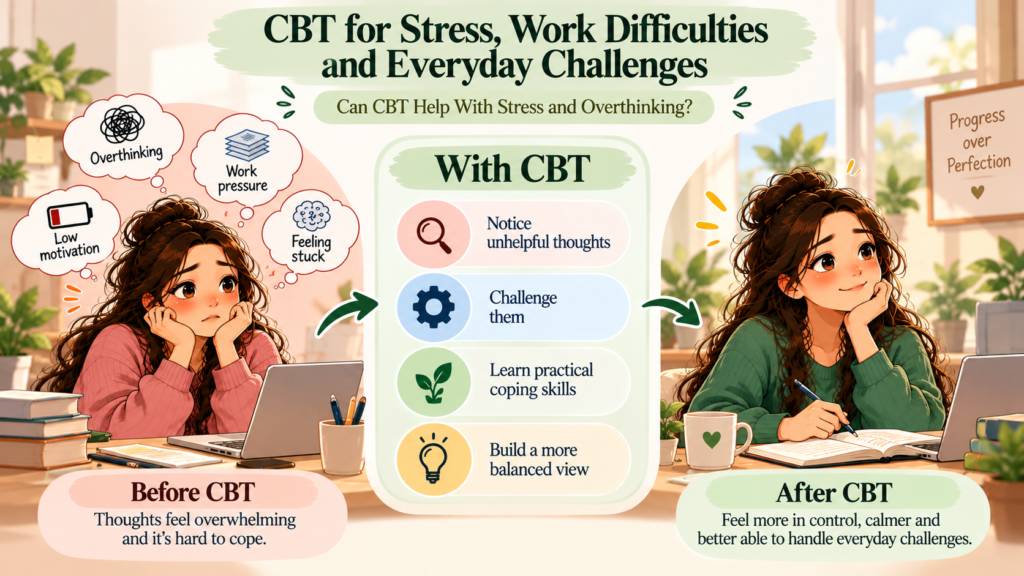
Can CBT Help With Stress and Overthinking?
CBT may help people manage stress by identifying modifiable thinking and behavioural patterns, strengthening problem-solving skills and developing more effective coping strategies.
Stress can arise from genuine external pressures, including financial strain, caregiving, workplace demands, academic expectations, relationship conflict, discrimination or unsafe environments. CBT should not frame every difficult reaction as a thinking error.
Common areas of focus
A CBT-based approach may explore:
- Overthinking and repetitive
- Perfectionism and unrealistic personal
- Difficulty setting
- Procrastination and task
- Unhelpful responses to
- Work-related
- Coping with
- Communication and problem-solving
A practical problem-solving example
Suppose a person feels overwhelmed by several pending tasks.
A therapist may help them:
Working Through Pending Tasks
Define the problem clearly
Define the problem clearly.
Separate urgent tasks
Separate urgent tasks from those that can wait.
Identify what is within your control
Identify what is within their control.
Break a large task into smaller steps
Break a large task into smaller steps.
Choose a realistic first action
Choose a realistic first action.
Review the result
Review the result and adjust the plan.
This approach does not remove every external pressure. It helps the person respond more deliberately while recognising when practical, social or professional support is also needed.
When stress requires broader intervention
If stress is driven by workplace harassment, domestic violence, financial insecurity or another serious external problem, cognitive and behavioural strategies may be only one part of the response. Safety planning, social support, practical assistance or other services may be necessary.
CBT for Children and Adolescents
Is CBT Suitable for Children and Teenagers?
CBT can be adapted for some children and adolescents experiencing difficulties such as anxiety, depression and other concerns for which an evidence-based CBT approach is appropriate.
The approach should match the young person’s developmental stage, communication style, needs and circumstances. CBT for a child is not simply an adult worksheet delivered to a younger patient.
How CBT may be adapted
Depending on age and clinical need, therapy may use:
- Stories, drawings and age-appropriate examples.
- Simple explanations of the connection between thoughts, feelings, body sensations and actions.
- Behavioural practice and gradual exposure where appropriate.
- Playful or visual activities that support learning.
- Support for parents or caregivers.
- School collaboration when appropriate and consented to.
- Regular review of goals and progress.
The role of parents and caregivers
Parent or caregiver involvement can be helpful, particularly when home routines, reassurance patterns, avoidance or family communication affect the difficulty being treated.
However, involvement should be planned sensitively. Children and adolescents also need age-appropriate privacy and opportunities to speak openly with the clinician.
The therapist should explain confidentiality and its limits in a way that the young person and caregivers can understand.
When another or additional approach may be required
A child’s difficulties may require broader assessment, school-based support, family intervention, psychiatric evaluation or another specialised treatment. The treatment plan should not be selected from a website description alone.
CBT Alongside Psychiatric Consultation and Medication

Can CBT Be Combined With Psychiatric Treatment?
Yes. Depending on the person’s needs, CBT may form part of a broader treatment plan that includes psychiatric assessment, medication, other psychological interventions or practical support.
Psychotherapy and medication are not necessarily competing choices. Their relative roles depend on the presenting problem, severity, treatment history, patient preferences, risks and available evidence.
What each professional may contribute
CBT Alongside Psychiatric Consultation and Medication
Psychiatric consultation
CBT with a suitably trained therapist
Psychological assessment
Collaborative care
Professional responsibilities vary by qualifications, registration, scope of practice and the services being provided
Should medication be stopped when CBT begins?
No medication should be stopped, reduced or changed solely because a person has started CBT. Changes to prescribed medication should be discussed with the prescribing clinician.
Likewise, CBT should not be represented as a guaranteed substitute for medication or other clinically indicated treatment
What if therapy does not seem to be helping?
Patients can discuss concerns directly with their therapist. Useful questions include:
- Are the treatment goals clear?
- Is the selected approach appropriate for my difficulty?
- Are the between-session exercises manageable?
- Have we reviewed progress and barriers?
- Would a different treatment, additional assessment or coordinated care be appropriate?
Lack of progress does not automatically mean that the patient has failed. It may mean that the plan needs to be reviewed.
CBT vs Other Psychological Therapies
How Is CBT Different From Other Therapies?
Different psychological therapies have different methods and areas of emphasis. The most suitable approach depends on the person’s difficulties, goals, preferences, clinical needs and the therapist’s training.
The following comparison is a general guide, not a ranking of treatments.
Comparing Psychotherapy Approaches
CBT
Relationships between thoughts, emotions, behaviours and physical responses; structured skills and practice.
Several anxiety and mood difficulties and other problems for which CBT is appropriate.
ERP
Gradual exposure to obsession-related fears and reducing compulsive responses.
OCD and selected related presentations.
DBT
Mindfulness, distress tolerance, emotion regulation and interpersonal effectiveness.
Selected difficulties involving emotion dysregulation and other clinical needs.
Supportive therapy
Emotional support, coping, validation and strengthening available resources.
Depending on the person's needs and treatment goals.
Family therapy
Interaction patterns, communication and family relationships.
When family dynamics or shared difficulties are relevant to treatment.
CBT-I
Structured interventions targeting persistent insomnia.
Chronic insomnia where CBT-I is indicated.
Other psychotherapies
Methods vary by therapeutic model.
According to assessment, evidence, goals and patient preference.
CBT versus ERP
ERP is a specialised intervention often incorporated into CBT for OCD. Although the approaches overlap, general CBT and ERP should not be treated as interchangeable.
CBT versus DBT
CBT commonly focuses on the relationships between thoughts, behaviours, emotions and physical responses. DBT places particular emphasis on skills for managing intense emotions, tolerating distress and improving interpersonal effectiveness.
Some skills may overlap, and treatment approaches can sometimes be integrated when clinically appropriate. The right choice depends on the person’s needs and the clinician’s competence.
CBT versus supportive therapy
Supportive therapy may prioritise emotional support, coping and strengthening resources. CBT typically uses a more structured framework for examining patterns and practising specific skills. Both can be valuable in appropriate circumstances.
How should a patient choose?
Rather than choosing a therapy based only on popularity, ask:
- Is this approach appropriate for my concern?
- Does the clinician have relevant training and experience?
- What will treatment involve?
- How will we review progress?
- What alternatives are available if the approach is not suitable?
Common Myths and Limitations of CBT
What CBT Can and Cannot Do
Common Myths and Realities About CBT
CBT means thinking positively.
✦CBT encourages realistic, flexible thinking and useful behavioural responses. It does not require a person to ignore grief, danger, injustice or genuine problems.
⚖CBT works immediately.
◷Progress varies. Some people notice changes early, while others need more time, a different approach or additional treatment.
◷CBT is only talking about problems.
💭CBT often combines discussion with practical exercises, behavioural experiments, between-session practice and progress reviews.
✎CBT is suitable for every person and every condition.
♧CBT is not a universal solution. Treatment should be matched to the problem, and other or additional interventions may be needed.
◇If CBT is difficult, the patient is doing it wrong.
〰Therapy can be challenging, especially when approaching feared situations or changing long-standing habits. Difficulties should be discussed and the plan adjusted collaboratively.
♡Important limitations to explain
CBT may have limitations when:
- The chosen CBT protocol does not adequately match the person’s difficulty.
- A condition requires a specialised treatment.
- Severe symptoms, safety concerns or other clinical factors require additional care.
- External circumstances make treatment practice diffecult.
- The patient and therapist have not established a workable therapeutic relationship.
- The treatment needs adjustment, more time or a different approch.
CBT is a treatment, not a guarantee. Ethical content should not promise a cure, a fixed recovery timeline or identical results for everyone.
How to Choose a CBT Therapist in Delhi
What Should You Check Before Starting CBT?
Choosing a therapist involves more than searching for the nearest clinic. Patients should consider relevant qualifications, training, the proposed treatment approach, communication, accessibility and whether the service meets their needs.
Questions to ask a potential therapist
- What are your professional qualifications and registration details, where applicable?
- What training and experience do you have in CBT for my specific concern?
- How will you determine whether CBT is suitable for me?
- What will the initial assessment involve?
- How will we agree on treatment goals?
- Will there be between-session exercises?
- How will progress be reviewed?
- What happens if I do not improve or find the exercises difficult?
- What are the session fees, duration, cancellation rules and payment arrangements?
- What are your confidentiality policies and their limits?
- If another professional is involved in my care, how would coordination work with my consent?
What to expect from an initial appointment
An initial session may involve discussion of:
- The main concerns and when they began.
- The effect of symptoms on daily functioning.
- Relevant personal, family, medical and treatment history.
- Current coping strategies and support system.
- The person’s expectations and goals.
- Whether CBT or another intervention appears appropriate.
- Practical arrangements, confidentiality and next steps.
Not every assessment covers all topics in the first appointment. The process should be proportionate to the person’s needs.
Finding CBT therapy near you
People searching for CBT therapy in Delhi may also search for a CBT therapist near Paschim Vihar, Rohini or Narela. Local pages should help readers understand where a service is genuinely available and how to enquire.
For Headspace Mind Clinic, publish location-specific details only after confirming:
- Whether CBT is currently offered at that branch.
- Which appropriately qualified professional provides it.
- Whether appointments are available in person, online or both.
- Current fees and session duration.
- The correct contact and booking method.
Avoid publishing the same generic location text across multiple neighbourhood pages. Each local page should provide useful, accurate information about the actual service and its availability.
In-person versus online CBT
Depending on the clinical situation and service arrangements, CBT may be delivered in person or online. Suitability depends on the person’s needs, privacy, technology access, risk level and the therapist’s assessment.
Patients should clarify how online sessions are conducted, what happens if the connection fails and what arrangements apply if urgent help becomes necessary.
Confidentiality, Consent and Patient Participation
Is CBT Confidential?
Psychological therapy generally involves privacy protections, but confidentiality is not absolute in every circumstance. The therapist should explain relevant professional, legal and safety-related limits before or during the initial assessment.
Patients should be able to ask questions about how their information is collected, recorded, stored and shared.
What patients should understand
Before beginning therapy, clarify:
- The purpose and general structure of treatment.
- The expected benefits, possible difficulties and alternatives.
- Session fees, cancellation terms and other practical arrangements.
- How clinical notes and personal information are handled.
- When information might need to be shared because of safety or legal obligations.
- Whether information will be shared with another treating professional and how consent works.
- The procedure for raising concerns or providing feedback.
The patient's role in CBT
CBT is collaborative. Patients can ask questions, explain when a technique does not make sense, discuss barriers to practice and participate in decisions about treatment goals.
Between-session practice can be useful, but the patient should not be blamed for every difficulty or expected to complete exercises perfectly. Therapy should be adapted to individual circumstances and capacity.
Clinical takeaway: A good therapeutic process combines professional competence, informed participation, realistic expectations and regular review.
Explore CBT Therapy at Headspace Mind Clinic
Frequently Asked Questions About CBT Therapy in Delhi
Frequently Asked Questions About CBT Therapy
Use these FAQs to answer common patient questions clearly.
Cognitive Behavioural Therapy (CBT) is a structured form of psychotherapy that helps people understand and change unhelpful patterns involving thoughts, emotions and behaviours. Depending on the person’s needs, treatment may include practical exercises, problem-solving, behavioural experiments and between-session practice.
CBT is used for several psychological difficulties, including certain anxiety disorders and depression. Specific CBT-based approaches may also be used for conditions such as obsessive-compulsive disorder and insomnia. The appropriate treatment depends on the person’s assessment and clinical needs.
CBT can help some people manage anxiety by addressing threat-related interpretations, avoidance and other patterns that maintain distress. The treatment plan varies according to the type of anxiety and the individual’s needs. Improvement is not guaranteed, and other forms of treatment may also be appropriate.
CBT is an established psychological treatment option for depression. It may help people identify unhelpful thinking patterns, increase engagement in meaningful activities and develop coping strategies. Some people may also benefit from medication or other forms of support following clinical assessment.
The number of sessions depends on the problem being treated, symptom severity, treatment goals, the person’s progress and the specific CBT approach. Some structured treatments are relatively brief, while other situations require a longer course of care. A therapist should discuss an individual treatment plan rather than promise a fixed number of sessions.
Neither approach is universally better. CBT is a structured therapy that focuses on connections between thoughts, feelings and behaviours. Counselling may involve emotional support, exploration of difficulties and other approaches, depending on the practitioner’s training and treatment model. Suitability depends on the person’s needs and the specific intervention being offered.
A CBT session may involve reviewing current difficulties, setting goals, examining thoughts and behavioural patterns, practising a technique and agreeing on an exercise to try between sessions. The exact structure varies according to the treatment plan and the person’s progress.
No. CBT can be helpful for many people, but it is not suitable as the only intervention in every situation. Some concerns require a specialised treatment, psychiatric assessment, medication, medical evaluation or broader practical and social support.
Yes. CBT is an important treatment for OCD, and treatment commonly includes Exposure and Response Prevention (ERP). ERP helps people face obsession-related fears while reducing compulsive responses. The approach should be selected and delivered by a suitably trained clinician.
CBT can help some people understand and respond differently to panic symptoms and fear-related avoidance. Treatment may include cognitive strategies and carefully planned exposure. New or severe physical symptoms should not automatically be assumed to be panic; medical assessment may be necessary.
A specialised treatment called Cognitive Behavioural Therapy for Insomnia (CBT-I) is recommended for chronic insomnia in adults. CBT-I is more comprehensive than general sleep hygiene advice and may include behavioural and cognitive techniques. Patients with persistent sleep difficulties should consider an appropriate assessment.
Yes. Depending on the condition and individual circumstances, CBT may be combined with psychiatric treatment and medication. Patients should not stop, reduce or change prescribed medication without consulting the prescribing clinician.
CBT can be delivered online in some settings, but suitability depends on the person’s clinical needs, privacy, technology access and the therapist’s assessment. Contact the service provider to confirm whether online CBT is currently available.
Look for a suitably qualified professional with relevant training and experience in the concern you wish to address. Ask about the treatment approach, goals, session structure, confidentiality, fees and how progress will be reviewed. Verify professional credentials and confirm the service’s current availability before booking.
Psychological therapy generally includes privacy protections, but confidentiality may have legal or safety-related limits. Ask the therapist how your information is handled, when it might be shared and what safeguards apply to clinical records.
Discuss your concerns with the therapist. The treatment goals, techniques, frequency or overall approach may need review. Depending on your needs, a different psychological intervention, psychiatric assessment or coordinated treatment plan may be appropriate.
No. CBT can help many people, but outcomes vary. The goal is to provide an appropriate, evidence-informed treatment and review progress collaboratively—not to promise a cure or a particular recovery timeline.
Visit the clinic’s verified website contact or appointment page to ask whether CBT is available at your preferred location, which professional provides the service, what the current fees are and how to arrange an initial appointment. Do not publish unverified branch availability or prices.
Quick Answers for Search Engines and AI Overviews
CBT Therapy in Delhi: Quick Answers
These short answers can appear near the relevant detailed sections or in a concise summary area. They should complement the full content, not replace it.
WHAT IS CBT?
CBT is a structured psychotherapy that helps people understand and modify unhelpful patterns involving thoughts, feelings and behaviours.
WHAT CAN CBT HELP WITH?
CBT may help with several concerns, including anxiety and depression. Specialised approaches are used for certain conditions, including OCD and insomnia.
HOW LONG DOES CBT TAKE?
Treatment length varies by condition, individual needs, progress and the specific CBT protocol.
IS CBT THE SAME AS ERP?
No. ERP is a specialised exposure-based treatment often incorporated into CBT for OCD.
CAN CBT REPLACE MEDICATION?
Not in every situation. Whether CBT is used alone or alongside medication depends on clinical assessment and the person’s treatment needs.
HOW DO I CHOOSE A CBT THERAPIST?
Check relevant qualifications, experience, treatment approach, confidentiality policies, practical arrangements and whether the service suits your needs.