
Seeing, hearing or feeling things others do not
A hallucination is a sensory experience, such as seeing, hearing, smelling, tasting or feeling something, without anything outside the person causing it. To the person it feels real.
Hallucinations should not automatically be put down to schizophrenia. Medical illnesses, fever and infections (especially in older adults), medicines, lack of sleep, alcohol withdrawal and drug use can all cause them, and some brief experiences while falling asleep are common and harmless. A timely, thorough assessment is important. Hallucinations with sudden confusion, high fever or after stopping alcohol need emergency care: call 112.
Types of hallucinations
Hallucinations can involve any of the senses:
- Hearing voices, music or sounds when no one is there (auditory)
- Seeing people, shapes, lights or animals that others cannot see (visual)
- Feeling touch, crawling or movement on the skin (tactile)
- Smelling something unpleasant that others cannot smell (olfactory)
- Tasting something strange with no cause (gustatory)
- Brief images or sounds while falling asleep or waking up
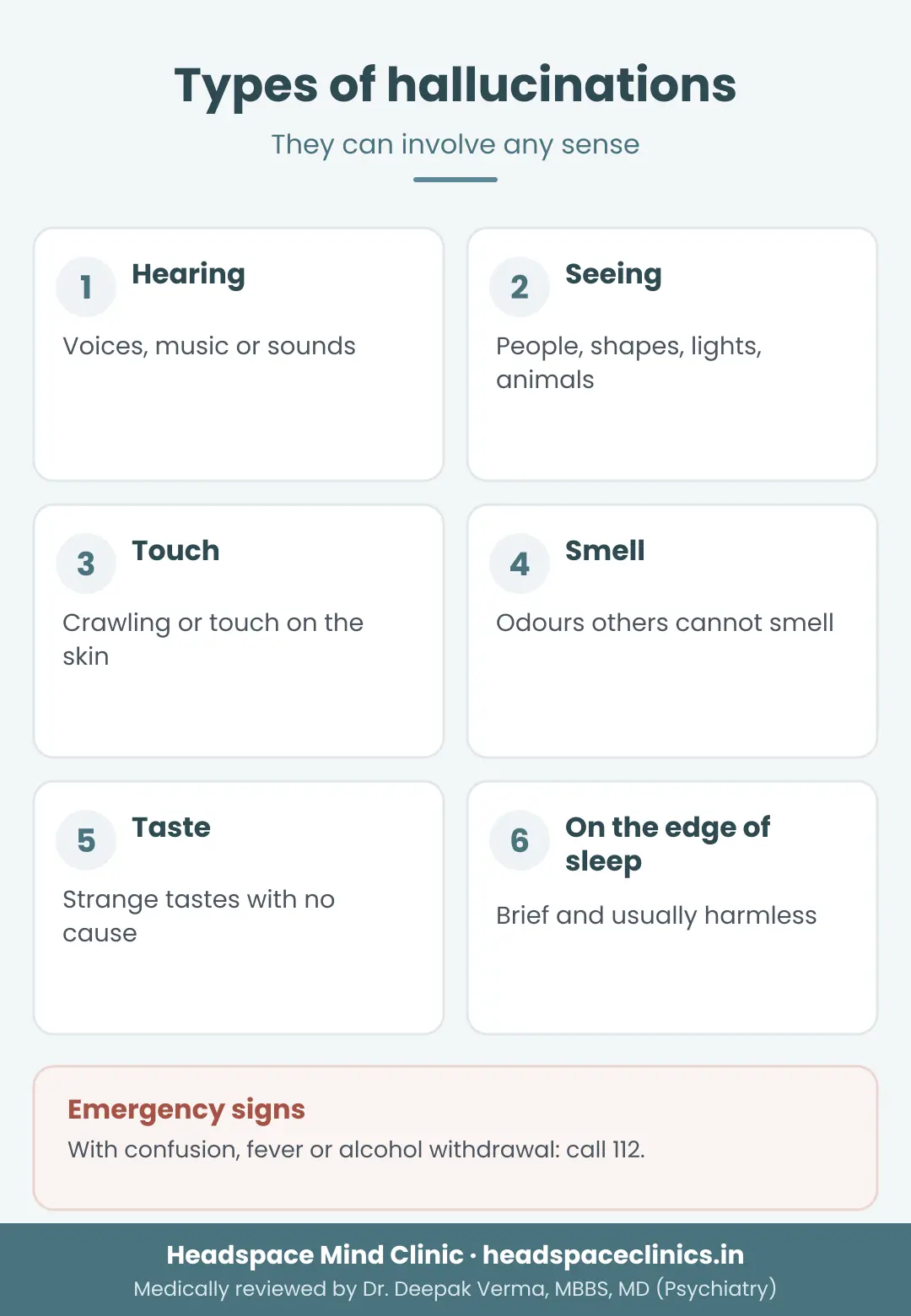
Types of hallucinations. Tap the image to enlarge.

Hallucinations involve experiencing something through the senses without an identifiable external stimulus, such as seeing, hearing or feeling something that others do not. They should never be automatically attributed to schizophrenia, because medical conditions, medications, sleep-related problems and substance use can also contribute. A timely and comprehensive assessment is important.
Dr. Deepak Verma, MBBS, MD (Psychiatry), Consultant Psychiatrist, Headspace Mind Clinic
Hallucinations are not only a sign of schizophrenia
Schizophrenia and other psychotic disorders are well-known causes, but they are far from the only ones. As Dr. Verma stresses, jumping to that conclusion can mean missing a medical problem that needs quick treatment, or frightening a family unnecessarily.
- Delirium, a sudden state of confusion caused by infection, dehydration, surgery or medicines, often brings visual hallucinations, especially in older adults. It is a medical emergency.
- Alcohol withdrawal can cause frightening visual and tactile hallucinations and needs urgent medical care.
- Drugs such as cannabis, stimulants and hallucinogens can trigger hallucinations, sometimes long after use.
- Severe lack of sleep can cause hallucinations in healthy people.
- Neurological and eye conditions, including Parkinson’s disease, some dementias, migraine, epilepsy and severe sight loss, can cause visual hallucinations.
- Grief: briefly hearing or seeing a loved one who has died is common in bereavement and is not, on its own, a sign of illness.
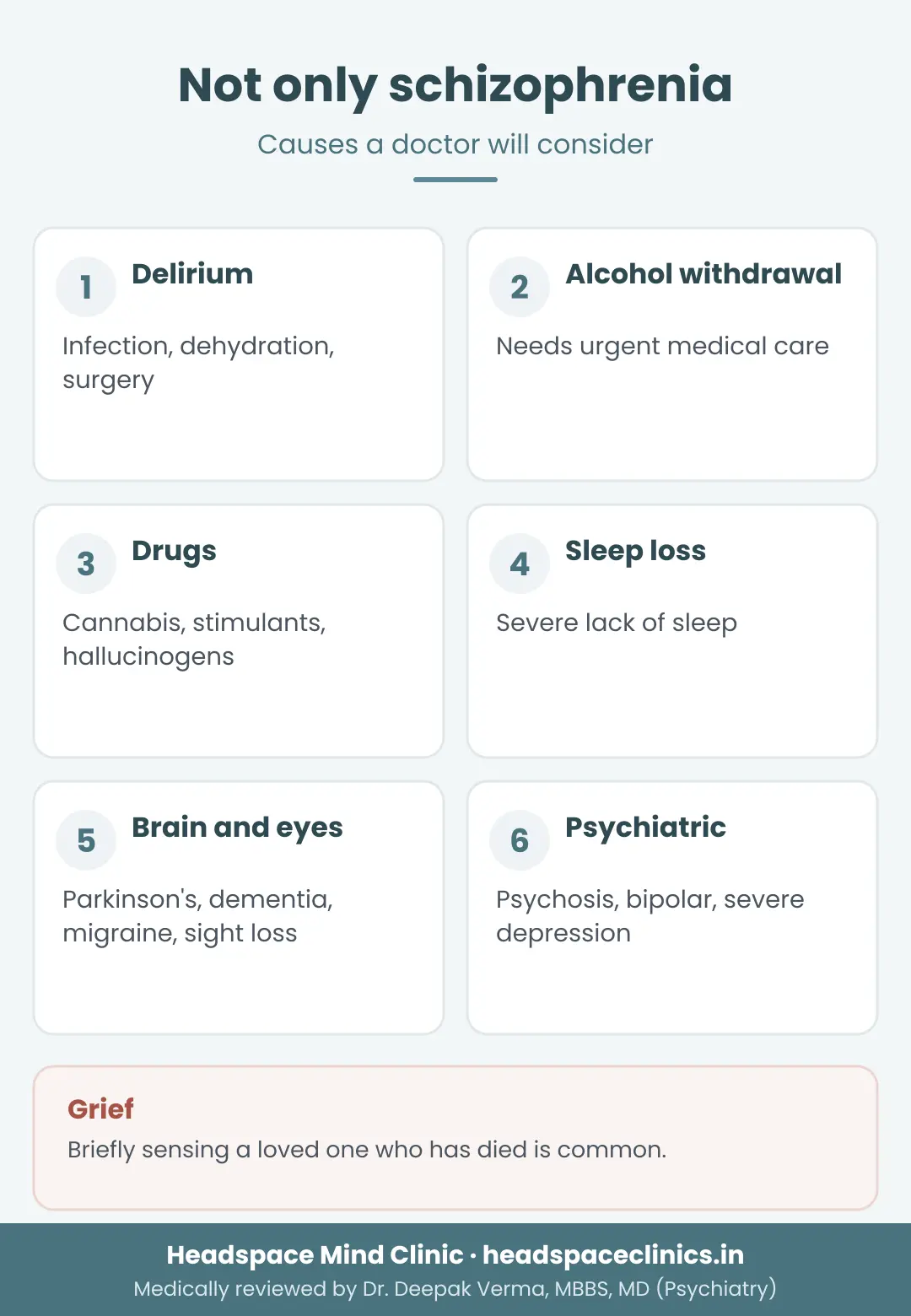
Causes beyond schizophrenia. Tap the image to enlarge.
Psychiatric causes of hallucinations
When medical causes have been considered, hallucinations may be part of a psychiatric condition. They also occur with severe stress and trauma. Possible psychiatric causes include:
Hallucinations with unusual beliefs
Hallucinations during severe episodes
Depression with psychotic features
Visual hallucinations in some types
Intoxication and withdrawal
Our guide to voices in particular
If you or someone close has hallucinations
Practical steps while getting help.
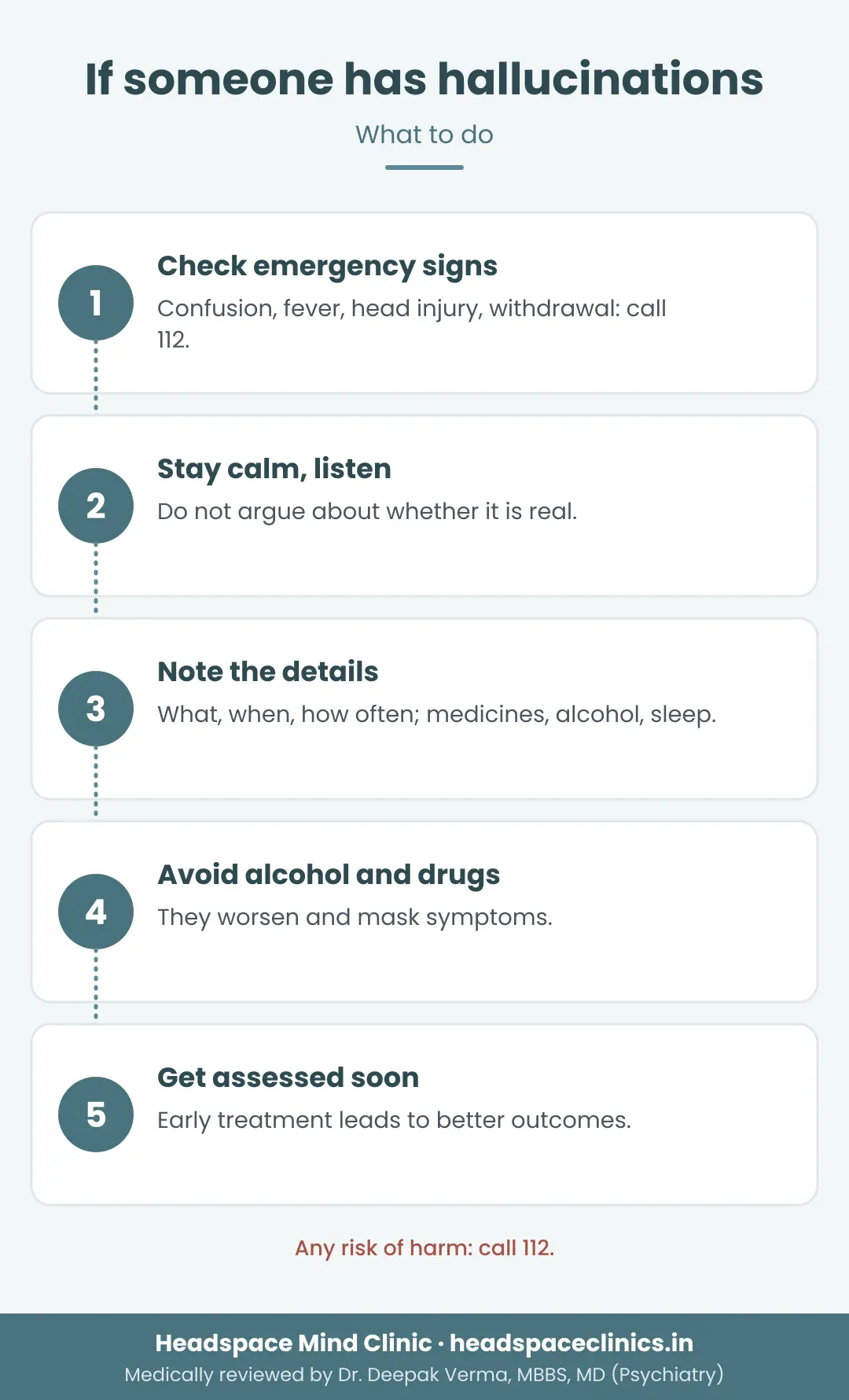
What to do if someone has hallucinations. Tap the image to enlarge.
Check for emergency signs. Sudden confusion, high fever, severe headache, recent head injury, alcohol withdrawal, drug use or any risk to safety needs emergency care. Call 112.
Stay calm and listen. If it is a family member, do not argue about whether the experience is real. Acknowledge that it feels real and frightening to them.
Note the details. What was experienced, when it started, how often it happens, and any medicines, alcohol, drugs, illness or sleep loss. This helps the doctor a great deal.
Avoid alcohol and drugs. They make hallucinations more likely and harder to assess.
Get an assessment soon. Early assessment and treatment lead to better outcomes, whatever the cause.
Do my experiences need a prompt assessment?
A quick way to decide whether to talk to a professional. It is not a diagnosis.
Tick the statements that apply to you. Nothing you tick is stored or sent anywhere.
This self-check is an educational aid, not a diagnostic test. Only a qualified professional can assess you properly.
When to see a doctor about hallucinations
Any new hallucinations deserve a timely assessment. Seek emergency care (call 112) if they come with sudden confusion, fever, a head injury, alcohol withdrawal or drug use, or if there is any risk of harm. The exception is brief images or sounds while falling asleep or waking, which are common; mention them if they are frequent or distressing.
Assessment includes a detailed history, a review of medicines and substances, a physical examination and often blood tests, with brain imaging or other tests when needed.
How hallucinations are treated
Treatment depends on the cause. Medical causes such as infection or delirium are treated directly. Withdrawal from alcohol needs medical supervision. When hallucinations are part of a psychotic disorder, antipsychotic medicines, psychological therapy and family support are the main treatments, and early treatment leads to better outcomes. We work with families throughout.
- Assessment by our consultant psychiatrist
- Talking therapy, including CBT, with our clinical psychologists
- Medicines only when they are needed, with regular reviews
- Video follow-ups for existing patients
हैलुसिनेशन का मतलब (Hallucination meaning in Hindi)
हैलुसिनेशन यानी मतिभ्रम: ऐसी चीज़ें देखना, सुनना, सूँघना या महसूस करना जो असल में मौजूद नहीं हैं, लेकिन व्यक्ति को सच लगती हैं। यह हमेशा सिज़ोफ्रेनिया का संकेत नहीं है। तेज़ बुख़ार, इंफ़ेक्शन (ख़ासकर बुज़ुर्गों में), दवाइयाँ, नींद की कमी, शराब छोड़ने पर होने वाले लक्षण और नशा भी इसकी वजह हो सकते हैं। अचानक भ्रम, तेज़ बुख़ार या शराब छोड़ने के बाद ऐसा हो तो तुरंत 112 पर कॉल करें। यह जानकारी केवल शिक्षा के लिए है। अपॉइंटमेंट के लिए कॉल करें: +91 99711 66040
Founder of Headspace Mind Clinic. Dr. Verma sees patients at our Paschim Vihar, Rohini and Narela clinics. About our psychiatry service →
Three clinics in West and North Delhi
Psychiatrist consultation fee: ₹1,800 at Paschim Vihar and Rohini, ₹500 at Narela. All appointments are scheduled; please call or book online.
Frequently asked questions
No. Hallucinations can be caused by medical illness, delirium, fever, medicines, lack of sleep, alcohol withdrawal, drug use, neurological conditions and severe stress, as well as psychiatric conditions. A thorough assessment is needed to find the cause.
Brief images, sounds or the feeling of a presence while falling asleep or waking up are common and usually harmless. Mention them to a doctor if they are frequent, distressing or happen at other times.
Severe stress, trauma and lack of sleep can sometimes lead to brief hallucinations. Ongoing hallucinations should always be assessed for other causes.
Yes. Infections such as urine or chest infections can cause delirium in older adults, with sudden confusion and visual hallucinations. This is a medical emergency and needs prompt treatment.
Stay calm, speak simply and do not argue about whether the experience is real. Acknowledge their feelings, keep the environment quiet and well lit, and help them get an assessment. Call 112 if there is any risk to safety.
Yes. Treatment depends on the cause and may include treating a medical illness, adjusting medicines, managing withdrawal, or antipsychotic medicines and therapy for psychotic disorders.
Book a consultation
Choose your preferred clinic and our team will call you to confirm a time. This form is for appointments only; please do not use it in an emergency.
References
- Waters F, Fernyhough C. Hallucinations: a systematic review of points of similarity and difference across diagnostic classes. Schizophrenia Bulletin. 2017;43(1):32–43.
- National Institute for Health and Care Excellence (NICE). Psychosis and schizophrenia in adults: prevention and management (CG178). nice.org.uk
- National Institute for Health and Care Excellence (NICE). Delirium: prevention, diagnosis and management in hospital and long-term care (CG103). nice.org.uk
- World Health Organization. International Classification of Diseases, 11th Revision (ICD-11). icd.who.int
- Tele-MANAS, National Tele Mental Health Programme, Ministry of Health and Family Welfare, Government of India. Helpline 14416.
Medically reviewed by Dr. Deepak Verma (MBBS, MD Psychiatry; DMC Reg. No. 37616). Last reviewed: 15 November 2026.
Medical disclaimer. The information on this page is provided for general educational purposes only. It is not medical advice and is not intended to diagnose, treat, cure or prevent any condition. Reading this page or using the self-check does not create a doctor–patient relationship with Dr. Deepak Verma or Headspace Mind Clinic. Please consult a qualified doctor about any symptom, diagnosis or treatment, and do not start, stop or change any medicine without talking to the doctor who prescribed it. Do not ignore professional advice, or delay seeking it, because of something you have read here. Symptoms, causes and responses to treatment differ from person to person, and no particular result is promised. Links to other websites are given for reference only, and we are not responsible for their content. If you think you or someone else may be facing a medical or mental health emergency, call 112, call Tele-MANAS on 14416 (free, 24×7) or go to the nearest hospital emergency department.