
Personality Disorder Treatment in Delhi
Trust Signals





Quick Facts
| Quick Fact | Details |
|---|---|
| Condition | Personality Disorder |
| Category | Mental Health Disorder |
| Typical Onset | Late adolescence or early adulthood |
| Treatment | Psychotherapy, Medication (when indicated), Family Support |
| Prognosis | Improvement possible with sustained treatment |
| Location | Delhi NCR |
What is a Personality Disorder?
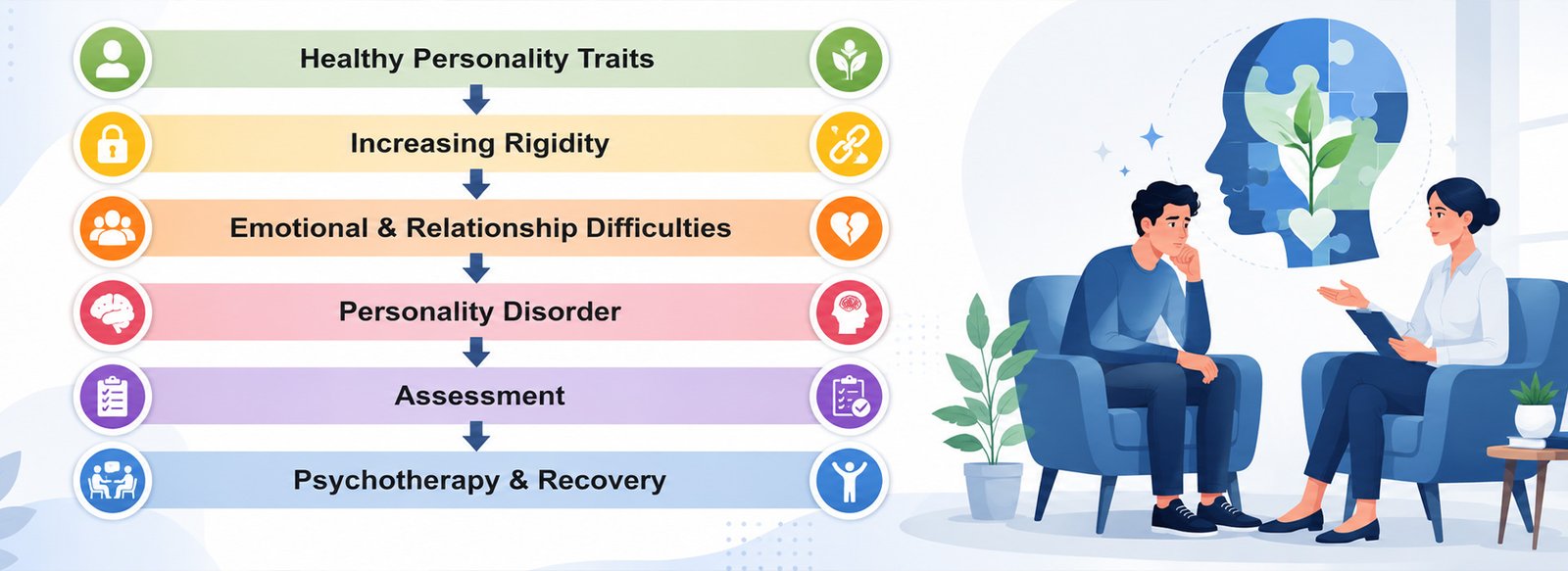
Personality disorder can be defined as a mental illness whereby an individual displays inflexible modes of thinking, feeling, behaving, and relating to other people that are not in agreement with cultural expectations and which bring about personal suffering or distress. This is a curable disorder with many people showing improvement through proper treatment.

Personality Traits Vs. Personality Disorder
Everyone may occasionally:
- Become angry
- Feel insecure
- Avoid social situations
- Act impulsively
- Persistent
- Inflexible
- Present across different situations
- Cause distress or functional impairment
- Affect relationships, work, or social functioning
Personality Traits vs Personality Disorder
| Personality Traits | Personality Disorder |
|---|---|
| Flexible | Persistent and rigid |
| Adapt to different situations | Difficult to change |
| Usually do not impair functioning | Cause significant impairment |
| Part of normal personality variation | Recognized mental health condition |
Types of Personality Disorders
Mental health clinicians categorize personality disorders into three major groups.
Cluster A - Odd and Eccentric Features
Includes:
- Paranoid Personality Disorder
- Schizoid Personality Disorder
- Schizotypal Personality Disorder
Cluster B - Dramatic, Erratic and Emotional Features
Includes:
- Borderline Personality Disorder
- Narcissistic Personality Disorder
- Antisocial Personality Disorder
- Histrionic Personality Disorder
Cluster C - Anxious and Fearful Features
Includes:
- Avoidant Personality Disorder
- Dependent Personality Disorder
- Obsessive-Compulsive Personality Disorder
Clinical Pearl
Borderline Personality Disorder is a very common type of personality disorder seen in mental health practices, and has a good evidence base for structured therapies like Dialectical Behaviour Therapy (DBT).
“Patient Takeaway Personality Disorder is not your identity. Many patients can achieve better emotional regulation, healthy relationships, and a good life with appropriate management. “
What are the signs and symptoms of a Personality Disorder?
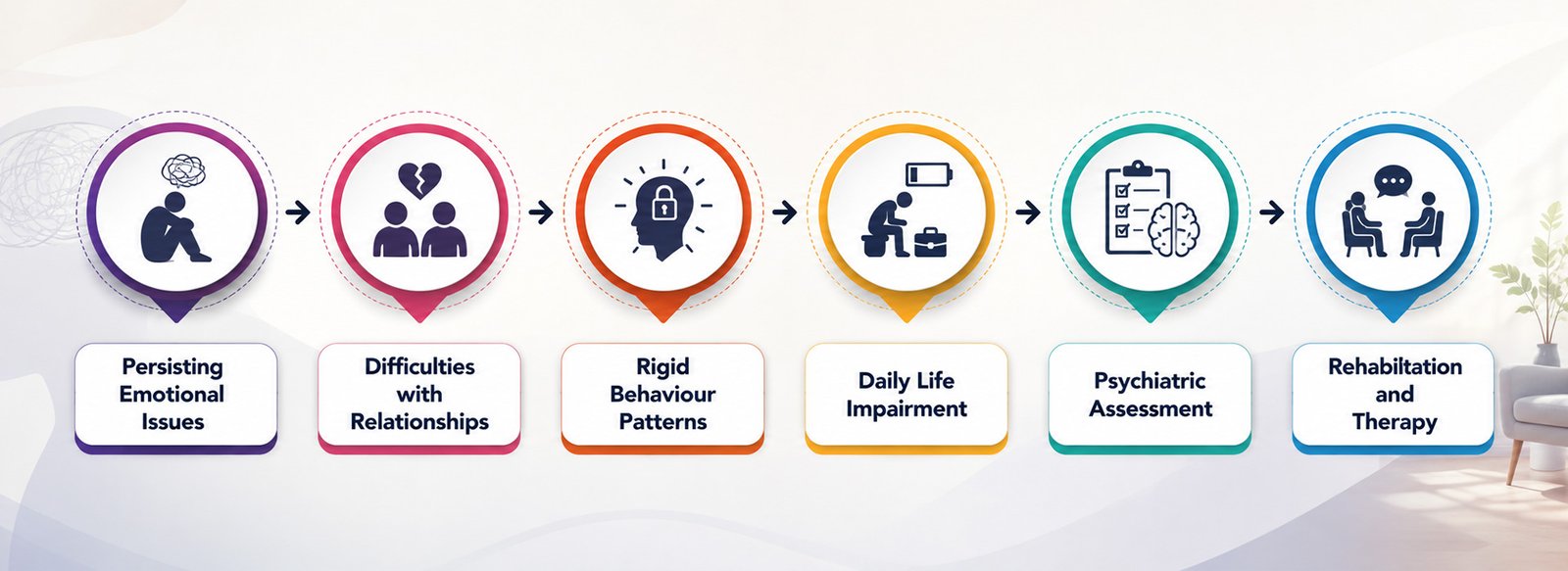
The signs and symptoms associated with personality disorders vary from one individual to another according to their particular type of personality disorder. The problems range from being unable to manage one’s emotions, having troubled relationships, impulsiveness, being fearful of rejection, inflexible thinking, inability to trust, poor self-concept, isolation, and ongoing interpersonal problems.
Relationship Problems
Many individuals experience:
- Fear of abandonment
- Unstable relationships
- Frequent conflicts
- Difficulty trusting others
- Dependency on others
- Difficulty maintaining close relationships
Emotional Symptoms
Individuals can exhibit such symptoms as:
- Rapid mood changes
- Extreme emotions
- Anger management problems
- Feeling empty
- Chronic loneliness
- Emotional instability
- Low self-esteem
Behavioral Symptoms
Behavioral symptoms may be manifested through:
- Impulsive decisions
- Risk-taking behaviours
- Self-destructive actions
- Difficulty controlling emotions
- Social withdrawal
- Manipulative behaviours (in some disorders)
- Rigidity or perfectionism (in particular OCPD)
Cognitive Symptoms
Some individuals experience:
- Suspiciousness
- Black-and-white thinking
- Difficulty understanding others' perspectives
- Distorted self-image
- Excessive need for admiration
- Fear of criticism
Common Symptoms Across Personality Disorders
| Emotional | Behavioural | Relationship |
|---|---|---|
| Mood instability | Uncontrolled behavior | Fear of abandonment |
| Anger | Reckless actions | Uneven personal relationships |
| Emptiness | Shyness | Difficulty forming trusting relationships |
| Anxiety | Self-destructive behaviors | Family or work issues |
| Low self-esteem | Perfectionism | Dependency or Avoidance |
When Should You Be Concerned?
A psychiatric assessment should be considered when these characteristics:
- Have been present for several years.
- Affect multiple relationships.
- Create problems in work or educational pursuits.
- Lead to repeated interpersonal conflicts.
- Result in impulsive or risky behaviours.
- Are associated with self-harm or suicidal thoughts.
See Your Doctor If You Have
- Suicidal ideation or suicide attempts.
- Self-injurious actions.
- Hostility that poses a threat to safety.
- Extremely high levels of emotional strain resulting in self-neglect.
- Delusional thoughts and/or hallucinations that appear as psychotic symptoms (uncommon in personality disorders but require urgent assessment).
Clinical Pearl
Personality disorders are often accompanied by depression, anxiety disorders, addiction, PTSD, or eating disorders. Conducting a thorough psychiatric evaluation is very important in determining other causes of such behavior.
Suffering from Overwhelming Emotions or Difficult Relations?
In case you experience emotional instability, relational difficulties, impulsiveness, or recurring interpersonal conflicts, the professional evaluation will identify the problem and guide you on the right course of treatment.
At Headspace Mind Clinic, we offer a full psychiatric evaluation, psychotherapy, and psychiatric medications when necessary for our clients with personality disorders.
What are the causes of Personality Disorders?
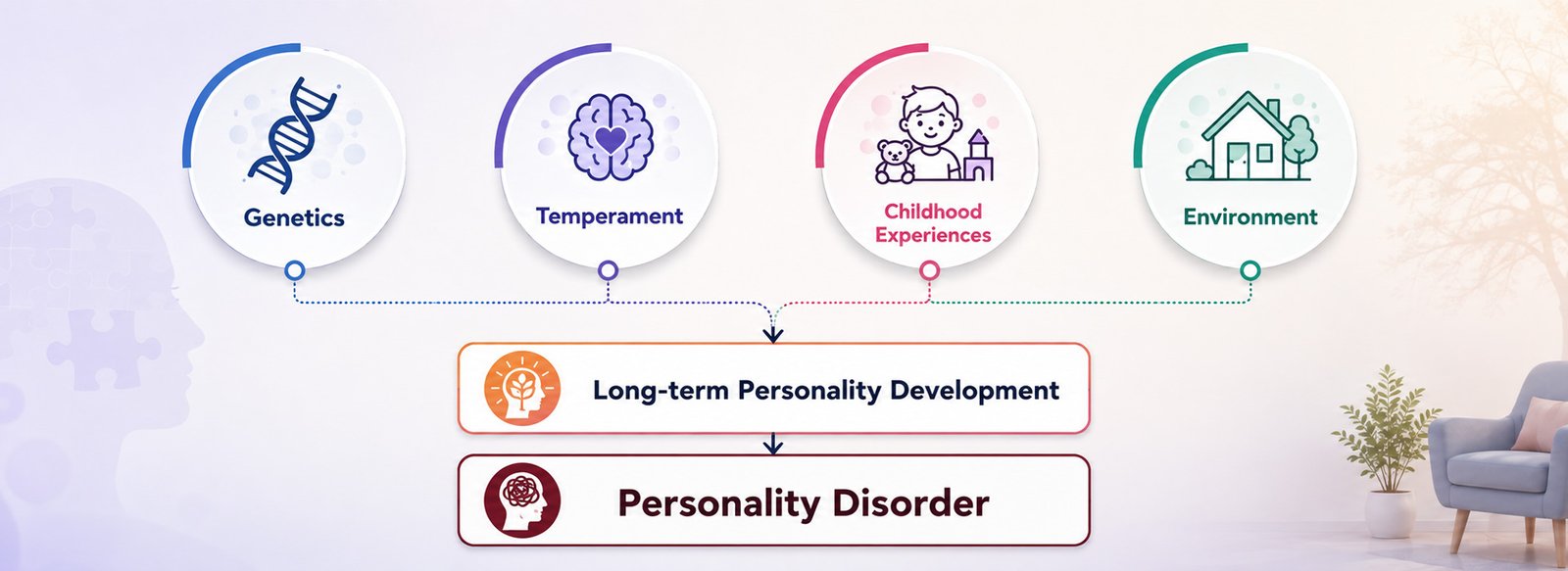
Personality disorders occur because of a variety of causes such as genetic, biological, psychological, and environmental. It is the family background, childhood, attachment patterns, temperament, trauma, and brain function that cause the emergence of certain thought, emotional, and behavioural patterns. There is no specific reason for personality disorders.
Scientific studies have shown that personality disorders happen due to a complicated interaction between biological and life circumstances.
Each individual is born with their specific temperament, which changes during childhood and adolescence because of family, emotional, educational, and stressful aspects.
Some individuals may develop peculiar ways of controlling their emotions, interpersonal relationships, and dealing with stress, which results in the development of personality disorders.
The key point to be mentioned is that risk factors do not necessarily lead to personality disorders.
The Biopsychosocial Model
Modern psychiatry explains personality disorders using the biopsychosocial model, recognizing that several factors interact over many years.
Biological Factors
- Genetic predisposition
- Temperamental traits
- Brain development
- Emotional sensitivity
- Impulsivity
Psychological Factors
Individuals can exhibit such symptoms as:
- Maladaptive coping strategies
- Low self-esteem
- Poor emotional regulation
- Chronic loneliness
- Negative beliefs about oneself or others
Social & Environmental Factors
- Childhood neglect
- Emotional abuse
- Physical abuse
- Sexual abuse
- Family conflict
- Bullying
- Chronic stress
- Unstable caregiving
Causes of Personality Disorders
| Biological | Psychological | Environmental |
|---|---|---|
| Genetics | Emotional dysregulation | Childhood trauma |
| Temperament | Poor coping skills | Family conflict |
| Brain development | Negative self-beliefs | Neglect |
| Emotional sensitivity | Attachment difficulties | Bullying |
| Impulsivity | Low self-esteem | Chronic stress |
Clinical Pearl
Personality disorders are developmental conditions that evolve gradually over many years rather than appearing suddenly during adulthood.
What Effects Do Personality Disorders Have on the Brain?
A number of studies have shown that personality disorders are connected to changes in brain circuitry which is involved in emotion processing, impulsivity, decision making, social cognition, and stress responses. These changes influence the way emotions are processed and interaction with other people; nevertheless, this does not mean that there is any kind of brain damage.
- Emotion regulation
- Impulse control
- Decision-making
- Threat perception
- Social interaction
- Empathy
Emotional Regulation
Effective regulation allows individuals to:
- Consciousness of emotions
- Manage emotional intensity
- Respond appropriately
- Fast changes in mood
- Emotional instability
- Intense reactions
- Difficulty calming down after distress
In case of personality disorders, this system becomes less effective, resulting in:
Impulse Control
Some personality disorders involve reduced ability to delay impulses. This may contribute to:
- Risk-taking
- Sudden decisions
- Self-harm
- Aggressive behaviour
- Substance abuse
Social Cognition
- Other people's emotions
- Intentions
- Facial expressions
- Relationships
- Misunderstanding others
- Distrust
- Fear of rejection
- Interpersonal conflicts
Brain Functions Commonly Involved
| Brain Function | Possible Difficulty |
|---|---|
| Emotional regulation | Being overwhelmed by emotions |
| Impulse control | Partaking in dangerous behavior |
| Decision-making | Poor judgement under stress |
| Social cognition | Relationship difficulties |
| Stress response | Emotional reactivity |
Clinical Pearl
Neurobiological differences make people more vulnerable but don’t define their future. Therapy can help people build better emotional and social skills for life.
Who is at risk of developing a Personality Disorder?
There are different risk factors for an individual, which include having a family history of psychological problems, childhood trauma, neglect, insecure attachment, being emotionally sensitive, high stress, and certain temperament traits. However, most individuals with such risk factors will not develop a personality disorder.
Biological Risk Factors
- Family history of personality disorders
- Family history of mood disorders
- Genetic vulnerability
- Highly reactive temperament
- Impulsivity
Psychological Risk Factors
- Poor emotional regulation
- Chronic feelings of insecurity
- Low self-esteem
- Negative self-image
- Difficulty trusting others
Environmental Risk Factors
Research has identified several environmental influences associated with increased risk. These include:
- Emotional neglect
- Childhood abuse
- Domestic violence
- Parental substance misuse
- Loss of caregivers
- Family instability
- Bullying
- Repeated interpersonal trauma
Risk Factors
| Non-Modifiable | Potentially Modifiable |
|---|---|
| Genetics | Chronic stress |
| Temperament | Poor coping skills |
| Family history | Untreated mental illness |
| Early childhood experiences | Substance misuse |
Clinical Pearl
Positive relationships, early intervention, and proper coping techniques may help to minimize the effects of risk factors and promote better results.
Types of Personality Disorders
Personality disorders have been categorized into three clusters depending on their shared characteristics as follows: Cluster A – odd/eccentric, Cluster B – dramatic/emotional/impulsive, and Cluster C – anxious/fearful. The disorders possess unique characteristics and can only be diagnosed via psychiatric assessment.
Cluster A – Odd or Eccentric Disorders
This cluster is commonly characterized by difficulties with trust, relating to others, or peculiar thoughts. The following disorders are included:
- Paranoid Personality Disorder
- Schizoid Personality Disorder
- Schizotypal Personality Disorder Common characteristics
- Social withdrawal
- Suspiciousness
- Limited emotional expression
- Conceivable thoughts or beliefs
Cluster B - Dramatic, Emotional, and/or Impulsive Disorders
Cluster B personality disorders occur in people who have unstable emotions, impulsive behavior, and problems with interpersonal relations. Such disorders include:
- Borderline Personality Disorder
- Narcissistic Personality Disorder
- Antisocial Personality Disorder
- Histrionic Personality Disorder Characteristics of Cluster B include:
- Emotional instability
- Fear of abandonment
- Impulsivity
- Emotion dysregulation
Cluster C – Anxiety Disorders or Fears
This cluster is characterized by patterns of behavior that are related to anxiety, fear, dependence, and perfection. It includes:
- Avoidant Personality Disorder
- Dependent Personality Disorder
- Obsessive-Compulsive Personality Disorder
- Common characteristics:
- Fear of criticism
- Need for reassurance
- Excessive perfectionism
- Difficulty making decisions
- Social inhibition
Personality Disorder Clusters
| Cluster | Main Characteristics | Examples |
|---|---|---|
| A | Eccentric, Odd | Paranoid, Schizoid, Schizotypal |
| B | Impulsive, Emotional | Borderline, Narcissistic, Antisocial, Histrionic |
| C | Anxious, Dependent | Avoidant, Dependent, OCPD |
Clinical Pearl
Borderline personality disorder is the mental illness for which there is the most research backing for therapy approaches like Dialectical Behavior Therapy, Mentalization-Based Treatment, and Transference-Focused Psychotherapy.
How are personality disorders diagnosed?
Personality disorders are identified by a psychiatric evaluation involving an assessment of an enduring pattern of thought, emotion, interpersonal functioning, and behavior. A personality disorder cannot be detected by a blood test or brain scan. The diagnosis of personality disorder is made based on the patient’s clinical history and mental status examination.
Clinical Assessment
The psychologist may ask questions on:
- Childhood experiences
- Relationships
- Work history
- Emotional regulation
- Behaviour patterns
- Impulsivity
- Family history
- Previous mental health treatment
Mental Status Examination
This includes assessment of:
- Mood
- Affect
- Thought processes
- Insight
- Judgement
- Behaviour
- Risk of self-harm
- Interpersonal functioning
Differential Diagnosis
A range of other illnesses have the potential to mimic the presentation of personality disorders and should therefore be included in the diagnosis, such as:
- Bipolar Disorder
- Major Depressive Disorder
- Work history
- Post-Traumatic Stress Disorder
- Autism spectrum disorder
- Attention deficit/hyperactivity disorder
- Obsessive-compulsive disorder
- Schizophrenia
- Substance Use Disorders
Are Medical Tests Required?
There is no lab test to diagnose a personality disorder. However, tests may sometimes be done to rule out any underlying medical or neurological problem that may be causing the behavioral and/or emotional problems. This may include:
- Complete Blood Count (CBC)
- Thyroid Function Tests
- Vitamin B12 and Folate Levels
- Blood Glucose
- Liver and Kidney Function Tests
- Urine Drug Screening
- Brain imaging or EEG only if neurological disease is suspected
Components of Assessment
| Assessment | Purpose |
|---|---|
| Clinical Interview | Gain insight into enduring patterns of personality. |
| Psychiatric Evaluation | Determine if other psychiatric disorders exist. |
| Mental Status Examination | Test current functioning. |
| Medical Assessment | Look for any physical conditions. |
| Risk Assessment | Find out about suicide, self-harm, or aggression. |
| Treatment | Care planning. |
Clinical Pearl
Diagnosis of any personality disorder is possible only after thorough assessment of stable behavioral traits in different situations. If symptoms arise exclusively within the context of depression, mania, psychosis, or drug-induced intoxication, they cannot be considered a personality disorder.
Struggling With Persistent Emotional or Relational Problems?
In case any problems with emotional instability, interpersonal problems, impulsivity, or personality rigidity impair your functionality, the psychiatric evaluation can help understand the problem and offer the best ways to solve it.
The experts from our Headspace Mind Clinic will be glad to provide you with confidential psychiatric evaluations, psychotherapy, psychopharmacology, and assistance with relationship and emotion management.
How are Personality Disorders treated?
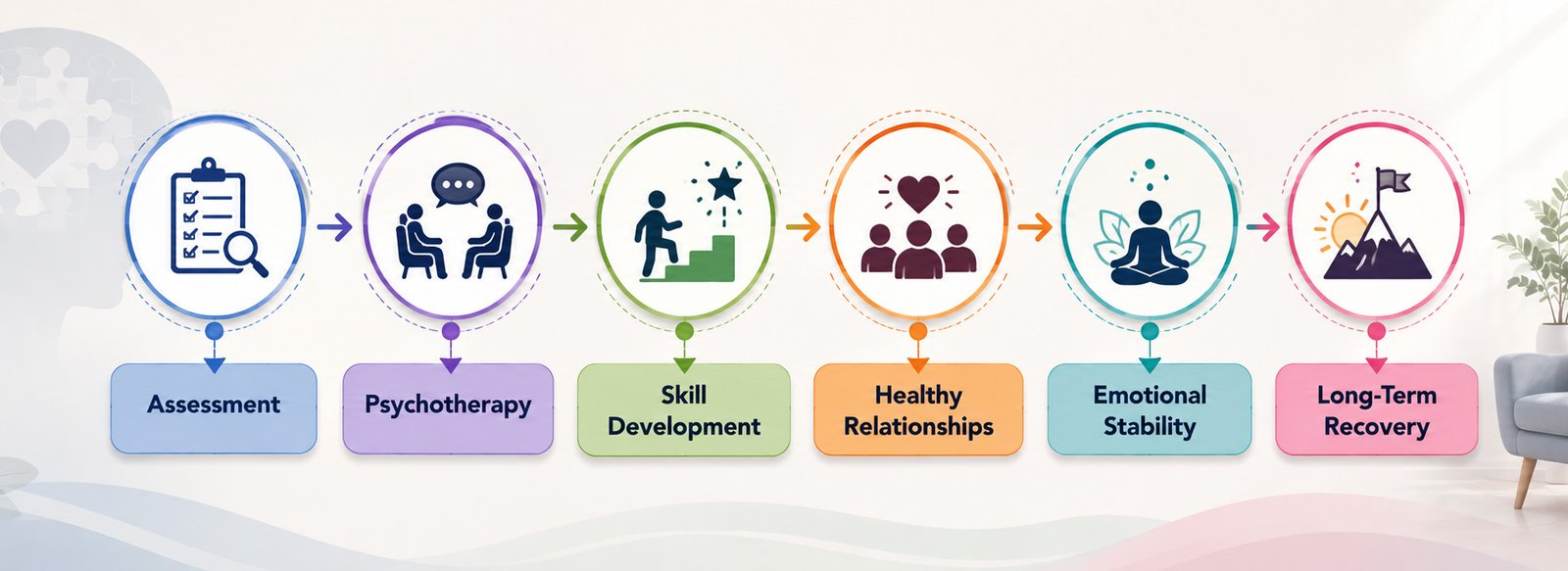
Personality disorders are curable. Psychotherapy remains the major form of treatment which assists the patient to manage his emotions, build relations, and gain insight into himself. Medication might be administered for the management of other issues, but medication cannot be taken as the primary mode of treatment. A personal treatment approach will be effective.
Personality disorders were considered incurable and unchanging for years.
There are many people nowadays who are successful thanks to therapy, especially if it has started early.
- Acquire knowledge about their emotions and behavior
- Learn better coping mechanisms.
- Improve relationships with others.
- Limit their impulsiveness.
- Gain greater emotional stability
- Improve their functioning at work and in society.
- Have a better self-image.
A Comprehensive Treatment Program
The combination of the following is often effective:
- Comprehensive psychiatric assessment
- Individual psychotherapy
- Medication (when appropriate)
- Family education
- Crisis planning
- Lifestyle modification
- Long-term follow-up
Components of Treatment
| Treatment | Primary Goal |
|---|---|
| Psychotherapy | Regulation of emotions and relationships. |
| Medication | Treatment of accompanying symptoms or conditions. |
| Family Therapy | Better communication between family members. |
| Crisis Management | Prevention of self-destructive behavior. |
| Lifestyle Modification | Increasing emotional resilience |
| Follow-up Care | Permanent improvement |
Clinical Pearl
Psychotherapy—not medication—is considered the first-line treatment for most personality disorders.
Psychotherapy for Personality Disorders
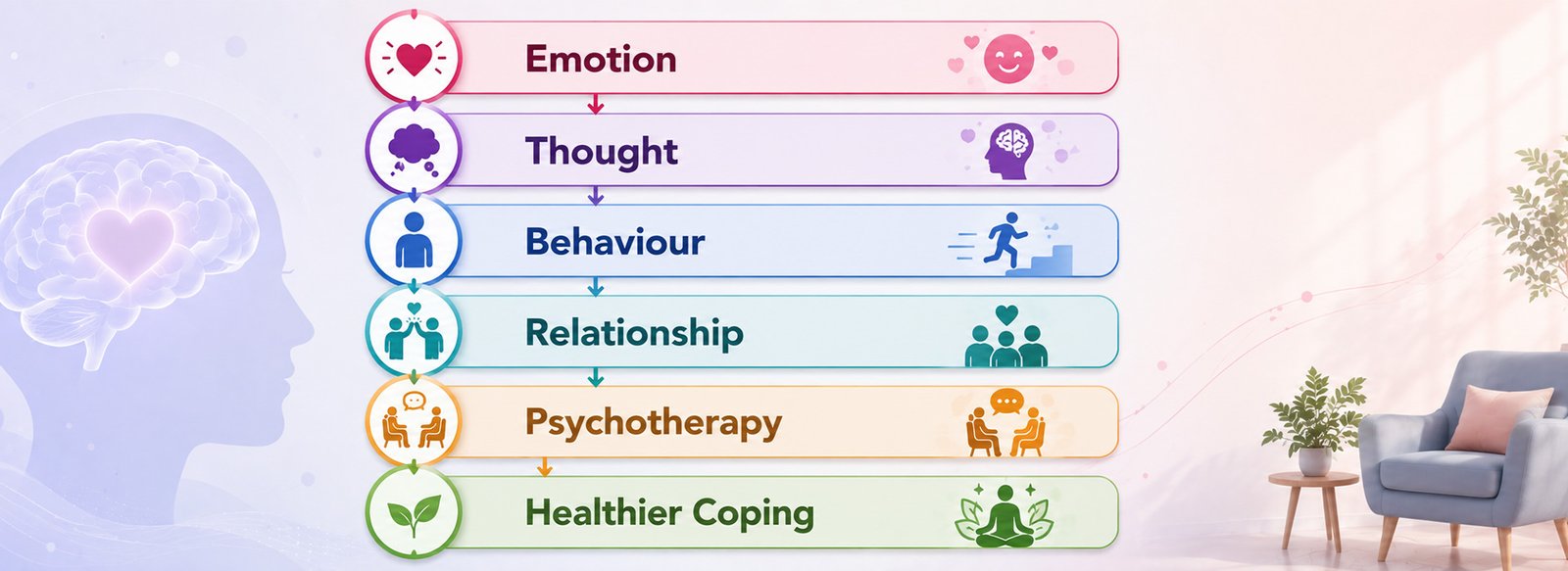
Psychotherapy is the most effective form of treatment in case of personality disorders. Different types of therapies are used to learn how to control one’s emotions, improve one’s relationship with others, cope with impulses and develop emotional stability.
Dialectical Behaviour Therapy
DBT has been studied the most among treatment methods for BPD.
- Emotional regulation
- Distress tolerance
- Mindfulness
- Interpersonal effectiveness
- Manage self-harm urges
- Handle difficult emotions
Cognitive Behavioural Therapy
CBT assists people in:
- Recognize unhelpful thinking patterns
- Challenge distorted beliefs
- Improve emotional responses
- Develop healthier behaviours
- Manage anxiety and depression
- Improve interpersonal functioning
Schema Therapy
Schema Therapy is a form of psychotherapy which seeks to reveal deeply held feelings and beliefs which have accumulated over time.
- Understand maladaptive life patterns
- Develop healthier emotional responses
- Improve relationships
- Build self-esteem
- Reduce rigid behavioural patterns
Schema therapy is highly efficient in treating different types of personality disorders, particularly those that have persistent interpersonal problems.
Mentalization-Based Therapy (MBT)
MBT assists the individual in comprehending:
- Their own emotions
- Other people's thoughts
- Intentions
- Reactions
- Interpersonal misunderstandings
Transference-Focused Psychotherapy (TFP)
TFP is a well-defined psychotherapy that aids the patient in comprehending his repeated interpersonal patterns through the exploration of emotions and relationship dynamics in therapy.
- Improve identity stability
- Reduce emotional instability
- Strengthen interpersonal functioning
Evidence-Based Psychotherapies
| Therapy | Primary Benefits |
|---|---|
| DBT | Emotional regulation, self-harm reduction |
| CBT | Thought and behaviour modification |
| Schema Therapy | Long-standing maladaptive beliefs |
| MBT | Understanding emotions and relationships |
| TFP | Personality integration and relationship improvement |
Clinical Pearl
Therapy is not a universal concept, and different individuals will require different psychotherapy approaches.
Is Medication Helpful?
There is no medication for treating personality disorder. Medication can be given to treat the symptoms that are related to personality disorders like anxiety, depression, irritability, insomnia, and other psychological problems. Medications prove most effective in combination with therapy.
Medication May Be Considered For
Depending on the individual's clinical presentation, medication may help manage:
- Anxiety
- Depression
- Mood instability
- Sleep problems
- Impulsive aggression (selected cases)
- Concurrent psychiatric illnesses
Important Notes on Medications
Medication:
- Is not a substitute for psychotherapy.
- Is prescribed only when clinically indicated.
- Requires regular monitoring.
- Should not be started, changed, or stopped without medical supervision.
Role of Medication
| Goal | Purpose |
|---|---|
| Anxiety Reduction | Emotional stabilization |
| Depression Treatment | Function improvement |
| Mood Stabilization | Distress reduction |
| Sleep Improvement | Recovery support |
| Co-morbid Conditions Management | Enhance treatment success |
Clinical Pearl
The use of medication is effective for treating the symptoms, whereas psychotherapy works on the personality disorder symptoms.
Family Support and Psychoeducation
Family can be a significant contributor to the recovery process. Psychoeducation and family therapy interventions help in creating communication, resolving conflicts, creating healthy boundaries, and adhering to treatment.
Personality disorders may not only affect the individual but also the family, partner, and friends of that individual.
Misconceptions, emotions, and ongoing conflicts may cause problems within the relationship. Education about the disorder will help to understand it better.
Benefits of Family Involvement
Family participation may help:
- Improve communication
- Reduce conflict
- Encourage treatment adherence
- Identify early warning signs
- Strengthen emotional support
- Promote healthy boundaries
Healthy Boundaries
Supportive relationships involve:
- Respectful communication
- Consistent expectations
- Encouraging independence
- Avoiding criticism or blame
- Responding calmly during emotional crises
Family Support Strategies
| Strategy | Benefit |
|---|---|
| Psychoeducation | Better understanding of the condition |
| Family Therapy | Improved communication |
| Healthy Boundaries | Reduced conflict |
| Emotional Support | Increased treatment engagement |
| Crisis Planning | Improved safety |
Clinical Pearl
Family education can considerably enhance treatment compliance and prevent misunderstandings that could exacerbate interpersonal problems.
Lifestyle Changes That Support Recovery
The positive effects of healthy lifestyles in conjunction with psychotherapy are that they will help the person regulate emotions, decrease stress levels, improve physical wellbeing, and increase their resilience. However, lifestyle change alone is not treatment for personality disorders.
Daily practices influence emotional well-being.
Although following healthy behaviors does not take place of the actual clinical treatment, it is helpful in making the recovery process more effective.
Healthy Practices for Supporting Mental Well-being
Some of these practices are as follows:
- Regular physical activity
- Consistent sleep schedule
- Balanced nutrition
- Stress management techniques
- Mindfulness practices
- Limiting alcohol and recreational drugs
- Building supportive relationships
- Structured daily routines
Stress Management
Stress is likely to worsen emotional disorders. Some healthy stress management strategies are:
- Deep breathing
- Progressive muscle relaxation
- Meditation
- Yoga
- Journaling
- Time management
- Seeking support when needed
Lifestyle Strategies
| Habit | Benefit |
|---|---|
| Regular Exercise | More effective emotion control |
| Healthy Sleep | Numerous psychological gains |
| Proper Nutrition | Physical and psychological health |
| Mindfulness | Sense of emotional awareness |
| Social Network | Less emotional isolation |
| Structured Routine | Greater psychological stability |
Clinical Pearl
A few small modifications to your lifestyle can add value to the psychotherapy process.
Crisis Management and Recovery
There exists the possibility of recovery from a personality disorder. This can be done gradually using different kinds of therapies, coping mechanisms, support and aftercare. At the time when the person is experiencing emotional distress, safety planning and intervention is of utmost importance so as to prevent self-harm.
Recovery is rarely a straight line.
There will be times of growth as well as instances of setbacks for many people.
This is a typical process and should not be considered a therapy failure.
Developing a Crisis Plan
A personalized crisis plan may include:
- Recognizing early warning signs
- Identifying coping strategies
- Contacting trusted family members or friends
- Reaching out to the treating psychiatrist or therapist
- Seeking emergency care if safety is at risk
What Recovery Looks Like
Many people experience:
- Better emotional regulation
- Fewer interpersonal conflicts
- Greater self-awareness
- Improved self-esteem
- Reduced impulsive behaviour
- Healthier relationships
- Better work or academic functioning
Signs of Recovery
| Improvement | Example |
|---|---|
| Emotional Regulation | Less intense emotional reactions |
| Relationships | Improved communication and stability |
| Behaviour | Less impulsiveness |
| Self-Awareness | Greater awareness of feelings |
| Daily Functioning | Enhanced performance in work, school, and social settings |
Clinical Pearl
Improvement is always achievable regardless of what stage of adulthood a patient is at. Psychotherapy and follow-up are essential for optimal results.
Get the Help You Need
Living with a personality disorder can be difficult, but with appropriate treatment, one will be able to develop more positive relations and emotions.
At Headspace Mind Clinic, we provide psychiatric assessment, psychotherapy, family therapy, and medication, where necessary, according to the individual needs of patients.
What is the long-term outlook for Personality Disorders?
However, the prospects for individuals with personality disorders should be considered positive as opposed to what used to be the case in the past. With the use of evidence-based psychotherapy, correct psychiatric management, coping strategies, and follow-up care, many individuals have shown remarkable improvement in terms of mood, relationships, work, and general well-being. The recovery process takes time and may even take months or years.
In the past, personality disorders were thought of as incurable diseases. However, modern science has altered this view.
Research indicates that many individuals are able to improve significantly through treatment, especially if the treatment is initiated early on and maintained properly.
Recovery does not have to mean that all symptoms go away. Instead, treatment helps individuals:
- Understand their emotions better
- Respond rather than react impulsively
- Build healthier relationships
- Increase self-respect
- Increase independence
- Reduce emotional crises
- Have productive lives
Factors that Enhance Prognosis
An individual tends to fare better when he or she:
- Attends therapy regularly
- Has follow-ups with a psychiatrist
- Learns positive coping skills
- Benefits from supportive connections
- Resolves other psychological disorders
- Abstains from alcohol and illicit drugs
- Solicits assistance in an emotionally charged situation
Positive Prognostic Factors
| Factor | Benefit |
|---|---|
| Early Diagnosis | Earlier intervention |
| Regular Psychotherapy | Emotional regulation |
| Family Support | Treatment adherence |
| Healthy Lifestyle | Resilience |
| Co-occurring Disorder Treatment | Less relapse and crisis |
| Long-term Follow-up | Improved status |
Clinical Pearl
A lot of personality disorder symptomatology becomes milder as people get older, provided that proper treatment is received and the learned skills are practiced.
“Patient Takeaway Improvement is possible. Often, recovery takes place through gradual steps. “
Living Well with a Personality Disorder
A person who has to lead a quality life despite personality disorders needs self-awareness, therapy, good health, social contacts, and medical checkups consistently. Quite many individuals have led their lives successfully, even with the existence of personality disorders.
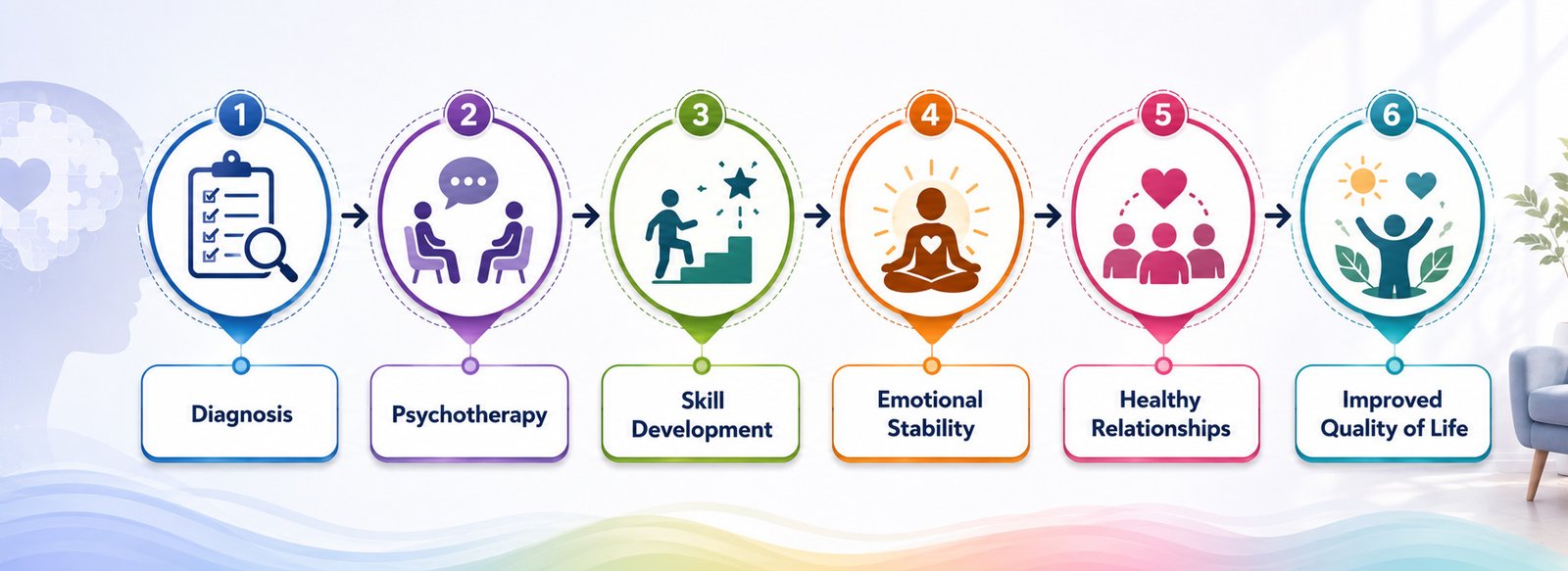
- Complete education
- Build satisfying careers
- Maintain healthy relationships
- Raise families
- Pursue personal interests
- Live independent and fulfilling lives
Healthy Daily Routines
Some helpful techniques include:
- Maintaining regular sleep
- Exercising consistently
- Eating a balanced diet
- Being mindful
- Keeping structured routines
- Attending therapy sessions
- Avoiding alcohol and recreational drugs
- Building supportive social connections
Building Emotional Resilience
Recovery also involves learning to:
- Recognize emotional triggers
- Pause before reacting
- Tolerate distress
- Communicate effectively
- Accept constructive feedback
- Practice self-compassion
- Solve problems more effectively
Everyday Recovery Strategies
| Strategy | Benefit |
|---|---|
| Therapy Homework | Development of new skills |
| Mindfulness | Better understanding of emotions |
| Physical Activity | Regulation of emotions |
| Healthy Social Interactions | Social/emotional support |
| Structured Schedule | More stability |
| Regular Follow-up | Appropriate intervention early on |
Clinical Pearl
Small behavioral changes made repeatedly may provide bigger results than huge changes made temporarily.
When should you see a Psychiatrist?
When emotions, behaviors, or problems in personal relationships affect your work, studies, social life, or daily activities, it is advisable to see a psychiatrist.
SEEK PROFESSIONAL HELP IF
- Your emotions cannot be controlled.
- Relationships are repeatedly unstable.
- Anger or impulsive behaviour causes problems.
- Fear of rejection affects daily life
- Anxiety or depression accompanies emotional difficulties
- Low self-esteem persists.
- The symptoms affect your work or school.
- Earlier counseling did not work.
GET URGENT MEDICAL ATTENTION IF
Urgent medical care is needed if:
- There is any suicidal ideation or plans.
- Self-harm has occurred or seems imminent.
- Aggression places anyone at immediate risk.
- Serious emotional disturbances cause an inability to take care of one’s personal needs.
- Any psychotic symptoms such as hallucinations and delusions appear.
- There is significant substance intoxication combined with self-harm risk
Clinical Pearl
The early psychiatric evaluation usually avoids years of emotional suffering in the future.
Why Choose Headspace Mind Clinic for Personality Disorder Treatment in Delhi?
At Headspace Mind Clinic, we provide assessment and treatment services to persons with personality disorders based on scientific research. We use a holistic approach involving assessment, therapy, and psychotropic medications, where necessary, educating the family members and following up to enhance the person's life.
OUR APPROACH
- Comprehensive Psychiatric Assessment
- Consultant Psychiatrist
- Individualized Treatment Plans
- Evidence-Based Psychotherapy
- Medication Management (When Indicated)
- Family Psychoeducation
- Crisis Management Planning
- Long-Term Follow-up
SERVICES OFFERED
| Service | Available |
|---|---|
| Comprehensive Assessment | ✓ |
| Psychiatric Consultation | ✓ |
| Medication Management | ✓ |
| Individual Psychotherapy | ✓ |
| Family Counselling | ✓ |
| Crisis Planning | ✓ |
| Long-Term Follow-up | ✓ |
You Don’t Have to Do This All By Yourself
Book your confidential appointment now.
Phone:
Website:
Frequently Asked Questions (FAQ)
BPD includes problems with emotional regulation and relationships with others on an ongoing basis. BD consists of distinct episodes of depression and mania/hypomania. While there may be some similarities between them, these are two distinct disorders.
Medically Reviewed By
Dr. Deepak Verma
Consultant Psychiatrist & Neuropsychiatrist, Founder & Medical Director, Headspace Mind Clinic
ABOUT THE MEDICAL REVIEWER
PUBLICATION INFORMATION
| Item | Details |
|---|---|
| Author | Headspace Mind Clinic Editorial Team |
| Medical Reviewer | Dr. Deepak Verma |
| Last Medical Review | July 2026 |
| Next Scheduled Review | January 2027 |
| Content Version | 1.0 |
| Content Type | Evidence-Based Patient Education |
EDITORIAL POLICY
- Based on current scientific evidence and internationally accepted clinical guidelines.
- Reviewed by a qualified psychiatrist before publication.
- Written using respectful, non-stigmatizing, person-first language.
- Updated regularly as new evidence becomes available.
- Intended for educational purposes and should not replace individualized medical advice or treatment.
REFERENCES
- American Psychiatric Association (APA) – Diagnostic and Statistical Manual of Mental Disorders (DSM-5-TR)
- National Institute for Health and Care Excellence (NICE) – Guidelines for Borderline and Antisocial Personality Disorders
- Indian Psychiatric Society (IPS) – Clinical Practice Guidelines
- World Health Organization (WHO) – International Classification of Diseases (ICD-11)
- National Institute of Mental Health (NIMH) – Personality Disorders
- Recent PubMed-indexed systematic reviews – Personality disorder diagnosis, psychotherapy, and long-term outcomes