
Home › School Mental Health › Alcohol, vaping and drugs
Alcohol, vaping and drugs: talk early, stay calm
Many teenagers are curious, and friends, stress or social media can push them to try. Most first tries happen around the school years. Calm, early talks at home and school protect children far better than fear or punishment. If a child is already using, help works, and it works better early.
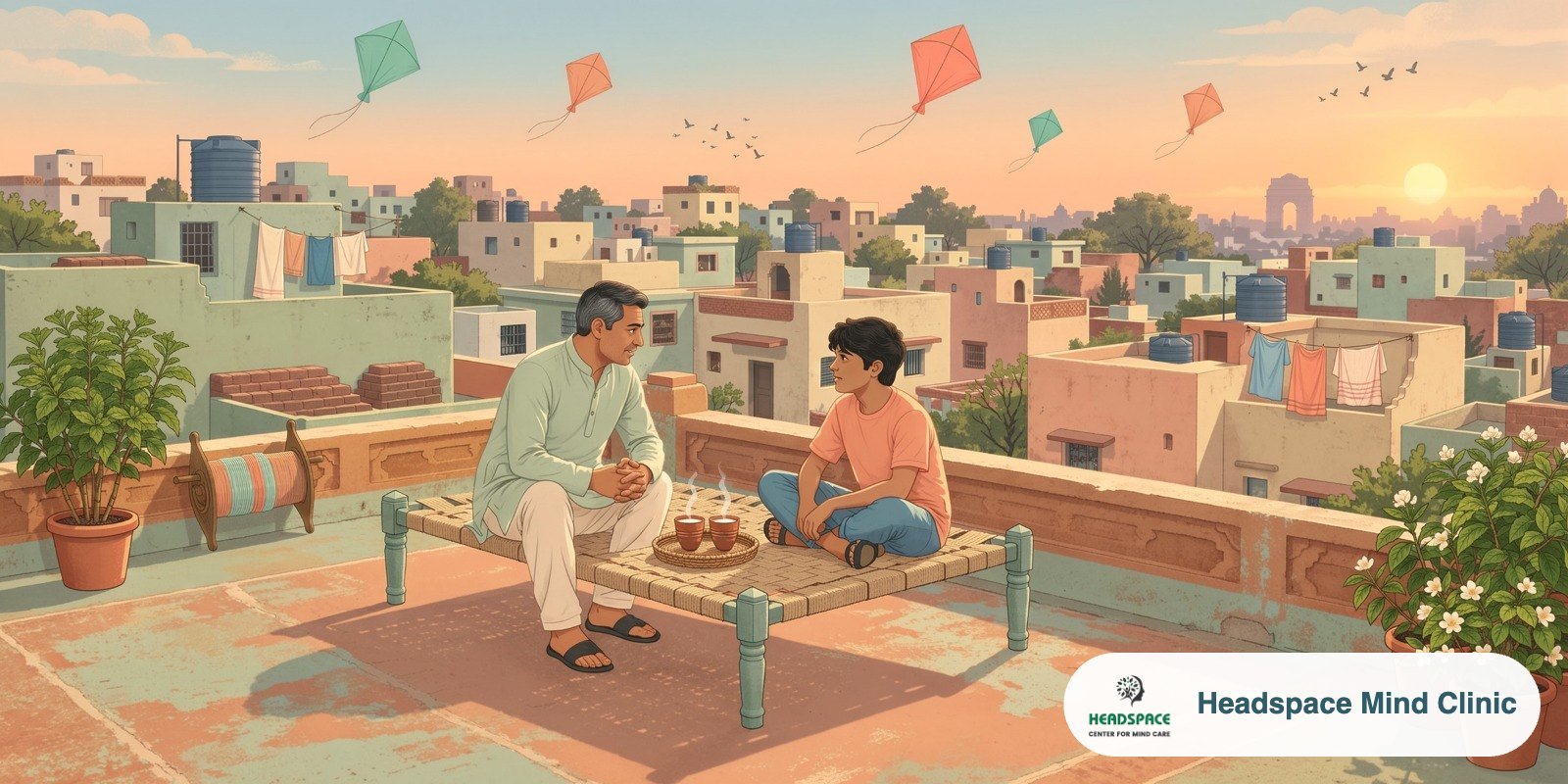
Does this sound familiar?
Real worries we hear from Delhi families and schools.
I found a vape in his school bag. He said it is “just flavour”, everyone has one.
Some boys come back from the break smelling of tobacco and look sleepy in class.
When parents panic and beat the child, the child just hides it better.
My friends said one try won’t do anything. I didn’t want to look scared.
In India: the numbers
Small references show where each number comes from.
Signs to notice
One sign alone is not a diagnosis. Look for a pattern that lasts.
Changes in friends
New friends they won’t introduce; drops old ones.Secrecy and money
Lies about where they were; money or things go missing.School drops
Bunks classes, marks fall, late or absent more often.Sleep and mood
Sleepy, red eyes, irritable, or unusually excited.Smells and objects
Smell of smoke or alcohol, vapes, lighters, eye drops, unknown pills.Risky behaviour
Fights, accidents, or getting into trouble with the police.Usual, or a sign to look closer?
| Usually part of growing up | Worth a closer look | |
|---|---|---|
| Curiosity | Asks questions about drinking or vaping | Is regularly using or carrying substances |
| Friends | Some friends experiment | Most time is spent with a group that uses |
| Mood | Normal teenage ups and downs | Big mood swings, anger, sleepiness, withdrawal |
| School | Steady | Bunking, falling marks, discipline notes |
| Control | Can say no | Uses alone, needs more, or can’t stop |
What helps, step by step
Pick your role. Each tab has practical steps you can start today.
Teachers can build a culture where students can ask for help without fear.
At home, a calm, ongoing conversation is your strongest protection.
Counsellors can screen, guide families and connect to treatment.
What to say, what to avoid
Try saying
- “I am not angry, I am worried about you.”
- “What do your friends say about vaping?”
- “You can always call me, any time, if you need to get home safely.”
- “Let’s find help together.”
Better to avoid
- “You have ruined our family’s name.”
- “Wait till your father hears.”
- “I will throw you out of the house.”
- “Only bad children do this.”
When to get help
Use this as a rough guide, not a test.
- Curious, asks questions
- Friends talk about it
- No signs of use
- Has tried once or twice
- Carries vapes, cigarettes or alcohol
- Hanging out with a group that uses
- Regular use, can’t stop
- Unconscious, vomiting badly, breathing trouble (call 112)
- Use with self-harm talk, violence or school dropout
From worry to a plan
Myths and facts
Questions parents and teachers ask
At what age should I talk to my child about drugs and alcohol?
Start around age 10 with simple facts, and keep talking as they grow. Many first tries happen around age 12–14.
I found a vape in my child’s bag. What should I do?
Stay calm. Talk when you are both calm. Ask about how often and why. Set clear rules and involve the school counsellor if needed.
Is vaping legal in India?
No. The Prohibition of Electronic Cigarettes Act, 2019 bans the sale and production of e-cigarettes in India.
Is there a helpline?
Yes. The national de-addiction helpline 14446 is free and works 24×7. Tele-MANAS 14416 also helps.
When does my child need a doctor?
If use is regular, they can’t stop, they have withdrawal, or there are mood, sleep or behaviour problems. In an emergency, call 112.
Where to get help in Delhi
Start with the person closest to the child. Help is available, and asking early is normal.
Headspace Mind Clinic (outpatient) in West and North Delhi:
- Paschim Vihar: GH-14/49, near Bosco Public School, Paschim Vihar, Delhi 110087 · +91 99711 66040
- Rohini: C-8/273, near Gurudwara, Sector 8, Rohini, Delhi 110085 (near Rohini East Metro) · +91 90990 97381
- Narela: 48/1 Singhu Border Road, Krishna Colony, Narela, Delhi 110040 · +91 74530 00444
Easy to reach from Paschim Vihar, Rohini, Narela, Pitampura, Punjabi Bagh, Shalimar Bagh, Nangloi, Bawana and nearby areas. All clinic details
More school mental health guides
Guides by role: Parents · Teachers · Counsellors · हिंदी में पढ़ें
Sources
- AIIMS Delhi multi-city survey of school students (Dhawan A et al., National Medical Journal of India, Dec 2025), reported by Careers360
- Press Information Bureau. Magnitude of drug abuse in the country (NDDTC–AIIMS national survey data), 29 March 2023
- Press Information Bureau. Toll-free helpline 14446 for de-addiction, 2 April 2025
- Prohibition of Electronic Cigarettes Act, 2019
Reviewed by Dr. Deepak Verma, Consultant Psychiatrist (MBBS, MD Psychiatry), 26 November 2026. Headspace Mind Clinic, Delhi.