
Home › School Mental Health › Low mood and depression
Low mood and depression: more than “just a phase”
Teenagers can be moody. Depression is different: the sadness or irritability stays for weeks, and the child stops enjoying things and starts falling behind. It is common, it is treatable, and adults who notice early make a real difference.
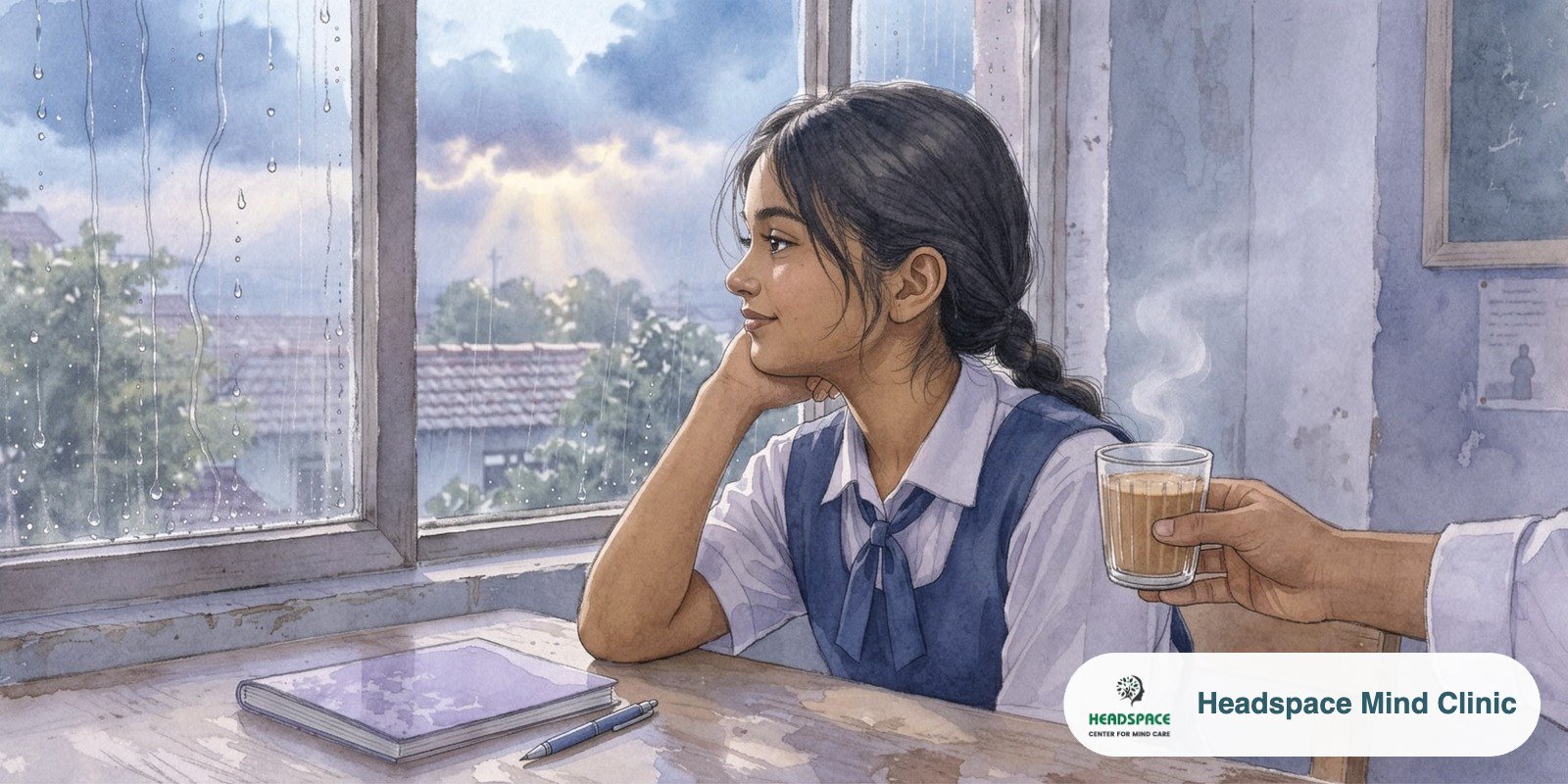
Does this sound familiar?
Real worries we hear from Delhi families and schools.
She stays in her room all day. We thought it was the phone, but she says she just feels tired of everything.
He used to be in the front bench. Now he sits at the back and doesn’t submit work.
Many students say “I’m fine” three times before they say what is really going on.
Everyone says these are the best years of my life. Then why do I feel empty?
In India: the numbers
Small references show where each number comes from.
Signs to notice
One sign alone is not a diagnosis. Look for a pattern that lasts.
Sad or irritable most days
Sadness, crying, or snapping at everyone for two weeks or more.Lost interest
No longer enjoys games, friends, music or things they used to love.Sleep and appetite change
Sleeps too much or too little; eats much less or much more.School slipping
Poor focus, incomplete work, falling marks, missing school.Pulling away
Avoids friends and family, stays in the room.Hopeless talk
“Nothing will change”, “I am a burden”, or talk about death.Usual, or a sign to look closer?
| Usually part of growing up | Worth a closer look | |
|---|---|---|
| Feeling | Sad for a day or two after a bad mark or a fight | Sad, empty or irritable most of the day, most days, for 2+ weeks |
| Interest | Still enjoys some things | Nothing feels fun any more |
| Energy | Tired after a busy week | Tired all the time, even after rest |
| Thinking | Self-doubt that passes | “I am useless”, guilt, hopelessness |
| Daily life | Goes to school, meets friends | Stops studying, skips school, avoids everyone |
What helps, step by step
Pick your role. Each tab has practical steps you can start today.
Teachers often see depression first, as falling work or a quiet child at the back.
At home, your calm presence matters more than perfect words.
Counsellors can screen early and connect the family to care.
What to say, what to avoid
Try saying
- “I have noticed you seem really low. I care about you.”
- “You don’t have to go through this alone.”
- “It is not your fault, and it can get better.”
- “Are you having thoughts of hurting yourself? You can tell me.”
Better to avoid
- “You have everything, why are you sad?”
- “Just think positive.”
- “Stop being dramatic.”
- “Others have bigger problems.”
When to get help
Use this as a rough guide, not a test.
- Low after a setback but bounces back in days
- Still enjoys some things
- Sleeps and eats roughly as usual
- Low or irritable for 2+ weeks
- Falling marks, pulling away from friends
- Sleep or appetite clearly changed
- Talks about death, suicide or self-harm
- Says life is not worth living, or gives away things
- Cannot get out of bed or eat for days
From worry to a plan
Myths and facts
Questions parents and teachers ask
How do I know if it is depression or normal teenage mood?
Normal moods pass in a few days. Depression lasts two weeks or more, and the child stops enjoying things and struggles at home or school.
Can depression be treated?
Yes. Talking therapies like CBT, family support and, when needed, medicine prescribed by a psychiatrist all help most young people recover.
Will my child have to take medicine?
Not always. Mild depression is often treated with therapy and support. A psychiatrist decides after a full assessment and explains the options.
What should a teacher do if a student talks about suicide?
Stay with the student, listen calmly, do not promise secrecy, and inform the school counsellor and parents the same day. In danger, call 112.
Where can we get help in Delhi?
Start with the school counsellor or family doctor. Tele-MANAS 14416 gives free advice any time. A child psychologist or psychiatrist can do a full assessment.
Where to get help in Delhi
Start with the person closest to the child. Help is available, and asking early is normal.
Headspace Mind Clinic (outpatient) in West and North Delhi:
- Paschim Vihar: GH-14/49, near Bosco Public School, Paschim Vihar, Delhi 110087 · +91 99711 66040
- Rohini: C-8/273, near Gurudwara, Sector 8, Rohini, Delhi 110085 (near Rohini East Metro) · +91 90990 97381
- Narela: 48/1 Singhu Border Road, Krishna Colony, Narela, Delhi 110040 · +91 74530 00444
Easy to reach from Paschim Vihar, Rohini, Narela, Pitampura, Punjabi Bagh, Shalimar Bagh, Nangloi, Bawana and nearby areas. All clinic details
More school mental health guides
Guides by role: Parents · Teachers · Counsellors · हिंदी में पढ़ें
Sources
Reviewed by Dr. Deepak Verma, Consultant Psychiatrist (MBBS, MD Psychiatry), 26 November 2026. Headspace Mind Clinic, Delhi.