
Home › School Mental Health › Exam stress and anxiety
Exam stress and anxiety: a practical guide for board exam season
A little exam tension is normal. But when worry turns into sleepless nights, stomach aches every morning, or blanking out in the exam hall, a student needs help, not more pressure. This guide shows what helps, in class and at home, from now until results day.
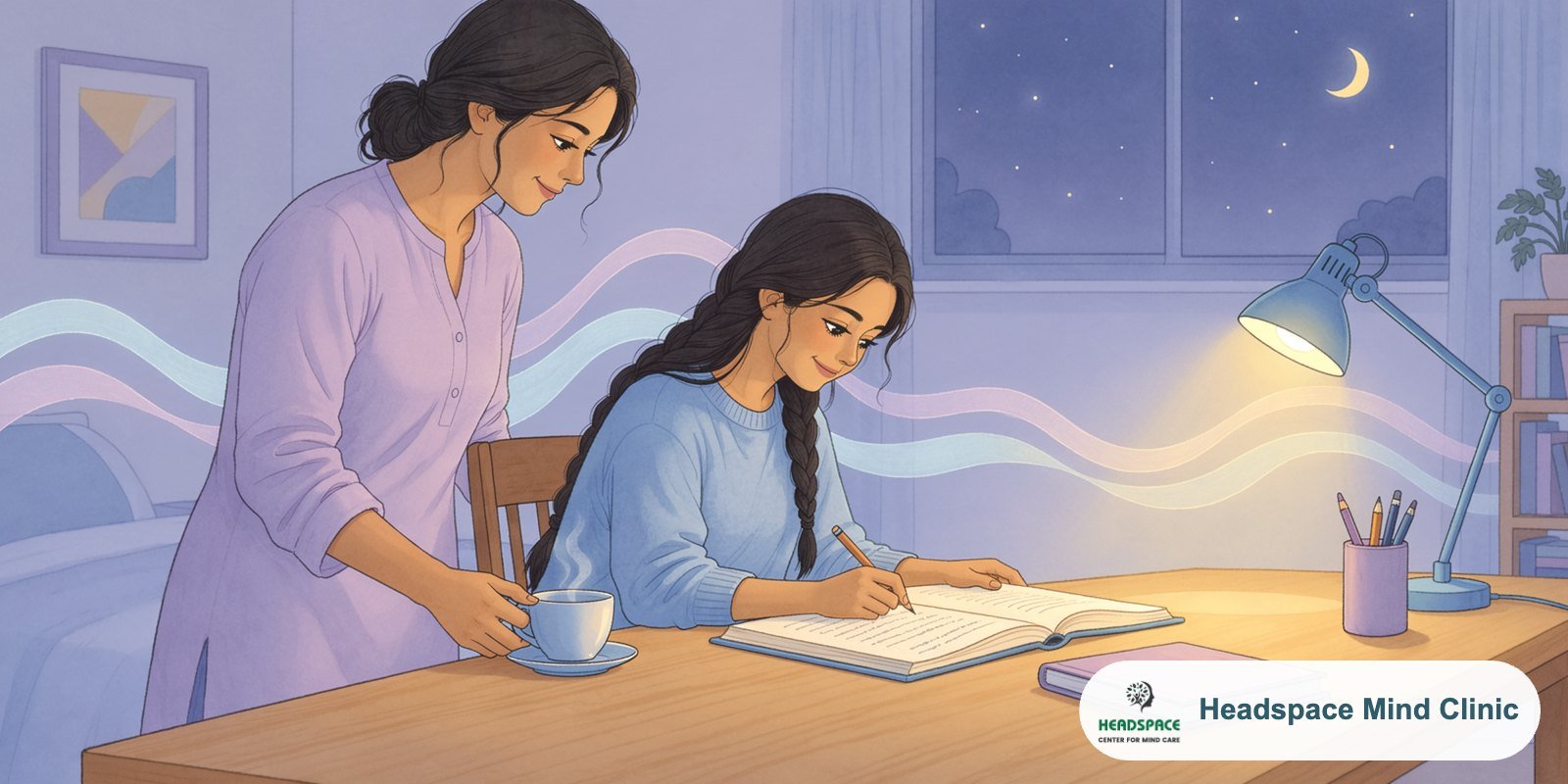
Does this sound familiar?
Everyone keeps asking “how much are you expecting?”. My chacha’s son got 96%. I study all day but nothing stays in my head.
She was fine till December. Now she cries every night and says her stomach hurts every morning before school.
Half my class looks exhausted. Two students had panic attacks in the pre-boards. I want to help, but the syllabus still has to finish.
Exam stress in India: what we know
The pressure is real, and it is common. That is why a calm plan matters.
What exam anxiety looks like
It shows up in the body, the mind and behaviour. Many students only talk about the body part.
In the body
- Stomach aches, nausea, loose motions before exams
- Headaches, fast heartbeat, sweating
- Not hungry, or eating much more
- Can’t fall asleep, wakes up at 3 am
In the mind
- “I’ll fail”, “I’ve forgotten everything”
- Can’t concentrate, reads the same page again and again
- Blanking out in the exam hall
- Constant comparing with others
In behaviour
- Avoids studying, or studies all night
- Irritable, snaps at family
- Skips school or pre-boards
- Stops meeting friends, stays in the room
Normal exam nerves, or something more?
| Normal exam nerves | Needs attention | |
|---|---|---|
| Worry | Comes and goes, mostly just before a paper. | Constant, for weeks, even on holidays. |
| Body | Butterflies on the morning of the exam. | Stomach aches, vomiting or headaches most days. |
| Sleep | A restless night before a big paper. | Can’t sleep for many nights, or sleeps all day. |
| Studying | Tension makes them revise more. | Can’t study at all, or freezes in the exam. |
| Mood | Relief and fun after the paper. | Tears, anger, “I’m useless”, no interest in anything. |
What helps
Choose your role.
Teachers set the tone of exam season. A calm, organised class reduces anxiety for every student, not only the anxious ones.
Your words and your home routine matter more than any guidebook. Children remember how home felt during exams.
Exam season is your busiest time. A plan made in December saves crises in February.
Try this: a 1-minute calm-down
Practise it daily for a week before exams, so it works in the exam hall.
Breathe in for 4
Slowly through the nose. Count 1, 2, 3, 4.
Hold for 4
Shoulders down. Unclench the jaw.
Breathe out for 6
Slowly through the mouth, like blowing on hot tea.
Repeat 5 times
Then read the first question slowly. Start with the one you are most sure of.
What to say, and what to avoid
Try saying
- “I’m proud of how hard you are working.”
- “Your marks don’t decide how much we love you.”
- “Let’s plan the next hour, not the whole syllabus.”
- “Whatever happens, there is always a next step. We’ll find it together.”
Better to avoid
- “If you don’t get 90%, what will people say?”
- “Look at your cousin, he never needed tuition.”
- “We have spent so much on your coaching.”
- “Stop crying, it’s just an exam.”
When to get help
Don’t wait for the exams to finish if you see the red signs.
- Nervous before papers, fine after
- Still eating, sleeping and studying
- Can laugh and relax on a break
- Worry most days for 2 weeks or more
- Stomach aches or headaches most mornings
- Can’t study, or studying all night
- Avoiding school or pre-boards
- Panic attacks
- Not eating, crying every day
- Refusing to go to school at all
- Any talk of self-harm or “no point living”: act today
From worry to a plan
Myths and facts
Common questions
How much exam stress is normal?
Some nervousness is normal and even useful: it makes us revise. It becomes a problem when it stops a student from studying, sleeping or eating, causes panic in the exam hall, or continues for weeks with stomach aches, tears or hopeless talk.
My child studies all night before exams. Is that okay?
No. Sleep is when the brain stores what was studied. Teenagers need about 8 to 10 hours (American Academy of Sleep Medicine). A tired brain forgets more and panics more. Fixed sleep time is part of exam preparation, not a break from it.
What if my child does badly in the board exam?
One exam does not decide a life. From 2026, CBSE Class 10 students can take an optional second board exam in May to improve marks in up to three subjects (CBSE, 2026). There are also supplementary exams, many college routes and many careers. Say this to your child before the results, not after.
Should we stop tuition and coaching before the exam?
Not suddenly, but the last two weeks should be for revision and rest, not new topics. If tuition timings eat into sleep, cut them down.
When does exam anxiety need professional help?
If panic attacks, constant crying, not eating, not sleeping, refusing to go to school, or any talk of self-harm or “there is no point” appear. Do not wait for the exams to finish. Speak to the school counsellor or a doctor this week.
Is there a free helpline for board exam stress?
Yes. CBSE runs a free psycho-social counselling helpline, 1800-11-8004, for Class 10 and 12 students around board exams (in 2026 it ran from 6 January to 1 June) (CBSE press release, 6 Jan 2026). Tele-MANAS, 14416, is free all year, 24×7.
Where to get help in Delhi
Start with the person closest to the child. Help is available, and asking early is normal.
Headspace Mind Clinic (outpatient) in West and North Delhi:
- Paschim Vihar: GH-14/49, near Bosco Public School, Paschim Vihar, Delhi 110087 · +91 99711 66040
- Rohini: C-8/273, near Gurudwara, Sector 8, Rohini, Delhi 110085 (near Rohini East Metro) · +91 90990 97381
- Narela: 48/1 Singhu Border Road, Krishna Colony, Narela, Delhi 110040 · +91 74530 00444
Easy to reach from Paschim Vihar, Rohini, Narela, Pitampura, Punjabi Bagh, Shalimar Bagh, Nangloi, Bawana and nearby areas. All clinic details
More school mental health guides
Guides by role: Parents · Teachers · Counsellors · हिंदी में पढ़ें
Sources
- NCERT (Manodarpan). Mental Health and Well-being of School Students: A Survey, 2022 (3.79 lakh students), as reported by Down To Earth
- CBSE. Press release: Psycho-Social Counselling Support for students, 6 January 2026
- CBSE. Class 10 board exams twice a year from 2026; second exam optional (PTI, June 2025; schedule April 2026)
- Paruthi S et al. Recommended amount of sleep for paediatric populations. Journal of Clinical Sleep Medicine, 2016
Reviewed by Dr. Deepak Verma, Consultant Psychiatrist (MBBS, MD Psychiatry), 26 November 2026. Headspace Mind Clinic, Delhi.