
Home › School Mental Health › Anger and behaviour
Anger and behaviour: what is behind the outbursts?
Every child gets angry. Shouting, slamming doors and saying “no” are part of growing up. But when anger is daily, hurts people or keeps a child out of class, the child is usually struggling with something. Here is how to look underneath, and what helps.
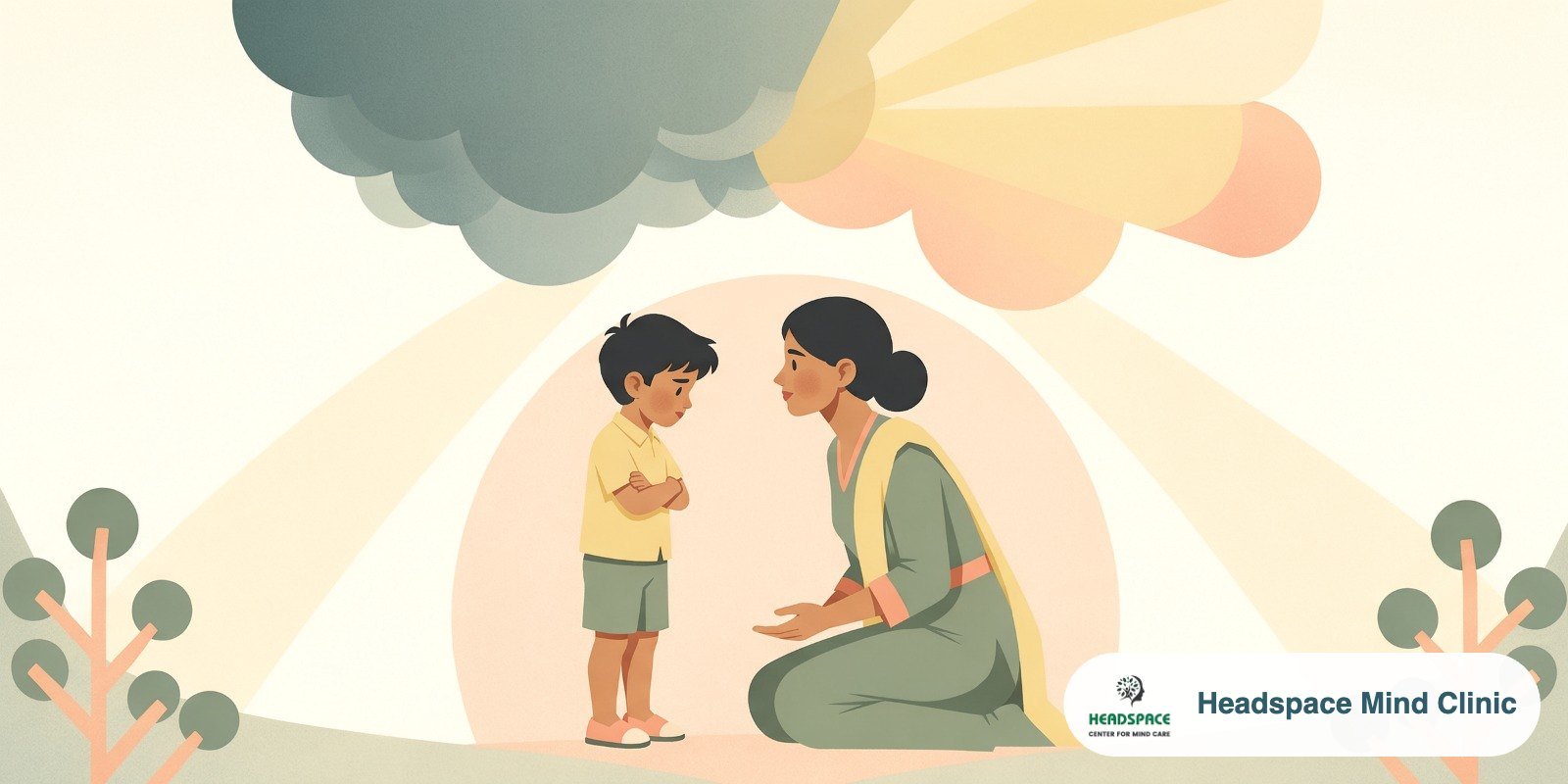
Does this sound familiar?
Real worries we hear from Delhi families and schools.
He throws things when he loses a game. Then he cries and says sorry. I don’t know what triggers him.
One boy disrupts every lesson. Punishment works for a day, then it starts again.
By the time children reach me for “behaviour”, they have already been labelled the bad boy of the class.
Everyone shouts at me first. Then when I shout back, I get the punishment.
In India: the numbers
Small references show where each number comes from.
Signs to notice
One sign alone is not a diagnosis. Look for a pattern that lasts.
Outbursts most days
Explosions over small things, many times a week.Hurting others
Hitting, biting, bullying, or breaking things on purpose.Always arguing with adults
Refuses rules, blames others, argues about everything.Trouble at school
Notes from teachers, being sent out, suspensions.Losing friends
Other children avoid them; not invited to play.Sad or worried underneath
Anger can hide sadness, fear, learning problems or hurt.Usual, or a sign to look closer?
| Usually part of growing up | Worth a closer look | |
|---|---|---|
| Tantrums | Short tantrums in toddlers; fewer after age 5 | Long, frequent tantrums after age 7, or getting worse |
| Arguing | Argues about some rules, especially in the teen years | Defies almost every adult, at home and at school |
| Aggression | Occasional pushing or shouting when upset | Hurts people or animals, or uses weapons |
| After the anger | Calms down, feels sorry | No regret; blames others every time |
| School | Some notes home | Repeated suspensions, can’t stay in class |
What helps, step by step
Pick your role. Each tab has practical steps you can start today.
In class, calm and consistent beats strict and loud. A few steps reduce most disruptions.
At home, children learn to handle anger by watching how adults handle theirs.
Counsellors can turn a “bad child” label into a plan.
What to say, what to avoid
Try saying
- “I can see you are very angry. I am here.”
- “Let’s take five breaths together, then talk.”
- “It is okay to be angry. It is not okay to hit.”
- “What happened just before you got upset?”
Better to avoid
- “You are a bad boy.”
- “Wait till your father comes home.”
- “Why can’t you be like your sister?”
- “Get out of my class!”
When to get help
Use this as a rough guide, not a test.
- Gets angry sometimes but calms down
- Says sorry or repairs later
- Has friends and stays in class
- Outbursts most days for weeks
- Often in trouble at school
- Parents feel they are “walking on eggshells”
- Hurts people or animals, or uses a weapon
- Talks of harming self or others
- Runs away, steals, or is suspended again and again
From worry to a plan
Myths and facts
Questions parents and teachers ask
Is my child’s anger normal?
Short tantrums are normal in young children. Worry if outbursts happen most days, are getting worse, hurt people, or continue past age 7–8 without improving.
Can anger be a sign of something else?
Yes. ADHD, learning difficulties, anxiety, low mood, sleep problems, bullying or stress at home often show up as anger.
Should I punish my child?
Calm, clear consequences (like losing screen time) work better than shouting or beating. Praise good behaviour much more often than you punish.
What can the school do?
Teachers can use clear class rules, praise, a cool-down space and a simple behaviour chart, and involve the counsellor and parents.
When should we see a doctor or psychologist?
If behaviour hurts others, is getting worse, affects school, or comes with sadness, poor attention or talk of self-harm.
Where to get help in Delhi
Start with the person closest to the child. Help is available, and asking early is normal.
Headspace Mind Clinic (outpatient) in West and North Delhi:
- Paschim Vihar: GH-14/49, near Bosco Public School, Paschim Vihar, Delhi 110087 · +91 99711 66040
- Rohini: C-8/273, near Gurudwara, Sector 8, Rohini, Delhi 110085 (near Rohini East Metro) · +91 90990 97381
- Narela: 48/1 Singhu Border Road, Krishna Colony, Narela, Delhi 110040 · +91 74530 00444
Easy to reach from Paschim Vihar, Rohini, Narela, Pitampura, Punjabi Bagh, Shalimar Bagh, Nangloi, Bawana and nearby areas. All clinic details
More school mental health guides
Guides by role: Parents · Teachers · Counsellors · हिंदी में पढ़ें
Sources
- Sarkhel S, Sinha VK, Arora M, Desarkar P. Prevalence of conduct disorder in schoolchildren of Kanke. Indian Journal of Psychiatry, 2006
- Malhotra S, Patra BN. Prevalence of child and adolescent psychiatric disorders in India: a systematic review and meta-analysis. Child and Adolescent Psychiatry and Mental Health, 2014
- Right of Children to Free and Compulsory Education Act, 2009, Section 17 (no physical punishment or mental harassment)
Reviewed by Dr. Deepak Verma, Consultant Psychiatrist (MBBS, MD Psychiatry), 26 November 2026. Headspace Mind Clinic, Delhi.