
Home › School Mental Health › School refusal
School refusal: when every morning is a battle
Some children cry, feel sick or panic at the thought of going to school. This is not simple naughtiness. It is often fear, worry or a problem at school. The longer a child stays home, the harder it gets, so home and school need to act together, early and kindly.
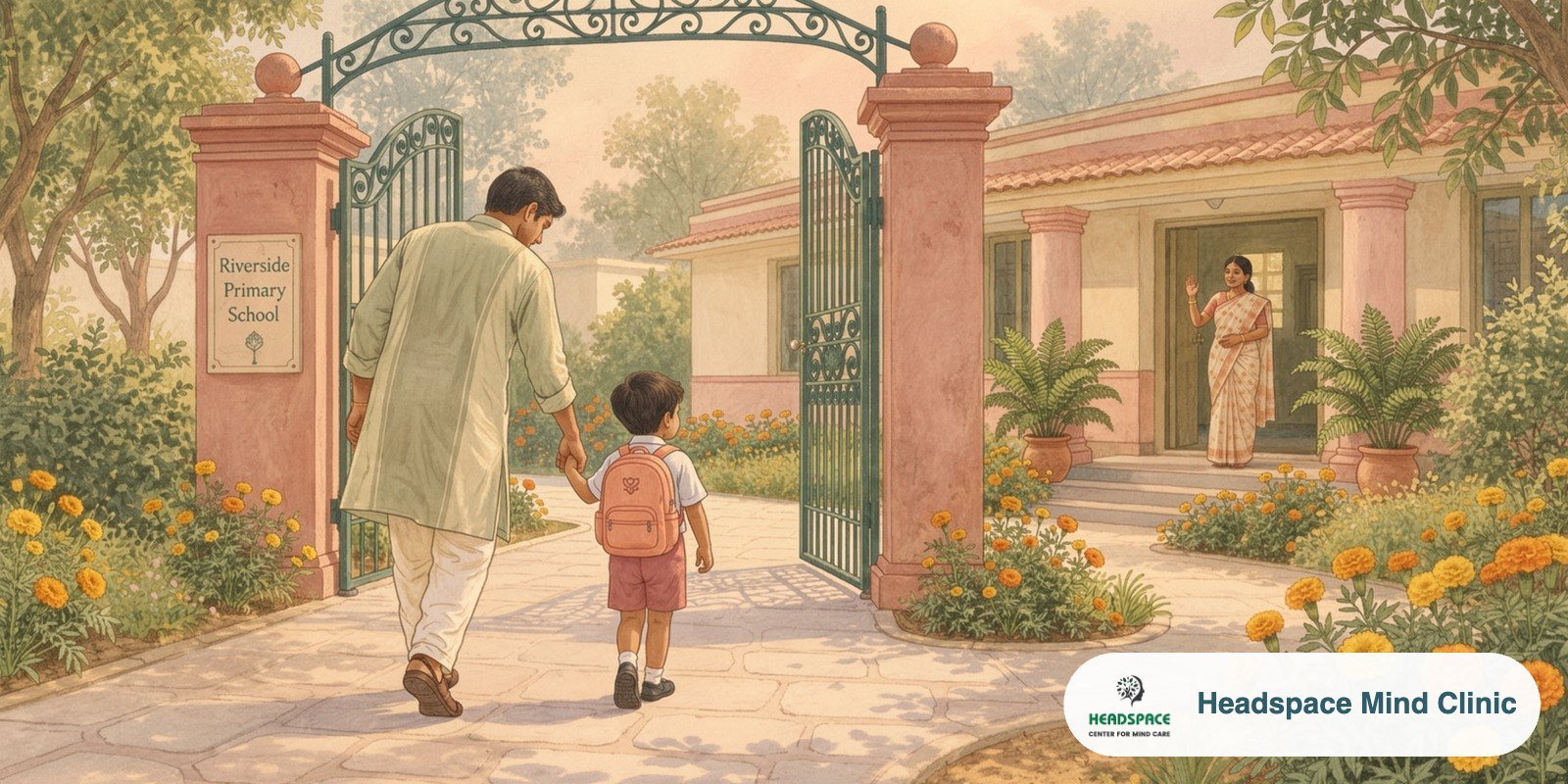
Does this sound familiar?
Real worries we hear from Delhi families and schools.
Every morning she vomits and says her head hurts. By 11 o’clock she is fine at home.
He has missed 20 days this term. When he comes, he sits quietly and asks to call home.
Families are often told “just force him”. Forcing without support usually makes it worse.
I can’t explain it. My stomach turns when I see the school bus.
In India: the numbers
Small references show where each number comes from.
Signs to notice
One sign alone is not a diagnosis. Look for a pattern that lasts.
Morning body complaints
Tummy aches, headaches, vomiting on school mornings that ease at home.Tears and tantrums
Crying, clinging or anger when it is time to leave.Missing days
Many absences, late arrivals, or calls home to be picked up.Fear at school
Hides in the toilet, avoids the canteen, stays near the staff room.Sunday night worry
Gets upset the evening before school or after holidays.Comfort at home
Feels better at home, often with screens or a parent.Usual, or a sign to look closer?
| Usually part of growing up | Worth a closer look | |
|---|---|---|
| Reluctance | Grumbles about school some mornings | Refuses or panics most school days |
| Body signs | Occasional tummy ache | Regular aches on school days only, with normal medical check |
| Absence | A few sick days a term | Misses many days or whole weeks |
| At home | Normal mood on holidays | Fine at home but distressed at the thought of school |
| Truancy vs refusal | Leaves home but bunks school (truancy) | Wants to stay home, and parents know (refusal) |
What helps, step by step
Pick your role. Each tab has practical steps you can start today.
Teachers can make school feel safe enough to come back.
At home, be kind but firm: going to school is the goal, with support.
Counsellors are key to a coordinated return plan.
What to say, what to avoid
Try saying
- “I know mornings feel scary. We will do this together.”
- “What is the hardest part of the school day?”
- “Let’s plan just the first step for tomorrow.”
- “You stayed for two periods today. That was brave.”
Better to avoid
- “You are just lazy.”
- “Fine, stay home today.”
- “If you don’t go, I will tell everyone.”
- “Other children go happily, why can’t you?”
When to get help
Use this as a rough guide, not a test.
- Grumbles on some mornings
- Goes to school and settles
- Happy at school once there
- Body complaints on most school mornings
- Several missed days this month
- Calls home often to be picked up
- Missing school for 2+ weeks
- Panic, severe distress or talk of self-harm
- Bullying or abuse suspected
From worry to a plan
Myths and facts
Questions parents and teachers ask
Why does my child feel sick only on school days?
Worry and fear cause real body symptoms like tummy aches and headaches. If the doctor finds no illness, anxiety is a likely cause.
Should I force my child to go?
Don’t drag or threaten. Do keep the goal of school, with a step-by-step plan agreed with the school.
How long can we wait?
Not long. After two weeks of refusal, it becomes much harder. Act early.
Can school refusal be treated?
Yes. Most children return with a clear plan, coping skills and support from family and school. CBT is very helpful.
What if the problem is bullying?
Tell the school in writing and ask for action under their anti-bullying policy. Read our bullying guide for steps.
Where to get help in Delhi
Start with the person closest to the child. Help is available, and asking early is normal.
Headspace Mind Clinic (outpatient) in West and North Delhi:
- Paschim Vihar: GH-14/49, near Bosco Public School, Paschim Vihar, Delhi 110087 · +91 99711 66040
- Rohini: C-8/273, near Gurudwara, Sector 8, Rohini, Delhi 110085 (near Rohini East Metro) · +91 90990 97381
- Narela: 48/1 Singhu Border Road, Krishna Colony, Narela, Delhi 110040 · +91 74530 00444
Easy to reach from Paschim Vihar, Rohini, Narela, Pitampura, Punjabi Bagh, Shalimar Bagh, Nangloi, Bawana and nearby areas. All clinic details
More school mental health guides
Guides by role: Parents · Teachers · Counsellors · हिंदी में पढ़ें
Sources
- Nayak A, Sangoi B, Nachane H. School refusal behavior in Indian children: analysis of clinical profile, psychopathology and development of a best-fit risk assessment model. Indian Journal of Pediatrics, 2018
- Yadav AS et al. Functional analysis of school refusal: an exploratory study in the Indian context. Industrial Psychiatry Journal, 2024
Reviewed by Dr. Deepak Verma, Consultant Psychiatrist (MBBS, MD Psychiatry), 26 November 2026. Headspace Mind Clinic, Delhi.