
Home › School Mental Health › For teachers › Teacher stress and burnout
Teacher stress and burnout: looking after the people who look after children
Big classes, admin work, exam pressure, parents’ expectations and now student mental health duties: Indian teachers carry a lot. When stress builds up without rest or support, it can turn into burnout. Noticing it early helps you, your family and your students.
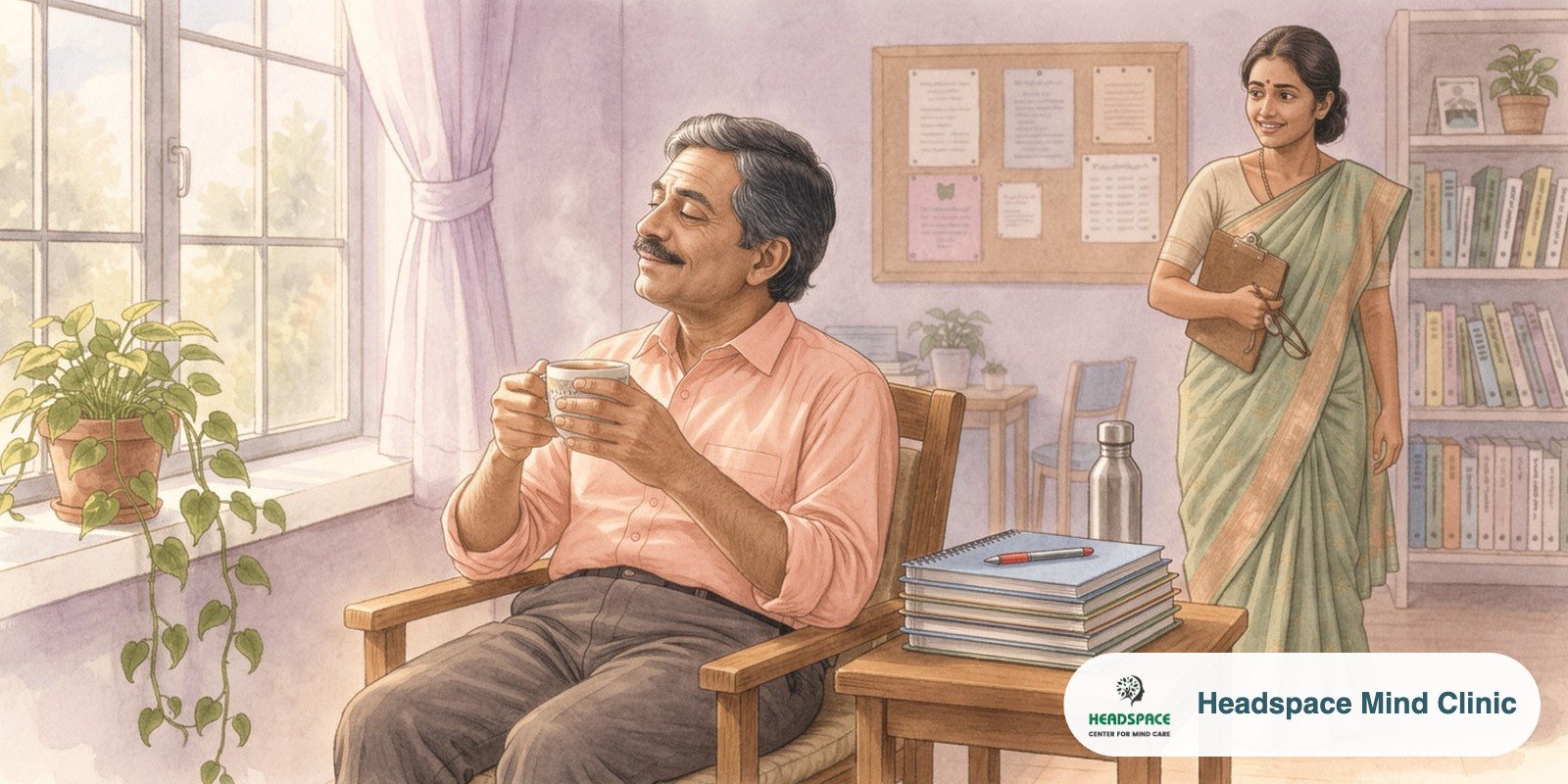
Does this sound familiar?
What teachers tell us.
I used to love teaching. Now I count the days to the next holiday.
Registers, online entries, duties, meetings… when do I prepare my lesson?
I give everything at school and have nothing left for my own children.
Teachers are asked to notice students’ mental health. Who notices theirs?
In India: the numbers
Small references show where each number comes from.
Signs of burnout
Burnout builds slowly. Look for a pattern over weeks.
Exhausted all the time
Tired even after a weekend or holiday.Irritable and cynical
Short temper with students, colleagues or family; “nothing will change”.Feeling ineffective
“I am not making any difference.”Body signs
Headaches, acidity, back pain, poor sleep, frequent illness.Pulling away
Avoids colleagues, skips staff events, stops enjoying hobbies.Low mood or anxiety
Dread before school, crying, loss of interest: this needs care.What helps: small daily steps
Protect breaks
Eat lunch away from your desk; a 5-minute walk between periods.Plan and batch
One time slot for checking copies; one for admin; say no to extras when full.Talk to someone
A trusted colleague, friend or counsellor. Sharing reduces load.Sleep and switch off
Fixed sleep time; no school WhatsApp groups after a set hour, if possible.Move a little daily
Walking, yoga or stretching for 20–30 minutes.Notice good moments
Write down one good thing from class each day.What schools can do
School leaders can reduce burnout for everyone.
When to get help
- Tired after busy weeks
- Recovers with rest
- Still enjoys parts of teaching
- Exhausted most days for weeks
- Irritable, sleeping poorly
- Dread before school
- Low mood or anxiety most days
- Using alcohol or pills to cope
- Thoughts of self-harm (call Tele-MANAS 14416 or 112)
Questions parents and teachers ask
What is the difference between stress and burnout?
Stress is feeling “too much” and usually eases with rest. Burnout is long-lasting exhaustion, cynicism and feeling ineffective that does not go away with a short break.
Can burnout lead to depression?
It can. If low mood, hopelessness or anxiety last two weeks or more, see a doctor or mental health professional.
Is it okay for teachers to seek counselling?
Yes. Looking after your own mental health helps you support students better. Counselling is confidential.
What can I say to my principal?
Share specific pressures and suggest one or two practical changes, such as fewer duplicate registers or a protected planning period.
Where can teachers in Delhi get help?
Tele-MANAS 14416 (free, any time), your family doctor, or a psychologist or psychiatrist.
Where to get help in Delhi
Start with the person closest to the child. Help is available, and asking early is normal.
Headspace Mind Clinic (outpatient) in West and North Delhi:
- Paschim Vihar: GH-14/49, near Bosco Public School, Paschim Vihar, Delhi 110087 · +91 99711 66040
- Rohini: C-8/273, near Gurudwara, Sector 8, Rohini, Delhi 110085 (near Rohini East Metro) · +91 90990 97381
- Narela: 48/1 Singhu Border Road, Krishna Colony, Narela, Delhi 110040 · +91 74530 00444
Easy to reach from Paschim Vihar, Rohini, Narela, Pitampura, Punjabi Bagh, Shalimar Bagh, Nangloi, Bawana and nearby areas. All clinic details
More resources for teachers
All topics: ADHD · Exam stress · Learning difficulties · Bullying · Self-harm warning signs · Screen time and gaming · Anger and behaviour · Low mood and depression · Anxiety and worry · Autism signs · School refusal · Sleep problems · Alcohol, vaping and drugs · Grief and loss · Body image and eating · When a child tells you about abuse
Sources
- Lavanya M et al. Perceived stress among private school teachers in Chengalpattu district, Tamil Nadu. Cureus, 2024
- Shetty D, Jerome A. Perceived stress among school teachers and its associated factors (Pune). 2025
- Correlates of burnout among Indian primary school teachers. International Journal of Organizational Analysis, 2021
- Tele-MANAS, Ministry of Health and Family Welfare
Reviewed by Dr. Deepak Verma, Consultant Psychiatrist (MBBS, MD Psychiatry), 26 November 2026. Headspace Mind Clinic, Delhi.