
Home › School Mental Health › For parents › Is this normal? Behaviour by age
Is this normal? Your child’s behaviour, age by age
Tantrums at 3, fibs at 5, back-talk at 13: a lot of “difficult” behaviour is part of growing up. This guide shows what is usually normal at each age, and the signs that are worth a closer look. Use it as a rough guide, not a test.
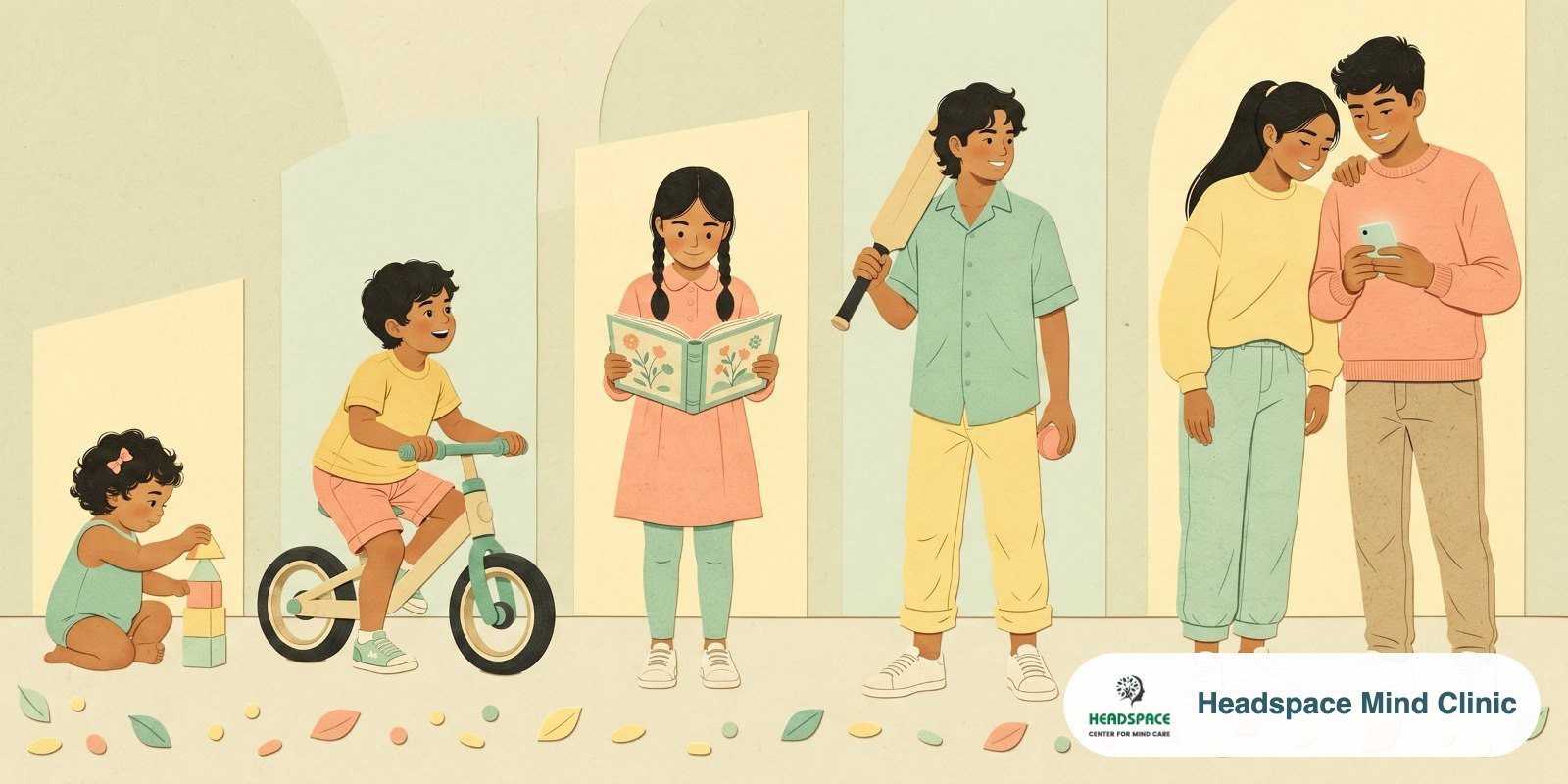
Does this sound familiar?
Everyone says boys are naughty. But is this much naughty normal?
She used to tell us everything. Now she just says “fine” and closes the door.
In our time children were not like this. Is it the phone?
My parents think I am just moody. I don’t know how to tell them it is more than that.
Age by age: usual vs worth a closer look
One sign alone rarely means a problem. Look for patterns that last weeks and affect daily life.
| Age | Usually part of growing up | Worth a closer look |
|---|---|---|
| 2–3 years | Tantrums, “no!”, clingy with strangers, short attention, plays next to (not with) other children | No words or very few by 2 years; no pointing; loses skills; no interest in people |
| 4–5 years | Lots of questions, pretend play, some fears (dark, monsters), occasional lies and fibs | Very aggressive daily; can’t separate from parent at all; not playing with others; speech hard to understand |
| 6–8 years | Wants to win and follow rules, worries about school and friends, some tummy aches before tests | Frequent tantrums still; very anxious most days; can’t sit for short tasks; struggles to read or write |
| 9–12 years | More private, peer friendships matter, mood dips, argues about fairness, interest in phones and games | Withdraws from friends; school refusal; bullying (either side); sleep and appetite changes; secret screen use |
| 13–15 years | Moody, wants independence, more time with friends, body and looks matter, some risk-taking | Low mood or irritability for 2+ weeks; self-harm; skipping meals; drug or alcohol use; falling marks |
| 16–18 years | Exam stress, career worries, relationships, late nights | Hopelessness, panic attacks, not sleeping for days, talk of suicide, very unusual behaviour |
Three questions to ask yourself
How long?
A few days is usually a phase. Weeks or months is worth a closer look.How strong?
Is it much more intense than other children the same age?How much does it affect life?
Is it hurting school, friendships, sleep, eating or family life?Warning signs at any age
Get help soon if you notice any of these.
- Short phases linked to a change (new school, new sibling)
- Still eats, sleeps and plays
- Bounces back in days
- Changes lasting more than 2–3 weeks
- Marks or friendships falling
- Frequent body complaints on school days
- Loses skills already learned
- Talk of self-harm or death
- Hurts self or others, or signs of abuse
What helps at every age
Daily special time
10–15 minutes of one-to-one time, no phones.Listen first
Ask open questions and listen more than you advise.Routines
Regular sleep, meals and screen times.Praise effort
Notice good behaviour more than bad.Talk to school
Teachers see your child for hours every day.Ask early
Early help is easier and works better.Questions parents and teachers ask
My 3-year-old has many tantrums. Is this normal?
Yes, tantrums are common at 2–3 years. They usually reduce by age 4–5 as language improves. Worry if they are very long, daily and getting worse, or if your child hurts themselves or others.
My teenager is moody and private. Should I worry?
Some moodiness and wanting privacy is normal. Worry if low mood or irritability lasts two weeks or more, or they stop enjoying things, sleeping or eating normally.
Is it just a phase?
Phases are short and don’t stop daily life. If it lasts weeks, is very intense, or affects school and friendships, talk to the school counsellor or a professional.
Who should I talk to first?
Start with your child’s class teacher or school counsellor, and your family doctor or paediatrician.
Where can we get an assessment in Delhi?
Child psychologists and child psychiatrists can do a full assessment. Government hospitals and private clinics offer this.
Where to get help in Delhi
Start with the person closest to the child. Help is available, and asking early is normal.
Headspace Mind Clinic (outpatient) in West and North Delhi:
- Paschim Vihar: GH-14/49, near Bosco Public School, Paschim Vihar, Delhi 110087 · +91 99711 66040
- Rohini: C-8/273, near Gurudwara, Sector 8, Rohini, Delhi 110085 (near Rohini East Metro) · +91 90990 97381
- Narela: 48/1 Singhu Border Road, Krishna Colony, Narela, Delhi 110040 · +91 74530 00444
Easy to reach from Paschim Vihar, Rohini, Narela, Pitampura, Punjabi Bagh, Shalimar Bagh, Nangloi, Bawana and nearby areas. All clinic details
More resources for parents
All topics: ADHD · Exam stress · Learning difficulties · Bullying · Self-harm warning signs · Screen time and gaming · Anger and behaviour · Low mood and depression · Anxiety and worry · Autism signs · School refusal · Sleep problems · Alcohol, vaping and drugs · Grief and loss · Body image and eating · When a child tells you about abuse
Sources
Reviewed by Dr. Deepak Verma, Consultant Psychiatrist (MBBS, MD Psychiatry), 26 November 2026. Headspace Mind Clinic, Delhi.