
Home › School Mental Health › For school counsellors › Mental status examination
Mental status examination (MSE): a simple guide for school counsellors
The MSE is a structured way to describe how a student looks, talks, feels and thinks during your meeting. It is a snapshot, not a diagnosis. Done well, it helps you spot risk, record changes over time, and write clear referral notes.
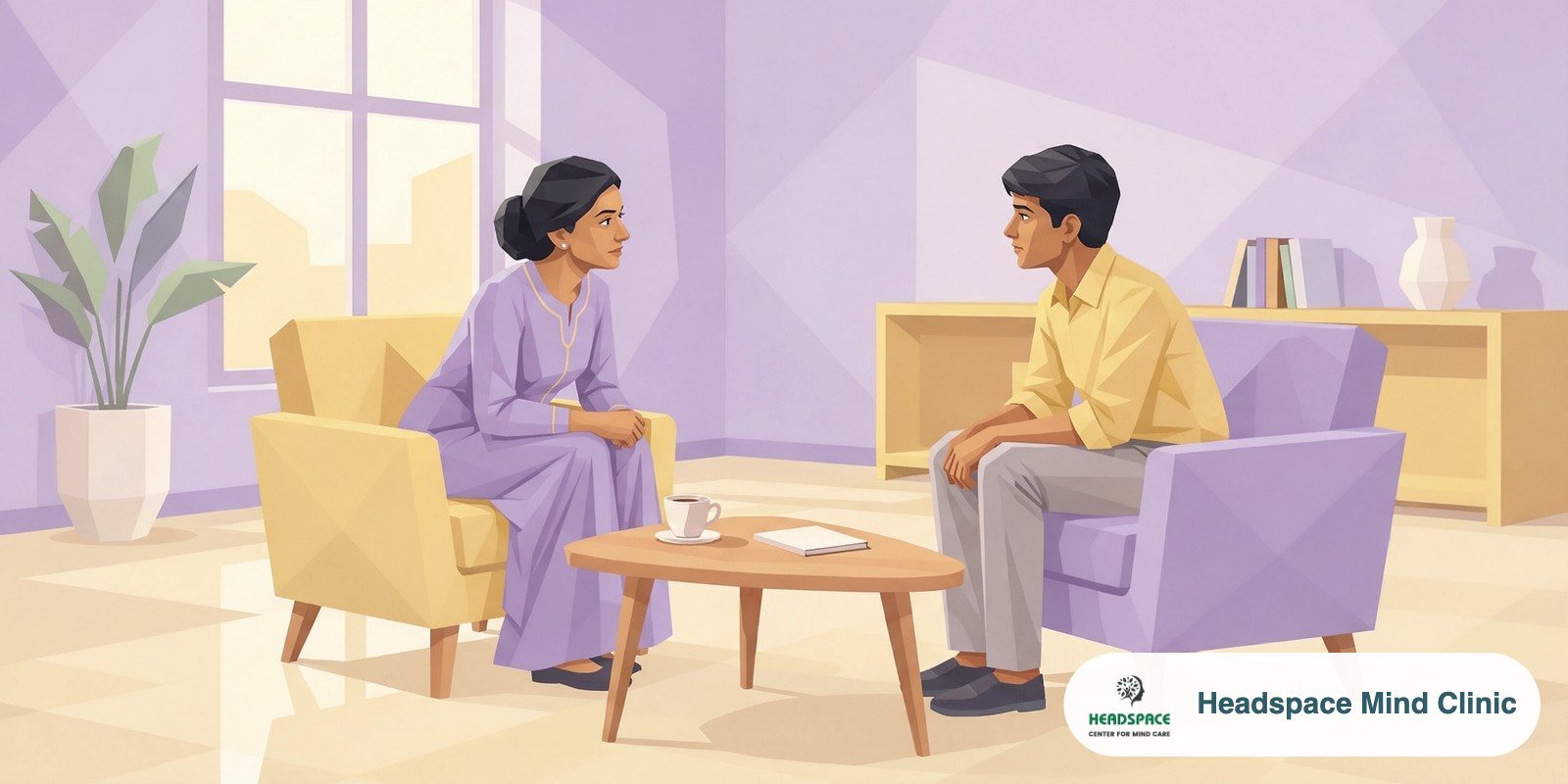
The MSE at a glance
Observe throughout the conversation; you rarely need to “test”.
| Area | What to observe | School example |
|---|---|---|
| Appearance | Dress, hygiene, grooming, visible injuries, eye contact | Uniform untidy for weeks; avoids eye contact |
| Behaviour | Activity level, restlessness, cooperation, unusual movements | Fidgets constantly; very slow; guarded |
| Speech | Rate, volume, amount, clarity | Very soft, few words; or fast and hard to interrupt |
| Mood (reported) | How the student says they feel | “I feel empty”, “I am fine” |
| Affect (observed) | The emotion you see; range, fit with content | Tearful; flat; laughs while describing a sad event |
| Thought form | How ideas connect; logical or jumping | Goes off-topic; hard to follow |
| Thought content | Main themes, worries, guilt, hopelessness, suicidal ideas | “Everyone would be better without me” |
| Perception | Hearing or seeing things others don’t | Hears voices calling their name |
| Cognition | Orientation, attention, memory, concentration | Can’t focus for more than a few minutes |
| Insight | Understanding of their difficulties | “Nothing is wrong, teachers are against me” |
| Judgement | Decision-making in everyday situations | Plans to run away from home tonight |
Adapting the MSE for children
Use play and drawing
Young children show mood and worries through play, drawing and stories.Simple words
“What makes you feel happy, sad, scared or angry?”Collateral is key
Parents and teachers describe behaviour at home and in class.Check development
Compare with what is expected for the child’s age.Always check risk
Ask clearly and calmly. Asking does not put the idea in their head.
- No thoughts of self-harm
- Good support
- Coping with stress
- Passive thoughts (“I wish I wasn’t here”)
- Recent stressor
- Some support
- Active thoughts or plan, recent self-harm
- Hopelessness, giving away things
- Abuse or unsafe home: follow protocol, inform principal and parents (unless unsafe), refer urgently, call 112 if in immediate danger
Sample MSE note (example only)
MSE note: Student A, Class 9 (example)
Appearance and behaviour
- Neatly dressed; poor eye contact; sat still, cooperative
Speech
- Soft, slow, few words
Mood and affect
- Mood: “tired of everything”; affect: low, tearful, restricted
Thought
- Logical; themes of failure and guilt; passive death wishes, no plan
Perception and cognition
- No unusual perceptions reported; poor concentration
Insight and judgement
- Partial insight; agrees to talk to parents
Plan
- Safety plan made; parents informed today; urgent referral to child psychiatrist
This is a made-up example for learning, not a real student.
Questions parents and teachers ask
Can school counsellors do an MSE?
Yes, a basic MSE is part of good observation and record-keeping. It does not replace a diagnosis by a psychiatrist or clinical psychologist.
How is MSE different from a case history?
The case history is the story over time. The MSE is a snapshot of how the student is in the session today.
Do I need special forms?
No. Use a simple structure like the table above and write short factual notes.
What should I do if I notice hallucinations or confused thinking?
Stay calm, ensure safety, inform parents and arrange an urgent assessment with a psychiatrist.
Where can I learn more?
Supervised practice is the most useful way. Case discussions with experienced clinicians help counsellors build MSE skills.
Where to get help in Delhi
Start with the person closest to the child. Help is available, and asking early is normal.
Headspace Mind Clinic (outpatient) in West and North Delhi:
- Paschim Vihar: GH-14/49, near Bosco Public School, Paschim Vihar, Delhi 110087 · +91 99711 66040
- Rohini: C-8/273, near Gurudwara, Sector 8, Rohini, Delhi 110085 (near Rohini East Metro) · +91 90990 97381
- Narela: 48/1 Singhu Border Road, Krishna Colony, Narela, Delhi 110040 · +91 74530 00444
Easy to reach from Paschim Vihar, Rohini, Narela, Pitampura, Punjabi Bagh, Shalimar Bagh, Nangloi, Bawana and nearby areas. All clinic details
More resources for school counsellors
All topics: ADHD · Exam stress · Learning difficulties · Bullying · Self-harm warning signs · Screen time and gaming · Anger and behaviour · Low mood and depression · Anxiety and worry · Autism signs · School refusal · Sleep problems · Alcohol, vaping and drugs · Grief and loss · Body image and eating · When a child tells you about abuse
Sources
Reviewed by Dr. Deepak Verma, Consultant Psychiatrist (MBBS, MD Psychiatry), 26 November 2026. Headspace Mind Clinic, Delhi.